What Cars Do Auto Jigglers Work On: Proven Gear
Auto jigglers, often called “ignition bypass tools,” primarily work on older vehicles with traditional, non-transponder key ignition systems, typically pre-dating the mid-to-late 1990s. They are generally ineffective on modern cars equipped with complex electronic immobilizers, chipped keys, or push-button start systems due to enhanced anti-theft security measures.
It’s frustrating when you need to start a vehicle but the key just won’t turn. Perhaps you’ve misplaced yours, or maybe you are working on an older project car. You might have heard about “auto jigglers”—tools designed to quickly manipulate the lock cylinder and get you moving. But which cars are actually compatible with this old-school technique?
Before you try anything, understanding the limitations is key. Auto jigglers rely on simple mechanical pin tumblers, which are common in older designs. If your car was built recently, these tools likely won’t even fit. Don’t worry, though! As your trusted automotive guide, Md Meraj, I’m here to break down exactly which vehicles are candidates for this method, what tools you need, and most importantly, how to approach vehicle access safely and responsibly.
Understanding the Auto Jiggler: What It Is and How It Works
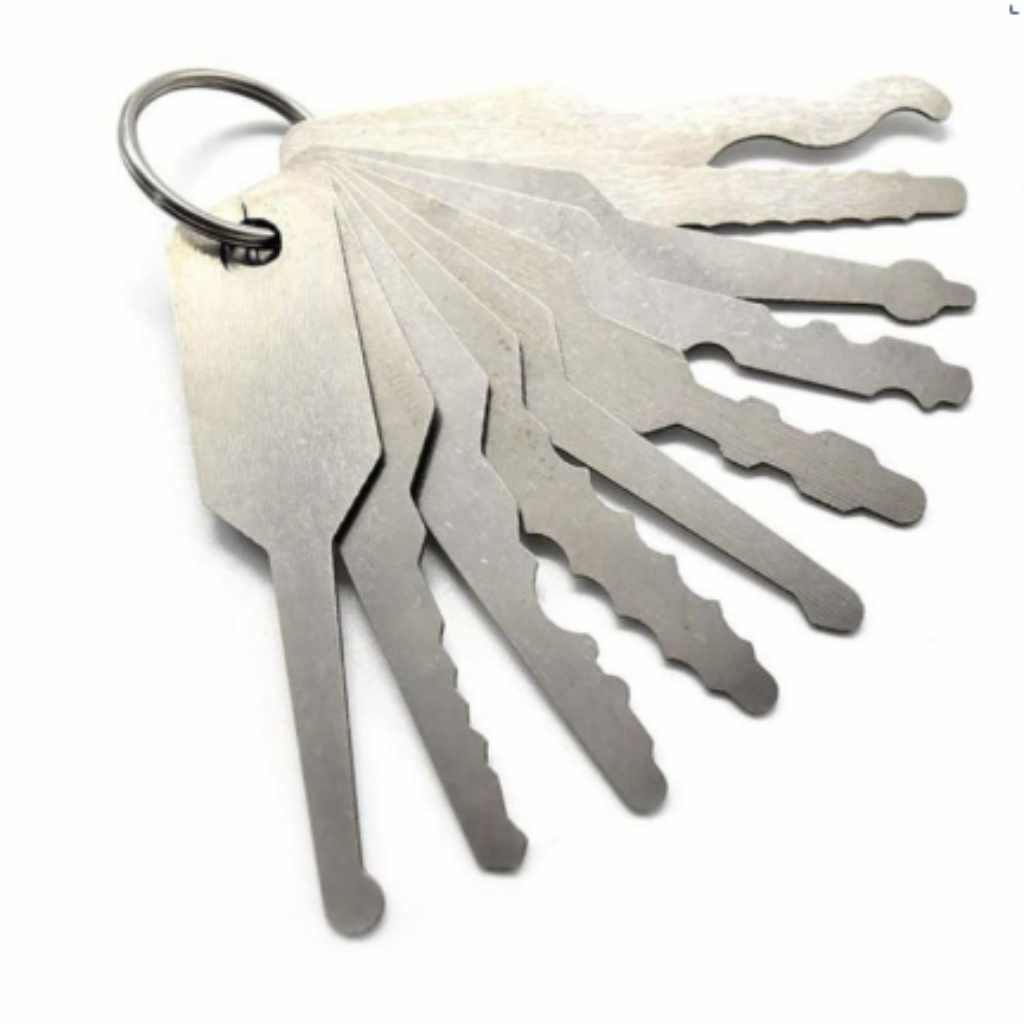
What exactly is an “auto jiggler”? Simply put, it’s a non-standard key blank specifically filed down or shaped to mimic the worn cuts of several different key profiles simultaneously. It’s not a magic wand; it’s a specialized locksmith tool.
The goal of a jiggler is to “jiggle” all the internal shear pin tumblers in an ignition or door lock cylinder to align at the exact same time, allowing the entire cylinder to turn. This mimics what a correctly cut key does, but much faster when you don’t have the right one.
The Core Principle: Mechanical vs. Electronic Locks
The success of an auto jiggler depends entirely on the type of lock system your vehicle uses. Understanding this distinction is the first step in knowing if this technique is viable for your car.
1. Older Mechanical Locks (The Good Targets)
Before the mid-to-late 1990s, most vehicles used simple pin-tumbler locks. These systems are purely mechanical. They rely on metal pins inside the lock cylinder being compressed to a precise height (the shear line) by the key’s grooves. These older systems are excellent candidates for jigglers because they lack electronic interference.
2. Modern Electronic Immobilizers (The No-Go Zones)
If your car was made after roughly 1998 (though this varies by manufacturer), it almost certainly has an anti-theft system involving a transponder chip inside the key. When you insert the key, a small antenna reads a radio signal from the chip. If the correct signal isn’t detected, the car’s computer (ECU) will prevent the engine from starting, even if the mechanical lock turns.
When dealing with these modern systems, an auto jiggler might turn the visible part of the ignition switch, but the engine will remain immobilized. Always check your key—if it looks slightly larger or thicker than old metal keys, it probably contains electronics.
What Cars Do Auto Jigglers Work On? The Proven Gear Categories
The compatibility question boils down to the presence or absence of electronic chips. Generally speaking, auto jigglers are most effective on domestic and some import models from specific manufacturing eras.
Category 1: Likely Compatible Vehicles (Pre-1990s to Early 2000s)
Jigglers are often designed to target common lock patterns used across many manufacturers during peak mechanical lock reliance. These patterns include common types like the KW1, SC1, or standard Ford/GM profiles frequently found in older ignitions.
Here are the general types of vehicles where success is more likely:
- Classic American Muscle Cars: Many GM (Chevy, Pontiac, Oldsmobile) and Ford models from the 1960s through the early 1980s often used simpler lock mechanisms.
- Older Trucks and Vans: Utility vehicles often lagged slightly behind passenger cars in adopting the latest security tech, meaning many vans and work trucks from the 1980s and early 1990s are susceptible to these tools.
- Economy Cars (Older Generations): Base models or older Japanese makes (like early Hondas or Toyotas) from before the mid-90s often had lock systems that respond well to jigglers.
Category 2: Unlikely Candidates (Post-Mid-1990s and Luxury Brands)
If the vehicle falls into these categories, put the jiggler away and consider professional assistance or lock picking tools designed for higher security pins:
- Any vehicle with a visible transponder chip: If the key head is bulky plastic housing a chip, the jiggler will only grant mechanical access, not engine authorization.
- Most European Luxury Vehicles (BMW, Mercedes-Benz): These brands adopted advanced electronic security (like immobilizers and complex wafer locks) much earlier than their mass-market counterparts.
- Vehicles with High-Security Wafer/Dimple Locks: Some higher-end or newer domestic models might use wafer locks instead of standard pin tumblers, making the action of a jiggler ineffective.
Table 1: Compatibility Snapshot for Auto Jigglers
| Vehicle Era/Type | Likelihood of Success | Reasoning |
|---|---|---|
| 1960s – Early 1980s Domestic Cars | High | Simple pin-tumbler mechanisms, standardized lock profiles. |
| Mid-1980s to Early 1990s Trucks/Vans | Medium to High | Often retain mechanical locks, especially base trims. |
| Mid-1990s to Present Day Passenger Cars | Very Low to Zero | Standard use of electronic transponder chips (immobilizers). |
| Vehicles with Laser-Cut or High-Security Keys | Zero | These use dimple or wafer systems, not standard pin stacks. |
The Jiggler Kit: What You Need for Proven Gear
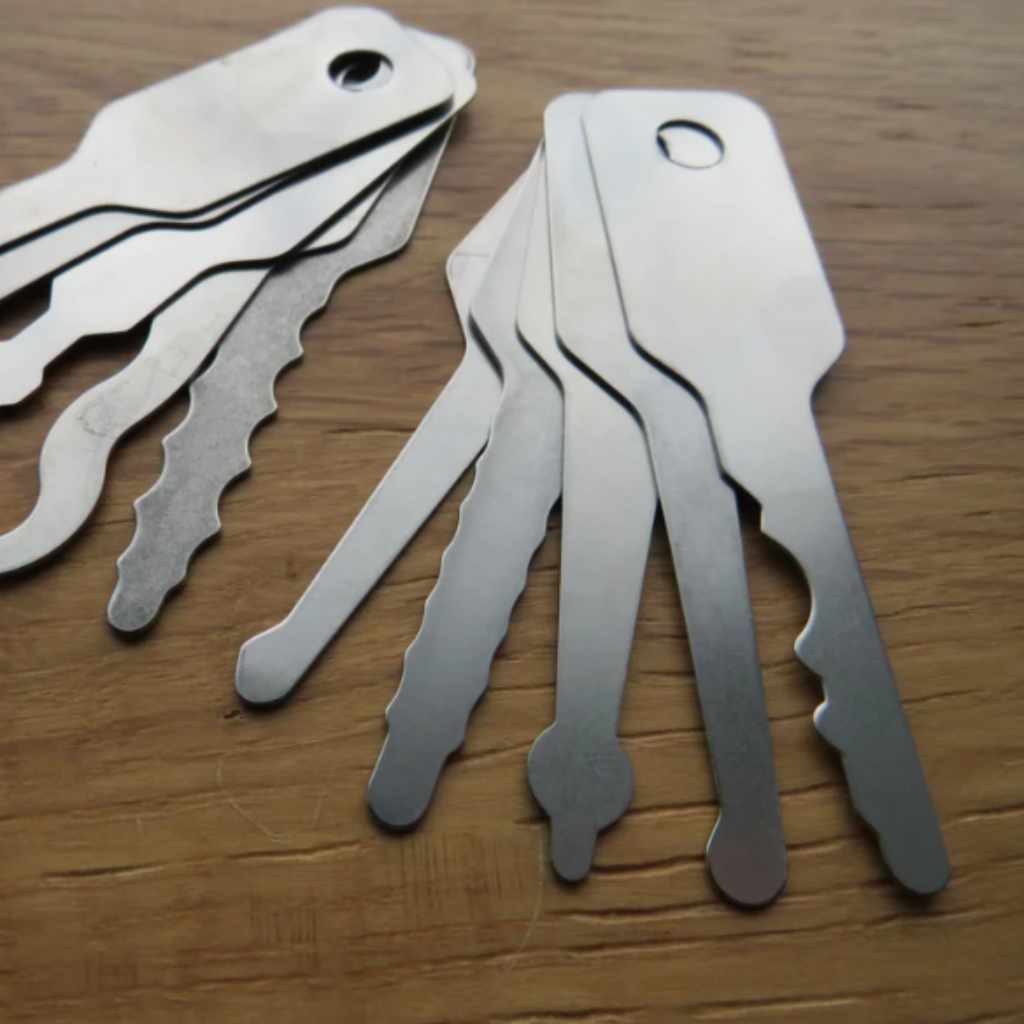
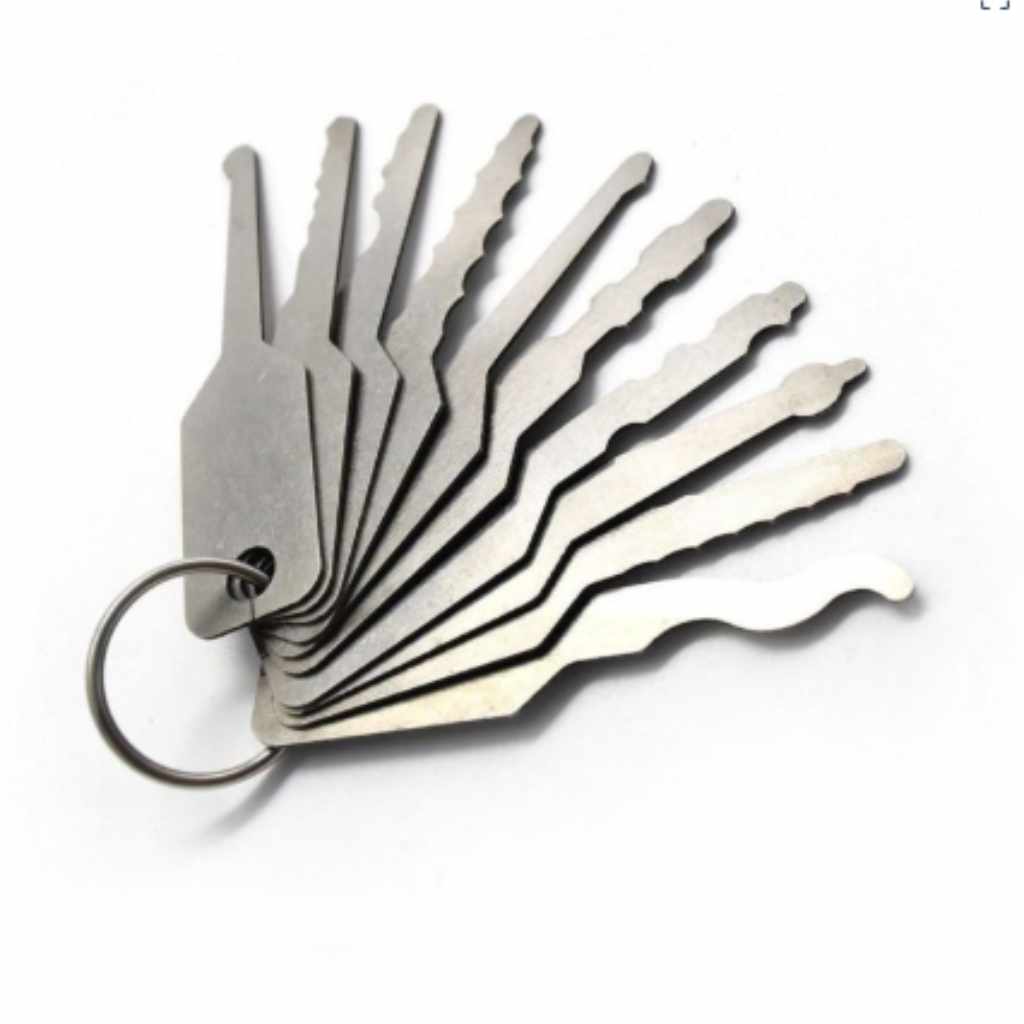
If you’ve determined your vehicle fits the older mechanical profile, you still need the right tools to execute the job. Auto jigglers are sold as sets because one jiggly shape won’t fit every lock. Manufacturers use slightly different internal lock setups, even within the same brand across different model years.
Essential Components of a Jiggler Set
A quality set usually contains several different shapes, each targeting a common configuration of pin stacks:
- The L-Shape or “J” Jigglers: These are often the most common, designed for standard pin-tumbler arrangements where the pins are arranged relatively linearly.
- The S-Shape or Snake Jigglers: These tackle locks where pin stacks are offset or require a more serpentine path to engage all pins simultaneously.
- Medium and Light Tension Wrenches: Though often used in traditional lock picking, a light tension wrench helps apply just enough rotational force to the cylinder so that when a pin sets correctly, the cylinder slightly catches, helping the next pin align.
A Note on Selection: Many reputable tool companies offer vehicle-specific or brand-specific jiggler sets (e.g., a Chrysler set or a GM set). For beginners working on their own older vehicle, buying a set tailored to that era and make often yields better results than a generic master set.
Safety and Responsible Use
Before we proceed, it’s vital we talk about responsibility. These tools are primarily for legitimate owners who have lost their keys or need emergency access to their own property. Misusing these tools is illegal and can severely damage the internal components of your ignition switch, leading to much more expensive repairs. Always ensure you have legal right to access the vehicle.
Step-by-Step: How to Use the Auto Jiggler Safely (On Compatible Locks)
If you suspect your vehicle is a good candidate (older, mechanical ignition), follow these steps cautiously. Remember, patience is crucial here.
Step 1: Preparation and Inspection
Use a small flashlight to look closely at the keyway. If you see any signs of a plastic housing or thick metal surrounding the key slot (besides the tumbler face itself), stop. If it looks like an old-fashioned, simple metal slot, proceed.
Step 2: Selecting the Correct Jiggler
Start with the shape that most closely matches the profile of the keys commonly used in your vehicle’s era (e.g., if you know the car used standard five-pin keys, start with the corresponding L-shaped jiggler).
Step 3: Inserting the Tool
Gently insert the chosen jiggler all the way into the ignition cylinder. Do not force it.
Step 4: Applying Light Tension
Using your non-dominant hand, apply very light rotational pressure in the direction the key normally turns to start the engine. This pressure must be minimal—just enough to encourage the pins to catch when they are set.
Step 5: The Jiggling Motion
With your dominant hand, gently but rapidly wiggle or “jiggle” the tool up and down, or in small circular motions, while maintaining that light rotational tension. This action attempts to lift all the internal pins to the shear line simultaneously.
- Listen and Feel: You might feel slight clicks or subtle shifts in tension. This means pins are moving.
- Experiment: If one motion doesn’t work after about 30 seconds, try slightly increasing or decreasing the rotational tension, and then repeat the jiggling.
Step 6: Achieving the Turn
If the pins align correctly, you will suddenly feel the tension release slightly, and the entire ignition cylinder will rotate to the “ON” or “START” position. Once it turns, hold it there and immediately remove the jiggler and insert your correctly cut key (if you have access to the ignition cylinder core) or proceed with starting the car if the jiggler turned it fully to the start position.
If it doesn’t work after several minutes of careful testing with one shape, switch to another shape in your kit and repeat the process. It can take time to find the specific alignment required for that specific lock.
Why Modern Cars Defeat Auto Jigglers
To give you complete confidence in knowing what cars don’t work, let’s dive a bit deeper into the technology that makes modern vehicles so secure. Understanding this helps prevent frustration.
The Role of the Transponder Key
The most significant security hurdle is the transponder chip. Modern ignition systems require two things to function:
- Mechanical Fit: The physical key must turn the lock cylinder.
- Electronic Authorization: The transponder chip within the key must broadcast the correct cryptographic code to the vehicle’s immobilizer module.
If the jigglers successfully turn the mechanical part, the dashboard lights will likely come on, but the fuel pump won’t prime, or the starter won’t engage. It’s a secure system designed precisely to stop tools like jigglers.
Advanced Lock Types
Even without transponders, some manufacturers moved away from traditional pin tumblers to increase resistance to quick entry methods:
- Wafer Locks: Instead of pins, these use small metal wafers. They require a different, more precise picking method or a specialized wafer-specific key/tool shape, which standard jigglers often cannot achieve.
- Dimple Locks: Found on many high-end German and some newer Japanese vehicles, these locks have indentations on the side of the key blade, requiring a completely different toolset than those used for standard jigglers. You can read general security standards endorsed by government agencies like the National Institute of Standards and Technology (NIST) to understand key cutting complexity, though automotive specifics vary widely.
Case Study: Common Compatibility Examples
When researching what cars do auto jigglers work on, forum discussions and locksmith reports often point toward specific success stories from the past. Here are some generalized groupings known for having simpler ignition cylinders susceptible to these tools:
General Motors (GM) – Pre-1996
Many GM vehicles using the older style keys (like older Chevrolet Cavaliers, Pontiac Grand Ams, and many older pickup trucks) often featured lock cylinders designed around easily manipulated pin stacks.
Ford – Prior to 1998
Certain Ford trucks and passenger cars from the 1980s and early 1990s that relied on simpler lock designs were historically vulnerable. Once Ford integrated PATS (Passive Anti-Theft System), jigglers became largely obsolete.
Chrysler/Dodge – Pre-1999
Similar trends were seen here. Older Mopar vehicles often used lock patterns that corresponded to common jiggler profiles available in basic sets.
Table 2: Key Features to Check Before Using a Jiggler
| Feature | Indicates Jiggler Might Work | Indicates Jiggler Will Likely Fail |
|---|---|---|
| Key Appearance | Simple, all-metal key with distinct cuts/grooves. | Bulky plastic head, flat-sided, or laser-cut appearance. |
| Immobilizer Light | No visible “key” or “security” light illuminates when the key is inserted (or turns). | A flashing or solid security light on the dash. |
| Lock Cylinder Depth | The key slides in deeply without significant resistance from the plastic housing. | Key insertion is shallow, or it stops against an electronic reader. |
Thinking Beyond the Jiggler: When You Need Other Gear
If your car is newer than 2000 or you simply cannot get the jiggler to work, don’t despair. There are other, often more reliable, forms of “gear” or assistance available for vehicle entry and starting.
1. Professional Locksmith Services
A reputable automotive locksmith has tools far more advanced and precise than a standard jiggler kit. They can often:
- Pick the lock cylinder directly using precision tension wrenches and rakes, which is different from the blunt force required by a jiggler.
- Create a new key code based on the door lock cylinder (if the ignition hasn’t been changed).
- Program a new transponder key on-site using advanced diagnostic equipment, an essential step for modern cars.
2. Lock Picking (Raking)
If it’s a standard pin-tumbler lock, traditional lock picking using tension wrenches and picks (like those found in a standard beginner lock picking set) can be more successful than jigglers, as it allows you to set each pin sequentially rather than relying on a single simultaneous alignment.
3. Accessing the Battery/Electrical System
If the goal is simply to move the car (e.g., a project or a roadside emergency), sometimes accessing the battery or electrical system via a less secure point (like manually popping a hood latch if accessible) might be the route, though this is highly vehicle-dependent.
Frequently Asked Questions (FAQs) About Auto Jigglers
Q1: Are auto jigglers legal to own?
A: In most places, yes. Owning the tools themselves is usually legal, similar to owning a general lock pick set. However, using them on property you do not own or do not have permission to access is illegal and constitutes breaking and entering or theft.
Q2: Will an auto jiggler work on a chipped key ignition?
A: No. The jiggler might turn the key mechanism itself, but the vehicle’s electronic immobilizer system will prevent the engine from starting because it won’t recognize the security code transmitted by the missing chip.
Q3: How can I tell if my car has a transponder chip in the key?
A: Look at the key head. If it is significantly larger than older metal keys and made of plastic, it almost certainly contains a transponder chip. If you try to start an older car and the dash lights up but the engine cranks or just clicks, that’s a strong sign of an immobilizer issue.
Q4: Can I damage my car by using an auto jiggler incorrectly?
A: Yes. Forcing the tool or using too much rotational tension can bend or break the internal pins, seize the lock cylinder, or damage the electrical contacts behind the ignition switch, turning a small problem into a major repair.