What Cars Share the Same Bolt Pattern as BMW?
Figuring out What Cars Have the Same Bolt Pattern as BMW? can seem tricky at first, especially if you’re new to car modifications or repairs. Bolt patterns, which determine how your wheels attach to your car, can be confusing! Don’t worry, this guide will simplify everything. We’ll break down bolt patterns, and give you a simple step-by-step method to help you find cars that can use your BMW wheels. Get ready to discover which vehicles share the same specifications!
Understanding Bolt Patterns and BMWs
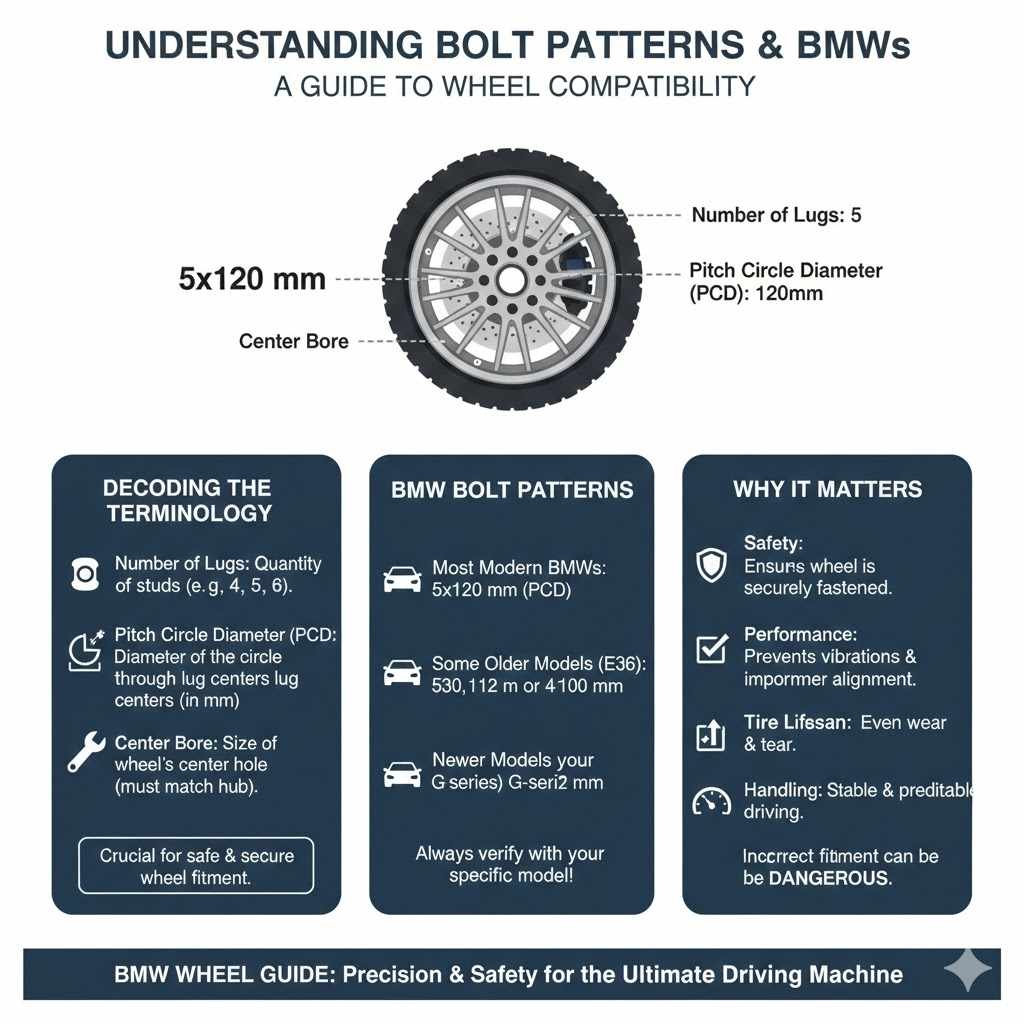
Bolt patterns, also known as lug patterns, are crucial when it comes to wheel compatibility. They’re basically the blueprint for how your wheels are attached to your car’s hubs. A correct bolt pattern ensures the wheel fits securely, while an incorrect one can lead to dangerous situations. BMW, known for its performance and style, uses specific bolt patterns across its model range, which are important to keep in mind when exploring wheel options. Knowing this information is critical for maintaining safety.
Decoding the Bolt Pattern Terminology
Bolt patterns are usually represented as two numbers: the first number tells you how many lug nuts your wheel has, and the second number indicates the diameter of the circle created by those lug nuts in millimeters (mm). For example, a bolt pattern of 5×120 mm means there are five lug nuts and the circle has a diameter of 120mm. Bolt patterns are measured in millimeters, unlike the older imperial system that is still in use for the older American models. Different manufacturers will often use different patterns, so it is necessary to know the specifics of your car.
- Number of Lugs: This signifies the quantity of studs or bolts that secure the wheel to the hub. Most cars have between four and six lug nuts. The quantity is important as it needs to correspond correctly to avoid a dangerous situation. It is the first number in the bolt pattern indication, like in the example above.
- Pitch Circle Diameter (PCD): This is the diameter of an imaginary circle that runs through the center of all the lug nuts on the wheel. This measurement is in millimeters. If you are ever unsure, it can easily be measured with the correct tools, so it is important to know how to measure it. The PCD is crucial for ensuring the new wheel will fit your car.
- Center Bore: The center bore is the size of the hole in the wheel’s center, which aligns with the hub of the car. It must be the correct size. The center bore is key to proper wheel alignment and balance and it is important to check whether it fits. A mismatch here will cause vibration while driving.
Why Bolt Pattern Matters
The bolt pattern is what allows the wheel to be secured to the hub of the car. It is key to road safety and performance. The wheel will either fit properly, or it will not fit at all. Using an incorrect bolt pattern is dangerous and could be catastrophic. Wheel bolts and lug nuts are designed to handle specific amounts of torque. Using the wrong size or pattern can lead to wheel failure, which could result in an accident. You have to be careful when replacing wheels and consider all the specifications.
Understanding bolt patterns allows you to explore various wheel options, allowing for customization and personalization. If you understand these specifications, then you can search different styles. You may be able to upgrade your car’s look or improve its performance. However, be cautious and always ensure compatibility with the correct specifications of your vehicle.
Common BMW Bolt Patterns
BMW models often have consistent bolt patterns, which simplifies the search for compatible wheels. BMW commonly uses a 5×120 mm bolt pattern, but this can differ depending on the specific model and model year. It is important to know the exact pattern for your car. These patterns affect wheel fitment and the options available for wheel replacements or upgrades. Understanding the core patterns that are used by BMW models helps you narrow down which other cars will be able to share the bolt pattern.
The 5×120 mm Bolt Pattern
The 5×120 mm bolt pattern is one of the most common used by BMW. It is widely used across many models and is usually found on most modern BMW vehicles, including the 3 Series, 5 Series, and X5. The prevalence of this pattern means a large selection of aftermarket wheels can be used. It also means that wheels from other manufacturers and car models might work. This is excellent for people looking to
- BMW 3 Series (E36, E46, E90, F30, G20): This is the sedan line, and many model years use the 5×120 mm pattern.
- BMW 5 Series (E39, E60, F10, G30): This series typically uses the 5×120 mm pattern across several generations.
- BMW X5 (E53, E70, F15, G05): The popular SUV also uses the 5×120 mm bolt pattern.
- BMW Z4 (E85, E86, E89, G29): The roadster/coupe series shares this pattern across some models.
Other Bolt Pattern Variations
Though less frequent, it’s essential to be aware of other bolt patterns that some BMW models might use. This is especially true when exploring older or specific models. For example, some older BMWs might have different bolt patterns or those used in special editions or performance models. This reinforces the need for accurate verification before purchasing replacement wheels or using wheels from other cars. Checking your car’s manual or a reliable online wheel guide is always a good idea.
- Older BMW Models: Some classic BMW models may have different bolt patterns.
- BMW M Models: Performance models might use different patterns.
- Special Editions: Special edition models or those with performance packages may come with unique bolt patterns.
Cars That Share the BMW Bolt Pattern
Several cars from different brands share the same 5×120 mm bolt pattern as BMW, which expands the potential options for wheel swapping. Knowing which cars use the same bolt pattern is helpful if you want to reuse wheels from another car, or if you’re exploring the used wheel market. These vehicles can be directly cross-compatible. Remember to verify the center bore and offset.
Vehicles Using the 5×120 mm Bolt Pattern
Several vehicles, primarily from brands like General Motors and some European automakers, share the 5×120 mm bolt pattern. This means wheels from these vehicles could fit some BMW models. However, it’s important to cross-reference the exact specifications of the wheels to ensure compatibility. The center bore needs to be the same, or larger, than your BMW’s hub, and the offset (the distance from the wheel’s mounting surface to its centerline) must be appropriate. Otherwise, the wheel may not fit, or it may damage the car.
- Holden (Various Models): Certain Holden models from Australia share this bolt pattern, offering a range of wheel styles.
- Opel (Various Models): Some Opel cars, particularly those linked to GM, use the 5×120 mm bolt pattern.
- Chevrolet (Various Models): Several Chevrolet models, like the Camaro and some Impala variants, share the 5×120 mm bolt pattern.
- Tesla (Model S, Model X): Tesla’s Model S and Model X have the 5×120 mm bolt pattern.
Important Considerations for Compatibility
When swapping wheels between vehicles, it is important to consider all the specifications beyond just the bolt pattern. Though two wheels share the same pattern, they will not be compatible if the other aspects are not right. These details ensure that the wheel fits properly, functions safely, and doesn’t affect your car’s performance. Matching the center bore (the center hole size), offset (the distance from the wheel’s mounting surface to the wheel’s centerline), and any brake caliper clearance issues is also key to ensuring a correct fit. It is also important to consider the size of the bolts.
- Center Bore: The center bore must match, or be larger than, the hub size of your BMW.
- Offset: The offset of the wheel is critical. An incorrect offset can cause the wheel to rub against the suspension or body. You should find a wheel with an offset that is within the range recommended by BMW, or by a trusted wheel and tire professional.
- Wheel Width and Diameter: Make sure the width and diameter are correct, or you could end up with an unsafe fit. A slightly wider tire can increase grip, but you need to make sure the fit is perfect.
- Tire Size: Always make sure your tires fit the wheels and are rated to carry the load of your vehicle.
Finding the Right Wheels for Your BMW
You have a lot of options when searching for wheels. You can look for new wheels or explore used options. Websites and wheel manufacturers offer a huge range of wheels to choose from, or you could consider aftermarket wheels. When you are looking for wheels, you can also search by vehicle. This will make sure you are only looking at wheels that will fit your car. There are many different styles and materials. Remember to consider all the specs before purchasing.
Resources for Wheel Searching
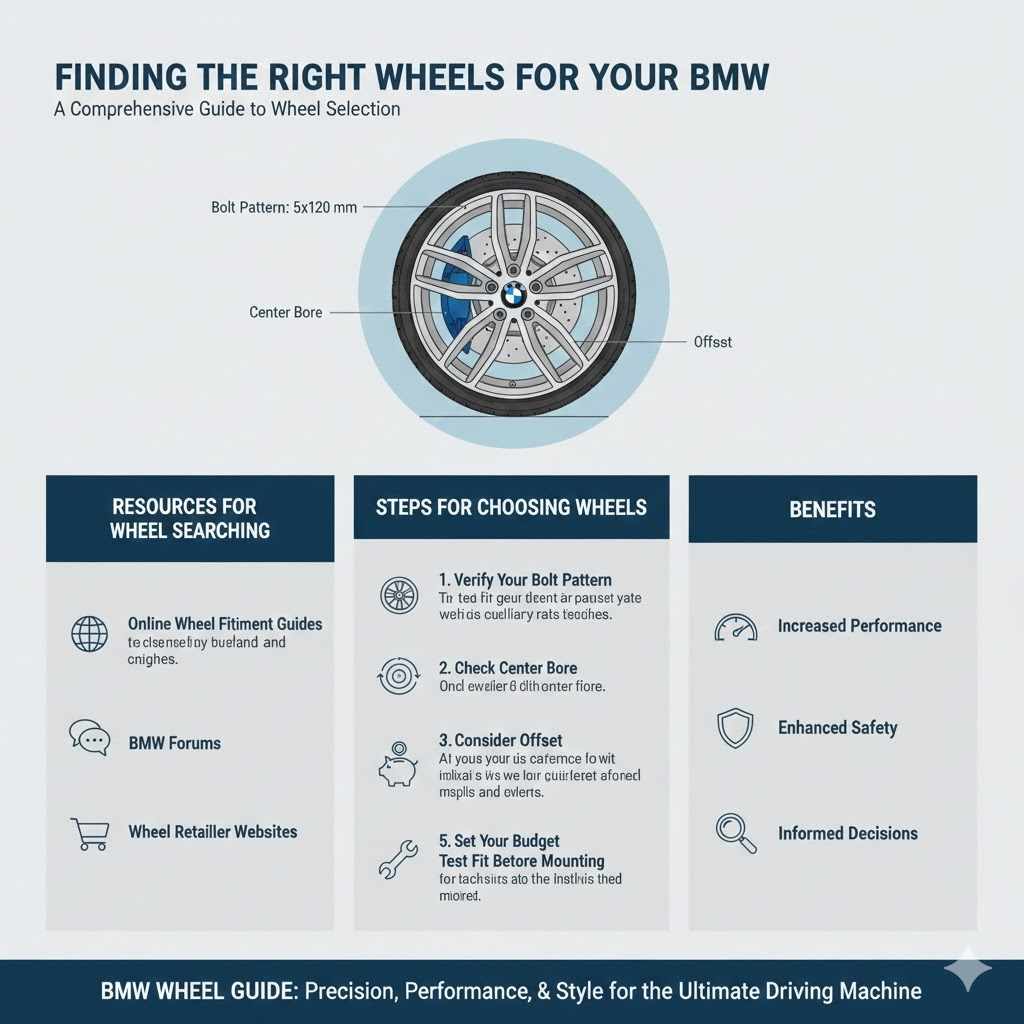
Several resources can aid you in the hunt for suitable wheels. You can check online forums dedicated to BMWs, which often have sections where members share information about wheel fitments. Wheel and tire fitment guides are also an excellent source of specifications and compatibility information. Wheel retailers often provide tools that allow you to check wheel fitment for your specific vehicle. These resources simplify the process and give you the knowledge you need.
- Online Wheel Fitment Guides: These tools let you input your car’s make, model, and year, and they suggest wheels that will fit.
- BMW Forums: Community forums are a place to ask questions and find advice from fellow BMW owners.
- Wheel Retailer Websites: Many wheel retailers offer fitment guides or the ability to search by vehicle.
Steps for Choosing Wheels
Before purchasing wheels, you will need to take a few steps to be sure the new wheels will fit properly. This makes sure you are making a safe and informed decision. First, confirm your bolt pattern (number of studs and diameter) for your car. Then, verify the center bore. Next, check the offset. After that, look for wheels that fit within your budget. Finally, before mounting the wheels, test fit them to ensure everything is correct.
- Verify Your Bolt Pattern: You will first need to find the correct bolt pattern. The first number is the number of studs on the wheel, and the second is the diameter of the wheel in millimeters. You can look in your car manual or use online resources for this information.
- Check Center Bore: Be sure that the wheel’s center bore matches or is larger than your BMW’s hub size. If it is too small, the wheel will not fit.
- Consider Offset: The offset is the distance from the wheel’s mounting surface to its centerline. It is measured in millimeters, and an improper offset can cause problems with handling and fitment.
- Test Fit Before Mounting: Before having tires mounted, do a test fit of the wheels on your car. This verifies that they clear the brake calipers and don’t rub against any suspension components or the car’s body.
Frequently Asked Questions
Question: Can I use wheels from a different car brand on my BMW?
Answer: Yes, you can. You will need to check the bolt pattern, center bore, and offset. It is important to match those specifications for the wheels to fit correctly and safely. Many cars share the same 5×120 mm bolt pattern that BMW uses.
Question: What happens if I use wheels with the wrong bolt pattern?
Answer: Wheels with the wrong bolt pattern will not fit properly, and this can be dangerous. The wheel may not be properly secured to the car, which could cause the wheel to detach while you are driving. Always make sure the bolt pattern is correct.
Question: Is it okay to use spacers on my wheels?
Answer: Wheel spacers can change the offset of the wheel, and they can be used to improve the look of the car. However, if they are not installed correctly, they can cause problems. Always consult with a professional and follow the manufacturer’s directions when installing spacers.
Question: What is the difference between center bore and offset?
Answer: The center bore is the size of the hole in the center of the wheel that fits over the hub of your car. The offset is the distance from the wheel’s mounting surface to the wheel’s centerline. Both are vital for a good fit, proper balance, and safe operation.
Question: How do I measure my BMW’s bolt pattern?
Answer: You can find this information in your owner’s manual or by using online wheel fitment guides. You can also measure it, but this can be tricky. It is easier to use online resources to find this information, as incorrect measuring could lead to buying the wrong wheels.
Final Thoughts
Finding wheels with the right bolt pattern is crucial for a safe and stylish ride, and understanding What Cars Have the Same Bolt Pattern as BMW? can open up a range of possibilities for wheel upgrades or