What Does a Water Pump Do in a Car? Function & Signs of Failure
A car’s water pump circulates coolant between the engine and radiator, using a spinning impeller to keep heat moving out of the engine block continuously while the car runs. Without it, an engine can overheat within minutes and warp or crack — a factory water pump typically lasts about 10 years or 100,000 miles. This guide covers how it works, the signs it’s failing, and real replacement costs.
We’ll break down its role step-by-step so you know exactly how it keeps your engine cool. Get ready to learn about this important part and its vital function.
Quick Answer
A water pump’s job is to circulate coolant between the engine and radiator so heat is continuously carried away from the engine block. It’s driven either by the serpentine/timing belt or, on newer cars, an electric motor controlled by the engine computer. Most last 60,000-150,000 miles depending on the type.
The Engine Cooling System Explained
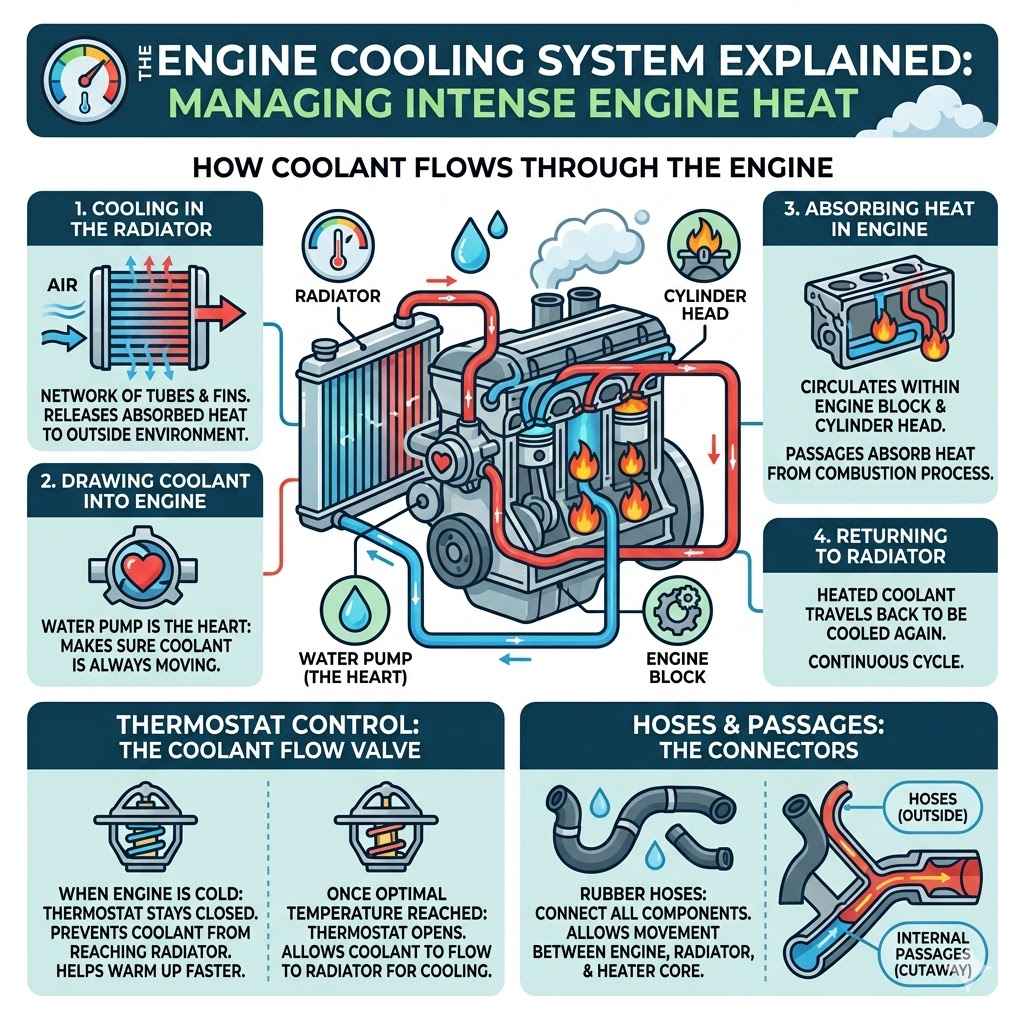
The engine cooling system is a car’s way of managing the intense heat created when the engine runs. Without it, your engine would quickly overheat and suffer severe damage. This system relies on a special liquid, often called coolant or antifreeze, to absorb and transfer heat away from the engine.
The water pump is the heart of this entire operation, making sure the coolant is always moving.
How Coolant Flows Through the Engine
Coolant starts its journey in the radiator, where it’s cooled by air passing through the radiator’s fins. From the radiator, the coolant is drawn into the engine block. As it circulates within the engine, it picks up heat generated by the combustion process.
This heated coolant then travels back towards the radiator to be cooled again, creating a continuous cycle.
The Radiator’s Role
The radiator is like the cooling system’s air conditioner. It’s a network of small tubes and fins that allow air to pass through, cooling the hot coolant that flows within them. This is where the heat absorbed from the engine is released into the outside environment.
Thermostat Control
The thermostat is a valve that controls coolant flow. When the engine is cold, the thermostat stays closed, preventing coolant from reaching the radiator. This helps the engine warm up faster.
Once the engine reaches its optimal operating temperature, the thermostat opens, allowing coolant to flow to the radiator for cooling.
Hoses and Passages
Rubber hoses connect the various components of the cooling system, allowing coolant to move between the engine, radiator, and heater core. Inside the engine block and cylinder head are passages that the coolant flows through to absorb heat.
What Does a Water Pump Do In A Car Specifically
So, to directly answer “What Does a Water Pump Do in a Car?”, its main job is to circulate the coolant. Think of it as the engine’s circulation system. It’s usually a belt-driven or electric pump that physically pushes the coolant through the engine and back to the radiator.
Without the water pump actively moving the coolant, the system would just sit there, and the engine would quickly get too hot.
The Mechanical Heart of Cooling
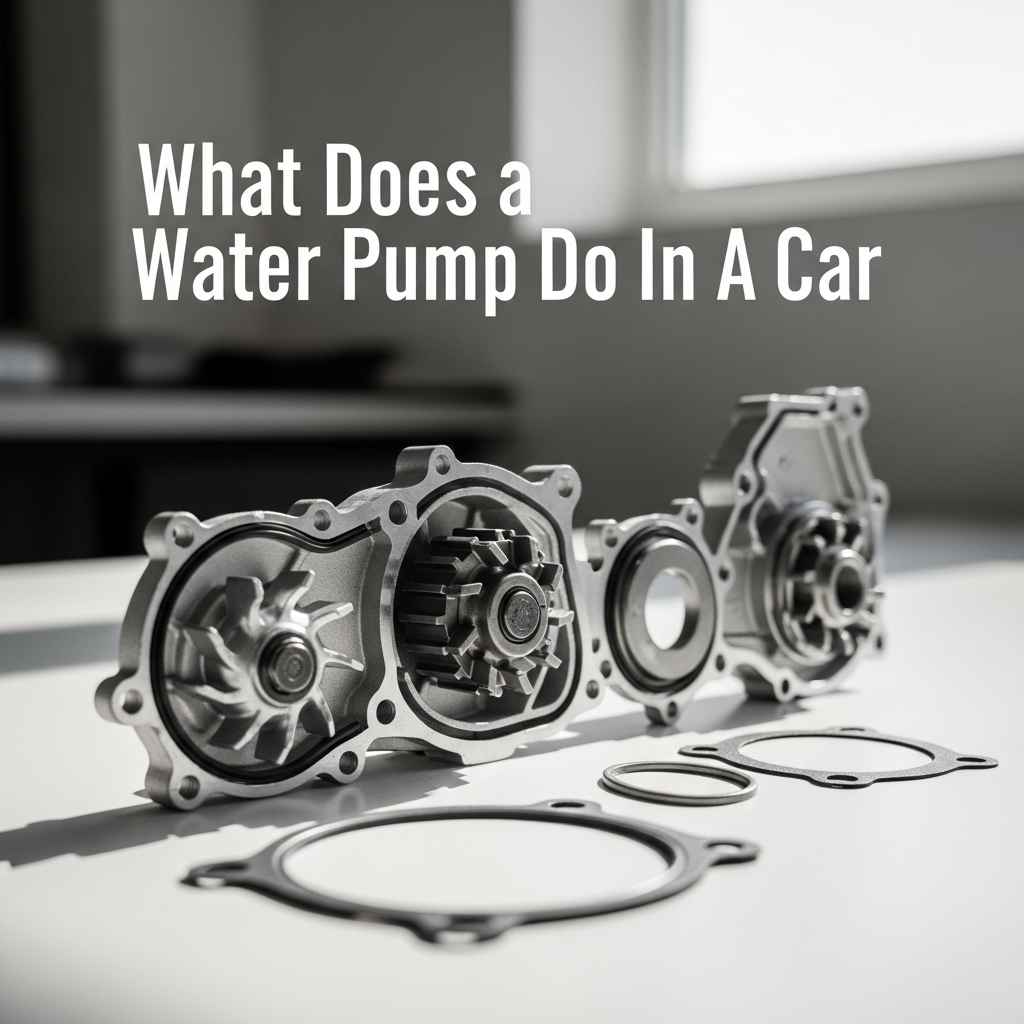
The water pump is a relatively simple mechanical device. It typically has a housing that contains an impeller, which is a spinning wheel with vanes. As the engine runs, it turns a pulley connected to the water pump’s shaft.
This rotation causes the impeller to spin, creating a centrifugal force that draws coolant into the pump and then forces it out into the cooling system. This constant pushing action is what keeps the coolant moving.
Impeller Design
The impeller is the part that actually moves the coolant. Its shape and size are designed to efficiently push the fluid through the system. Different pump designs might have slightly different impeller types, but the fundamental principle of using spinning vanes to move liquid remains the same.
Shaft and Bearings
The impeller is attached to a shaft that extends through the pump housing. This shaft is supported by bearings, which allow it to spin smoothly. These bearings are crucial for the longevity of the water pump and often lubricated by the coolant itself.
Seals and Gaskets
Water pumps are designed to prevent coolant leaks. They use seals around the shaft and gaskets where the pump bolts to the engine to ensure that coolant stays contained within the system. When these seals fail, leaks can occur.
Types of Water Pumps
There are two main types of water pumps found in cars: belt-driven and electric. Both serve the same purpose but operate differently.
Belt-Driven Water Pumps
These are the most traditional type. They are connected to the engine’s serpentine belt or timing belt. This means the pump runs whenever the engine is running.
The speed of the pump is directly related to the engine speed. Faster engine means faster pump.
Constant Operation
As long as the engine is on, the belt-driven water pump is working. This ensures a continuous flow of coolant. However, it also means the pump is running even when the engine is very cold and doesn’t need as much cooling.
Maintenance Considerations
Because they are connected to belts, their condition is often checked during routine maintenance like timing belt changes. A failing belt can damage the pump or stop it from working.
Electric Water Pumps
More modern vehicles are starting to use electric water pumps. These are powered by the car’s electrical system and are controlled by the engine’s computer. This allows for more precise control over coolant flow.
Variable Speed Control
Electric pumps can adjust their speed based on the engine’s needs. If the engine is under heavy load or running hot, the computer can tell the pump to spin faster. If the engine is just idling or cold, it can slow down or even turn off, saving energy.
Improved Efficiency
This ability to precisely control coolant flow helps optimize engine temperature, leading to better fuel efficiency and reduced emissions. It also means the pump isn’t overworking when it’s not needed.
The Importance of Proper Circulation
Imagine trying to cool your house with a fan that’s barely turned on. That’s what happens to an engine without a properly functioning water pump. Consistent and adequate coolant circulation is key to preventing overheating.
When the water pump isn’t working right, the coolant can’t efficiently carry heat away from critical engine parts.
Preventing Hot Spots
Engine components, especially around the cylinders and combustion chambers, get extremely hot. Without constant coolant flow, localized areas can develop “hot spots.” These areas are much hotter than the rest of the engine and can lead to serious damage like warped cylinder heads or cracked blocks.
Consistent Temperature
The goal of the cooling system is to maintain a stable operating temperature. A good water pump ensures that coolant is always moving, preventing drastic temperature swings. This stability is vital for engine performance and longevity.
Heater System Function
The same coolant that cools the engine also heats the cabin of your car. If the water pump isn’t circulating coolant, your car’s heater will also stop working effectively. This is often one of the first signs that the water pump is failing — and it’s also why some drivers try turning the heater on to help an overheating car as a temporary measure.
Cavitation: A Hidden Cause of Water Pump Failure
Beyond worn bearings and failed seals, cavitation is a less-visible way a water pump fails. It happens when coolant boils or vaporizes inside the pump due to a sudden pressure drop or localized overheating — the resulting vapor bubbles collapse violently and erode the impeller and pump housing over time. Cavitation damage reduces pumping efficiency long before it causes an obvious leak or noise, which is why a pump can perform poorly even when nothing looks visibly wrong yet.
📊 A factory water pump typically lasts about 10 years or 100,000 miles under normal driving conditions before wear, cavitation, or seal failure catches up with it. — Source: GMB
Mechanics commonly point to cavitation damage on the impeller and housing as a failure mode that develops well before a water pump starts visibly leaking or making noise — by the time a bearing squeals, the pump has often already been losing efficiency for months.
Signs of a Failing Water Pump
Because it’s so critical, it’s important to recognize when a water pump might be starting to fail. Ignoring these signs can lead to expensive repairs down the road. Common indicators include strange noises, leaks, and temperature gauge issues.
Leaking Coolant
A leaking water pump is one of the most common and obvious signs of a problem. The pump is connected to the engine, and if its seals or gaskets fail, coolant will start to drip out.
Visible Puddles
You might notice puddles of coolant under your car, usually a brightly colored green, pink, or orange liquid. This is a clear sign that something in the cooling system is leaking.
Corrosion Around the Pump
Sometimes, you can visually inspect the water pump area (often on the front of the engine) and see signs of dried coolant or corrosion around the pump housing. This indicates a slow leak that might be getting worse.
Low Coolant Level
If you frequently have to add coolant to your car, it’s a strong indication of a leak somewhere in the system, and the water pump is a frequent culprit.
Strange Noises
A failing water pump can also make unusual sounds. These noises often come from the bearings inside the pump or from the impeller.
Grinding or Whining
A worn bearing in the water pump can create a grinding or whining sound that gets louder as the engine speeds up. This sound is often described as a metallic screech.
Rattling
In some cases, a loose impeller or damaged internal components can cause a rattling sound. This can be more intermittent but is still a sign of trouble.
Belt Issues
If the water pump is belt-driven, a failing pump pulley or bearing can cause the belt to squeal or slip, adding another layer to the noises you might hear.
Engine Overheating
The most severe symptom of a failing water pump is the engine overheating. If the pump isn’t circulating coolant effectively, the temperature gauge on your dashboard will rise into the red zone.
Temperature Gauge Spikes
Sudden or gradual spikes in the engine temperature gauge are a critical warning. If the needle goes into the red, it means your engine is running too hot and needs immediate attention. If you’re not sure whether hot weather alone is to blame, see do cars run hotter in the summer.
Steam from the Hood
In extreme cases of overheating, you might see steam coming from under the hood. This is usually a sign of boiling coolant, which indicates the cooling system has failed to do its job.
Dashboard Warning Lights
Many modern cars have a specific warning light for engine temperature. If this light comes on, it’s a clear signal to stop driving and have your car inspected.
How a Water Pump Works with Other Parts
The water pump doesn’t operate in isolation. It’s part of a larger, interconnected system. Its efficiency and proper function depend on several other components working correctly.
The Radiator and Its Importance
The radiator is where the coolant releases its heat. The water pump pushes hot coolant from the engine to the radiator. Air flowing through the radiator’s fins cools the coolant, which then returns to the engine.
If the radiator is clogged or damaged, it can’t cool the coolant effectively, putting extra strain on the water pump and the entire system.
Radiator Maintenance
Keeping the radiator clean, both inside and out, is essential. Flushing the cooling system regularly helps remove buildup that can impede coolant flow. Ensuring the radiator fins are free of debris allows for optimal airflow and cooling.
Thermostat’s Role in Regulation
The thermostat acts as a gatekeeper for coolant flow. When the engine is cold, it stays closed to help the engine reach its optimal operating temperature quickly. Once warm, it opens to allow coolant to flow to the radiator.
If the thermostat gets stuck closed, the coolant won’t reach the radiator for cooling, causing the engine to overheat, even if the water pump is working perfectly.
Thermostat Failure Symptoms
A faulty thermostat can cause slow engine warm-up or rapid overheating. If your car takes a very long time to reach normal operating temperature, or if it overheats quickly after starting, the thermostat could be the issue.
Coolant Hoses and Their Integrity
The hoses are the pathways for coolant. They carry coolant from the engine to the radiator and back. They are usually made of reinforced rubber.
If a hose is old, cracked, or swollen, it can burst, leading to a sudden and complete loss of coolant. This would immediately stop the water pump from being able to circulate anything.
Hose Inspection
Regularly inspect coolant hoses for signs of wear, such as cracks, bulges, or softness. Replacing them at recommended intervals, often when changing the timing belt or water pump, can prevent catastrophic failures.
Water Pump Failure Scenarios
Let’s look at a couple of real-world situations to see how water pump problems can affect a car.
Scenario 1 A Long Road Trip
Sarah was on a long road trip when her car started making a strange whining noise. She thought it was just the tires, but then her temperature gauge began to climb. She pulled over quickly and saw steam coming from under the hood.
It turned out her water pump had failed, and the engine was rapidly overheating.
Initial Symptom Noticed
Sarah heard a high-pitched whine coming from the engine compartment as she drove.
Second Symptom Appears
Shortly after, she noticed the engine temperature light turn on and the gauge rise into the danger zone.
Immediate Action Taken
She immediately pulled the car over to a safe spot to prevent further engine damage.
Diagnosis and Repair
A mechanic found that the water pump bearings had seized, causing the noise and preventing coolant circulation, leading to overheating.
Scenario 2 Daily Commute Problems
John noticed a small puddle of green liquid under his car after parking it at work. He checked his coolant level and found it was low. He scheduled an appointment to have it checked.
The mechanic found that the water pump seal was leaking. They replaced the water pump to prevent a more serious issue.
Daily Observation
John noticed a small coolant leak in his driveway each morning.
Coolant Level Check
He checked and topped off his coolant regularly, but the leak persisted.
Professional Inspection
A mechanic identified a faulty seal on the water pump as the source of the leak.
Preventative Replacement
The water pump was replaced proactively before it could cause overheating.
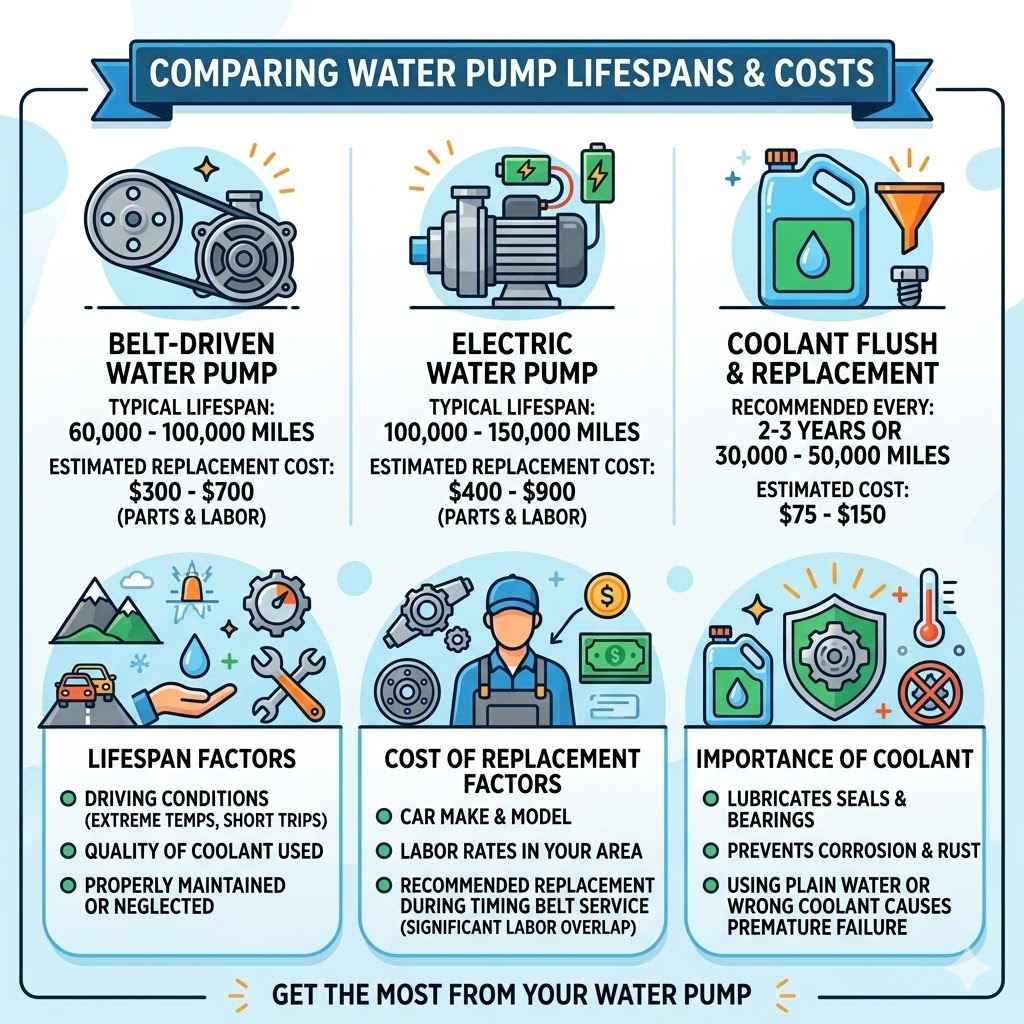
Comparing Water Pump Lifespans and Costs
Water pumps don’t last forever. Their lifespan can vary, and so can the cost of replacement. Here’s a look at typical expectations.
| Component | Typical Lifespan | Estimated Replacement Cost (Parts & Labor) |
|---|---|---|
| Belt-Driven Water Pump | 60,000 – 100,000 miles | $300 – $700 |
| Electric Water Pump | 100,000 – 150,000 miles | $400 – $900 |
| Coolant Flush & Replacement | Every 2-3 years or 30,000-50,000 miles | $75 – $150 |
Lifespan Factors
The lifespan of a water pump is influenced by driving conditions, the quality of the coolant used, and whether it has been properly maintained. Extreme temperatures, frequent short trips, and using the wrong type of coolant can shorten its life.
Cost of Replacement
The cost of replacing a water pump varies depending on the make and model of the car, as well as the labor rates in your area. For many cars, it’s recommended to replace the water pump when the timing belt is also replaced, as they are often in the same area and require significant labor overlap.
Importance of Coolant
Using the correct type and concentration of coolant is vital. It not only prevents freezing and boiling but also lubricates the water pump’s seals and bearings and prevents corrosion. Using plain water or the wrong coolant can lead to premature pump failure.
Best Coolant Pick
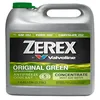
Zerex Original Green Concentrate Antifreeze/Coolant
The right coolant lubricates the water pump’s seals and bearings — plain water or the wrong type is a real, common cause of premature pump failure.
- Best for: topping off or fully replacing coolant on most older and mainstream vehicles
- Why we picked it: low-silicate formula is gentle on water pump seals and bearings
- Main drawback: concentrate needs to be mixed with water, not ready-to-use out of the jug
Compare more water pump diagnostic tools
 Option 1 Etekcity Infrared Thermometer
|
 Option 2 CXPRO Radiator Pressure Tester
|
 Option 3 OEMTOOLS No-Spill Funnel Kit
|
As an Amazon Associate we earn from qualifying purchases.
Frequently Asked Questions
How often should I replace my car’s water pump?
It’s often recommended to replace your water pump every 60,000 to 100,000 miles, or when you replace your timing belt, as labor costs overlap. Check your car’s manual for specific recommendations.
Can I drive my car if the water pump is leaking?
Driving with a leaking water pump is risky. It can lead to overheating, which can cause severe engine damage. It’s best to address the leak immediately.
What happens if the water pump fails completely?
If the water pump fails completely, coolant will stop circulating. This will cause the engine to overheat very quickly, potentially leading to expensive damage.
How can I tell if my water pump is belt-driven or electric?
Belt-driven pumps are usually attached to the engine by a visible belt. Electric pumps are typically mounted directly to the engine and controlled electronically, often without a visible belt connection.
Is water pump replacement expensive?
Replacement costs can vary, typically ranging from $300 to $900 depending on the car model and whether other parts like the timing belt are replaced simultaneously.
Summary
The water pump is essential for your car’s engine. It keeps coolant circulating to prevent overheating. Watch for leaks, strange noises, or rising temperature gauges.
A healthy water pump means a healthy engine. Keep an eye on it for worry-free driving.
Products related to this article
Sponsored / affiliate links. As an Amazon Associate I earn from qualifying purchases. I may earn additional commission from eligible campaigns.