3 Best Car Cleaning Gloves for Paint-Safe Washing
The Griot’s Garage 10260 Microfiber Car Wash Mitt leads for paint-safe washing because it gives you a compact, foam-lined wash surface with an elastic cuff and enough control for badges, trim, and tight panel edges.
Top pick for 2026
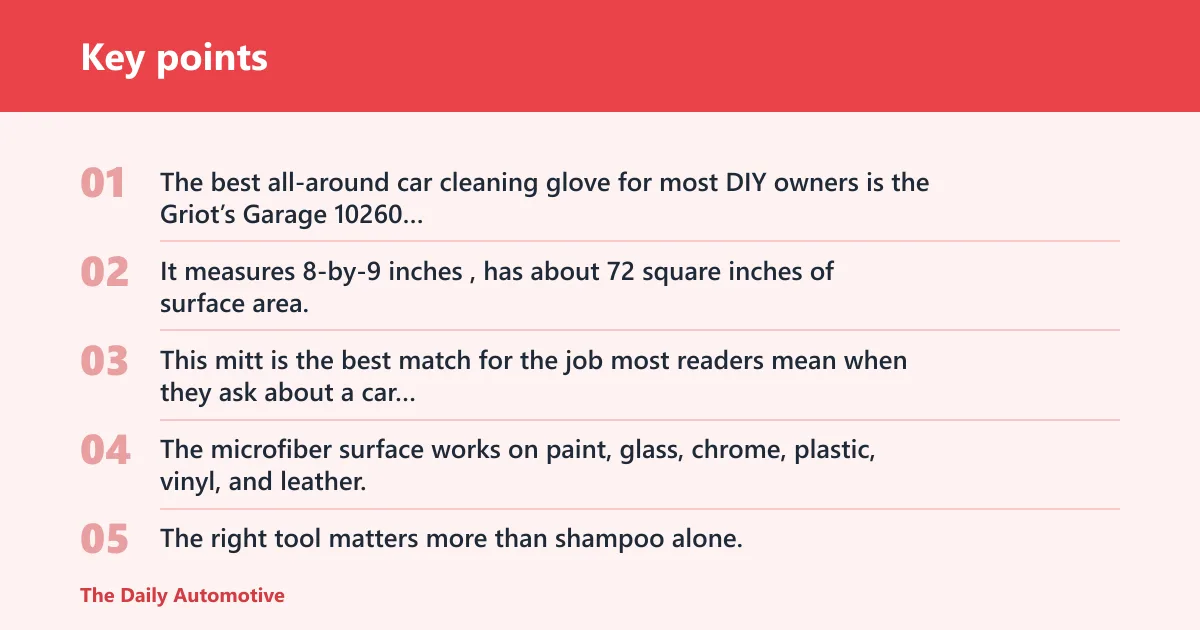
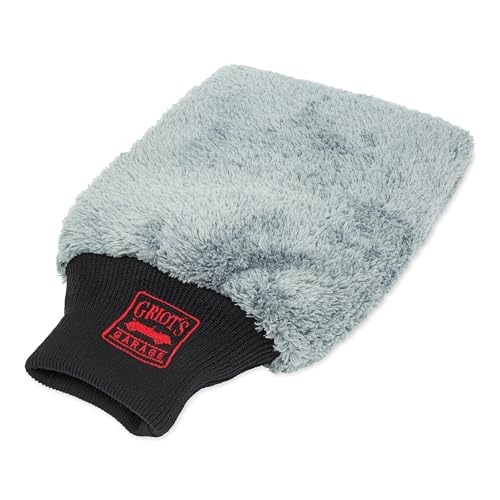


The best all-around car cleaning glove for most DIY owners is the Griot’s Garage 10260 Microfiber Car Wash Mitt. It measures 8-by-9 inches, has about 72 square inches of surface area, and uses a foam-lined interior and elastic cuff, which makes it a strong fit for controlled wash work on paint without feeling bulky.
Why this glove leads for paint-safe washing
This mitt is the best match for the job most readers mean when they ask about a car cleaning glove: washing exterior panels safely. The microfiber surface works on paint, glass, chrome, plastic, vinyl, and leather, and the elastic cuff helps keep the mitt seated while you move from hood to doors to rocker panels.
The right tool matters more than shampoo alone. A mitt that is too loose can twist, trap grit, and slow you down around mirrors and emblems. A compact mitt like this gives you more panel control than a large, floppy wash accessory.
Who should buy it first?
Start here if you want one glove for regular wash days, especially on compact and midsize cars where you will move quickly between broad panels and smaller details. It is the best fit for readers who value safe exterior washing over decontamination or chemical-handling chores.
Where it falls short
It is not a decontamination tool, and it is not the right glove for greasy garage cleanup. If bonded contamination is the problem, a clay mitt belongs in the cart. If the job involves solvents, brake dust residue, or oily parts, nitrile is the better pick.
Quick picks
| Pick | Best for | Key spec | Why it wins |
|---|---|---|---|
| Griot’s Garage 10260 Microfiber Car Wash Mitt | Paint-safe washing | 8-by-9 inches; about 72 square inches; foam-lined interior; elastic cuff | Controlled coverage on paint, trim, and glass with a secure fit |
| PuddleMe synthetic clay mitt set | Decontamination | Medium-grade synthetic clay mitt and mesh-grade mitt glove | Targets bonded contamination before wax or polishing |
| EPPCO Eco-Grip nitrile gloves | Messy garage cleanup | Textured nitrile surface | Better grip and protection for dirty, chemical-prone jobs |
Car cleaning gloves matrix
This matrix separates the three buying paths readers usually mix together. A wash mitt, a clay mitt, and a nitrile work glove solve different problems, and buying the wrong one usually means either poor control or extra work later.
| Buying path | Material | Grip | Surface coverage | Fit | Cleaning difficulty | Ideal user |
|---|---|---|---|---|---|---|
| Best for paint-safe wash | Microfiber | Moderate, controlled when damp | Good for broad panels and smaller detail areas | Elastic cuff helps keep it seated | Moderate; rinse well and launder carefully | DIY owner washing exterior paint, glass, chrome, plastic, vinyl, and leather |
| Best for decontamination | Synthetic clay surface | High when paired with lubricant | Focused contact for bonded contamination | Glove-style fit improves finger control | Moderate to high; residue must be removed after use | User preparing paint before waxing or polishing |
| Best for garage cleanup | Nitrile | Textured grip for dirty tools and slippery parts | Full hand coverage with disposable convenience | Snug, fast on and off | Low if disposable; replace when soiled | DIY owner handling oily, dusty, or chemical-prone cleanup |
What are the best car cleaning gloves for washing a car?
The best glove for washing a car is a microfiber wash mitt, and the Griot’s Garage 10260 is the strongest pick here because it combines a compact shape, a secure elastic cuff, and surface coverage that suits paint-safe washing on large panels and smaller trim sections.
Microfiber works well for wash duty because it is soft enough for exterior surfaces yet controlled enough for repeat passes across hood, doors, and roof. The small footprint helps you stay close to the panel instead of swinging past it, which matters around mirror bases, grille edges, and emblems.
Why microfiber fits this job
Microfiber wash mitts are the most practical choice for paint-safe washing when you want one tool that can move from panel to panel without feeling clumsy. They are also useful on glass, chrome, plastic, vinyl, and leather, which gives them wider utility than a wash-only sponge.
The key is fit. A mitt that sits securely on the hand gives better panel control, and the elastic cuff on the Griot’s mitt is a useful detail, not a cosmetic one. Loose fit leads to bunching, which can make dirt management harder.
When a wool glove is the better wash-day choice
A wool car wash glove is a strong alternative when your priority is an ultra-soft cleaning surface with high water and soap absorption. Breathable mesh backing and a scratch-free, swirl-reducing setup make it appealing for careful wash routines, especially on delicate finishes.
Choose wool if you want maximum wash feel and fluid retention. Choose microfiber if you want a tighter, more compact tool that is easier to aim around trim and small sections.
Are microfiber gloves better than wool car wash gloves?
Microfiber gloves are better for control and versatility, while wool gloves are better for absorption and a softer wash feel. If you clean tight areas, badges, and lower body contours, microfiber usually wins. If you want a very plush wash surface that holds more suds, wool is the stronger specialist.
The split is simple. Microfiber gives more exact panel control, and wool feels gentler and stays wetter longer. That is why microfiber often suits daily wash duty, while wool can appeal to owners who want a more traditional wash experience on well-maintained paint.
Best for decontamination?
The best glove for decontamination is a clay mitt, not a wash mitt. The PuddleMe set is the clearest fit here because it includes a medium-grade synthetic clay mitt and a mesh-grade mitt glove, which are designed for removing bonded contamination before waxing or polishing.
How a clay mitt works before wax or polish
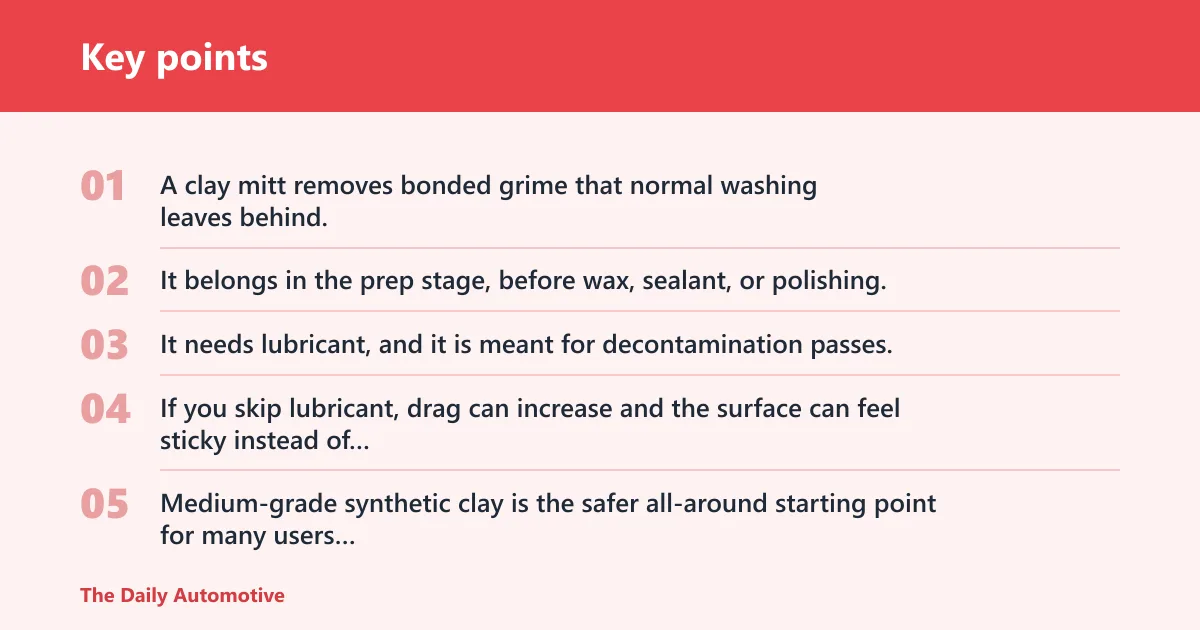
A clay mitt removes bonded grime that normal washing leaves behind, such as embedded road film or roughness you can feel after a wash. It belongs in the prep stage, before wax, sealant, or polishing, because it helps create a cleaner surface for the next step.
Do not use a clay mitt like a wash mitt. It needs lubricant, and it is meant for decontamination passes, not routine soap-and-water washing. If you skip lubricant, drag can increase and the surface can feel sticky instead of gliding.
Medium vs mesh grades
Medium-grade synthetic clay is the safer all-around starting point for many users because it gives effective decon without feeling overly aggressive. Mesh-grade mitt gloves are often preferred when you want more texture and faster contact on stubborn contamination, but they require more discipline with lubrication and pressure.
PuddleMe says its gloves can cut decontamination time by 30–50%. That matters only if the job is actually decontamination. It is not a reason to substitute a clay mitt for a wash mitt.
What lubricant is required and why
Use a dedicated clay lubricant or a product that is explicitly labeled for clay work. The lubricant reduces drag, helps the mitt glide, and lowers the chance of marring paint. The goal is controlled contact, not dry scrubbing.
Suppose your sedan feels smooth after washing but still has rough patches on the hood and rear doors. That is a clay mitt job, not another pass with shampoo. A wash mitt can clean the surface, but it cannot remove what is bonded below the rinse line.
Best for garage cleanup?
The best glove for messy garage cleanup is a nitrile work glove. The EPPCO Eco-Grip gloves use a textured nitrile surface and are positioned for messy garage cleanup jobs, which makes them better for oily, grimy, or chemical-prone handling than a wash mitt.
Why nitrile suits dirty jobs
Nitrile is the better choice when the priority is hand protection, disposable convenience, and grip around slippery parts. It is useful whenever you are handling degreaser, dirty tools, trim clips, or interior trash removal where you do not want soap-soaked fabric on your hands.
The textured surface helps with grip, and the disposable fit is useful when cleanup has to be fast. If the glove gets contaminated, you can remove it and move on instead of washing a fabric mitt before the next task.
Should you use nitrile gloves or wash mitts for detailing?
Use nitrile gloves for chemical handling, dirty hardware, and interior cleanup. Use wash mitts for the actual contact wash on paint. They solve different detailing problems, and mixing them up usually means either poor protection or poor panel control.
A common first-timer mistake is using the same car cleaning glove for both dusty dashboards and muddy wheel wells. That often means a wash mitt gets oily and holds dirt, or a nitrile glove gets used for paint washing where it offers less plush contact and less coverage over larger panels.
How do you choose the right glove?
Choose by job, not by softness alone. Wash mitts give more coverage speed on large panels, while glove-style tools give more dexterity around badges, grilles, mirrors, and trim. Fit matters because loose material can trap grit, shed fibers, or shift in your hand during contact.
Wash mitt vs glove
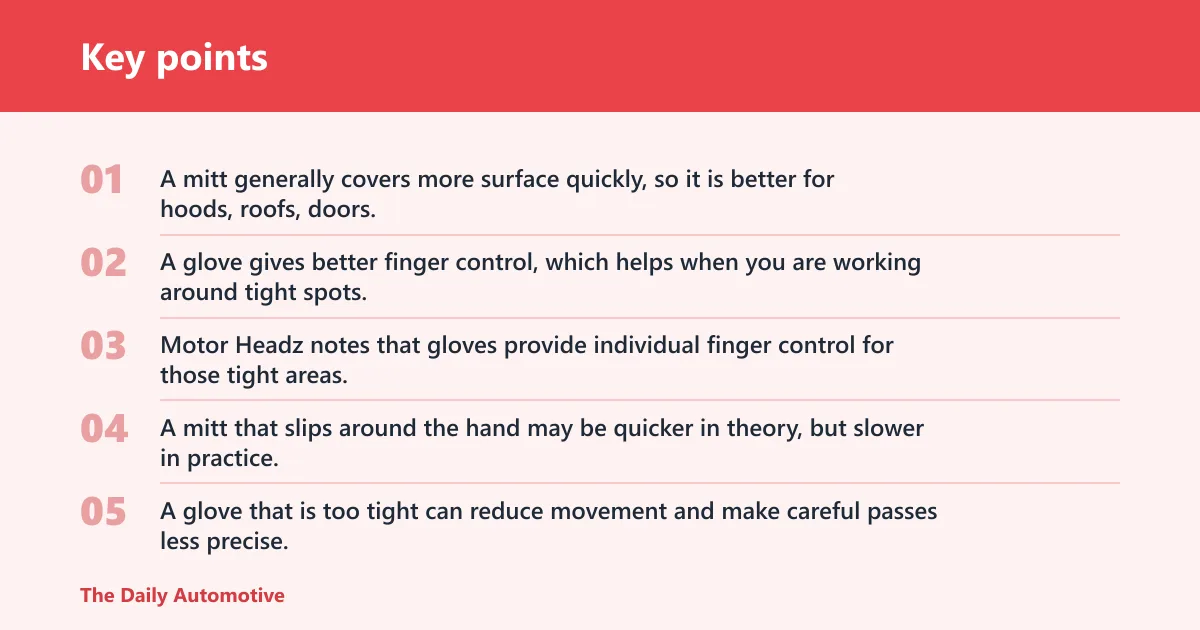
A mitt generally covers more surface quickly, so it is better for hoods, roofs, doors, and quarter panels. A glove gives better finger control, which helps when you are working around tight spots, recessed emblems, and grille openings. Motor Headz notes that gloves provide individual finger control for those tight areas.
Fit is the divider. A mitt that slips around the hand may be quicker in theory, but slower in practice. A glove that is too tight can reduce movement and make careful passes less precise.
Failure cases to watch
If a glove holds dirt, stop and rinse it. If it sheds fibers, retire it from paint work. If it fits too loosely, it can bunch up and make you miss grit at the edges of a panel. Those failures matter more than the material label on the package.
Say your hatchback has black paint and a crowded rear badge panel. A loose wash mitt can drag across the badge recess and collect grime there, while a compact mitt or glove gives you a cleaner path around the edges. The right shape matters as much as the right fabric.
Where a car cleaning kit fits in the decision
A car cleaning kit can add value when you need soap, sprays, brushes, towels, a foam cannon, or a bucket with a grit guard in one purchase. Chemical Guys’ Arsenal Builder Kit includes a foam cannon, a Heavy-Duty Detailing Bucket with Grit Guard, and three microfiber towels, so it is a useful example of bundle value rather than a reason to skip the glove choice itself. (Caranddriver)
Choose the glove first, then decide whether the rest of your setup is value-oriented or premium-oriented. A kit can fill gaps in the wash process, but it does not replace the need to match the glove to the job.
How do you clean car wash gloves after use?
Rinse paint mitts immediately after use so grit does not dry into the fibers. Then wash them separately from ordinary laundry with a gentle detergent, and air-dry them fully before storage. That workflow helps preserve softness and reduces the chance of trapped debris on the next wash day.
How to clean gloves
- Rinse out loose dirt under running water.
- Check the fibers or surface for embedded grit.
- Wash the glove with a mild detergent if it is fabric-based.
- Rinse again until no soap residue remains.
- Air-dry completely before putting it away.
How to clean work gloves
Disposable nitrile gloves are not meant to be cleaned and reused once they are heavily soiled. If they are only lightly contaminated, wipe them down while wearing them and discard them after the job. Reusable work gloves need a more careful rinse, but they should never go back on the paint if they have picked up oily residue.
A decontamination mitt needs extra care because residue can stay on the synthetic surface even after one rinse. If the mitt feels rough or holds grit, do not use it on paint again until it is fully clean.
Frequently asked questions
What is the best glove for car detailing?
The best glove for car detailing depends on the task. Use a microfiber wash mitt for washing, a clay mitt for decontamination, and nitrile gloves for dirty or chemical-heavy cleanup. Detailing is task-specific, so one glove rarely does all three jobs well.
Should I use nitrile gloves or wash mitts for car detailing?
Use nitrile gloves for handling dirty parts, cleaners, or greasy interior work. Use wash mitts for paint contact during the wash stage. Nitrile gives protection and grip; wash mitts give safer, broader contact on exterior surfaces.
What gloves are safest for delicate car paint?
For delicate paint, choose a microfiber wash mitt or a wool wash glove with a soft surface and a secure fit. Keep the glove clean, use plenty of wash solution, and avoid anything that has trapped grit, since contamination is what usually causes damage.
Can car wash gloves be used for interior cleaning too?
Yes, but only with limits. A microfiber wash mitt can work on some interior surfaces such as vinyl or leather if it is clean and separate from exterior grime. Do not use a mitt that has touched road dirt on seats, screens, or trim.
How do you clean work gloves?
For reusable work gloves, rinse off debris, wash gently, and dry them fully before storage. For disposable nitrile gloves, do not try to clean and reuse them after serious contamination. If they are oily, torn, or sticky, discard them and start fresh.
Products related to this article
Sponsored / affiliate links. As an Amazon Associate I earn from qualifying purchases. I may earn additional commission from eligible campaigns.