What Does A Freon Leak Look Like In A Car? (Key Signs)
This guide will help you spot the signs of a Freon leak. We’ll break down what it looks like, why it happens, and what you can do about it. We want to make this clear and easy to follow.
You’ll learn to identify the problem before it gets worse.
A Freon leak in a car’s AC system means refrigerant is escaping. This reduces cooling power, often leading to warm air from vents. Key signs include hissing sounds, oily residue, and poor AC performance.
Understanding Freon Leaks in Car AC Systems
Freon is a brand name for a type of refrigerant. Refrigerants are special fluids that absorb heat. In your car’s air conditioning system, they help move heat from inside your car to the outside.
This process cools the air you feel. The system is sealed. This means the refrigerant should stay inside.
A leak means this special fluid is escaping. This is bad for a few reasons. First, your AC system needs enough refrigerant to work.
If it runs low, it can’t cool your car effectively. Second, refrigerants can be harmful to the environment. They are also very cold when they escape.
This can cause frostbite if you touch them.
Over time, car AC systems can develop small leaks. These can happen at seals, hoses, or even the main components like the compressor. It’s a common issue that many car owners face.
Knowing the signs helps you address it quickly.
My Own Close Call With a Leaky AC
I remember one summer, it was a scorcher. I was driving home from a weekend trip, windows down, sweat dripping. I thought, “Finally, home, I can crank the AC.” I pressed the button.
Nothing. Just hot air. My heart sank.
My car’s AC had always been great. I started to panic a little.
I pulled over and popped the hood. I didn’t really know what I was looking for. But then I noticed a strange, almost greasy film around one of the AC lines.
It felt a bit oily. And I thought I heard a faint hissing sound, like air escaping a balloon, but very, very quiet. That greasy film was my first real clue.
It turned out to be a small refrigerant leak. It wasn’t a massive gush, but enough to ruin my day and my car’s cooling. That experience taught me to pay close attention to my car’s AC.
Signs of a Leaky AC Component
Hissing Sounds: If you hear hissing or bubbling near the AC system, it could be refrigerant escaping. This is often one of the first audible clues.
Oily Residue: Refrigerant is often mixed with a special oil. When it leaks, it can leave behind a slick, oily spot. Look for this on AC lines or connections.
Frost or Ice Buildup: Sometimes, a leak can cause parts of the AC system, like the evaporator or lines, to freeze up.
Key Signs of a Freon Leak
Spotting a Freon leak isn’t always obvious. It might not look like a giant puddle under your car. But there are definite signs to watch for.
These signs usually appear gradually. They might start small and get worse over time. Paying attention to your car’s behavior is key.
1. Weak or Warm Air From Vents
This is the most common sign. Your AC system is designed to blow cold air. If you turn on your AC and it feels barely cool, or even warm, that’s a big red flag.
The refrigerant is what makes the air cold. If it’s escaping, there isn’t enough left to do its job. You might notice it takes longer for the air to get cool.
Or it never gets truly cold, even on the lowest setting.
2. Hissing or Bubbling Sounds
When refrigerant leaks, it’s often under pressure. As it escapes, it can make a hissing or bubbling sound. This sound might be faint.
You may only hear it when the engine is running and the AC is on. Listen carefully around the engine bay. Sometimes, you can pinpoint the area where the sound is loudest.
This is a direct clue that something is wrong with the sealed system.
3. Visible Oily Residue or Stains
Refrigerant in car AC systems is usually mixed with a special lubricating oil. This oil helps keep the system’s moving parts running smoothly. When refrigerant leaks out, it carries some of this oil with it.
This oil can leave a greasy or wet stain on parts of the AC system. Look for these stains on AC lines, hoses, or near connection points. The residue might appear light green or yellowish.
It can be quite noticeable on dusty engine parts. This oily film is a strong indicator of a leak. It shows the refrigerant and oil are escaping together.
Where to Look for Oily Residue
AC Compressor: This is a key part of the system. Leaks can happen around its seals.
Hoses and Lines: Flexible hoses and rigid metal lines carry the refrigerant. Check all connections and along the length of these parts.
Condenser and Evaporator: These are radiators for the AC. Leaks can happen in their fins or connections.
4. Unusual Smells
Sometimes, a Freon leak can cause a strange smell. It might smell slightly sweet or musty. This is not always present.
It depends on the specific type of refrigerant and if any other substances are mixed in. If you notice an unusual odor when you turn on your AC, it’s worth investigating. The smell might be faint at first.
It can become more noticeable if the leak is larger.
5. Frost or Ice Buildup
In some cases, a leak can cause parts of the AC system to freeze. This happens on the low-pressure side of the system. You might see ice forming on AC lines or the evaporator core.
This is a sign that the pressure within the system is too low. Low pressure is a direct result of losing refrigerant. This frost can then melt, creating water.
This is different from normal condensation. It’s a sign of a serious problem.
Contrast: Normal Condensation vs. Leak Ice
Normal Condensation: Water dripping from under your car after using the AC. This is just moisture from the air. It’s normal and healthy.
Leak Ice Buildup: Frost or ice forming directly on AC lines or components. This points to a pressure imbalance caused by a leak.
6. AC System Cycling On and Off Too Often
Your car’s AC system is designed to maintain a set temperature. It cycles on and off as needed. If there’s a refrigerant leak, the system may not be able to reach the desired temperature.
It might then cycle off prematurely. Or it might struggle to turn on at all. You might notice the compressor engaging and disengaging rapidly.
This is the system trying to work but failing because of low refrigerant.
7. Check Engine Light or AC Warning Light
Some modern cars have sensors that monitor the AC system. If the refrigerant level gets too low, it can trigger a warning light. This could be the check engine light or a specific AC warning light.
The car’s computer detects an anomaly in the system’s performance. It flags this as a potential problem. Don’t ignore these lights.
They are your car telling you something needs attention.
Quick Scan: Common Leak Indicators
Warm Air: AC blows warm instead of cold.
Strange Noises: Hissing or bubbling sounds from AC components.
Greasy Spots: Oily residue on AC lines or connections.
Less Cooling: The AC is not as cold as it used to be.
Why Do Freon Leaks Happen?
Car AC systems are complex. Many things can go wrong to cause a leak. It’s rarely just one thing.
It’s usually a combination of factors. Understanding these can help you know what to expect. It can also help you maintain your system better.
Here are some common reasons:
1. Age and Wear and Tear
Rubber hoses and seals in your car’s AC system degrade over time. They can become brittle, crack, or loosen. This is normal.
Cars are exposed to heat, cold, and vibration constantly. These conditions wear down materials. The rubber O-rings and seals around fittings are especially prone to this.
As they age, they lose their flexibility. This makes them less able to create a tight seal. Eventually, small gaps form, allowing refrigerant to escape.
This is a very common cause, especially in older vehicles.
2. Vibrations and Impacts
Cars vibrate a lot while driving. Constant vibrations can loosen fittings and connections over time. Also, road debris can hit AC components.
Small stones or road grit can damage hoses or the condenser. A damaged condenser or a loose fitting is a direct pathway for refrigerant to leak out. This is more common if you drive on rough roads often.
Or if you’ve had any minor accidents or impacts to the front of your car.
3. Corrosion
Metal parts of the AC system, like the condenser and pipes, can corrode over time. This is especially true in areas with road salt or high humidity. Corrosion can eat away at the metal.
This creates small holes or weakens the material. Once there’s a hole, the refrigerant can escape. The condenser, which sits in front of your car’s radiator, is particularly exposed to the elements.
It’s often the first place to show signs of corrosion and leaks.
4. Faulty Components
Sometimes, a specific part of the AC system can fail. This could be a worn-out compressor seal. Or a damaged O-ring at a connection.
Even a tiny manufacturing defect can lead to a leak down the line. If a component like the AC compressor or a valve malfunctions, it can cause pressure issues. This can lead to leaks in other parts of the system.
Regular inspections can catch these issues early.
5. Improper Installation or Repair
If your AC system has been repaired or serviced before, a leak might be related to that work. If parts weren’t tightened correctly. Or if the wrong type of seal was used.
This can lead to problems later on. It’s important to use qualified technicians for AC repairs. They have the right tools and knowledge to ensure a proper seal.
Common Leak Points:
Seals and O-rings: These are small rubber rings that create watertight seals. They wear out.
Hoses: Rubber hoses can crack or get holes.
Condenser: This part is at the front and can be hit by debris.
Compressor: The pump for the AC system can develop seal leaks.
What Happens When Freon Leaks?
When Freon leaks, it affects your car’s AC system in several ways. It’s a chain reaction. The main effect is on the cooling capability.
But there are other consequences too. Understanding these can help you see why it’s important to fix it.
Reduced Cooling Efficiency
This is the most direct result. The AC system needs a specific amount of refrigerant to operate efficiently. When it leaks, the amount of refrigerant decreases.
Less refrigerant means less heat can be absorbed from the car’s interior. So, the air coming from your vents won’t be as cold. As the leak gets worse, the AC may stop cooling altogether.
You’ll be left with just outside air being blown around.
Damage to AC Components
Refrigerant and the lubricating oil circulate together. If the refrigerant leaks out, the oil leaks out too. This oil is vital for the AC compressor.
It keeps its internal parts lubricated and prevents them from overheating. Without enough oil, the compressor can suffer severe damage. It can overheat and seize up.
This is a very expensive repair. Often, a damaged compressor means the entire AC system needs to be flushed and recharged. It’s a costly outcome of a simple leak.
Environmental Impact
Many older refrigerants, like R-12 Freon, are harmful to the ozone layer. Newer refrigerants, like R-134a, are better but still contribute to greenhouse gases. When Freon leaks into the atmosphere, it adds to pollution.
This is why it’s important to repair leaks and recharge systems correctly. Environmental regulations aim to reduce these emissions. Repairing leaks is a responsible step.
Potential Health Hazards
While not highly toxic, refrigerants can cause health issues if inhaled in large amounts. They can displace oxygen in enclosed spaces. Also, liquid refrigerant is extremely cold.
Direct contact can cause frostbite. If you suspect a leak, avoid prolonged exposure. Work in a well-ventilated area if you are inspecting the system yourself.
Professional help is safer.
Quick Facts About Refrigerant Impact
Cooling Power: Drops significantly with even small leaks.
Compressor Health: Oil loss leads to overheating and failure.
Environment: Contributes to ozone depletion and greenhouse gases.
Safety: Can cause frostbite and displace oxygen.
Real-World Scenarios of Freon Leaks
Let’s look at some everyday situations where a Freon leak might become apparent. These scenarios happen in many homes and on many roads across America.
Scenario 1: The Summer Road Trip
Imagine you’re packed and ready for a long drive. It’s July. As soon as you hit the highway, you turn on the AC.
At first, it seems okay. But after an hour, the air coming from the vents isn’t as cold as it should be. Your family starts complaining.
You notice the AC seems to be working harder. The fan is blowing strong, but the air feels just cool, not cold. This could be a slow leak that’s getting worse as the system runs.
Scenario 2: The Morning Commute
It’s a typical Tuesday morning. You start your car, turn on the AC, and hear a faint hissing sound from under the hood. It’s subtle, but you’ve never heard it before.
You ignore it because you’re late for work. But by the time you get to the office, the air in your car is noticeably warm. You look under the car and see a small, damp spot.
This might be a leak that started overnight or became more noticeable with continuous use. The hissing is a clear sign of escaping refrigerant.
Scenario 3: The Used Car Purchase
You found a great deal on a used car. The AC worked fine during the test drive. But a few weeks after you buy it, the AC starts blowing warm air.
You check the system and see a faint oily residue on one of the AC lines. This is a classic sign. The leak might have been small before.
But continuous use after purchase made it worse. Or perhaps it was overlooked during the inspection. This is why inspecting AC systems on used cars is crucial.
Observational Flow: Leak Discovery
Step 1: AC blows less cold air.
Step 2: Listen for unusual sounds (hissing).
Step 3: Visually inspect for oily residue.
Step 4: Notice if the AC cycles off too soon.
Step 5: Check for warning lights on the dashboard.
What This Means for Your Car and You
A Freon leak is more than just an inconvenience. It’s a sign that your car’s AC system needs attention. Ignoring it can lead to bigger, more expensive problems.
Understanding when it’s normal and when to worry is important.
When a Slight Loss is Normal (to a degree)
Over many years, a very small amount of refrigerant can escape. Car AC systems are not perfectly sealed forever. However, a noticeable drop in cooling performance or the signs we’ve discussed usually means the leak is significant.
A system that was recharged a year or two ago should still be blowing cold air. If it’s not, something is wrong. It’s not normal for an AC system to need frequent “top-ups.” That indicates a leak needs fixing.
When to Worry (and Get it Checked)
You should worry and get your AC checked if you notice any of the following:
- The AC blows warm air.
- You hear hissing or bubbling sounds.
- You see oily residue around AC components.
- The AC system cycles on and off very rapidly.
- Your car’s warning lights come on related to the AC.
- The AC system needs to be refilled often.
These are all strong indicators of a Freon leak. Acting quickly can prevent more damage to the system. It can also save you money in the long run.
Simple Checks You Can Do
While you shouldn’t try to fix a Freon leak yourself without proper tools and knowledge, you can do some basic checks:
- Visual Inspection: Look under the hood for any signs of oily residue on the AC lines and connections. Check the front of your car for damage to the condenser.
- Listen: With the engine running and AC on, listen for any unusual hissing or bubbling sounds.
- Feel the Air: Feel the air coming from the vents. Is it as cold as it used to be?
- Check for Ice: Look for any frost or ice buildup on AC lines.
If you see or hear any of these signs, it’s time to call a qualified mechanic. They have the equipment to properly diagnose and repair AC leaks.
DIY AC Check List
Check Vents: Air temperature feels right?
Listen: Any new noises from engine bay?
Look: Oily spots or wetness on AC parts?
Feel Lines: Any frost forming on metal tubes?
Quick Fixes and Tips for Your Car’s AC
When you have a Freon leak, a true “fix” involves finding and repairing the leak. Then, recharging the system. However, here are some tips and guidelines to help manage AC issues.
Get It Fixed Professionally
The best and safest approach is to take your car to a certified mechanic. They can:
- Detect the exact location of the leak.
- Repair or replace the faulty part (hose, seal, etc.).
- Evacuate the old refrigerant safely.
- Recharge the system with the correct amount and type of refrigerant.
- This ensures the repair is done right and safely. It also helps protect the environment.
Consider AC Recharge Kits (with caution)
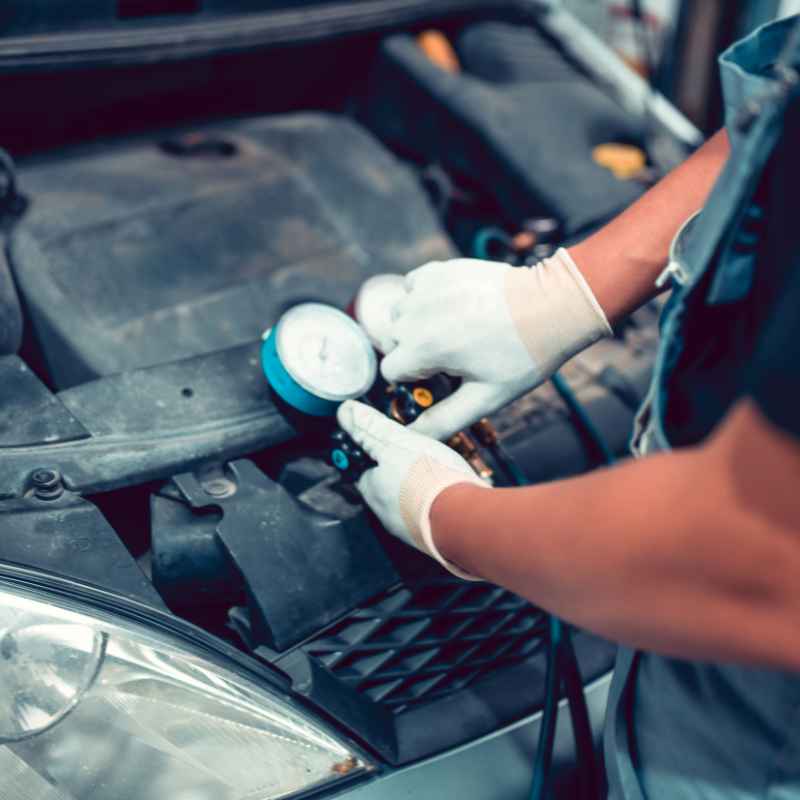
You might see AC recharge kits at auto parts stores. These kits let you add refrigerant yourself. They often come with a gauge.
While they can temporarily restore AC cooling, they have downsides:
- They don’t fix the leak. The refrigerant will just leak out again.
- You might overcharge the system. This can cause more damage.
- They can hide underlying problems. You might think you’ve fixed it, but the real issue remains.
- Using the wrong type of refrigerant can cause damage.
Use these kits only as a temporary solution if you absolutely must. And always follow the instructions very carefully. It’s always better to get the leak professionally repaired.
Regular AC Maintenance
Preventative maintenance can help catch issues early.
- Get your AC system checked annually. Especially before summer.
- Keep the condenser clean. Debris can block airflow and cause problems.
- Replace cabin air filters regularly. This improves airflow inside the car.
Good maintenance can extend the life of your AC system. It can help prevent small problems from becoming big ones. For example, if a mechanic sees a hose looking brittle during a regular check, they can replace it before it leaks.
Tips for AC Care
Professional Check-ups: Schedule annual AC inspections.
Keep it Clean: Remove debris from the condenser.
Filter Replacement: Change cabin air filters as recommended.
Avoid Overcharging: Use gauges correctly if recharging.
Know Your Refrigerant: Use only the correct type for your car.
Frequently Asked Questions About Freon Leaks
What exactly is Freon?
Freon is a brand name for a type of refrigerant used in air conditioning systems. The most common refrigerants in cars are R-134a and the newer R-1234yf. Older cars might use R-12.
These are chemicals that absorb and release heat to cool your car’s cabin.
Can I just add more Freon if my AC is blowing warm?
Adding more refrigerant (often called “topping off”) is only a temporary fix. It doesn’t address the underlying leak. If there’s a leak, the refrigerant will escape again.
It’s best to find and repair the leak first. Simply adding more can also lead to overcharging the system, which can cause damage.
How much does it cost to fix a Freon leak?
The cost varies a lot. It depends on where the leak is and what needs to be replaced. Simple repairs like replacing a seal or O-ring might cost $100-$300.
If a component like the AC compressor or condenser needs replacing, it can be $500-$1500 or more. This includes the cost of labor and recharging the system.
Is it safe to breathe in Freon if there’s a leak?
Refrigerants are not highly toxic, but they can displace oxygen. In a confined space, inhaling large amounts could be dangerous. Liquid refrigerant is also extremely cold and can cause frostbite on contact with skin.
If you suspect a leak, ventilate the area well. Avoid prolonged exposure. For repairs, it’s best to let professionals handle it.
How long does it take for a Freon leak to stop the AC from working?
This depends on the size of the leak. A small leak might take months or even years to cause a noticeable difference in cooling. A larger leak could make the AC blow warm air within days or weeks.
You might notice gradual warming first, then complete loss of cooling.
Can I drive my car with a Freon leak?
Yes, you can usually drive your car with a Freon leak. The car will still function. However, the AC system will not cool properly.
More importantly, if the leak is significant, the AC compressor might be damaged due to lack of lubrication. It’s best to get it checked and repaired as soon as possible to avoid further damage.
Conclusion
Spotting a Freon leak in a car is about paying attention to small signs. Warm air, strange sounds, or oily spots are clues. These point to a problem that needs fixing.
Ignoring these signs can lead to a failing AC system. It can also result in costly repairs. By understanding what to look for, you can keep your car cool.
You can also help protect the environment.
Products related to this article
Sponsored / affiliate links. As an Amazon Associate I earn from qualifying purchases. I may earn additional commission from eligible campaigns.