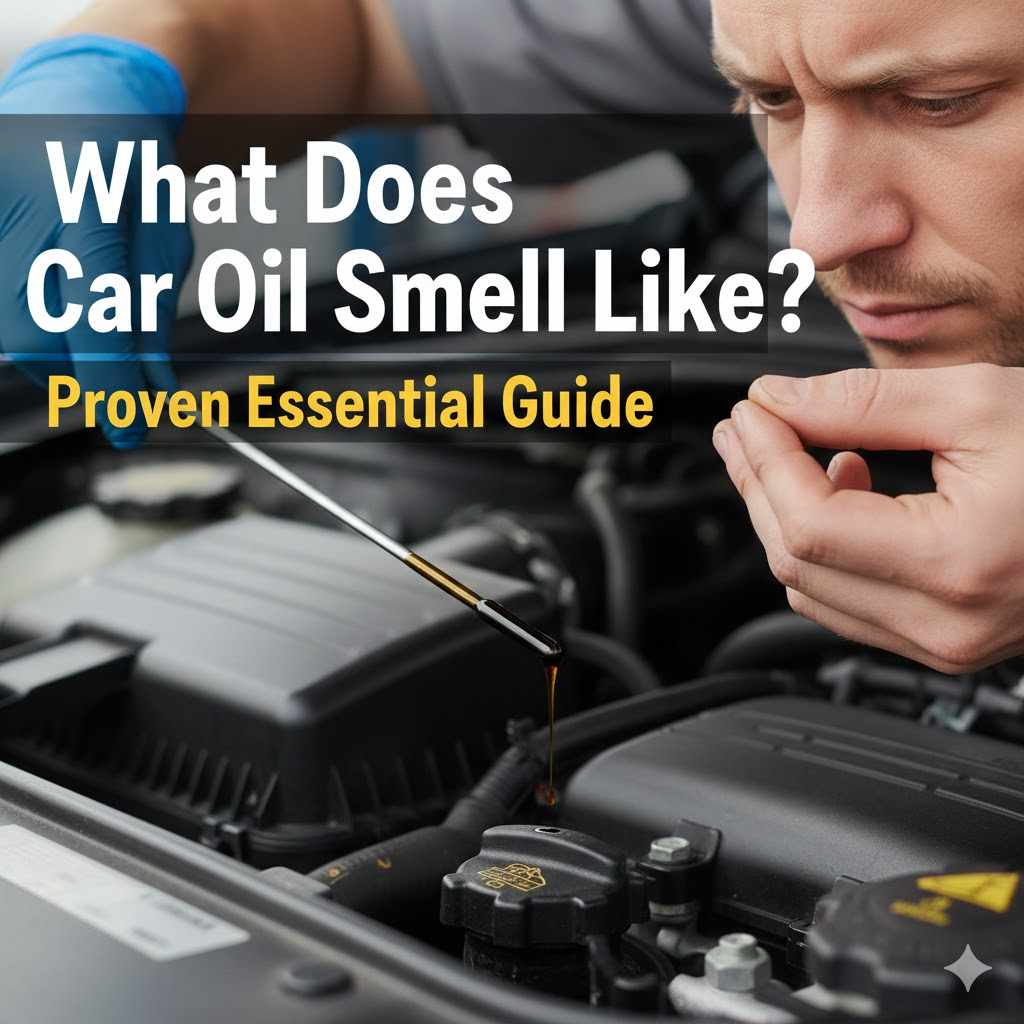
What Does Car Oil Smell Like? Proven Essential Guide
Car oil usually smells faintly nutty, earthy, or slightly burnt if it’s hot and fresh. However, strong burning, sweet, or gasoline-like smells often indicate a problem, like a leak, burning oil, or coolant mixing with the oil. This guide will help you identify the smell and know what to do next.
Have you ever popped the hood of your car or caught a strange scent while driving and wondered, “What does car oil smell like, exactly?” It’s a common moment of worry for many drivers. Fresh oil has a distinct, mild odor, but when that smell changes, it’s your car sending you a signal. Don’t panic! Understanding these different smells is the first step to keeping your engine happy and avoiding costly repairs. We are going to walk through every common smell, what causes it, and what you need to do next. You’ve got this!
Decoding the Mystery: What Does Car Oil Smell Like Normally?
When everything is running smoothly in your engine, the oil smell should be very subtle. If you are checking the dipstick or looking under the hood shortly after a change, you should notice a few familiar, non-alarming scents. These smells are simply the natural characteristics of the base oils and the additives used in engine lubricants.
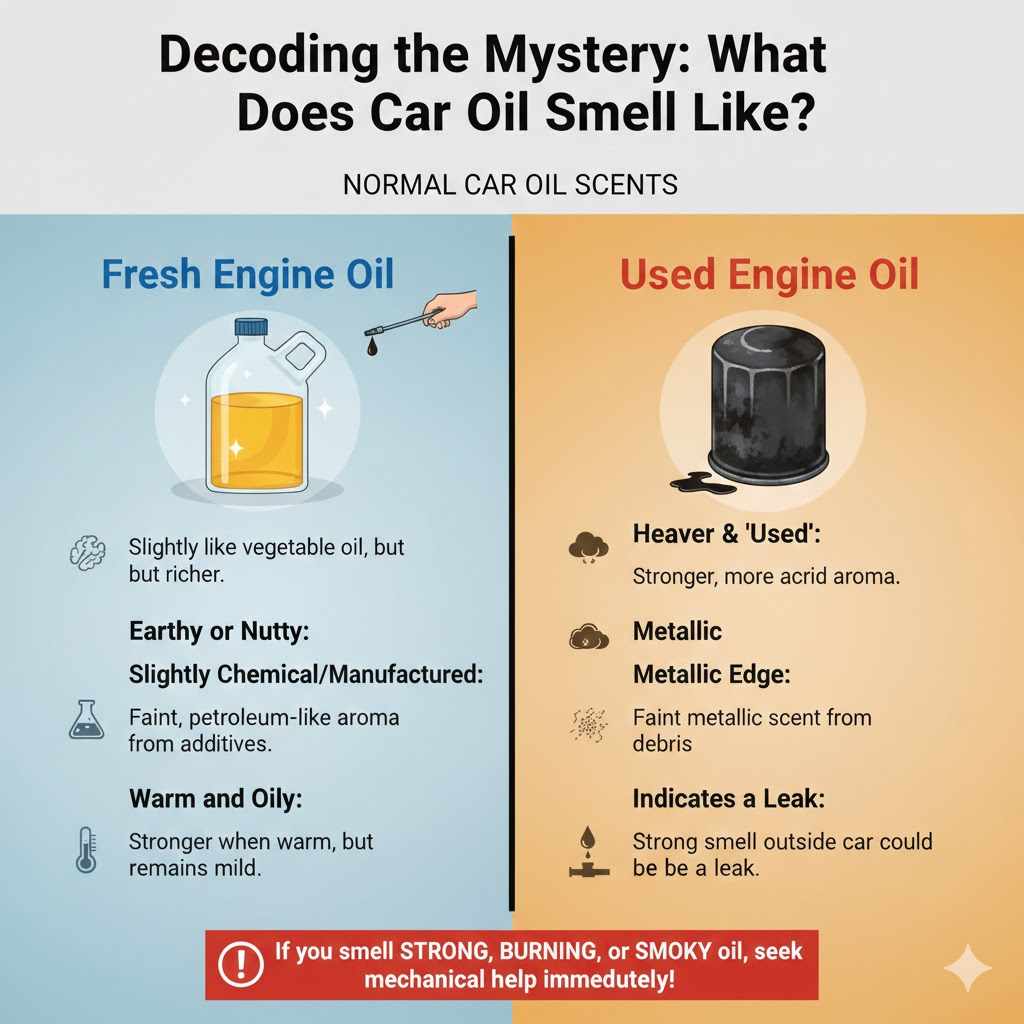
The Scent of Fresh Engine Oil
New, clean engine oil has a very distinct, albeit light, aroma. Think of it as the smell of modern chemistry working hard to protect your engine. It is not necessarily unpleasant, but it is definitely noticeable compared to water or air.
- Earthy or Nutty: Many modern synthetic or high-quality conventional oils carry a slightly nutty or earthy scent, almost like a very light vegetable oil, but richer.
- Slightly Chemical/Manufactured: Because oil contains many performance-enhancing additives (like detergents and anti-wear agents), you might notice a faint, manufactured or petroleum-like smell.
- Warm and Oily: When the engine is warm, the smell might be slightly stronger but should remain mild.
The Smell of Used Oil (Time for a Change)
As oil works hard inside your engine, it collects heat, dirt, and microscopic metal particles. This process changes its smell, usually making it stronger and often a bit sharper or more acrid than fresh oil. If you smell used oil strongly, it usually means it’s past its prime and needs replacement soon.
- The smell becomes heavier and more “used.”
- It might take on a faint, metallic edge from the microscopic debris it has collected.
- If you can smell it strongly outside the car when you are driving, it could indicate a very small, slow leak dripping onto a hot exhaust component.
When The Smell Changes: Recognizing Problem Scents
The real issue arises when the smell of your engine oil deviates from the normal nutty or earthy scent. These abnormal smells are critical indicators that something underneath your hood needs immediate attention. Ignoring these changes can lead to serious engine damage.
1. The Burning Oil Smell (The Most Common Alarm)
This is perhaps the most frequent abnormal smell drivers notice. It’s usually sharp, acrid, and unmistakable—the smell of oil hitting something extremely hot, like the exhaust manifold or catalytic converter. This smell often gets stronger when you stop at a light after driving fast.
Why Oil Smells Like It’s Burning:
- External Leaks: This is the number one cause. Oil might be leaking from a valve cover gasket, oil filter housing, or drain plug and dripping directly onto the hot exhaust system. The oil doesn’t need to burn completely; just vaporizing is enough to create that strong odor.
- Bad Seals or Gaskets: Internal seals, like the valve stem seals, can fail, allowing oil to seep down into the combustion chambers where it burns off with the fuel.
- Overfilling: If you recently added too much oil, the excess can be thrown onto hot engine parts by the rotating crankshaft, causing it to burn off rapidly.
2. The Sweet, Maple Syrup Smell (Coolant Contamination)
If you smell something oddly sweet, almost like maple syrup or candy, your engine is in serious trouble. This is the distinct smell of ethylene glycol, the main component in antifreeze (coolant).
What This Sweet Smell Means:
When your engine overheats or a critical seal fails (like a head gasket), coolant can mix with your engine oil. This contamination is highly damaging because coolant breaks down the oil’s lubricating properties instantly. If you smell this, stop driving as soon as it is safe to do so.
For reliable information on engine health indicators, you can always check resources from the National Highway Traffic Safety Administration (NHTSA) regarding regular vehicle maintenance checks.
3. The Gasoline or Raw Fuel Smell
If your engine oil smells strongly of gasoline, it means raw, unburned fuel is leaking into your crankcase. This is often a sign of a major fuel system issue.
Causes of Fuel Contamination:
- Stuck Fuel Injector: An injector may be stuck open, constantly dumping excess fuel into the cylinder.
- Failing Fuel Pressure Regulator: This component might be allowing too much pressure, forcing fuel past the piston rings and into the oil sump.
- Worn Piston Rings: If the rings are worn, the fuel washes down the cylinder walls instead of being burned, contaminating the oil.
Gasoline thins out the oil, drastically reducing its ability to protect metal parts, leading to rapid wear. This requires prompt attention from a trusted mechanic.
4. The Acrid, Rotten Egg Smell (Sulfur)
This smell is distinct and often points to issues related to your exhaust system, but sometimes it can be related to oil additives reacting improperly.
While often associated with catalytic converter failure (hydrogen sulfide gas), if this smell is strong near the engine bay and you have recently changed your oil, it could mean the new oil’s additives are reacting poorly to engine temperatures or there is a minor exhaust leak near the oil fill cap.
Table: Quick Guide to Oil Smells and Their Meanings
Use this table to quickly reference what different odors usually indicate:
| Smell Description | Likely Cause | Urgency Level |
|---|---|---|
| Faint, Nutty, Earthy | Fresh or healthy used oil | Low (Normal Operation) |
| Strong, Acrid Burning | Oil leaking onto the hot exhaust system | Medium (Check for leaks immediately) |
| Sweet, Maple Syrup-like | Coolant (antifreeze) mixing with oil (e.g., bad head gasket) | Critical (Stop Driving) |
| Strong Gasoline/Fuel | Unburned fuel contaminating the oil | High (Requires professional inspection) |
| Rotten Eggs (Sulfur) | Catalytic converter issue or oil additive reaction | Medium to High |
Step-by-Step Guide: How to Investigate an Unusual Oil Smell
If you smell something concerning, the key is to approach the inspection methodically. Always ensure your car is parked on a flat surface and the engine has cooled down sufficiently before touching anything under the hood. Safety first!
Step 1: Check the Engine Oil Level and Condition
This is your baseline assessment. You need to know if you are low on oil and what the oil itself looks like.
- Wait: Allow the engine to sit for at least 15 to 30 minutes so the oil drains back into the pan.
- Pull the Dipstick: Remove the oil dipstick, wipe it clean with a lint-free cloth, reinsert it fully, and pull it out again.
- Assess the Level: Is the oil level between the “Add” and “Full” marks? If it’s very low, a leak is highly likely.
- Assess the Color/Texture: Does the oil look milky, watery, or like a thick sludge? Milky oil strongly suggests water or coolant contamination.
Step 2: Inspect for Visible External Leaks
A burning smell means oil is likely hitting a hot surface. You need to look for the source of the drip.
- Look Around the Valve Covers: These are the large metal covers on the top of the engine. Look for dark, wet trails running down the side of the engine block.
- Check the Oil Filter: Ensure the oil filter is screwed on tightly. If it’s loose, oil will spray out when the engine is running.
- Examine the Drain Plug: Look underneath the car where the oil pan is located. If the drain plug is missing its gasket or wasn’t tightened correctly during the last oil change, it will leak.
Step 3: Test the Sweet Smell Indicator (Coolant Check)
If you suspect the sweet smell (coolant contamination), you must check the coolant system immediately, but only when the engine is COOL.
- Locate the Coolant Reservoir: This is usually a translucent plastic tank near the radiator.
- Check the Level: Is the level low?
- Check the Oil Filler Cap: Pop off the oil filler cap (where you add new oil). If you see a pale, mayonnaise-like substance mixed with the oil, this is a strong indicator of a blown head gasket mixing coolant and oil.
Step 4: Determine the Smell Source Location
Where is the smell strongest? This helps narrow down the problem.
- Strongest from the Exhaust Pipe: Points toward potential issues inside the combustion chamber (burning oil or fuel).
- Strongest from Under the Hood (Near the Front/Top): Points toward valve cover gaskets or the oil filter housing.
- Strongest from Underneath the Car: Points toward the oil pan gasket or drain plug.
Understanding Oil Viscosity and Its Role in Odor
The thickness, or viscosity, of your oil plays a surprising role in what you smell and how the engine behaves. Mechanics use codes like 5W-30 to define this. A lower first number (like 0W) means it flows better when cold, while the second number (like 30) relates to its thickness when hot.
When Oil Gets Too Thin (Low Viscosity)
If you use an oil that is too thin for your engine specifications, it is more likely to slip past piston rings or fail to seal gaskets properly. This increases the chance of oil leaking externally or burning internally, leading to a stronger burning smell, even if the leak is minor.
When Oil Gets Too Thick (High Viscosity)
If the oil is too thick, especially in very cold weather, it can struggle to circulate quickly. This can sometimes lead to premature breakdown of the oil additives or localized overheating, which might result in a slightly different, heavier burnt smell.
Always refer to your vehicle manufacturer’s owner’s manual (often available online through the manufacturer’s support site) for the exact oil viscosity recommended for your climate and engine type. Using the wrong viscosity can affect fuel economy, as noted by the U.S. Department of Energy, and certainly affects how the oil performs and smells.
Preventative Measures: Keeping Your Oil Smelling Normal
The best way to deal with strange oil smells is to prevent them from happening in the first place! Routine, proactive maintenance is your engine’s best friend.
1. Stick to Your Oil Change Schedule
This is the golden rule. Dirty, degraded oil breaks down faster and is more likely to produce strong, acrid smells as it burns off deposits. Follow the manufacturer’s recommended intervals, typically every 5,000 to 7,500 miles for modern cars using synthetic blends, or as outlined in your manual.
2. Use High-Quality Filters
A cheap oil filter might not effectively capture contaminants, leading to sludge buildup that can change the oil’s smell profile prematurely. Investing in a quality filter ensures better filtration.
3. Watch for Low Oil Pressure Warnings
If your oil pressure light comes on, stop the car immediately. Low pressure means oil isn’t circulating properly, which leads to overheating and rapid oil degradation—both of which cause bad smells.
4. Monitor Temperature Gauges
If the temperature gauge spikes, your engine is running too hot. Overheating significantly speeds up the rate at which oil breaks down and burns, causing strong odors, often before a catastrophic leak even happens.
When to Call a Professional Mechanic
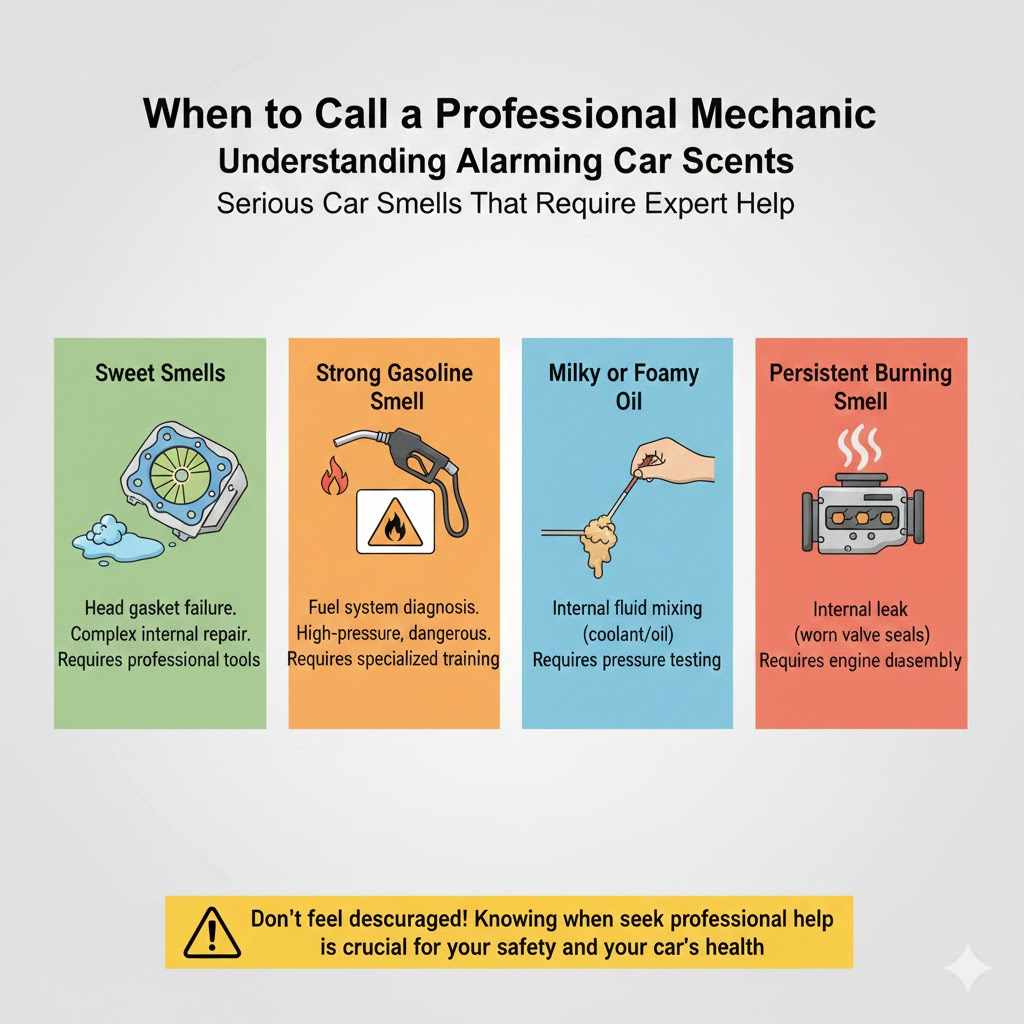
While simple leaks can sometimes be addressed at home, certain smells require professional tools and expertise. If you encounter any of the following, it is time to call in the experts:
- Sweet Smells: Head gasket failures are complex internal repairs that should only be handled by a trained technician.
- Strong Gasoline Smell: Fuel system diagnosis involves high-pressure components and is dangerous to attempt without proper training.
- Milky or Foamy Oil: This indicates internal fluid mixing that requires pressure testing (like a leak-down test) to pinpoint the exact failure point.
- Persistent Burning Smell Despite No Visible Leak: This might mean the leak is internal, such as through worn valve seals, which requires more in-depth engine disassembly.
Don’t feel discouraged if you need a mechanic! Knowing when to seek professional help is just as important as knowing how to check your dipstick. It shows you are a responsible driver who values their car’s longevity.
Frequently Asked Questions (FAQ) About Car Oil Smells
Q1: Can I drive my car if the oil smells slightly burnt?
A: If the smell is very faint and you have recently driven hard (like up a long hill), you can probably drive cautiously to your destination. However, if the smell is strong, pull over safely as soon as possible. A strong burning smell means oil is actively dripping onto the exhaust, which can eventually cause an engine fire or lead to rapid oil loss.
Q2: Why does my oil smell like burning plastic?
A: While oil itself doesn’t typically smell like plastic, this often means that a plastic component—like a plastic engine cover, an engine hose, or a wire loom insulation—is touching the exhaust manifold or another very hot surface and beginning to melt.
Q3: Is it normal for a new oil change to smell different?
A: Yes, new oil smells different from old oil. New oil has a cleaner, chemical, or nutty scent. If you are concerned, compare the smell of the oil on the dipstick to the smell of the oil left in the empty bottle from the service center. If the smells are similar, everything is fine.
Q4: Does the smell get worse in hot weather?
A: Yes, generally. Higher ambient temperatures mean the engine runs hotter, and any minor leaks vaporize much faster and more intensely, making the burning oil smell more noticeable.
Q5: What if I smell oil, but I don’t see any leaks on the ground?
A: This is very common! If oil is leaking onto the top or sides of the engine, it often drips onto the engine cradle or transmission housing, where it evaporates before it hits the ground, or it burns off instantly on contact with the hot exhaust components.
Q6: How often should I check my oil just by smelling it?
A: You should physically check your oil level with the dipstick at least once a month. Trusting your nose is a great backup! If you notice any strange smells between checks, investigate right away.
Conclusion: Trust Your Nose, Trust Your Car
Understanding “what does car oil smell like” is a fundamental skill that empowers you as a car owner. Remember, fresh oil has a mild, earthy scent. Any strong departure from that—especially burning, sweet, or fuel smells—is your car giving you a clear warning sign. By knowing the difference between a minor annoyance (like a slight leak that needs topping up) and a major emergency (like sweet coolant mixing in), you can react quickly and appropriately.
Routine checks, timely oil changes, and paying attention to your senses will keep your engine running smoothly, reliably, and smelling just as it should for years to come. Keep checking under the hood, and you’ll stay ahead of most common vehicle issues!