What Happens If You Don’t Want Your Finance Car Anymore? Proven Solutions
If you no longer want your financed car, you have options! You can sell it privately, trade it in, or a dealership can buy it out. Each method involves paying off the loan. We’ll guide you through each solution, explaining the steps to take, potential payoffs, and what to watch out for.
It’s a common situation: you bought a car with financing, and now circumstances have changed. Maybe your needs have evolved, you’ve found a better deal elsewhere, or you simply don’t want that car anymore. You might be wondering, “What happens if I don’t want my finance car anymore?” The good news is, you’re not stuck. There are several proven solutions available to help you move on from your financed vehicle without major headaches.
This guide will walk you through everything you need to know, broken down into simple steps. We’ll cover selling it yourself, trading it in, and even having a dealership buy it outright. You’ll learn how to figure out your car’s value, handle the loan payoff, and understand the paperwork involved. Let’s get you moving towards a solution that fits your life!
Understanding Your Car Loan
Before we dive into the solutions, it’s important to understand how your car loan works, especially when you want to get rid of the car. When you finance a car, you don’t actually own it until the loan is fully paid off. The lender holds the title, ensuring they get their money back. This means you can’t just hand the keys back and walk away without addressing the outstanding balance.
The key to any solution is knowing your loan’s status: how much you still owe and what your current payoff amount is. This is often called the “payoff balance” and it might be slightly different from your remaining loan balance due to accrued interest and potential fees.
Key Terms to Know
- Loan Balance: The total amount of money you still owe on your car loan.
- Payoff Amount: The exact amount you need to pay to completely settle your loan at a specific date. This includes the remaining balance, accrued interest, and any early payoff fees.
- Equity: The difference between your car’s current market value and the amount you owe on the loan. Positive equity means you owe less than the car is worth, while negative equity means you owe more.
- Lienholder: The company or institution that holds the title to your car until the loan is repaid (usually your bank or finance company).
Getting a clear picture of your loan and equity is the first essential step. You can usually find this information by logging into your lender’s online portal or by calling their customer service line.

Solution 1: Selling Your Financed Car Privately
Selling your car yourself can often get you the best price, as you cut out the middleman. However, it involves more effort and requires careful handling of the loan payoff.
Step-by-Step Private Sale Guide
- Determine Your Car’s Market Value:This is crucial. Use reputable online resources like Kelley Blue Book (KBB.com), Edmunds, or NADA Guides to get an estimated value. Consider features, mileage, condition, and recent sales of similar vehicles in your area.
- Calculate Your Payoff Amount:Contact your lender and ask for the exact payoff amount. Make sure to specify the date you intend to finalize the sale, as interest accrues daily. Get this figure in writing if possible.
-
Compare Value to Payoff Amount:
- Positive Equity: If your car’s market value is higher than your payoff amount, you’ll have cash left over after settling the loan. This is the ideal scenario.
- Negative Equity: If your payoff amount is higher than your car’s market value, you’ll need to cover the difference out-of-pocket. You cannot sell the car without covering the full payoff.
- Prepare Your Car for Sale:Clean it thoroughly, inside and out. Consider minor repairs or detailing to improve its appearance and value. Gather all maintenance records and the owner’s manual.
- List Your Car:Use online platforms like Craigslist, Facebook Marketplace, eBay Motors, or specialized car selling sites. Write a detailed description and take high-quality photos from all angles. Be upfront about the loan status.
-
Handle the Transaction Safely:This is the most critical part when dealing with a financed car. You need to ensure the lien is released and the title is transferred properly.
- Option A: Buyer Pays Your Lender Directly: If the buyer has positive equity and is using their own financing or paying cash, they might be willing to go with you to your bank. The buyer pays the payoff amount directly to your lender, and the lender releases the lien. You then sign over the title to the buyer.
- Option B: You Pay Off the Loan First: If you have the funds to cover the payoff yourself (especially if you have positive equity), you can pay off the loan before the sale. Once the lien is released and you receive the title in your name, you can then sell the car to the buyer and receive their payment.
- Option C: Escrow Service: For a safer transaction, especially with a significant amount of money, consider using an escrow service. The buyer deposits funds into escrow, you pay off the loan and get the title, then the funds are released from escrow to you.
Never let the buyer drive away with the car before the loan is fully paid and the title transfer process is initiated. This protects you from potential legal issues if they don’t complete the payoff.
- Sign Over the Title and Bill of Sale:Once the buyer has paid you, and you’ve paid off the lender, you’ll sign the title over to the buyer. You should also create a Bill of Sale, detailing the sale price, date, VIN, and names/addresses of both parties. Keep a copy for your records.
Pros and Cons of Private Sale
| Pros | Cons |
|---|---|
| Potentially higher selling price. | More time and effort required. |
| Full control over the selling process. | Requires careful handling of loan payoff and title transfer. |
| Can negotiate directly with buyers. | Safety concerns when meeting strangers and handling money. |
| No dealer fees or commissions. | If you have negative equity, you must cover the difference upfront. |
Solution 2: Trading In Your Financed Car
Trading in your car to a dealership is often the easiest and quickest way to get out of your financed vehicle. The dealer handles much of the paperwork, but you might not get the top dollar compared to a private sale.
Step-by-Step Trade-In Guide
- Get Your Payoff Quote:As always, contact your lender for the current payoff amount. This is essential for the dealership to know how much they need to pay off your loan.
- Research Your Trade-In Value:Use KBB, Edmunds, or NADA Guides to get an estimate of your car’s wholesale value. Dealerships typically offer less than retail value. Knowing this will help you negotiate effectively.
- Visit Dealerships:Shop around. Go to a few dealerships, preferably those selling the car you’re interested in buying, or just ones that offer trade-ins. Be upfront about your car being financed.
-
Negotiate the Deal:The dealership will assess your car and make an offer. They will then present you with a deal that includes the trade-in value of your car and the price of the new car. The dealer will pay off your loan directly.
- Positive Equity: If your trade-in value is more than your payoff amount, the difference is your “equity.” This amount should be applied as a down payment towards your new vehicle purchase.
- Negative Equity: If your payoff amount is more than your trade-in value, you have negative equity. The dealership will add this deficit to the amount you finance for your new car, increasing your overall loan.
Tip: Try to negotiate the price of the new car and the value of your trade-in separately to get the best deal.
- Complete the Paperwork:The dealership will handle the payoff to your lender and all the title transfer documentation. You’ll sign papers for the new car loan and registration. Ensure you understand all the figures presented.
Pros and Cons of Trading In
| Pros | Cons |
|---|---|
| Convenient and fast. | Usually results in a lower selling price compared to private sale. |
| Dealership handles all the paperwork and loan payoff. | Can be harder to negotiate a good price for your trade. |
| Simplifies the process of buying a new car. | Negative equity will be rolled into the new car loan, increasing costs. |
| Good option for those with negative equity who can’t afford to pay cash. | You have less control over who buys your old car. |
Solution 3: Selling Your Financed Car to a Dealership or Car Buying Service
Companies like CarMax, Carvana, or local dealerships that specialize in buying cars (even if you’re not buying one from them) offer another streamlined option. They will buy your car directly, pay off your loan, and give you the remaining equity (if any).
Step-by-Step Dealership Buyout Guide
- Get a Quote Online or In Person:Many online car buying services allow you to get an estimate by filling out details about your car on their website. Some offer on-site inspections for a more accurate appraisal.
- Obtain Your Payoff Quote:Contact your lender for the exact payoff amount. You’ll need to provide this to the buying service.
- Get Offers from Multiple Buyers:Just like trading in, it’s wise to get quotes from several different car buying services or dealerships to ensure you’re getting the best offer.
- Accept an Offer and Schedule an Inspection:Once you have a satisfactory offer, schedule a time for them to inspect the vehicle. This is usually when they verify its condition and confirm the details you provided.
-
The Buyout Process:If the offer stands after inspection, the buyer will typically:
- Wire the payoff amount directly to your lender.
- Pay you the remaining equity (if any) via check or direct deposit.
- Handle all the paperwork, including lien release and title transfer.
This is a straightforward process when your car’s market value exceeds your loan balance (positive equity).
- Dealing with Negative Equity:If your loan payoff is higher than the offer, you will be presented with the difference you need to pay for them to take the car. You’ll have to pay this difference to complete the sale. If you cannot or do not want to pay the difference, this option might not be feasible.
Pros and Cons of Dealership/Car Buying Service Buyout
| Pros | Cons |
|---|---|
| Very quick and convenient, often completed in a day or two. | Offers are typically lower than private sale prices. |
| They handle all the loan payoff and title transfer paperwork. | You might not get the full market value of your car. |
| No need to advertise or deal with individual buyers. | If you have significant negative equity, you’ll need to pay a substantial amount. |
| Less hassle than a private sale. | Less negotiation power compared to selling privately. |
Getting Out of a Leased Car
While this article focuses on financed cars, it’s worth briefly mentioning leased vehicles. If you have a lease and no longer want the car, your options are different. You typically can’t sell a leased car yourself. Your options often include:
- Lease Buyout: You can purchase the car for its residual value (plus fees). You can then sell it as a financed car.
- Lease Trade-In: Some dealerships or car buying services will buy out leases, but this is less common and can be complex.
- Lease Transfer: You may be able to transfer the lease to another person, though your leasing company’s policies will dictate this.
Lease agreements are contracts with strict terms, so always refer to your specific lease agreement or contact your leasing company for the most accurate information.
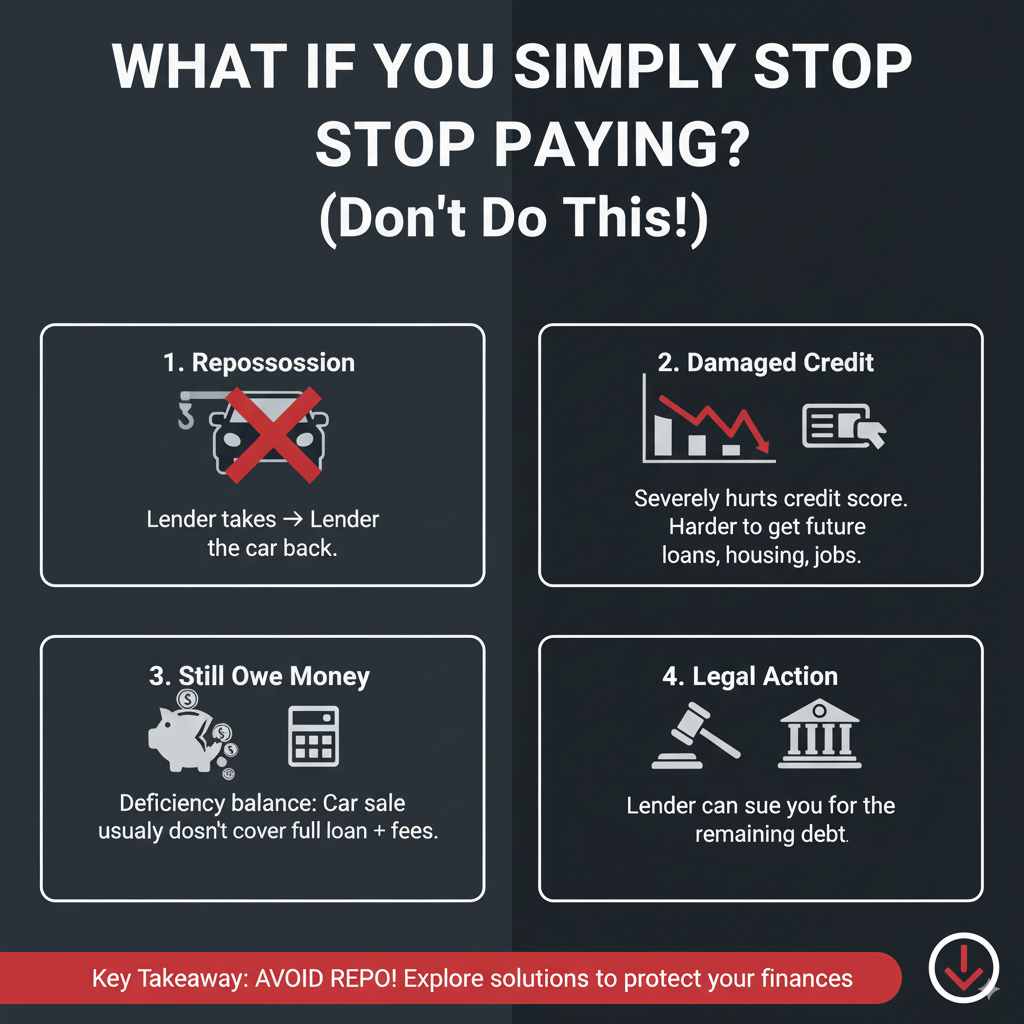
What If You Simply Stop Paying? (Don’t Do This!)
It might seem like an easy way out, but intentionally defaulting on your car loan is a very bad idea. Here’s why:
- Repossession: The lender will repossess the car. This means they will take it back.
- Damaged Credit: A repossession will severely damage your credit score, making it harder to get loans, rent an apartment, or even get a job in the future.
- Still Owe Money: After repossession and sale, you will likely still owe the lender money. The sale will cover only a portion of the debt (if that), and you’ll be responsible for the remaining balance plus repossession and sale fees. This is called a deficiency balance.
- Legal Action: The lender could sue you to recover the deficiency balance.
Instead of this drastic measure, explore the solutions outlined above. They offer legitimate ways to resolve your situation without incurring severe financial and credit penalties.
Frequently Asked Questions (FAQ)
Q1: Can I sell my financed car if I have negative equity?
A1: Yes, but you’ll need to pay the difference between the car’s selling price (or trade-in value) and the loan payoff amount yourself. For example, if you owe $15,000 but the car is only worth $13,000 (negative equity of $2,000), you must come up with $2,000 to pay off the loan before the sale can be finalized.
Q2: How do I get the title from my lender if I sell the car?
A2: Once you (or the buyer) pay the full payoff amount to your lender, they will release their lien on the car. They will then send you the title, or sometimes directly to the buyer if you coordinate it that way. The process can take a few days to a couple of weeks after payment is received.
Q3: What is the difference between a loan balance and a payoff amount?
A3: The loan balance is the total principal and interest remaining on your loan. The payoff amount is the exact figure required to close out the loan on a specific date, which includes any accrued interest up to that date and potentially small fees. Always ask for the payoff quote.
Q4: Can I trade in my financed car for a car that costs less than I owe?
A4: Yes, this is called negative equity. The dealership will pay off your loan, and the difference (your negative equity) will be added to the purchase price of the new car, meaning you’ll finance more for your new vehicle.
Q5: What happens if the buyer of my financed car doesn’t pay off the loan?
A5: If you don’t ensure the loan is fully paid off and the title transferred correctly, you remain responsible for the loan.