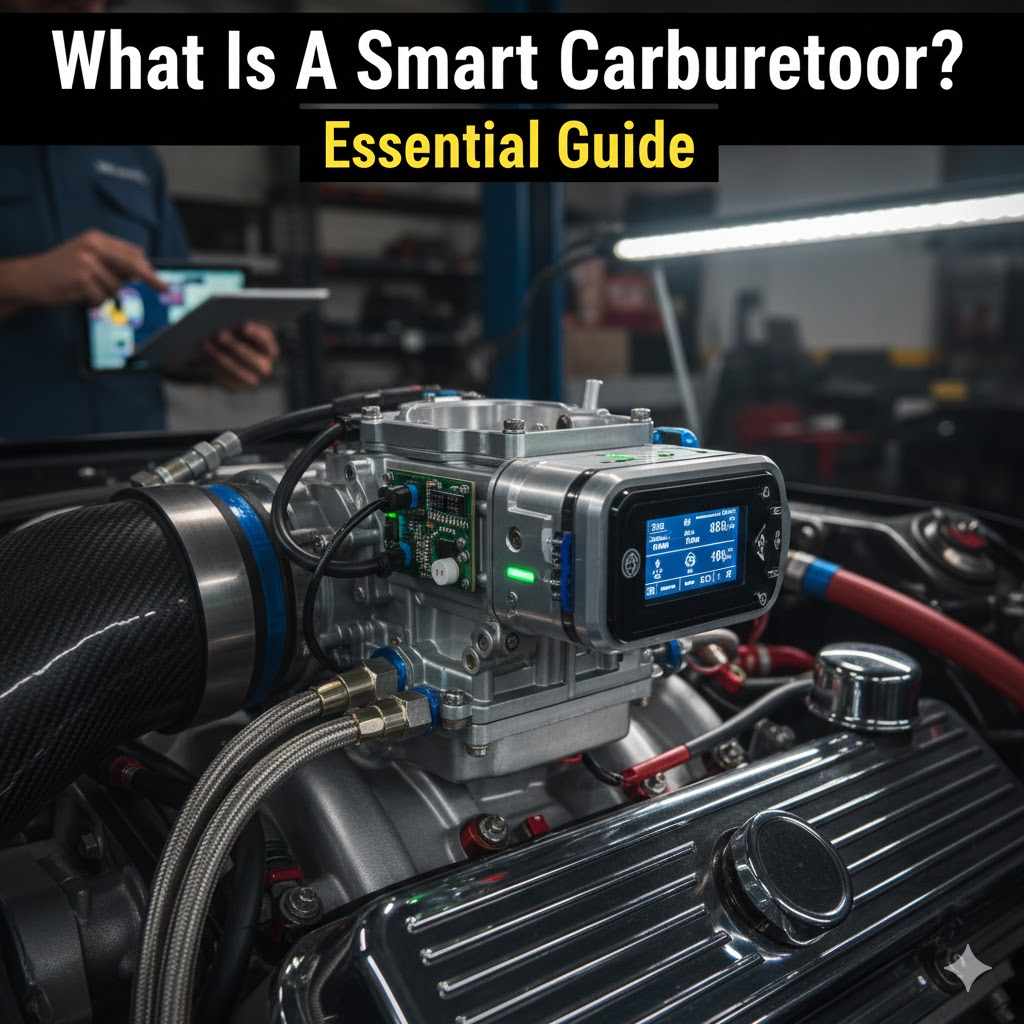
What Is A Smart Carburetor? Essential Guide
A smart carburetor is an electronically controlled fuel delivery system designed to replace or heavily modify traditional carburetors in older or classic vehicles. Its main goal is to improve fuel efficiency, reduce emissions, and offer better engine performance by constantly adjusting the air-fuel mix based on real-time driving conditions, similar to modern fuel injection.
What Is A Smart Carburetor? Essential Guide for Every Driver
Ever wish your classic car ran as smoothly and efficiently as a brand-new vehicle? Dealing with old carburetors can mean tricky starting, poor mileage, and frustrating tuning sessions. That’s where the concept of a “smart carburetor” comes into play. It sounds complicated, but it’s actually a straightforward upgrade for everyday drivers looking for reliability.
If you are tired of constant adjustments or smoky tailpipes, you are in the right place. We are going to break down exactly what a smart carburetor is, how it works without confusing jargon, and why it might be the perfect upgrade for your vehicle. Get ready to boost your engine’s brains without needing a huge mechanic bill!
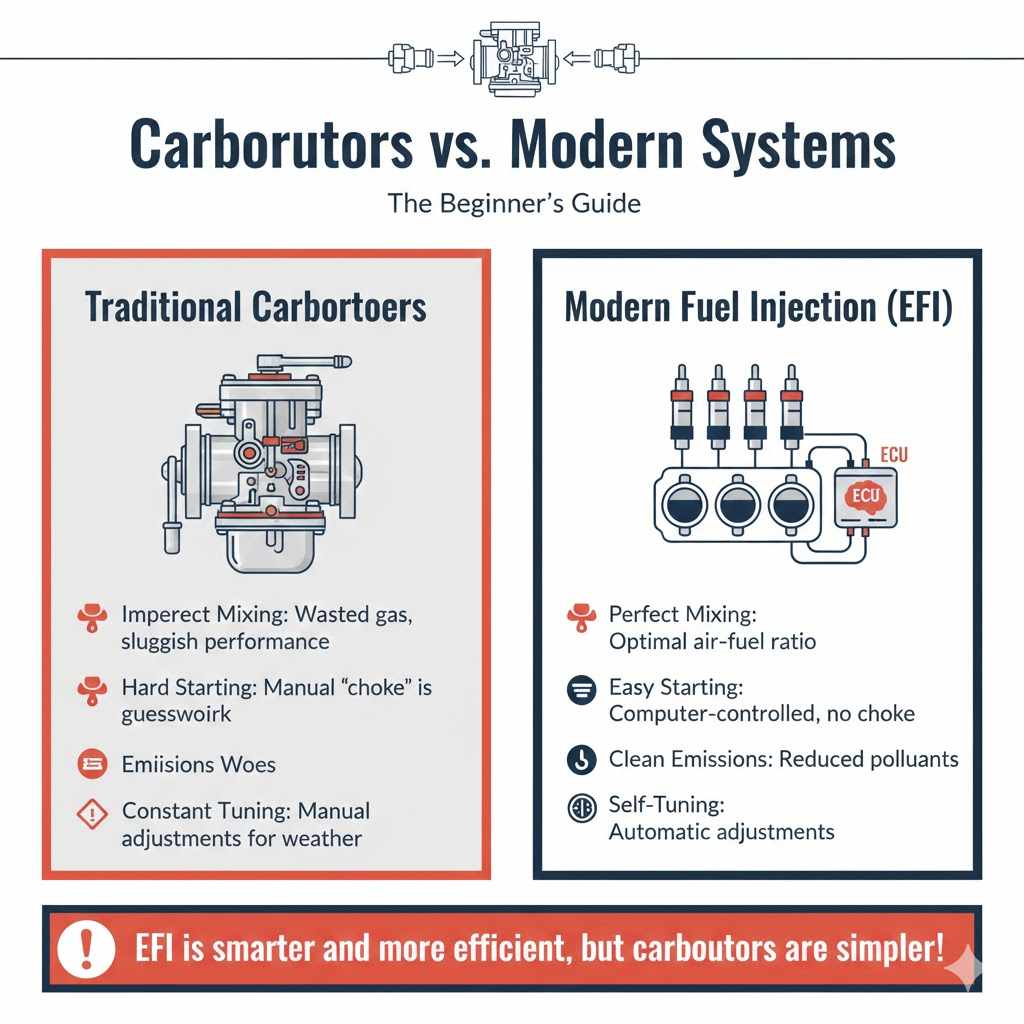
Understanding the Basics: Carburetors vs. Modern Systems
Before diving into the “smart” part, let’s quickly remember what a regular carburetor does. Think of the carburetor as the engine’s kitchen. Its job is simple: mix gasoline (fuel) with air in just the right amounts so the engine can burn it cleanly and powerfully.
Traditional carburetors have worked for nearly a century, but they have limits. They use fixed jets and mechanical linkages that struggle to keep up when conditions change rapidly—like climbing a hill, driving in hot weather, or starting the engine cold.
The Problem with Old Carburetors
Traditional mechanical carburetors rely on vacuum and mechanical adjustments. This means:
- Imperfect Mixing: The air-fuel ratio is often wrong for the specific moment, leading to wasted gas or sluggish performance.
- Hard Starting: Getting the “choke” just right when cold can feel like guesswork.
- Emissions Woes: They produce more harmful exhaust because the mixture isn’t precise enough.
- Constant Tuning: Drivers often need to manually adjust screws when the weather changes.
Enter Fuel Injection
Modern cars use Electronic Fuel Injection (EFI). EFI uses sensors to constantly measure everything—air temperature, engine load, throttle position—and a computer (ECU) instantly adjusts how much fuel is sprayed. This is highly efficient but often difficult and expensive to retrofit onto older, carbureted engines.
What Is A Smart Carburetor? The Definition You Need
So, what is a smart carburetor? Simply put, a smart carburetor is an aftermarket device designed to bring the precision and efficiency of modern electronic fuel injection (EFI) to an engine that was originally built for a traditional carburetor, without completely ripping out the original intake system.
It acts as a bridge. It looks somewhat like a carburetor, sitting right on top of the intake manifold, but inside, it contains electronic brains, sensors, and injectors. It gives you the best of both worlds: the classic look and feel of carburetion combined with electronic accuracy.
The Core Function: Electronic Adjustment
The defining feature of a smart carburetor is its ability to adjust the air-fuel mixture electronically, rather than relying purely on fixed mechanical passages. It uses sensors to monitor conditions and then controls small electronic injectors (similar to those found in a full EFI system) to deliver the perfect amount of fuel instantly.
This self-tuning ability means:
- No More Guesswork: The system tunes itself automatically.
- Better Cold Starts: It warms up just like a modern car.
- Power on Demand: It supplies the exact fuel needed for acceleration or cruising speed.
How Does a Smart Carburetor Work? The Beginner’s Breakdown
Don’t worry about complex wiring diagrams! Think of the smart carburetor as having three main parts that work together seamlessly:
- The Senses (Sensors): These are the eyes and ears of the system. They measure crucial data like how much the throttle is open, the temperature of the air entering the engine, and sometimes even the oxygen content in the exhaust.
- The Brain (Controller): This is a small computer unit that takes all the data from the sensors. It compares this data against pre-programmed ideal settings (maps) for your specific engine type.
- The Action (Fuel Delivery): Based on the brain’s decision, the controller tells small, highly accurate electronic fuel injectors (usually built right into the carburetor body) to open or close precisely, delivering the perfect amount of fuel into the air stream.
Key Components in a Smart Carburetor System
While designs vary between manufacturers (like Holley Sniper or FiTech systems), most smart carburetors share these common elements:
| Component | What It Does (Simple Terms) | Why It Matters |
|---|---|---|
| Throttle Position Sensor (TPS) | Tells the system how hard you are pressing the gas pedal. | Ensures quick fuel delivery when you accelerate. |
| Coolant Temperature Sensor (CTS) | Measures engine heat. | Adjusts the mixture for smooth starting when the engine is cold or hot. |
| In-Built Fuel Injectors | Tiny electronic nozzles that spray fuel, replacing the fixed jets. | Allow for instant, precise fuel metering. |
| ECU/Controller | The small computer chip that makes all the decisions. | The “smart” part; calculates the perfect air-fuel ratio constantly. |
This electronic control means the system can constantly learn and adapt. If you move from sea level to the mountains, the smart carburetor recognizes the change in air density and adjusts the fuel automatically. This level of adaptability is impossible for a standard mechanical carburetor.
Why Upgrade? The Major Benefits of Going “Smart”
Switching to a smart carburetor isn’t just a technical tweak; it’s a major quality-of-life improvement for the driver. For those who love their older vehicle but hate the maintenance hassle, the benefits are substantial.
1. Significant Fuel Economy Gains
The single biggest advantage is efficiency. Because the system stops running “rich” (too much fuel) unnecessarily, your engine burns fuel more completely. For many drivers, this results in noticeably better miles per gallon (MPG), saving money at the pump.
2. Superior Driveability
This is what you feel the most. Say goodbye to hesitation when you punch the gas or stalling when coming to a stop. The smart carburetor keeps the engine “on the boil,” offering:
- Instant throttle response.
- Smooth idling, even when hot.
- Reliable performance in varied temperatures and altitudes.
3. Easier Maintenance and Tuning
This is a huge relief for beginners. Instead of needing specialized knowledge and tools to adjust floats, power valves, and jets, tuning is often done via a handheld controller or even a smartphone app!
For instance, many modern systems allow you to:
- Plug in the device and select your engine type (e.g., small block Chevy V8).
- Let the system run an initial self-learn sequence.
- Monitor basic data without touching a wrench.
This reduces frustrating trial-and-error tuning, which is often cited as the hardest part of owning a classic car. Check out resources from organizations like the SAE International (Society of Automotive Engineers) which continuously research efficient combustion methods that these electronic systems utilize.
4. Reduced Emissions
If you live in an area with stricter emissions testing or simply want to be more environmentally conscious, a smart carburetor helps immensely. By achieving a cleaner, more complete burn, you produce fewer harmful byproducts. This makes passing local smog checks much simpler.
Smart Carburetor vs. Full EFI Conversion: Which is Right for You?
This is the biggest decision point. Many people hear about smart carburetors and think, “Why not just go all-in with a full EFI conversion?” It’s a fair question. Here is a comparison to help you decide what fits your needs and budget.
| Feature | Smart Carburetor (Throttle Body Injection) | Full EFI Conversion (Multi-Port) |
|---|---|---|
| Installation Difficulty | Easy to Moderate (Bolts on like a regular carb). | Difficult (Requires new intake manifold, wiring harness, fuel lines). |
| Cost | Lower initial investment. | Significantly higher initial investment. |
| Appearance | Maintains the classic look under the hood. | Looks visibly electronic; changes the engine bay aesthetic. |
| Precision & Tuning | Very good; self-adjusting based on throttle body input. | Excellent; most precise fuel metering possible. |
| Fuel System Needs | Usually requires a return-style or returnless fuel system capable of higher pressure than stock. | Requires high-pressure fuel pump and often new fuel lines. |
When to Choose the Smart Carburetor
The smart carburetor shines when:
- You want to keep your existing intake manifold.
- You are on a tighter budget for upgrades.
- You want to retain the classic appearance of a carburetor under the hood.
- You are comfortable with moderate DIY installation skills.
When to Consider Full EFI
Full EFI is superior for racing applications or vehicles where absolute peak performance and the highest level of computer control are necessary. However, the complexity of the wiring and plumbing usually makes it a job best left to experienced professionals unless you are a dedicated hot rod builder.
A Simple Installation Guide: What to Expect
One of the best aspects of the smart carburetor is its relatively simple installation process, often achievable in an afternoon for the confident beginner. Always refer to the specific instructions provided by the manufacturer (like FiTech or Holley), but the general steps look like this:
Tools You Might Need (Check your kit first!):
- Basic socket and wrench set.
- Screwdrivers.
- Safety glasses and gloves.
- New high-pressure fuel pump (often required).
- Wire strippers/crimpers (for connecting power/ground).
Step-by-Step Overview
- Safety First: Disconnect the battery. Relieve any residual fuel pressure according to your vehicle’s manual.
- Remove the Old Carburetor: Unbolt the old carburetor, carefully disconnecting the throttle linkage, choke wiring (if applicable), and fuel line.
- Install the Fuel Pump (If Needed): If your car previously had a mechanical, low-pressure fuel pump (common on older models), you must replace it with a high-pressure electric pump rated for the new system’s needs (often 40-60 psi). Run the new fuel lines appropriately.
- Mount the Smart Carburetor: Place the new unit onto the intake manifold using the supplied gasket. Bolt it down securely.
- Connect Linkage: Reconnect the throttle and transmission kick-down linkage to the new throttle blade shaft.
- Wiring the Brain: This is the most technical part. You will typically connect just three or four wires: switched 12V power (only hot when the key is on), constant 12V power (for memory), and a ground wire. Follow the color codes exactly!
- Connect Sensors: Plug in the sensors that came with the unit (like the oxygen sensor if your kit includes one for closed-loop tuning, which is highly recommended).
- Prime and Start: Reconnect the battery. Prime the fuel system (turn the key to ‘on’ a few times to run the electric pump). Start the engine. It might run rough initially.
- The Self-Learning Phase: Most smart carburetors enter a learning or “base tune” mode. Drive the car normally for 10 to 20 minutes. The system monitors performance and adjusts its internal maps automatically until it finds the optimal settings for your engine.
Remember, precision matters here. If you are uncomfortable with the electrical connections, it is always best to have a professional automotive electrician handle the wiring part of the conversion.
Troubleshooting Common Issues (Keep It Simple)
Even the smartest technology can have hiccups, especially when integrating it into an older engine. Here are the most common beginner issues and their straightforward fixes:
1. Rough Idle After Installation
The Problem: The engine runs shaky or hunts for an idle speed.
The Fix: This is usually the self-learning process not being complete, or a vacuum leak. Check that the carburetor base gasket is sealed perfectly. Ensure all vacuum hoses that used to connect to the old carburetor are correctly capped or rerouted to the proper vacuum source for the new unit.
2. Engine Won’t Start or Floods Easily
The Problem: Too much fuel is being delivered right away, or the fuel pump is too strong.
The Fix: First, verify your fuel pressure. If you installed a new electric pump, ensure it is delivering the pressure specified by the smart carb manufacturer. If the pressure is correct, check the power wire connection to ensure the unit is turning off completely when the key is off, preventing fuel bleed-down.
3. Poor High-Speed Performance
The Problem: The car feels weak or hesitates above half throttle.
The Fix: This often means the system is not reading the air demand correctly. Check the Throttle Position Sensor (TPS) wiring. If it is misaligned or wired incorrectly, the system thinks you are pressing the pedal lightly when you are actually flooring it, starving the engine of extra fuel.
For deeper diagnostic help, consulting online forums dedicated to these specific products (like Holley Sniper users) can provide real-world insight into common issues on specific engine types.
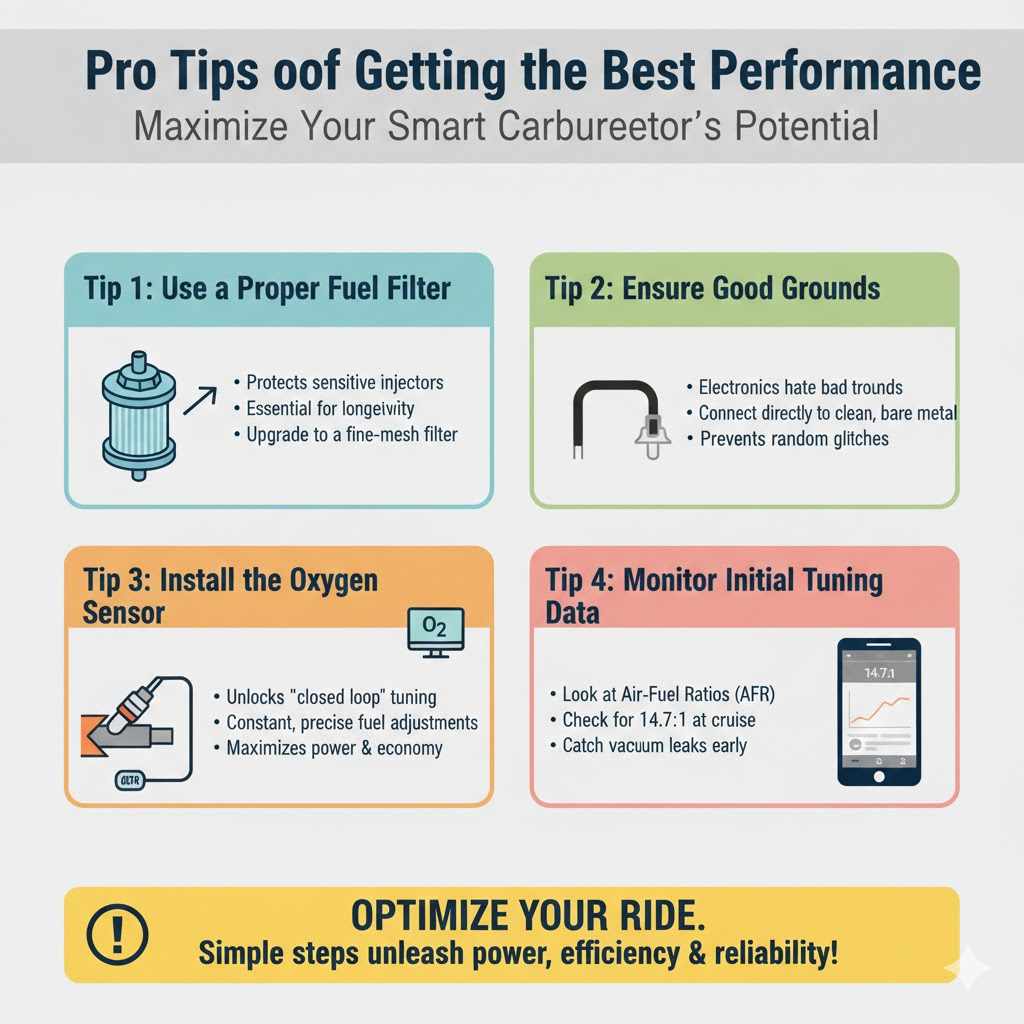
Tips for Getting the Best Performance
Once you have the smart carburetor installed, a few simple best practices will ensure you get the maximum benefit in reliability and efficiency.
Tip 1: Use a Proper Fuel Filter
The tiny electronic injectors inside the smart carburetor are extremely sensitive to dirt and debris. Even if your old car ran fine with a cheap in-line filter, upgrading to a high-quality, fine-mesh fuel filter right before the carburetor inlet is non-negotiable for longevity.
Tip 2: Ensure Good Grounds
Electronics hate bad grounds. When wiring the controller unit, make sure the ground wire is connected directly to clean, bare metal on the engine block or chassis. A weak ground can cause intermittent sensor readings, leading to random performance glitches.
Tip 3: Install the Oxygen Sensor (If Applicable)
Many smart carb kits come with an oxygen (O2) sensor that goes into the exhaust pipe. While you can run the system without it (called “open loop”), installing it allows the system to run in “closed loop.”
Closed loop means the computer constantly monitors the exhaust and makes microscopic adjustments to the fuel mixture hundreds of times per second for the absolute best tune possible—this maximizes both power and economy. It’s worth the extra step of drilling into your exhaust pipe!
Tip 4: Monitor Initial Tuning Data
If your unit has a display or smartphone app, take a few minutes each week to look at the data, especially air-fuel ratios (AFR) at cruise. If the cruising AFR is consistently much higher (leaner) or lower (richer) than the recommended baseline (usually around 14.7:1), it might signal a vacuum leak or sensor issue that needs attention before it causes drivability problems.
FAQ: Quick Answers About Smart Carburetors
Here are some common questions we hear from drivers new to this technology:
Q1: Will a smart carburetor fit on any engine?
A: Generally, yes, if the engine originally used a 4-barrel or 2-barrel carburetor. You must select a model sized correctly for your engine’s displacement (e.g., a unit designed for a 400 cubic inch V8 versus a 283 V8).
Q2: Do I have to get rid of my original distributor?
A: No. Most smart carburetors are designed to work perfectly with your existing distributor and ignition system. They only manage the fuel delivery, not the spark timing.
Q3: How much better is the gas mileage usually?
A: Results vary widely based on the health of the engine and driving style, but drivers commonly report improvements ranging from 10% to 30% over a poorly tuned, stock carburetor.
Q4: Are these complicated to tune by myself?
A: No. The core benefit is that they tune themselves automatically. Complex tuning usually only happens if you are trying to achieve extreme high-performance goals or if there is an underlying mechanical issue.
Q5: Can I use regular gasoline with a smart carburetor?
A: Yes. Since the system maintains precise stoichiometric ratios, you usually don’t need high-octane fuel unless your engine was already set up to require it due to high compression.
Q6: What happens if the electronics fail while driving?
A: Modern units are designed with safety margins. In most cases, if power or a sensor fails, the system will default to a safe, rich (but drivable) base map, allowing you to get home, though performance will suffer until the issue is fixed.
Conclusion: Confidence Under the Hood
Upgrading to a smart carburetor is one of the best steps you can take to modernize the reliability of a classic or older vehicle without sacrificing its character. By replacing fixed mechanical parts with electronic brains and precision injectors, you gain efficiency, power, and, most importantly for many drivers, peace of mind.
For the beginner DIY enthusiast, the smart carburetor offers a manageable entry point into modernizing engine management. The installation is accessible, the self-tuning feature builds confidence quickly, and the consistent, reliable performance means you spend less time under the hood fiddling with jets and more time enjoying the drive. Embrace the technology; your older engine will thank you with smooth running for years to come.