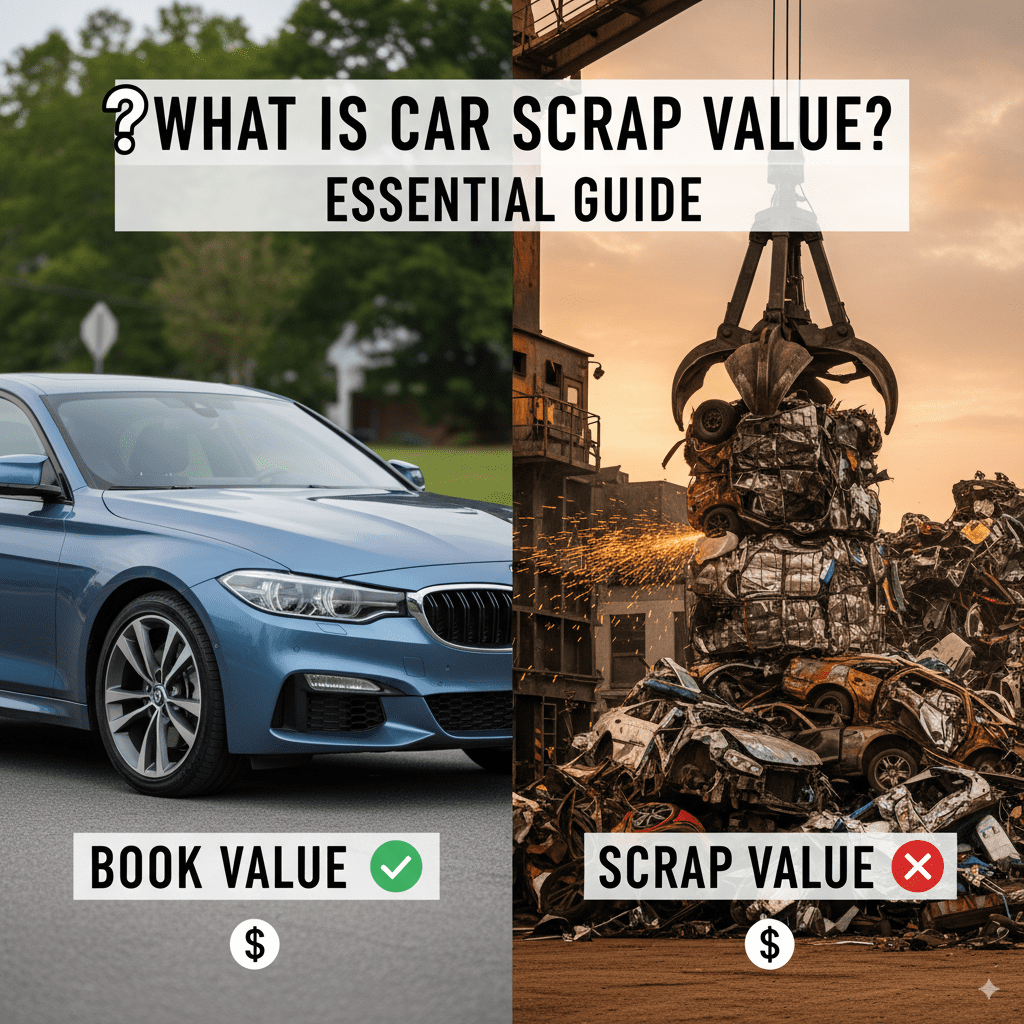
What Is Car Scrap Value: Essential Guide
Your car’s scrap value is the money you can get for it when it’s no longer roadworthy, based on its weight in metal and recoverable parts. Even old or damaged cars have value! This guide will clearly explain it all, helping you get the best deal.
Hey there, car owners! Ever worried about what to do with a car that’s seen better days, or maybe one that’s been in an accident? It’s a common thought: “What’s this old heap even worth?” You might be surprised to learn that even a car that looks like it’s ready for the junkyard can still have some value. This value is called car scrap value. It might sound a bit daunting, like something only mechanics or scrap yards understand, but I’m here to break it down for you. We’ll look at what it means, how it’s figured out, and what you can do to get the most out of it. Let’s make this process simple and stress-free, so you can feel confident about your car’s final chapter!
What Exactly Is Car Scrap Value?
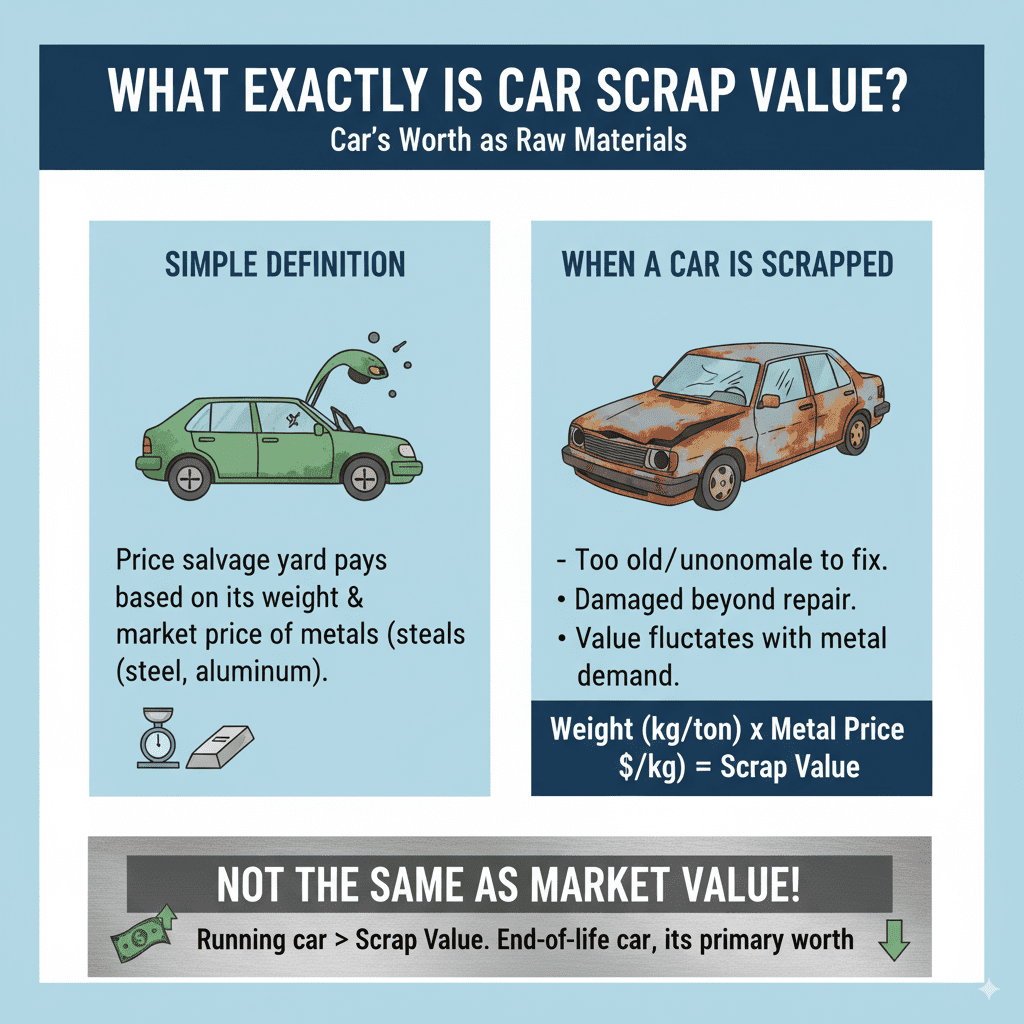
Simply put, what is car scrap value? It’s the price a salvage yard or scrap dealer is willing to pay for your car based on its weight and the market price of the metals it contains, like steel and aluminum. Think of it as the car’s value as raw materials. When a car is too old, damaged beyond repair, or uneconomical to fix, it’s often destined for the scrap heap. However, before all its useful parts are removed, the remaining chassis and metal components are weighed. This weight, multiplied by the current scrap metal price per pound or ton, gives you the car’s basic scrap value.
It’s important to understand that scrap value is different from the market value of a working car. A car that’s running perfectly will be worth much more than its scrap value. But when a car reaches the end of its functional life, its scrap value becomes its primary worth. This value fluctuates based on global demand for recycled metals and other economic factors. Even a small, older car can be worth a few hundred dollars in scrap, which is definitely better than nothing!
Why Does Car Scrap Value Matter?
Knowing about car scrap value is practical for several reasons:
- End-of-Life Vehicles: If your car is totaled by an insurance company or simply can’t be repaired cost-effectively, understanding its scrap value helps you negotiate a fair settlement or sale price.
- Disposal: When it’s time to get rid of an old, non-running vehicle, knowing its scrap value helps you find the best place to sell it for parts or metal.
- Potential for Income: For older cars you plan to sell, even for parts, knowing the scrap metal price can give you a baseline expectation.
- Environmental Responsibility: Selling a car for scrap ensures that its valuable metals are recycled, which is much better for the environment than letting it sit and rust away. The recycling process diverts waste from landfills and reduces the need to mine new raw materials. According to the U.S. Environmental Protection Agency (EPA), recycling significantly conserves natural resources and energy.
How Is Car Scrap Value Calculated?
Calculating the scrap value of a car involves a few key factors. It’s not just a wild guess; it’s based on tangible elements.
1. Weight of the Vehicle
The most significant factor is the car’s weight. Scrap yards typically calculate value based on the weight of the metal in the car. This often means the curb weight, which is the weight of the vehicle without passengers or cargo, but with all essential fluids like oil and coolant. Different car models have different weights. For example, a large SUV will have more metal—and thus a higher potential scrap value—than a small compact car.
Here’s a rough idea of typical car weights:
| Vehicle Type | Approximate Weight (lbs) | Approximate Weight (kg) |
|---|---|---|
| Compact Car | 2,500 – 3,000 | 1,134 – 1,361 |
| Mid-size Sedan | 3,000 – 3,500 | 1,361 – 1,588 |
| Full-size Sedan | 3,500 – 4,500 | 1,588 – 2,041 |
| Small SUV/Crossover | 3,200 – 4,000 | 1,451 – 1,814 |
| Large SUV | 4,000 – 5,500+ | 1,814 – 2,495+ |
| Pickup Truck (Light Duty) | 4,000 – 5,500+ | 1,814 – 2,495+ |
Note: These are approximate weights and can vary significantly by make, model, and year.
2. Type of Metals
Cars are made from various metals, primarily steel, but also aluminum, copper, and other alloys. Steel is the most common and forms the bulk of the car’s structure. Aluminum is lighter and used in components like engine blocks, wheels, and body panels. Copper is found in wiring and radiators. The price scrap yards pay can sometimes differ slightly based on the purity and type of metal. For instance, aluminum often fetches a higher price per pound than steel.
3. Current Market Price of Scrap Metals
The value of scrap metal isn’t fixed; it fluctuates daily based on supply and demand on the global commodities market. Prices for steel, aluminum, and other metals change frequently. Scrap yards will base their offer on the prevailing market rates. You can often check current scrap metal prices online to get an idea of what they might be getting paid.
For example, a typical car might contain around 2,000 to 3,000 pounds of steel. If the scrap steel price is $0.15 per pound, the steel alone could be worth $300 to $450. This, however, doesn’t account for the labor involved in preparing the car for scrap, nor does it factor in the value of other metals.
4. Condition and Salvageable Parts
While pure scrap value is based on metal weight, many salvage yards also consider the value of intact, working parts that can be reused or resold. If a car has a relatively new engine and transmission, or if certain body panels are in good condition, a yard might offer more than just the raw metal weight suggests. They might strip the valuable parts first, then sell the remaining shell for scrap. This means a car that’s slightly damaged but has good components might fetch a higher price than one that’s completely rusted out.
5. Location and Demand
Scrap yards in different regions might offer slightly different prices due to local demand for scrap metal and the cost of processing. Yards closer to major recycling facilities or ports may have an advantage. Competition among local yards can also influence the prices they offer.
What Factors Affect Car Scrap Value?
Besides the core calculation, several other elements can influence the final offer you receive:
- Make and Model: As mentioned, larger and heavier vehicles generally have more metal, potentially leading to a higher scrap value.
- Year of Manufacture: Older cars, especially from before the 1980s, might have less advanced materials or be made of heavier steel. However, some very old cars might be considered “classic” and have a different valuation.
- Recent Damage: A car that’s been in a severe accident might have its metal structure compromised or deformed, which can slightly affect its scrap value, though it’s usually still sold by weight.
- Fluids and Hazardous Materials: Scrap yards need to drain all fluids (oil, coolant, gasoline, brake fluid) and remove hazardous components (like batteries and mercury switches) before crushing. The cost and labor associated with this can be factored into the price they offer. Proper disposal of these materials is crucial for environmental safety, and specialized companies often handle this.
- Metal Prices on the Day: The price of steel, aluminum, and other recyclable metals can change daily. What your car is worth today might be slightly different tomorrow.
Estimating Your Car’s Scrap Value
You don’t need to be a scrap metal expert to get a good idea of your car’s worth. Here’s how you can estimate it:
1. Find Your Car’s Curb Weight
The easiest way to find your car’s curb weight is to check your owner’s manual. If you don’t have it, you can usually find this information online by searching for “[Your Car’s Make, Model, Year] curb weight.” Websites like Edmunds or U.S. News & World Report Cars often list detailed specifications.
2. Research Current Scrap Metal Prices
Search online for “scrap metal prices per pound” or “scrap steel prices.” Look for reputable sources that provide daily or weekly averages. Remember that wholesale prices might be different from what a local scrap yard can offer you directly, as they have overhead costs.
3. Do a Quick Calculation
Let’s say your car’s curb weight is 3,000 lbs, and it’s mostly steel. If the current scrap steel price is $0.15 per pound, your theoretical scrap value could be around 3,000 lbs * $0.15/lb = $450.
However, this is a very basic estimate. Scrap yards often pay a bit less than the theoretical maximum to cover their processing costs (draining fluids, dismantling, transport, etc.). A common practice is for yards to offer a percentage of the melt value, and they may deduct amounts for specific fluids or batteries. Most yards will offer a price per ton or per pound for the entirety of the vehicle.
Where Can You Sell Your Car for Scrap?
When your car is ready to be scrapped, you have a few options for selling it:
- Local Scrap Yards/Junkyards: These are the most common places to sell a car for scrap. They specialize in buying old vehicles, dismantling them for usable parts, and then crushing the remaining metal for recycling. They often offer free towing.
- Salvage Yards: Similar to scrap yards, salvage yards also focus on reselling usable parts from damaged or end-of-life vehicles. They may offer different rates depending on which parts are considered valuable.
- Online Car Buyers: Several websites are dedicated to buying cars in any condition, including for scrap. You typically provide your car’s details online, and they give you an instant offer. If you accept, they arrange for pickup and payment. Examples include sites like Carvana (though primarily for working cars, they do buy some older ones) or more specialized “cash for junk cars” services.
- Auto Recyclers: These businesses are often licensed and more focused on the environmental aspect of recycling cars, ensuring proper disposal of all materials.
Tips for Selling Your Car for Scrap
To make the process smoother and get the best possible deal:
- Shop Around: Don’t take the first offer you get. Call a few different scrap yards or online buyers to compare their quotes. Prices can vary.
- Be Honest About Condition: Accurately describe your car’s condition, including any major damage or missing parts. This avoids surprises when they come to inspect it.
- Remove Personal Belongings: Before the buyer picks up the car, make sure you’ve removed all your personal items from the interior, trunk, and glove compartment.
- Have the Title Ready: Most buyers will require proof of ownership, so have your car’s title handy. If you no longer have the title, you may need to contact your local Department of Motor Vehicles (DMV) for procedures on selling a vehicle without a title.
- Ask About Towing: Most scrap yards include free towing in their offer. Confirm this when getting your quote.
- Consider Removing Valuable Parts (If Allowed): If you’re mechanically inclined or know someone who is, you might be able to remove valuable parts like the battery, catalytic converter (beware of theft!), or even the engine and sell them separately for more cash before selling the car itself. However, check with the scrap yard first, as some may deduct value if parts are missing.
What’s the Difference Between Scrap Value and Salvage Value?
While often used interchangeably, there’s a subtle difference between scrap value and salvage value.
- Scrap Value: This is the value of the car as raw material, primarily its weight in recyclable metals. It’s what’s left after all usable parts have been removed and the car is ready to be crushed and melted down.
- Salvage Value: This is the price a car can fetch when it’s damaged or declared a total loss by an insurance company. It considers the value of reusable parts that can be sold to repair other vehicles, plus the leftover scrap metal value. A car with high salvage value might still be repairable or have many valuable components.
So, when you’re selling a car that’s past its prime, the offer you get is often a combination of its salvageable parts and its scrap metal worth.
Common Misconceptions About Car Scrap Value
Let’s clear up some common misunderstandings:
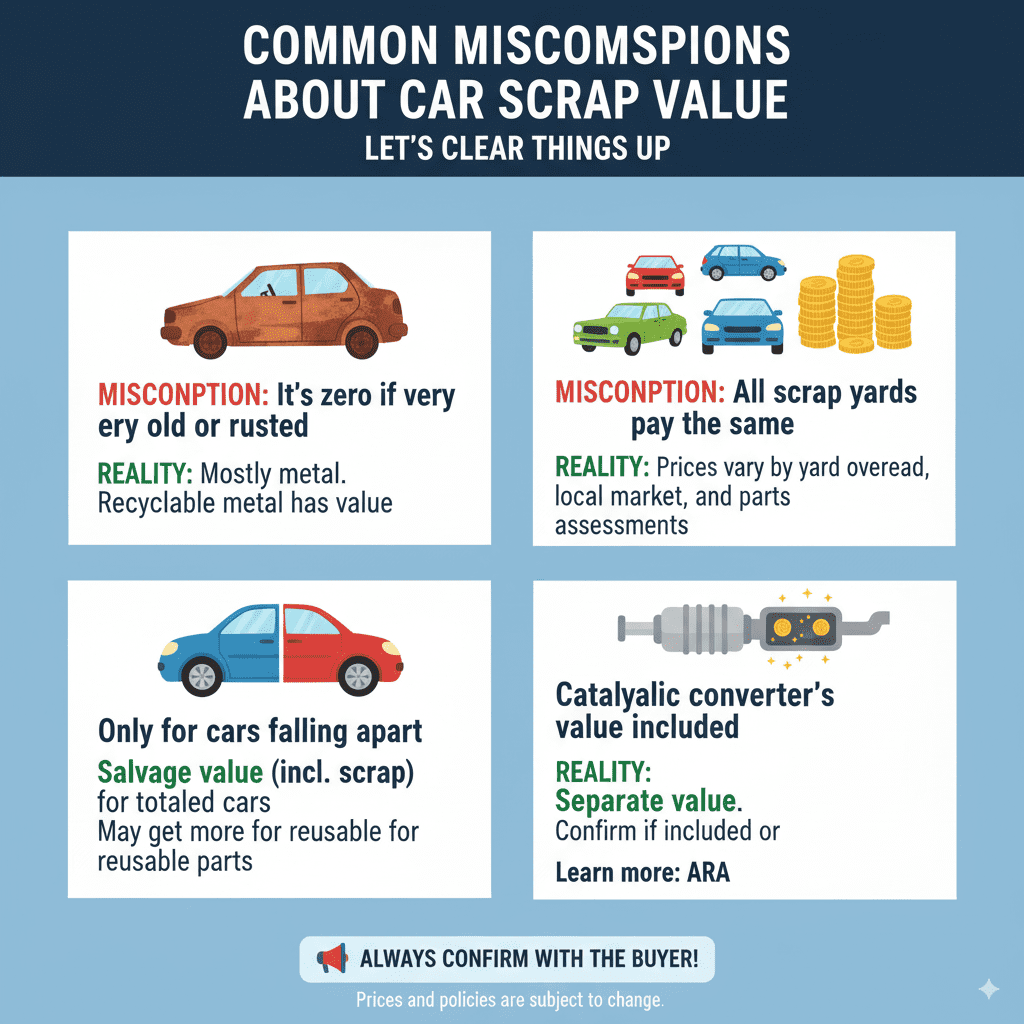
- Misconception: It’s zero if the car is very old or rusted.Reality: Even heavily rusted cars are mostly metal. As long as the metal can be recycled, there’s scrap value.
- Misconception: All scrap yards pay the same price.Reality: Prices vary based on the yard’s overhead, local metal market demand, and how they assess the car’s parts.
- Misconception: You can only get scrap value for a car that’s falling apart.Reality: Insurance companies use “salvage value” (which includes scrap value) when a car is totaled. You might get more than just basic scrap if the car has valuable reusable components.
- Misconception: The catalytic converter’s value is included in the quoted scrap price.Reality: Catalytic converters contain precious metals and have a separate value. Some buyers might include this, while others might only pay for the basic metal weight and leave the converter, or they may deduct its value if it’s missing. It’s wise to confirm this. You can learn more about catalytic converter recycling from resources like the Automotive Recyclers Association (ARA).
Frequently Asked Questions (FAQ)
Q1: What is the average scrap value for a car?
The average scrap value for a car can range from $300 to $600, but it can go higher for larger vehicles or when metal prices are high. It’s highly dependent on the car’s weight and current market rates for scrap metal.
Q2: Can I get more than the scrap value for my old car?
Yes! If your car still has usable parts (like a working engine, transmission, good tires, or intact body panels), you might get more than just the scrap metal price. This is where salvage yards look to make extra money by selling individual components.
Q3: How do I find a reputable scrap yard near me?
You can search online for “scrap yards near me” or “junk car buyers.” Look for yards with good online reviews, clear pricing policies, and professional communication. Asking local auto repair shops for recommendations can also be helpful.
Q4: Do I need the car’s title to sell it for scrap?
In most cases, yes, you will need the car’s title to prove ownership. If you don’t have it, contact your local Department of Motor Vehicles (DMV) to inquire about the process for selling a vehicle without a title. Some scrap yards might accept a bill of sale and a VIN (Vehicle Identification Number) trace if properly authorized by your state’s regulations.