What Is Intelligent Access Car Battery? Power Check
An intelligent access car battery is the 12-volt battery that supports keyless-entry and push-button-start functions; if the car shows weak accessories or repeated no-start warnings, it is often reasonable to check the vehicle battery first, then the fob battery. If you ignore it, you can end up locked out or stuck with a car that will not start. This guide shows how to tell whether the fob, the 12V battery, or the access module is actually failing.
What is an intelligent access on a car?
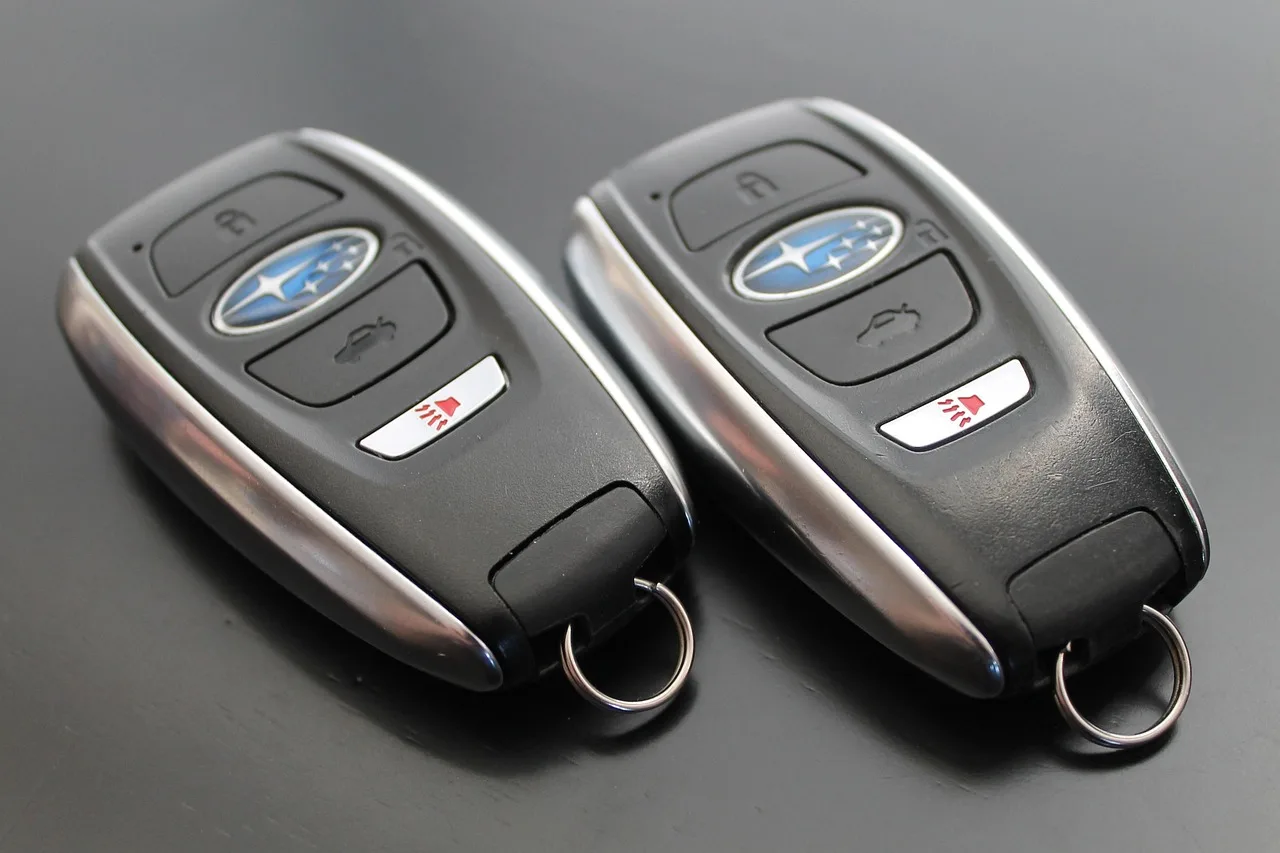
In automotive use, intelligent access means keyless entry, proximity entry, and push-button start. It is a vehicle access system, not a measure of driver intelligence. The word intelligence has broader dictionary meanings: the ability to perceive, infer, retain, or apply information, plus sound judgment, quick comprehension, and adaptive behavior in context. That broader meaning is why search results sometimes pull in unrelated material about human intelligence, including fluid intelligence and crystallized intelligence.
Those human-intelligence terms are off-topic here. A car’s intelligent access system depends on low-voltage electronics, radio-frequency communication, and start authorization logic. The term became widely used in the early 1900s in a different context, long before modern vehicles used fobs and proximity antennas. In cars, the practical question is simple: which battery or module has lost power?
Why the term points to vehicle access hardware, not driver intelligence
Most articles that mention “intelligent” discuss cognition, reasoning, or learning from experience. The APA report says people differ in understanding complex ideas and adapting effectively to the environment, and ScienceInsights describes intelligence as the ability to learn from experience and adapt to new situations. None of that explains why a door will not open at the handle or why the start button says no key detected.
The automotive meaning is narrower. Intelligent access covers the parts that let the car recognize the fob, open doors without a metal key, and authorize starting when conditions match. If voltage drops, that chain breaks.
How different automakers label the same basic system
Ford, Toyota, Honda, Nissan, and other brands use different names, layouts, and backup procedures. One maker may call it Intelligent Access, another Smart Key, Keyless Access, or Proximity Key. The hardware is similar enough for diagnosis, but the backup slot, antenna layout, and warning messages vary by make and model.
That means the label on the brochure matters less than the symptom on the dash. A dead fob battery, weak vehicle battery, or failed receiver can produce the same complaint: the car does not recognize the key.
Which battery actually powers intelligent access?
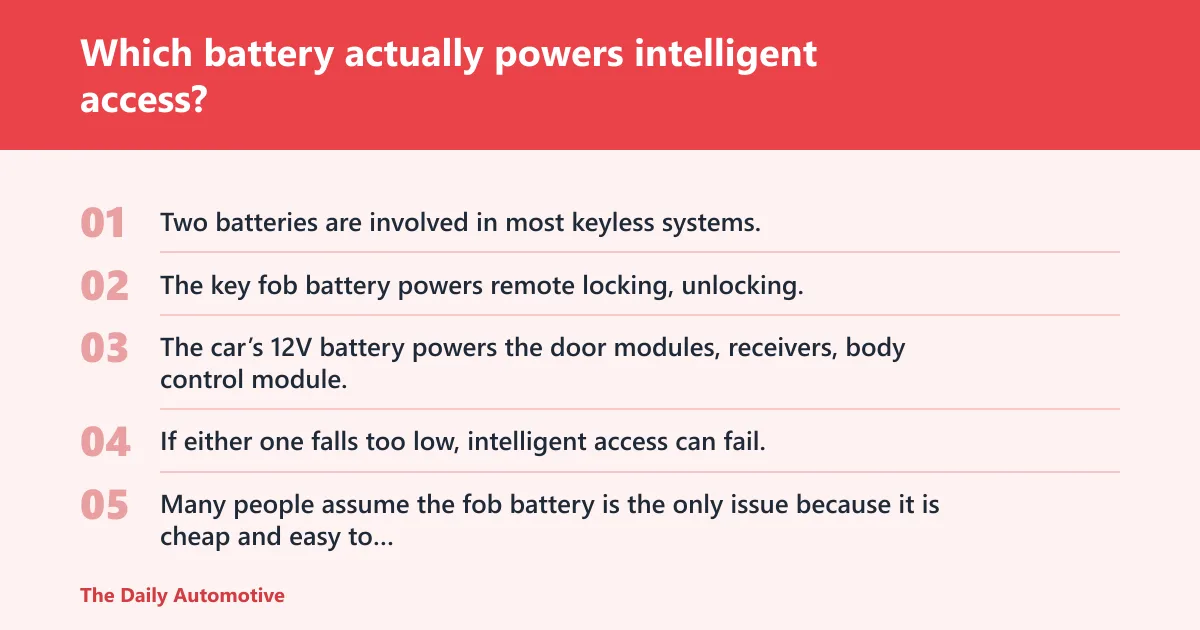
Two batteries are involved in most keyless systems. The key fob battery powers remote locking, unlocking, and proximity sensing inside the fob. The car’s 12V battery powers the door modules, receivers, body control module, immobilizer communication, and the start authorization logic. If either one falls too low, intelligent access can fail.
Many people assume the fob battery is the only issue because it is cheap and easy to replace. That is only part of the picture. The vehicle still needs healthy 12-volt power to wake the access modules and communicate with the immobilizer.
Key fob battery: what it does and when it fails first
The fob battery is usually a coin-cell type, and common sizes vary by brand. It often powers the remote buttons first and the proximity function second. When it weakens, the car may still start if the fob is held near the backup reader, but locking, unlocking, or passive entry becomes unreliable.
This is the easiest battery to change and usually the least expensive one. If only the fob is acting up while the dash and lights are normal, start here.
Car 12V battery: why low voltage can shut the system down
The vehicle’s 12V battery does more than crank an engine. It also keeps the access system awake, supports door modules, and allows immobilizer communication. When voltage drops, the car may fail to detect the fob, reject start authorization, or reset modules after sleep.
A resting 12V battery near 12.6 volts is often considered fully charged, while readings around 12.2 volts or lower may suggest a weak state. Cranking voltage that falls too far can also expose a battery that still looks fine at rest.
Access modules, antennas, and immobilizer communication
If the fob battery and vehicle battery check out, the fault can sit in an antenna, receiver, access module, or related wiring. Intelligent access depends on a short radio exchange and a valid immobilizer response. A broken antenna or module can make one door handle fail while the rest still work.
That pattern matters. A system-wide failure points more toward battery or power supply trouble. A single-zone failure, such as one handle or one backup location, points more toward hardware or wiring.
What are the common symptoms of a failing intelligent access system?
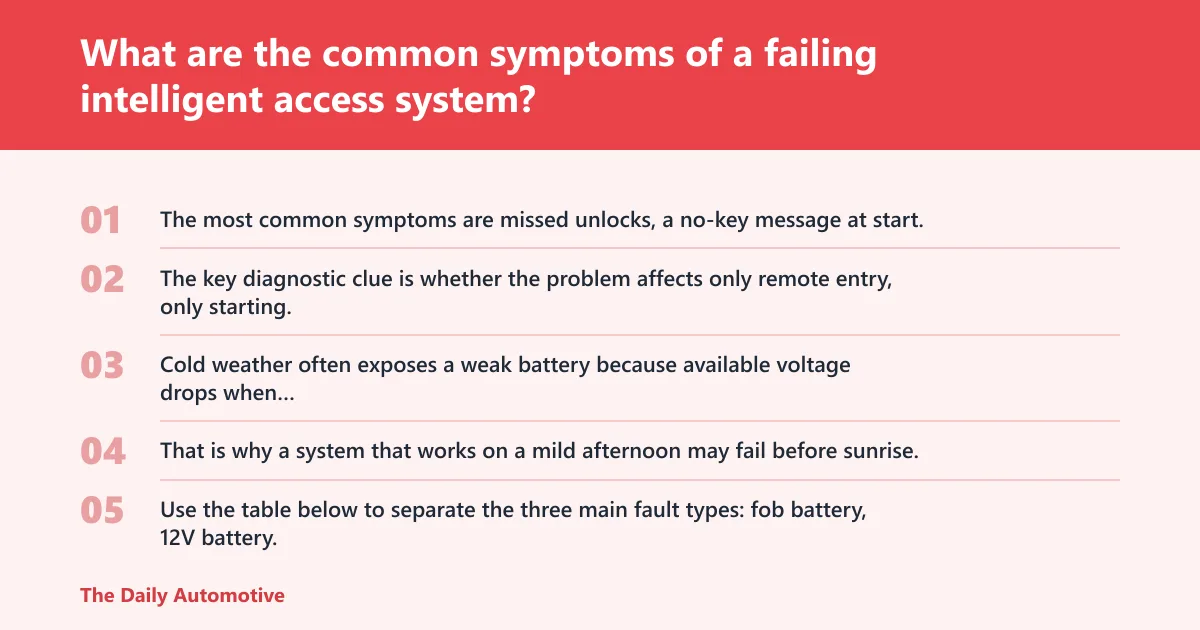
The most common symptoms are missed unlocks, a no-key message at start, intermittent operation in cold weather, and warning lights or messages about low fob battery or key not detected. The key diagnostic clue is whether the problem affects only remote entry, only starting, or the whole car.
Cold weather often exposes a weak battery because available voltage drops when temperatures fall. That is why a system that works on a mild afternoon may fail before sunrise.
Decision table: 8 common symptoms, likely cause, first test, and quick workaround
Use the table below to separate the three main fault types: fob battery, 12V battery, and module or antenna trouble. Start with the simplest test, then move to vehicle battery voltage and backup-start behavior.
| Symptom | Most likely failing component | First test to run | Fastest temporary workaround |
|---|---|---|---|
| Remote open works only at very close range | Key fob battery | Replace the coin-cell battery or check its voltage with a meter | Hold the fob against the start button or designated reader |
| Push-button start says “key not detected” | Key fob battery or weak 12V battery | Try the backup start method; if that fails, measure vehicle battery voltage | Use the backup slot or place the fob at the emergency sensing point |
| Doors unlock on one side but not another | Antenna or door module | Test all door handles and check whether only one area fails | Use the mechanical key or another access point |
| System works in warm weather, fails in cold weather | Weak 12V battery | Check resting battery voltage before start-up | Charge or jump-start the vehicle if approved by the owner’s manual |
| Fob buttons work, but passive entry does not | Key fob battery | Replace the fob battery and retest proximity sensing | Use the button on the fob and the mechanical key |
| No interior lights, slow locks, multiple warning messages | 12V battery | Measure battery voltage and inspect terminals for corrosion | Jump-start only if the manual allows it |
| Only one fob fails while a spare works normally | Key fob battery or damaged fob | Swap the battery; if needed, try the spare fob | Use the spare fob |
| Everything fails after battery replacement or repair | Access module, receiver, or wiring fault | Scan for body or immobilizer codes | Use the mechanical key and schedule service |
How to read the table
If the problem changes when you switch to a spare fob, the fob battery is the leading suspect. If the car acts sluggish overall, the 12V battery moves to the top of the list. If one handle, one door, or one side fails while other access functions work, think antenna or module fault.
Say your sedan unlocks from the driver door only when you stand right next to it, and the dash flashes “key not detected” on a cold morning. That pattern usually points first to a weak fob battery, then to weak vehicle voltage if the backup method also fails.
How do I know if my intelligent access battery is dead?
You can tell by separating fob symptoms from vehicle-battery symptoms. A dead fob battery usually causes short range, no response from passive entry, or a need to press the fob against the start point. A weak 12V battery usually causes slower electronics, multiple warning lights, and wider system failure.
The fastest diagnosis is to test both batteries instead of guessing. Replace the inexpensive fob cell first only when the rest of the car behaves normally.
Check fob battery type and replacement signs
Open the fob and note the battery code printed on the cell. Many are coin-cell batteries, and the correct type varies by brand. If the remote range suddenly drops, the proximity function becomes inconsistent, or the spare fob works better, the fob cell is the first suspect.
A weak fob battery can still let the car start if you use the emergency sensing point. That is the easiest way to separate a fob issue from a vehicle issue.
Measure 12V battery voltage and resting state
Use a digital multimeter at the battery posts. A healthy resting battery is often around 12.6 volts; readings around 12.2 volts or below suggest trouble, especially if the voltage drops further with the ignition on or during start attempt. If the car has been sitting overnight, that reading is more useful than a fresh charge right after driving.
If the vehicle battery is weak, the car may still power a few accessories while failing to run the access system correctly. That is why low voltage can be deceptive.
Use the vehicle’s backup start method to separate faults
Many vehicles include a backup slot, a designated sensing area, or a start procedure that works when the fob battery is low. If the car starts with the backup method, the fob battery is the main problem. If it does not, the 12V battery or access module deserves attention.
Check the owner’s manual for the exact location. Ford, Toyota, Honda, Nissan, and others do not use the same procedure.
How long does an intelligent access battery last?
Fob batteries often last a few years, but use pattern, temperature, and the number of proximity unlocks matter. The vehicle’s 12V battery usually lasts longer than the fob cell, but climate and short-trip driving can shorten its life. Replace either battery before complete failure if warning signs start.
The safest approach is preventive replacement. A weak battery that still works today may fail when the weather turns cold or the car sits unused.
Typical fob battery life by use pattern
Fob batteries tend to last longer if the car is driven regularly and the passive-entry system is not constantly waking. Heavy use of remote locking, repeated button presses, and frequent proximity requests shortens life. Most manufacturers list the fob cell as a maintenance item rather than a lifetime part.
If a spare fob is much stronger than the main one, replace the weak cell before it strands you at a parking lot.
Why 12V battery life varies by climate and driving habits
Vehicle battery replacement interval depends on climate and use. Hot weather ages batteries, cold weather exposes weak ones, and short trips do not fully recharge them. A vehicle that sits for days with accessories active can also drain the 12V battery faster.
Frequent no-start warnings, slow door locking, or dim interior lights are signs to test the battery before winter arrives.
Can I start my car if intelligent access battery is low?
Often yes, if the low battery is the fob battery and the vehicle has a backup start method. Many cars will still start when the fob is placed at the emergency sensing point or inserted into a backup slot. If the 12V battery is low, you may need a jump or charge first.
The key distinction is where the failure lives. A weak fob can still be worked around. A weak vehicle battery can shut down the whole access system.
Backup slot or emergency key methods
Some vehicles use a slot in the center console, steering column, or another marked location. Others use an emergency reader near the start button. The mechanical key may also open the driver door even if the electronic opening system is down.
Read the manual before you need it. Backup procedures are brand-specific.
Placing the fob near the start button
On many systems, holding the fob close to the start button lets the car read the transponder even when the coin-cell battery is weak. This does not fix the problem; it only gets you moving until you replace the fob battery.
A common first-timer mistake is replacing the car battery when the fob cell was the real fault. The backup start method helps avoid that error.
What to do when the 12V battery is the real problem
If the dash is dark, accessories are slow, or voltage tests low, a fob workaround will not solve the issue. Check the terminals, look for corrosion, and charge or jump-start the battery only in the way your owner’s manual permits. If the battery is near the end of life, replacement is usually the correct fix.
Suppose the car starts with a jump but the smart entry still acts erratic the next morning. That pattern usually means the 12V battery needs replacement, not the fob.
Why does intelligent access stop working in cold weather?
Cold weather lowers battery performance and can reveal a weak battery that seemed acceptable the day before. The 12V battery may not hold voltage as well, and the fob battery can also lose output. That combination can stop proximity sensing, door unlocking, or start authorization.
Intermittent cold-weather failures are often the earliest warning sign of a battery near the end of its useful life.
What cold weather does to battery voltage
Battery chemistry slows in low temperatures. Available voltage can dip, internal resistance rises, and the starter or access modules may see less power. A battery that reads acceptable indoors can behave differently after an overnight freeze.
If the problem appears only after the car sits outside, check voltage before assuming the fob is bad.
Signs you should replace before total failure
Replace the fob cell when range drops, buttons lag, or passive entry stops working. Replace the 12V battery when voltage is low, starts are sluggish, or multiple electronics act up together. Waiting for a full failure usually means a lockout at the worst moment.
Vehicle batteries and fob batteries fail differently, but both tend to give warning signs first.
How much does it cost to replace a smart key battery?
The fob battery is usually the cheapest fix. A coin-cell battery often costs only a few dollars, though dealer replacement can cost more because of labor or service fees. A 12V battery costs much more and varies by vehicle type, battery size, and installation method.
Simple battery swaps are often cheaper than diagnostic time. If the symptom points clearly to the fob, start there before replacing parts that still test good.
Fob battery costs versus 12V battery costs
Key fob batteries are inexpensive and often owner-replaceable. Vehicle 12V batteries cost more because they are larger, must meet the car’s electrical demands, and may require registration or adaptation on some models. Some vehicles also need system resets after replacement.
The cheapest path is the one matched to the actual failure. Guessing wrong is what makes the job expensive.
When to pay for diagnosis instead of guessing
If new fob batteries do not help, if a spare fob behaves the same way, or if the car shows broad electrical symptoms, pay for diagnosis before buying more parts. A scan for body-control and immobilizer codes can save time when antenna, receiver, or module faults are involved.
That is especially true on newer systems that split functions across several modules and networks.
Frequently asked questions
What is an intelligent access car battery?
It usually means the vehicle’s 12V battery, not the fob cell. That battery powers the access modules, immobilizer communication, door locking logic, and push-button-start authorization. If the car has weak electronics or repeated no-start warnings, test the 12V battery first, then check the fob battery.
Will a weak car battery stop intelligent access from working?
Yes. Low 12V battery voltage can stop the access module from waking up, prevent stable communication with the fob, and block start authorization. A weak battery may still power a few electronics, which is why the problem can look random before it becomes a full no-start.
How long does an intelligent access car battery last?
The fob battery often lasts a few years, while the vehicle’s 12V battery life depends on climate, driving pattern, and load. Hot weather, short trips, and long parking periods shorten life. Replace either battery at the first sign of weak range, slow response, or low-voltage warnings.
Products related to this article
Sponsored / affiliate links. As an Amazon Associate I earn from qualifying purchases. I may earn additional commission from eligible campaigns.