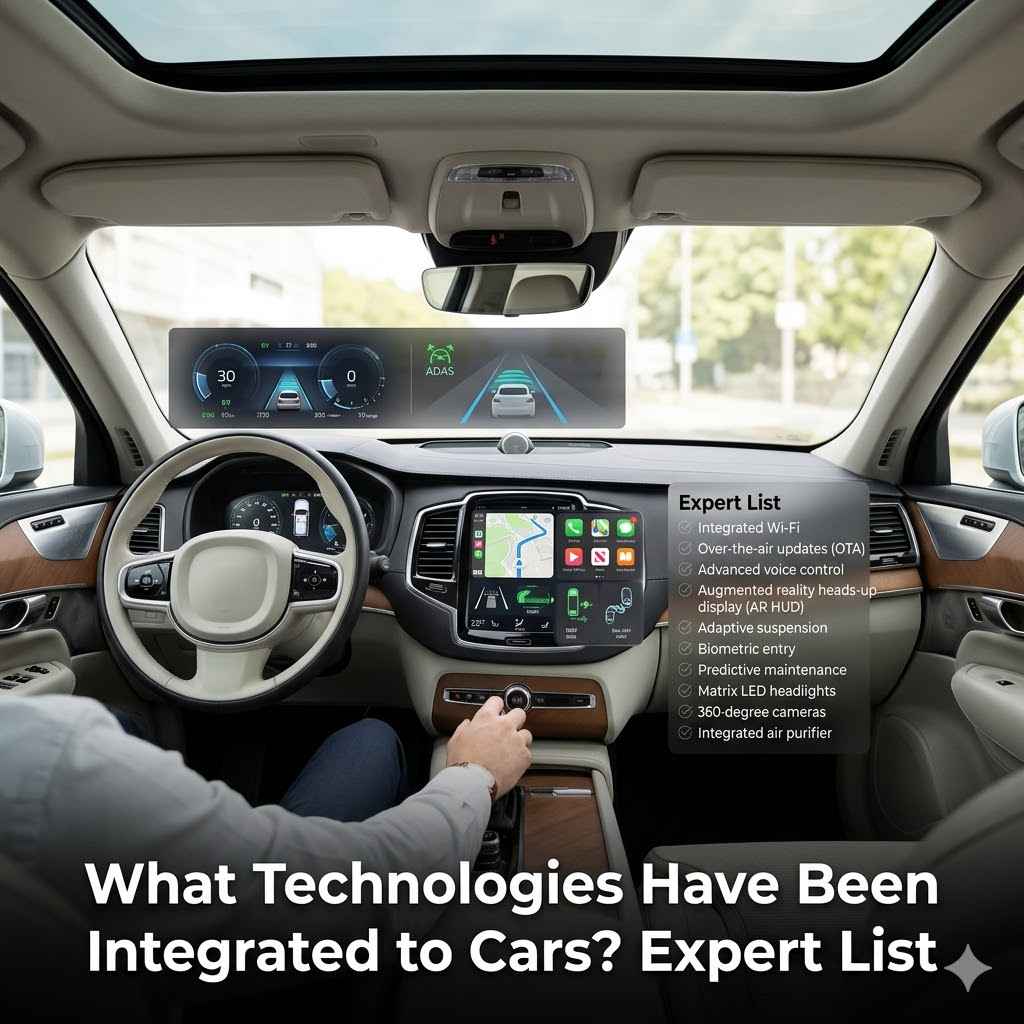
What Technologies Have Been Integrated to Cars? Expert List
Figuring out what technologies are now part of cars can seem like a big puzzle. Many people wonder, What Technologies Have Been Integrated to Cars? Expert List can be confusing because there are so many new things to learn.
But don’t worry! We’ll break it down step-by-step so it’s easy to get. Get ready to see how amazing cars have become.
Smart Safety Systems Explained
This section looks at all the clever ways cars help keep us safe. It covers technologies that watch the road and help prevent accidents before they happen. You’ll learn about systems that can see other cars, pedestrians, and even lane markers.
We will explore how these systems work together to make driving safer for everyone. This is a key part of understanding modern vehicles.
Automatic Emergency Braking
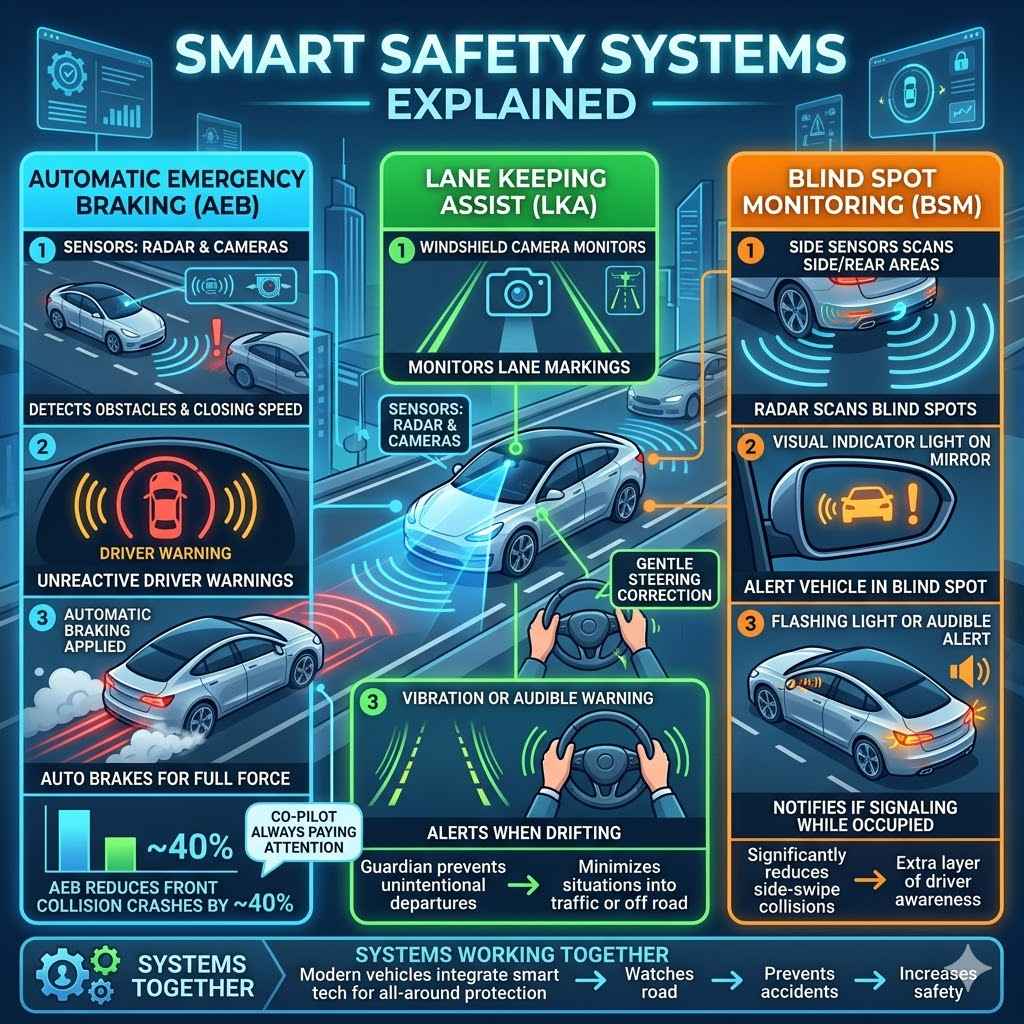
Automatic Emergency Braking, or AEB, is a system that helps prevent or lessen the severity of a frontal collision. It uses sensors, like radar and cameras, to detect if a car or obstacle is too close and moving faster than is safe. If the driver doesn’t react in time, the system will first give a warning.
This could be a visual alert on the dashboard or an audible beep. If the driver still doesn’t brake, the car will automatically apply the brakes with full force.
This technology is like having a co-pilot who’s always paying attention. It can react much faster than a human in some situations. For example, if you’re distracted for a second and the car in front of you suddenly stops, AEB can hit the brakes before you even realize the danger.
This can mean the difference between a minor fender bender and a much more serious crash.
The goal of AEB is to reduce crashes. Studies have shown that it is very effective. One report found that AEB systems can reduce front-to-rear crashes by about 40 percent.
This is a huge improvement in safety.
Lane Keeping Assist
Lane Keeping Assist (LKA) is another smart safety feature. It helps keep your car centered within its lane. The system uses a camera mounted on the windshield to monitor lane markings on the road.
When the camera sees that the car is drifting out of its lane without the turn signal being activated, LKA steps in. It can do this in a couple of ways.
First, it might provide a gentle steering correction. This nudges the steering wheel to guide the car back into the center of the lane. Think of it like a light hand on the wheel.
Second, some systems can alert the driver with vibrations in the steering wheel or an audible warning. This lets the driver know they are drifting.
LKA is especially helpful on long drives or when drivers might be a bit tired. It’s not meant to take over driving, but rather to be a helpful assistant. It acts as a guardian to prevent unintentional lane departures.
This feature contributes to overall road safety by minimizing situations where a car might drift into oncoming traffic or off the road.
Blind Spot Monitoring
Blind Spot Monitoring (BSM) uses sensors, often radar, located in the rear bumper or sides of the vehicle. These sensors scan the areas on either side of the car that the driver cannot easily see in their mirrors. This “blind spot” is a common place for accidents to happen when changing lanes.
When the BSM system detects a vehicle in one of these blind spots, it typically alerts the driver.
The most common alert is a visual indicator, usually a small light that illuminates on the side mirror. This light turns on when a vehicle is detected in the blind spot on that specific side. If the driver then signals to change lanes while a vehicle is present, the alert often becomes more noticeable.
This might involve flashing the light or sounding an audible warning.
Blind Spot Monitoring significantly reduces the risk of side-swipe collisions. It gives drivers an extra layer of awareness. This technology is particularly useful in busy traffic situations where many vehicles are close together.
It makes lane changes much safer by ensuring drivers know what’s beside them.
Connectivity and Entertainment Features
Cars are becoming more like our smartphones on wheels. This section explores how vehicles connect to the internet and offer amazing entertainment options. We’ll look at systems that let you use your phone apps in the car, get live traffic updates, and enjoy high-quality sound.
These features make every drive more enjoyable and informative.
Infotainment Systems
Infotainment systems are the central hub for most of a car’s electronic features. They combine information displays with entertainment functions. Typically, this is controlled via a touchscreen on the dashboard.
These systems are designed to keep drivers informed and entertained while minimizing distractions.
Key functions of an infotainment system include radio and media playback, navigation, phone connectivity, and vehicle settings. They often support Bluetooth for hands-free calling and audio streaming. Many also include Apple CarPlay and Android Auto.
These allow drivers to mirror their smartphone interface on the car’s screen, giving them access to familiar apps like maps, music players, and messaging services.
The screens for these systems vary in size and resolution. Larger, higher-resolution screens offer a more premium experience. Voice command is also a common feature, allowing drivers to control various functions without taking their hands off the wheel or eyes off the road.
This makes interaction with the system safer and more convenient.
Apple CarPlay and Android Auto
Apple CarPlay and Android Auto are software platforms developed by Apple and Google, respectively. They allow drivers to connect their iPhone or Android smartphone to the car’s infotainment system. When connected, the car’s screen displays a simplified version of the phone’s interface.
This makes it easy to access familiar apps and functions.
These platforms are designed with driving in mind. They offer large icons and simplified menus, making them easy to use even while on the move. Drivers can access navigation apps like Apple Maps or Google Maps, play music from streaming services like Spotify or Apple Music, make calls, and send text messages using voice commands.
The integration is seamless and greatly enhances the driving experience.
The primary benefit is convenience and familiarity. Drivers don’t have to learn a completely new system for navigation or music. They can use the apps they already know and love.
This reduces the learning curve and makes driving more enjoyable. It also allows for up-to-date maps and traffic information, as the car uses the phone’s live data.
Wireless Charging Pads
Wireless charging pads in cars offer a convenient way to keep your smartphone powered up without fumbling with cables. These pads are usually integrated into the center console or dashboard. They use a technology called inductive charging.
This means they transfer power wirelessly through electromagnetic fields.
To use a wireless charger, you simply place a compatible smartphone onto the designated pad. Most modern smartphones support this feature. The charging pad is connected to the car’s electrical system.
It draws power to create a magnetic field. When a Qi-certified device (the most common standard for wireless charging) is placed within this field, it begins to receive power.
This feature eliminates the need for USB cables, which can often clutter the car’s interior. It’s especially useful for longer trips or when you need to keep your phone charged for navigation or calls. Some advanced systems can even offer faster charging speeds, similar to wired fast chargers.
This technology is becoming increasingly standard in new vehicles.
Performance and Efficiency Technologies
Cars are getting smarter about how they use fuel and deliver power. This section delves into the technologies that make cars more efficient and powerful. We’ll discuss engines that sip gas, hybrid systems, and electric powertrains.
These innovations not only save money but also help protect the environment.
Hybrid Powertrains
Hybrid powertrains combine a traditional internal combustion engine with one or more electric motors. This combination offers significant benefits in terms of fuel efficiency and reduced emissions. The electric motor can assist the gasoline engine, allowing it to operate more efficiently or even shut off completely at low speeds.
There are different types of hybrid systems. In a parallel hybrid, both the gasoline engine and the electric motor can power the wheels together or independently. In a series hybrid, the gasoline engine acts solely as a generator to charge the battery, and the electric motor drives the wheels.
Most modern hybrids use a parallel system.
The battery in a hybrid is charged through regenerative braking. This means that when the car slows down or brakes, the electric motor acts as a generator, capturing kinetic energy that would otherwise be lost as heat and converting it into electrical energy to recharge the battery. This efficient energy recovery system is a cornerstone of hybrid technology.
Regenerative Braking
Regenerative braking is a key feature in hybrid and electric vehicles. When a driver lifts their foot off the accelerator pedal or presses the brake pedal, the electric motor reverses its function. Instead of using electricity to turn the wheels, it uses the wheels’ momentum to turn the motor.
This action generates electricity.
The generated electricity is then sent back to the vehicle’s battery pack, recharging it. This process not only helps recharge the battery but also slows down the vehicle. This means fewer traditional friction brakes are needed, leading to less wear and tear on brake pads and rotors over time.
It’s an ingenious way to recapture energy that is normally wasted.
Regenerative braking can significantly improve the driving range of electric and hybrid cars. It’s particularly effective in stop-and-go city driving. The more the car brakes and accelerates, the more energy can be recovered.
This makes these vehicles more efficient, especially in urban environments where braking is frequent.
Electric Vehicles EV Technology
Electric Vehicles, or EVs, are powered entirely by electricity stored in a large battery pack. They do not have a gasoline engine, exhaust system, or traditional fuel tank. This means they produce zero tailpipe emissions, making them a much cleaner alternative to gasoline-powered cars.
The electric motor provides instant torque, which can result in quick acceleration.
The heart of an EV is its battery. These batteries are typically lithium-ion, similar to those found in laptops and smartphones, but much larger and more powerful. The battery stores the energy that powers the electric motor.
The range of an EV depends on the size of the battery pack and the vehicle’s efficiency.
Charging an EV is done by plugging it into an external power source. This can be a standard household outlet (Level 1 charging), a dedicated home charging station (Level 2 charging), or a public fast-charging station (Level 3 charging). Charging times vary greatly depending on the type of charger and the battery size.
EVs are becoming increasingly popular due to their environmental benefits, lower running costs, and enjoyable driving experience.
Advanced Driver-Assistance Systems ADAS
Cars are getting smarter and can now perform many tasks that used to require human intervention. This section focuses on ADAS, which are technologies that help drivers with the driving task. These systems aim to improve safety and comfort by providing assistance in various driving scenarios.
They are stepping stones towards fully autonomous driving.
Adaptive Cruise Control
Adaptive Cruise Control (ACC) is an advanced version of traditional cruise control. While regular cruise control maintains a set speed, ACC also automatically adjusts that speed to maintain a safe distance from the vehicle ahead. It uses sensors, such as radar or cameras, to detect other vehicles in the car’s path.
When ACC is active, the driver sets a desired speed and a following distance. If the car approaches a slower vehicle, ACC will automatically reduce the vehicle’s speed to match the slower car. Once the slower vehicle moves out of the way or speeds up, ACC will resume the set speed.
Some advanced ACC systems can even bring the car to a complete stop and then resume driving when traffic begins to move again.
This technology is incredibly helpful for reducing driver fatigue on highways. It takes the stress out of managing speed in fluctuating traffic conditions. ACC contributes to safer driving by maintaining consistent and appropriate following distances, reducing the likelihood of rear-end collisions.
It allows drivers to relax more on longer journeys.
Parking Assistance Systems
Parking assistance systems are designed to make parking easier and safer. These systems can range from simple parking sensors to sophisticated self-parking capabilities. They use a variety of sensors, including ultrasonic sensors and cameras, to detect obstacles around the vehicle.
Ultrasonic sensors emit sound waves and measure the time it takes for them to bounce back. This helps determine the distance to objects. Cameras provide a visual representation of the car’s surroundings, often displayed on the infotainment screen.
This includes a rearview camera, which is now standard on most new cars.
More advanced systems include parking assist where the car can automatically steer into a parking spot. Some systems can even control the accelerator and brake pedals. These features are invaluable, especially in tight urban parking spaces.
They help drivers avoid scuffing wheels, hitting curbs, or bumping into other vehicles.
Driver Monitoring Systems
Driver Monitoring Systems (DMS) are designed to detect driver fatigue or distraction. They use cameras and sensors to observe the driver’s behavior. These systems can monitor various indicators, such as eye gaze, head position, and steering wheel movements.
If the DMS detects signs of drowsiness, such as prolonged eye closure or frequent head nodding, it will alert the driver. The alert can be an audible warning, a visual warning on the dashboard, or even a vibration. Some systems can also detect distraction, for example, if the driver is looking at their phone for too long.
These systems are crucial for enhancing safety, particularly on long drives. By identifying when a driver is not paying full attention or is becoming too tired to drive safely, DMS can help prevent accidents. They act as an intelligent assistant, reminding drivers to take a break or re-focus on the road.
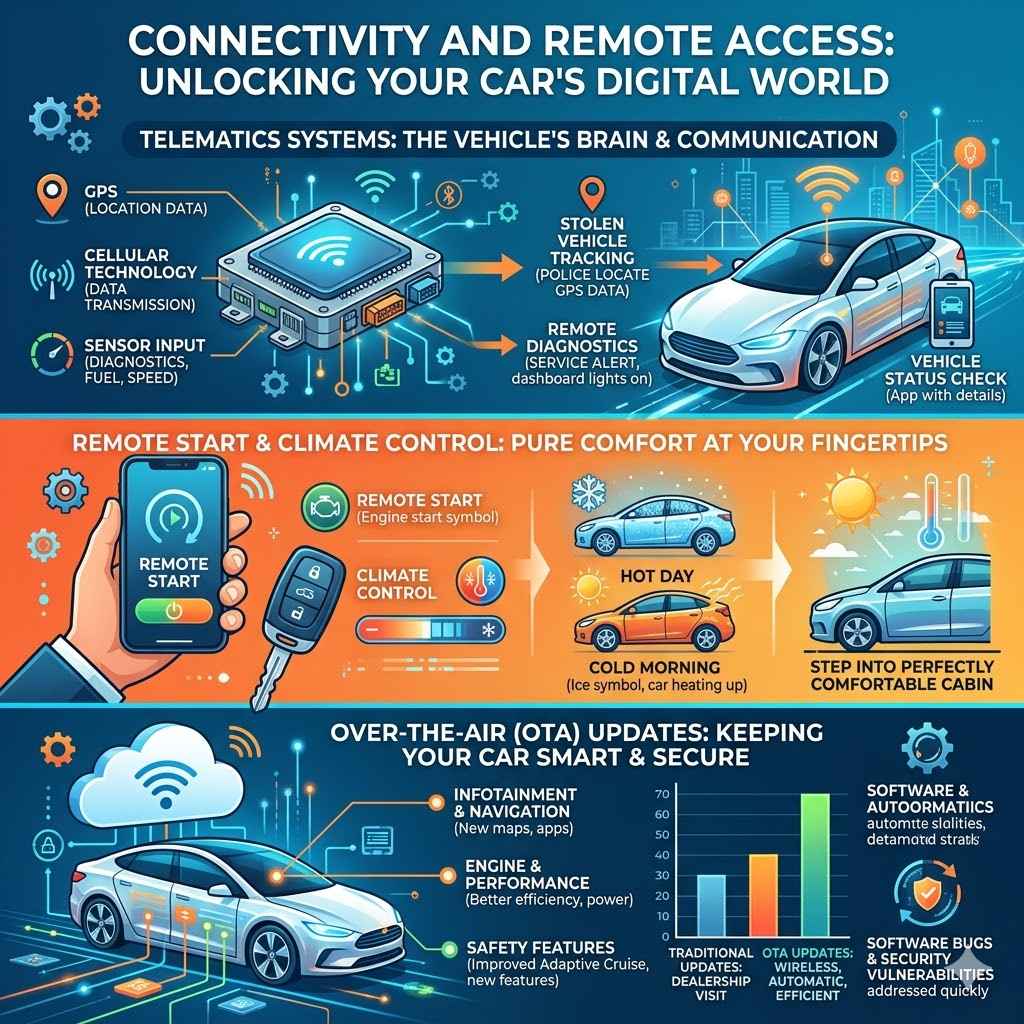
Connectivity and Remote Access
Cars are now part of our connected lives, allowing us to interact with them even when we’re not inside. This section covers how cars connect to the internet and allow for remote control. We’ll explore apps that let you start your car, check its status, and even find it in a parking lot.
Telematics Systems
Telematics systems are a combination of telecommunications and informatics. In cars, they use GPS and cellular technology to collect and transmit data. This data can include vehicle location, speed, fuel consumption, and diagnostic information.
Manufacturers use this data for various purposes, such as improving vehicle design and offering connected services to drivers.
For drivers, telematics often enable features like stolen vehicle tracking and remote diagnostics. If your car is stolen, law enforcement can use the GPS data to locate it. If the car detects a problem, it can send an alert to the owner or a service center, sometimes even before a dashboard warning light comes on.
Many modern cars come equipped with telematics systems as standard. They are the backbone of many connected car features. These systems are essential for providing real-time information and enhancing the overall ownership experience.
They bridge the gap between the car and the digital world.
Remote Start and Climate Control
Remote start allows you to start your car’s engine from a distance using a key fob or a smartphone app. This is incredibly useful, especially in extreme weather conditions. You can start your car to warm it up on a cold morning or cool it down on a hot day before you even get inside.
Similarly, remote climate control allows you to adjust the car’s heating and air conditioning settings remotely. This works in conjunction with remote start. The car will begin to adjust its internal temperature to your preset preference.
This means you can step into a perfectly comfortable cabin every time.
These features are often part of a larger connected car service offered by manufacturers. They enhance comfort and convenience significantly. The ability to prepare your car’s interior before you enter is a luxury that many drivers now appreciate.
Over-the-Air Updates
Over-the-Air (OTA) updates allow vehicles to receive software updates wirelessly, much like how smartphones get updates. This means that many of the car’s electronic systems can be improved or new features can be added without the driver needing to visit a dealership. This is a significant advancement in automotive technology.
OTA updates can cover a wide range of systems, from infotainment and navigation to engine control and safety features. For example, a manufacturer might release an update that improves the performance of the adaptive cruise control system or adds new apps to the infotainment system. These updates can be downloaded and installed automatically or with the driver’s permission.
This technology ensures that cars can stay up-to-date and continue to improve over their lifespan. It’s a more efficient way to manage software for complex electronic systems. It also allows manufacturers to quickly address any software bugs or security vulnerabilities that may be discovered.
Frequently Asked Questions
Question: What are the most common integrated technologies in cars today?
Answer: The most common integrated technologies include infotainment systems with smartphone integration like Apple CarPlay and Android Auto, advanced safety features like automatic emergency braking and lane keeping assist, and convenience features such as rearview cameras and Bluetooth connectivity.
Question: How do adaptive cruise control systems work?
Answer: Adaptive cruise control uses sensors like radar or cameras to detect vehicles ahead. It automatically adjusts the car’s speed to maintain a set distance from the vehicle in front, slowing down or speeding up as needed.
Question: Are electric vehicles truly emission-free?
Answer: Electric vehicles produce zero tailpipe emissions, meaning they don’t release pollutants directly into the atmosphere while driving. However, the overall environmental impact depends on how the electricity used to charge them is generated.
Question: What is the purpose of driver monitoring systems?
Answer: Driver monitoring systems aim to enhance safety by detecting signs of driver fatigue or distraction. They use cameras and sensors to observe driver behavior and provide alerts if necessary.
Question: Can my car receive new features wirelessly?
Answer: Yes, many modern cars can receive over-the-air (OTA) software updates wirelessly. This can add new features, improve existing ones, or fix software bugs without needing a visit to a dealership.
Conclusion
Cars now feature amazing technologies that make them safer, more convenient, and fun to drive. From smart safety nets to seamless connectivity and efficient powertrains, these advancements are transforming our driving experience. These expert-listed technologies are becoming standard.