Best Wireless Rearview Cameras (2026): No-Wire Install & Range
A wireless rearview camera clips onto your license plate and streams live video to a dash monitor with no wiring — but signal range (52-230 ft) and battery life vary widely by model. Buy the wrong one and you’ll fight lag, a dead battery, or a washed-out screen when you need to see a curb or a child on a bike. This guide compares real wireless range, IP69K waterproofing, night vision, and solar battery life across four current models.
Note: Insert your Affiliate Disclosure reusable block here.
Quick Answer
The best wireless rearview cameras use a magnetic or license-plate mount, install in under 3 minutes with no wiring, and stream to a dash monitor over a 2.4GHz digital signal. Look for at least a 50-100 ft rated range, IP69K waterproofing, a 5,000mAh+ battery (3-4 months per charge), and true night vision — not just a bright display.
What Is a Wireless Rearview Camera? How It Works
A wireless rearview camera is a small camera that mounts on your license plate, bumper, or rear window and transmits video over a 2.4GHz digital radio signal to a battery-powered or hardwired monitor — no cable has to be run through the vehicle. Most units activate automatically when you shift into reverse (if wired to the reverse light) or via a motion/vibration sensor on fully wireless, battery-only models. This is different from a factory-installed 360-degree camera system, which uses multiple cameras wired directly into the vehicle’s infotainment display — check whether your car already has one before buying an aftermarket unit.

Wireless vs. Wired Rear Camera: Which Should You Buy?
A wireless rear camera installs in minutes with no cable run, while a wired system needs a cable routed from the camera to the monitor (and often to the reverse light) but delivers a slightly more consistent signal with zero risk of RF interference. For a daily-driven car, SUV, or short-bed pickup, a good digital wireless camera is reliable enough to match a wired one; wired is still the safer bet for long trailers, RVs, or job-site trucks where the signal has to cross 20+ feet of metal.
| Factor | Wireless | Wired |
|---|---|---|
| Install time | 1-3 minutes, no drilling | 30-90 minutes, cable routing required |
| Signal reliability | Very good on cars/SUVs; can flicker in dense 2.4GHz areas | Consistent, no RF interference |
| Best for | Sedans, SUVs, short-bed trucks | RVs, trailers, long trucks, permanent installs |
| Power source | Battery + solar, or reverse-light tap | Hardwired to reverse light |
Rearview Mirror Camera Systems vs. License-Plate Wireless Cameras
A rearview mirror camera replaces or clips over your existing interior mirror and often pairs a front-facing dash cam with a rear camera in one unit — it’s a permanent, usually hardwired install. A license-plate wireless backup camera mounts externally on the plate and sends its feed to a small standalone monitor or your phone, and it’s designed to be moved between vehicles or removed entirely. Choose a mirror system if you also want continuous dash-cam recording; choose a plate-mount wireless camera if you just want backup visibility with the fastest, least invasive install.
Best Wireless Rearview Camera Pick
AUTO-VOX Solar Wireless Backup Camera (5" Monitor)
2-minute magnetic/adhesive license-plate mount with a frequency-hopping digital signal rated to 52 ft and a 5,000mAh battery that runs 3-4 months per charge.
- Best for: drivers who want the most balanced range, battery life, and price
- Why we picked it: IP69K waterproofing and a real 3-4 month battery runtime beat most cameras in this price tier
- Main drawback: 52 ft rated range is shorter than the brand’s own 6-inch model
Compare more wireless rearview camera options
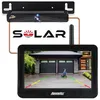 Budget Pick ARMOR ALL Solar Wireless Backup Camera
|
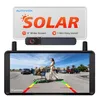 Longest Range AUTO-VOX 6" Solar Wireless Backup Camera
|
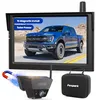 Best Daytime Visibility Solar Magnetic Anti-Glare Backup Camera
|
As an Amazon Associate we earn from qualifying purchases.
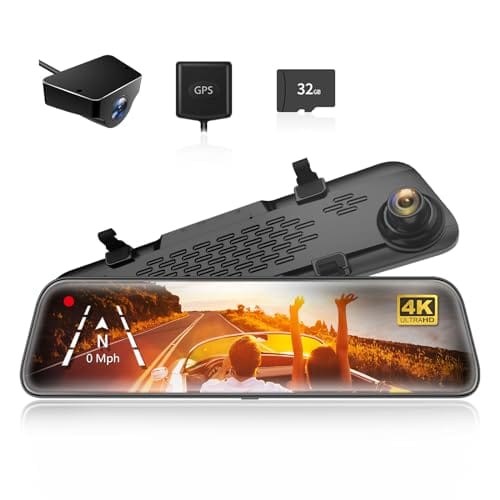
WOLFBOX G840S 12″ 4K Mirror Dash Cam Backup Camera
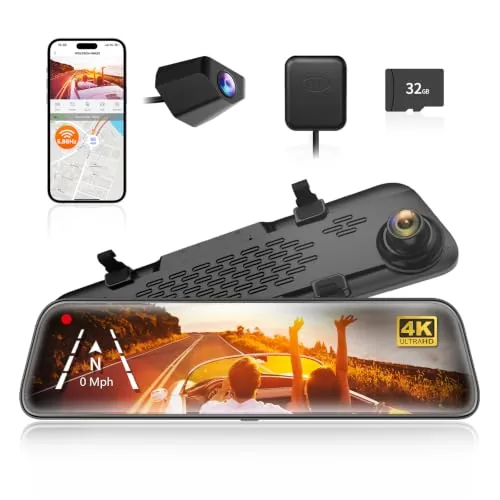
The WOLFBOX G840S is a mirror-replacement system, not a plate-mount wireless camera: it clips over your existing rearview mirror and connects to a hardwired rear camera and a windshield-facing front dash cam, both recording in 4K/2160P. It ships with a 32GB card and a GPS module, and its 5.8GHz WiFi link is used for phone app playback, not for the rear camera feed itself, which is wired. As of this guide, it’s priced at $129.98.
- Pros: true 4K dual dash-cam recording, large 12-inch display, includes 32GB card and GPS, night vision on both cameras
- Cons: rear camera is hardwired (not a true wireless plate camera), professional-style install recommended for the rear camera run
Pyle PLCM4590WIR Wireless Backup Rear View Camera
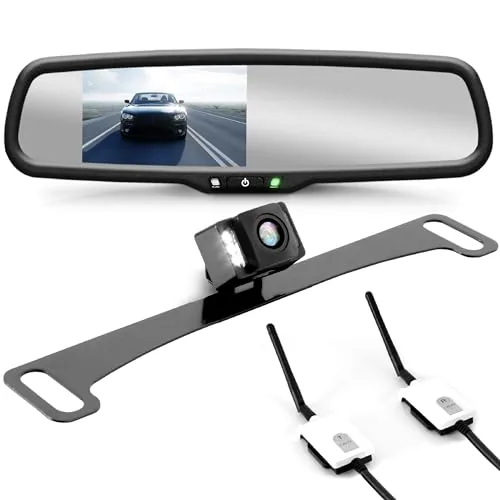
The Pyle PLCM4590WIR is a genuine wireless license-plate camera paired with a 4.3-inch clip-on mirror monitor, adjustable distance scale lines for parking, and built-in night vision. It’s waterproof for rain and car-wash exposure and currently lists at $141.59. It’s a straightforward, no-frills option if you want a wireless plate camera without the mirror-replacement bulk of a dash-cam combo unit.
- Pros: genuine wireless plate-mount camera, distance scale guidelines, night vision, waterproof housing
- Cons: 4.3-inch monitor is smaller than newer 5-6 inch competitors, no solar charging or long-range dual-antenna design
AUTO-VOX 6″ Solar Wireless Backup Camera
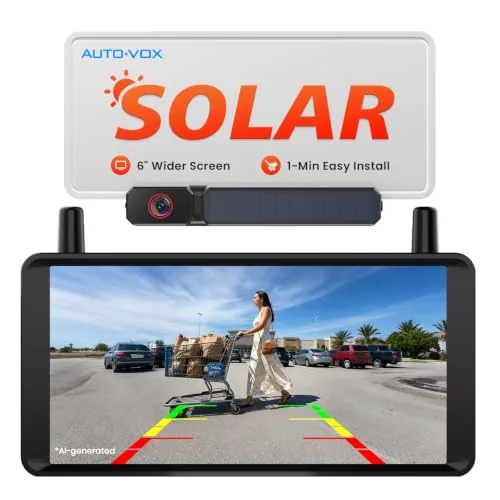
The AUTO-VOX 6″ Solar Wireless Backup Camera snaps onto the license plate in about a minute with no drilling and pairs to a 6-inch, 16:9 monitor over a dual-antenna wireless link rated up to 230 feet — the longest range of any camera in this guide, which matters more on longer SUVs and trucks. It adds built-in DVR recording, solar-assisted charging with a Type-C backup, and an IP69K waterproof rating, and currently lists at $159.99.
- Pros: longest wireless range in this guide (230 ft, dual-antenna), built-in DVR footage recording, solar + Type-C charging, larger 6-inch display
- Cons: highest price of the models reviewed here, larger monitor takes up slightly more dash space
How to Install a Wireless Magnetic Backup Camera
Every magnetic and license-plate wireless camera in this guide follows roughly the same install process:
- Clean the mounting area: Wipe down the license plate or rear bumper surface so the magnetic base or included 3M adhesive gets full contact.
- Attach the camera to the plate or magnetic base: Snap the camera onto the license plate frame or magnetic mount, angling the lens slightly downward to capture the full parking zone.
- Mount the receiver and monitor: Position the wireless monitor on the dash or clipped to the rearview mirror where the antenna has a clear line of sight to the camera.
- Power the monitor and pair the signal: Plug the monitor into a 12V outlet or USB port; most models auto-pair with the camera within seconds.
- Test the range and adjust angle: Put the car in reverse and check the live feed at normal driving distance before locking the camera in place with the included anti-theft screws.
How Far Can a Wireless Rear View Camera Really Transmit?
Published wireless range (52-230 ft in this guide) is measured in open space with no obstructions — in real-world use, your vehicle’s own metal body, other 2.4GHz devices (Wi-Fi routers, garage door openers, other wireless cameras nearby), and heavy rain or snow can all reduce effective range. Modern digital wireless cameras use frequency-hopping to automatically skip congested channels, which is why 2026-era models rarely show the constant flicker that plagued older analog wireless systems — most drivers see an occasional glitch every few weeks rather than a daily problem. If your feed lags or drops constantly, move the receiver antenna higher, onto the dash or windshield, rather than low on the center console.
IP67 vs. IP68 vs. IP69K: Which Waterproof Rating Do You Need?
IP ratings use two digits: the first (always 6 on these cameras) means fully dust-tight, and the second rates water resistance. IP67 means the housing survives up to one meter of submersion for 30 minutes; IP68 is rated for continuous submersion beyond that, with the exact depth set by the manufacturer; IP69K — the rating used on all four cameras in this guide — adds protection against high-pressure, high-temperature jets, which is the closest real-world match to a car wash or driving through standing road spray. For a backup camera mounted on your rear bumper or plate, IP69K is the rating to look for; IP67/IP68 alone don’t guarantee it will survive a pressure washer.
| Rating | What It Protects Against | Good Enough For a Backup Camera? |
|---|---|---|
| IP67 | Up to 1m submersion, 30 minutes | Rain and puddles only |
| IP68 | Continuous submersion beyond 1m | More than most cars need |
| IP69K | High-pressure, high-temperature jets | Yes — matches car washes and road spray |
Battery Life and Solar Charging for Magnetic-Mount Cameras
Battery-only magnetic and plate-mount cameras run on an internal lithium battery, typically 5,000mAh in the models reviewed here, which lasts roughly 3-4 months per charge under normal daily use before it needs a USB top-up. Models with a built-in solar panel — like the three plate-mount cameras in the product comparison above — trickle-charge that battery whenever the car is parked in daylight, which can extend runtime significantly and, for light use, may mean you rarely plug it in at all. Setting a shorter screen-on display time (60 seconds instead of 120) is the single easiest way to stretch battery life further.
Does a Backup Camera Replace Checking Your Mirrors?
No. A backup camera adds visibility directly behind the vehicle, but it still has its own blind spots close to the bumper and to the sides that only your mirrors and a physical shoulder check will cover. Since May 2018, Federal Motor Vehicle Safety Standard No. 111 has required rear-visibility technology on new light vehicles precisely because backing incidents were killing an estimated 210 people and injuring roughly 15,000 more every year in the US — a camera is meant to supplement that safety margin, not replace the habit of looking.
📊 Backup incidents caused an estimated 210 deaths and 15,000 injuries a year in the US before rear-visibility technology became mandatory — Source: Federal Register, FMVSS No. 111 Rear Visibility
“Rear visibility technology does not replace the need for drivers to look, use their mirrors, and back up slowly and carefully.”
Frequently Asked Questions
How far can a wireless backup camera transmit its signal?
Most magnetic-mount wireless backup cameras transmit 50 to 250 feet in open space, though metal vehicle bodies, other 2.4GHz devices, and weather can cut that range in real-world use. The AUTO-VOX 6-inch model in this guide is rated for 230 feet with a dual-antenna design, while smaller 5-inch models typically top out around 50 to 100 feet.
Do wireless backup cameras lag or lose signal while driving?
Occasional flicker is normal every few weeks on 2.4GHz digital models, especially in dense areas crowded with other wireless devices, but a properly paired camera shouldn’t drop the feed while you’re actively reversing. If you see constant lag, reposition the receiver antenna on the dash or windshield rather than low on the console.
What does the IP69K waterproof rating mean on a backup camera?
IP69K means the camera housing is fully dust-tight and rated to survive high-pressure, high-temperature washdowns, a higher bar than the IP67 rating used on many phones. For a camera mounted on your rear bumper or license plate, IP69K covers rain, car washes, and road spray without hesitation.
How long does the battery last on a wireless backup camera?
Battery-only magnetic-mount cameras typically run 2 to 4 months per charge with normal daily use, and models with a built-in solar panel can extend that further by trickle-charging during daylight parking. Battery life drops if you set a longer screen-on display time or trigger the camera frequently.
Can a backup camera replace checking my mirrors?
No. NHTSA is explicit that rear-visibility technology like backup cameras supplements, but does not replace, checking your mirrors and physically turning to look before reversing. Cameras have their own blind spots near the bumper and to the sides that mirrors and a shoulder check still cover.
Do I need a professional to install a wireless magnetic backup camera?
No. Magnetic and license-plate-mount wireless backup cameras are designed for a 1 to 3 minute DIY installation with no wiring, drilling, or reverse-light splice required. Hardwired mirror-replacement systems like the WOLFBOX G840S take longer and may need a wiring run to the reverse light.
Conclusion
For most drivers, a plate-mount wireless camera like the AUTO-VOX Solar Wireless Backup Camera hits the best balance of range, battery life, and IP69K waterproofing without the wiring hassle of a mirror-replacement system. Choose the 6-inch AUTO-VOX model if you drive a longer SUV or truck and want maximum range and DVR recording, the ARMOR ALL if budget is the priority, or the WOLFBOX G840S if you also want continuous front-and-rear dash-cam recording built into your mirror. Whichever you choose, remember it’s an addition to checking your mirrors — not a replacement for them. For more on car camera systems, see our guide to replacing a factory rear view camera and whether magnetic car mounts hold up to daily use.
Products related to this article
Sponsored / affiliate links. As an Amazon Associate I earn from qualifying purchases. I may earn additional commission from eligible campaigns.