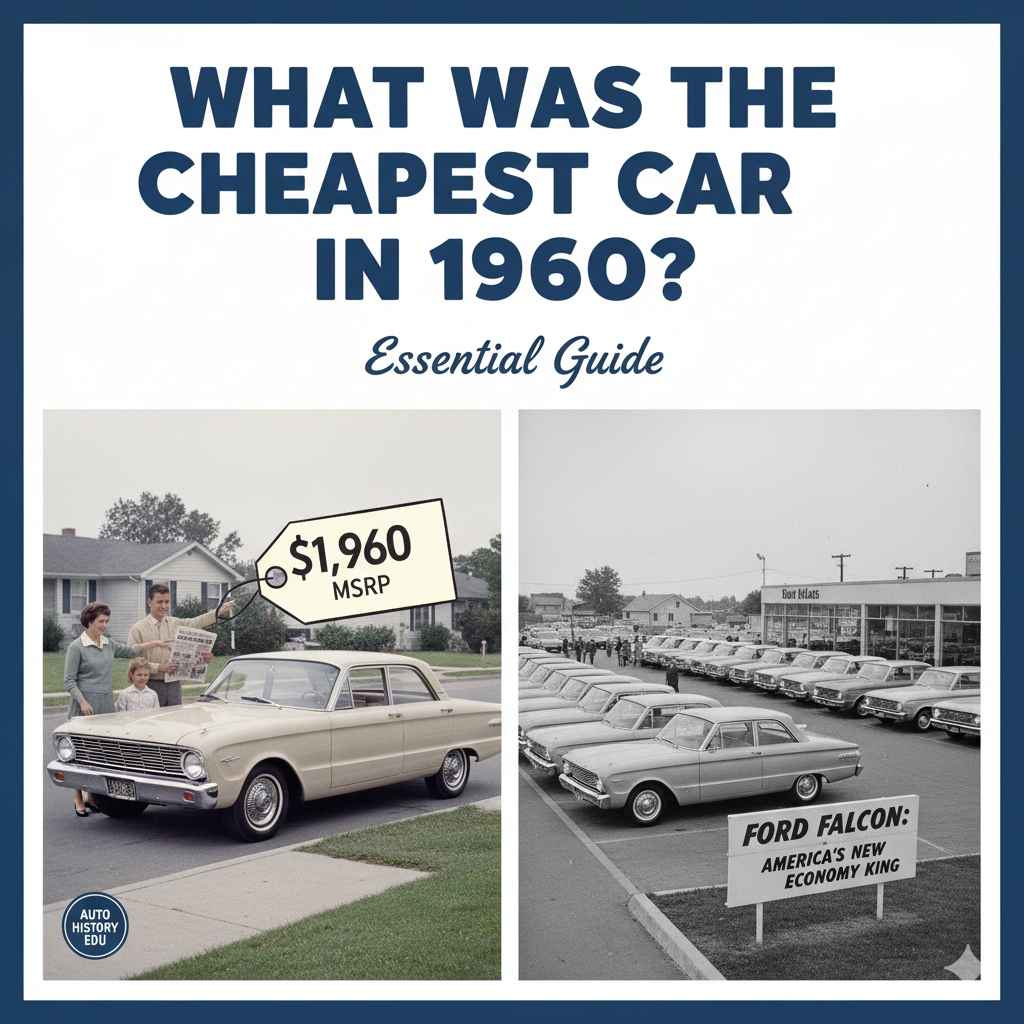
What Was The Cheapest Car In 1960: Essential Guide
The cheapest car in 1960 was the Nash Rambler American, often retailing for around $1,789. These compact, economical vehicles were designed for affordability and practicality, making them popular choices for budget-conscious buyers seeking reliable transportation that wouldn’t break the bank.
Thinking about the cars from the past can be fun, especially when we look at how much things cost! Many people wonder about the real bargain buys back in the day. If you’ve ever found yourself curious about what kind of deals were available for new cars in 1960, you’re in the right spot. It’s easy to get lost in historical data, but I’m here to break it all down for you in a simple, easy-to-understand way. We’ll uncover the most affordable option and what made it so special. Get ready to explore the world of economical motoring from a bygone era!
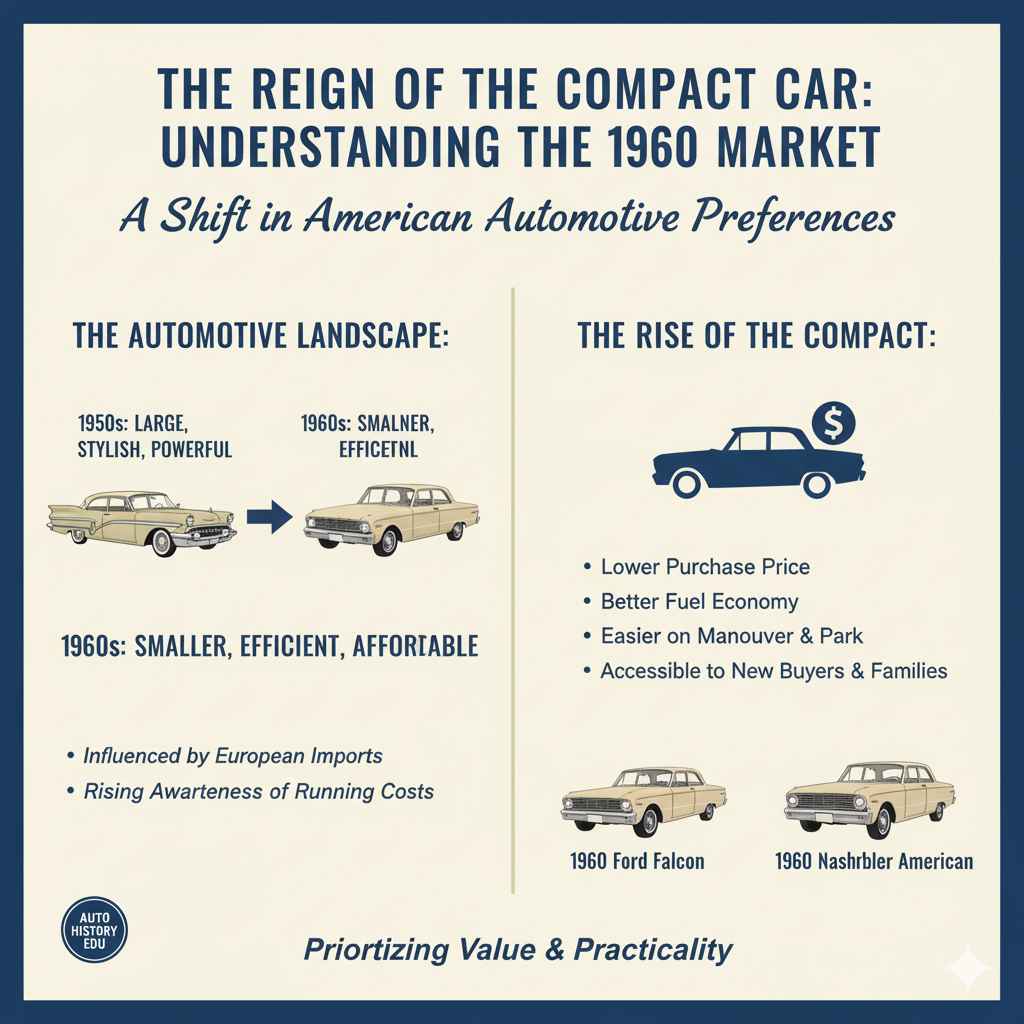
The Reign of the Compact Car: Understanding the 1960 Market
The year 1960 was a fascinating time for the automotive industry. While big, stylish, and powerful cars still held a strong appeal, a significant shift was happening. Smaller, more fuel-efficient, and budget-friendly cars, often referred to as “compacts,” were gaining serious traction. This was partly influenced by the success of European imports and a growing awareness of running costs. Drivers were starting to see the practical advantages of a car that was easier to maneuver, park, and, most importantly, cheaper to buy and run.
Automakers saw this trend and began to introduce their own versions of compact cars to compete. These vehicles were stripped-down, often lacking some of the luxury features found in their larger siblings, but they offered a vital benefit: affordability. This focus on price point made them accessible to a wider range of consumers, including first-time car buyers, families looking for a second car, and those simply prioritizing value.
Unveiling the Champion: The Nash Rambler American
When we talk about the absolute cheapest brand-new car you could drive off the lot in 1960, one name consistently rises to the top: the Nash Rambler American. This car wasn’t just a budget option; it was a symbol of sensible motoring. Built by the American Motors Corporation (AMC), the Rambler American was designed from the ground up to be economical in every sense of the word.
Its affordability was its biggest selling point. For a price point that was significantly lower than many of its competitors, buyers got a functional, no-frills vehicle that could get them from point A to point B reliably. It represented a smart choice for those who needed transportation without the extravagance, proving that you didn’t need to spend a fortune to own a new car.
Key Features and Appeal of the Rambler American
The Rambler American’s appeal lay in its simplicity and practicality. It wasn’t about flashy chrome or powerful V8 engines. Instead, it focused on delivering the essentials. Here’s what made it stand out as the budget king:
- Compact Size: Its smaller dimensions made it nimble in city traffic and easy to park, a growing concern for urban dwellers.
- Fuel Economy: Compared to larger American cars of the era, the Rambler American offered better gas mileage, a crucial factor in keeping running costs down.
- Lower Purchase Price: This was its defining characteristic. AMC positioned the Rambler American as an attainable option for the average family.
- Simple Mechanics: With fewer complex systems and options, maintenance was generally more straightforward and less expensive.
- Durable Build: Despite its low cost, the Rambler American was known for being a tough and dependable car, built to last.
The Rambler American came in various body styles, including a sedan and a station wagon, which further enhanced its appeal as a versatile car for different needs. Its no-nonsense design ensured that buyers were paying for transportation, not for features they might not need or want.
Price Point and Value: How Much Did it Really Cost?
The exact price of a new car can fluctuate based on options, dealer markups, and individual negotiation. However, research consistently places the base model Nash Rambler American in the range of approximately $1,700 to $1,800 in 1960. To put this into perspective, many other new cars from major manufacturers were often priced well over $2,000, and some could even reach $3,000 or more.
This price difference was substantial. For instance, if a comparable larger sedan cost $2,500, the Rambler American was nearly a third cheaper. This made it an incredibly attractive proposition for individuals and families stretching their budgets. AMC was very aggressive with its pricing strategy for the Rambler line, recognizing the growing market for affordable, reliable transportation.
Comparing Prices: Rambler American vs. Competitors
To truly appreciate the Rambler American’s position as the cheapest car, it’s helpful to look at how its price stacked up against some other popular models of 1960. While exact MSRPs can vary, here’s a general idea:
| Car Model | Approximate Base Price (1960 USD) | Notes |
|---|---|---|
| Nash Rambler American | $1,789 | Often cited as the lowest-priced new car. A true compact. |
| Ford Falcon | $1,900 – $2,500 | A key competitor to the Rambler, also a compact. |
| Chevrolet Corvair | $2,000 – $2,500 | Innovative but sometimes pricier than direct competitors. |
| Plymouth Valiant | $2,000 – $2,500 | Chrysler’s entry into the compact market. |
| Volkswagen Beetle (Type 1) | ~$1,600 (Imported) | Though very cheap, it was an imported car with a different market position and fewer creature comforts. |
| Dodge Lancer | $2,000 – $2,500 | Another Mopar compact offering. |
It’s worth noting the Volkswagen Beetle. While technically very affordable, it was an imported vehicle and appealed to a slightly different buyer who might have been looking for something distinctly European. For an American-built, readily available domestic model, the Rambler American was generally the undisputed budget champion.
Beyond the Price Tag: Costs of Ownership in the 1960s
When we talk about the “cheapest” car, it’s not just about the initial purchase price. For budget-conscious buyers in 1960, the ongoing costs of ownership were equally, if not more, important. This is where the Rambler American truly shone.
Fuel Efficiency
Gasoline prices in 1960 were much lower than today, but fuel efficiency was still a significant concern, especially for those on tight budgets. Larger, more powerful cars of the era often struggled to achieve 15-20 miles per gallon (MPG), while the Rambler American, with its smaller engines (typically straight-four or straight-six), could often deliver 25 MPG or even higher. This consistent saving at the pump added up considerably over time.
Maintenance and Repairs
The simpler design of the Rambler American translated into generally lower maintenance and repair costs. Fewer complex systems meant fewer things could go wrong. Parts were also typically less expensive than those for larger, more feature-rich vehicles. This made it easier for owners to keep their cars running without incurring massive repair bills. Basic tune-ups, brake jobs, and oil changes were straightforward and accessible for many local mechanics.
For those who enjoyed a bit of do-it-yourself work, the Rambler American was often a friendly platform. Its straightforward engineering meant that basic maintenance tasks were within reach for the average car owner, further contributing to lower overall costs.
Insurance and Taxes
While insurance rates vary widely, cheaper cars generally incurred lower insurance premiums. The perceived risk and the potential payout in case of theft or damage were typically lower for more affordable vehicles. Similarly, registration fees and taxes, often based on vehicle value or engine size, could also be less for a compact car compared to a luxury or high-performance model.
American Motors Corporation (AMC) and its Vision
American Motors Corporation, formed in 1954 by the merger of Nash-Kelvinator Corporation and Hudson Motor Car Company, was a smaller player in the Big Three auto-dominated American market. Led by George W. Romney for a significant period in the late 1950s and early 1960s, AMC focused on differentiating itself by emphasizing value, quality, and smart engineering, particularly in its compact Rambler line.
AMC wasn’t trying to compete with the sheer horsepower or luxury of Ford, Chevrolet, or Chrysler. Instead, they carved out a niche by offering vehicles that provided excellent fuel economy, solid construction, and a lower price point. The Rambler American division was the embodiment of this strategy. They saw the market’s growing demand for economical transport and delivered precisely that, making them a very successful smaller manufacturer during this era.
AMC’s success with the Rambler line, especially the American model, demonstrated that there was a substantial market for sensible, affordable cars in America. This foresight helped AMC survive and even thrive in a competitive landscape, offering an alternative to the larger, more traditional offerings from the giants of the automotive world.
A Look at Other Budget-Friendly Options in 1960
While the Nash Rambler American was generally considered the absolute cheapest, it’s important to acknowledge that other manufacturers were also introducing compelling affordable options to the market. The compact car wars were well underway, and consumers had choices, though most came at a slightly higher price point.
Ford Falcon
Ford’s entry into the compact market was the Falcon. Launched in late 1959 for the 1960 model year, it was an immediate success. The Falcon was designed to be light, economical, and affordable. While its base price was typically a bit higher than the Rambler American, it offered a robust challenger and was a major player in the compact segment. Its styling was conventional and appealing, making it a strong competitor.
Chevrolet Corvair
Chevrolet’s innovative answer to the compact trend was the Corvair. It featured a rear-mounted, air-cooled engine, making it quite different from most American cars. While technically advanced and offering good interior space for its size, the Corvair’s base price often put it a notch above the ultra-budget Rambler American and Falcon. Its unique engineering also led to some distinct driving characteristics that appealed to a specific type of buyer.
Plymouth Valiant
Chrysler’s response was the Plymouth Valiant. It was a distinctive car with “Tornado” styling and a reputation for robust construction and reliability. Like the Falcon and Corvair, the Valiant offered compact dimensions and better fuel economy than larger cars, but its entry-level models also tended to be priced slightly above the cheapest options.
These cars, while not always the absolute cheapest, represented the growing trend towards smaller, more affordable vehicles. They competed fiercely for the market share of cost-conscious buyers, but the Rambler American often maintained its lead as the entry-level, no-frills option.
The Legacy of 1960s Economy Cars
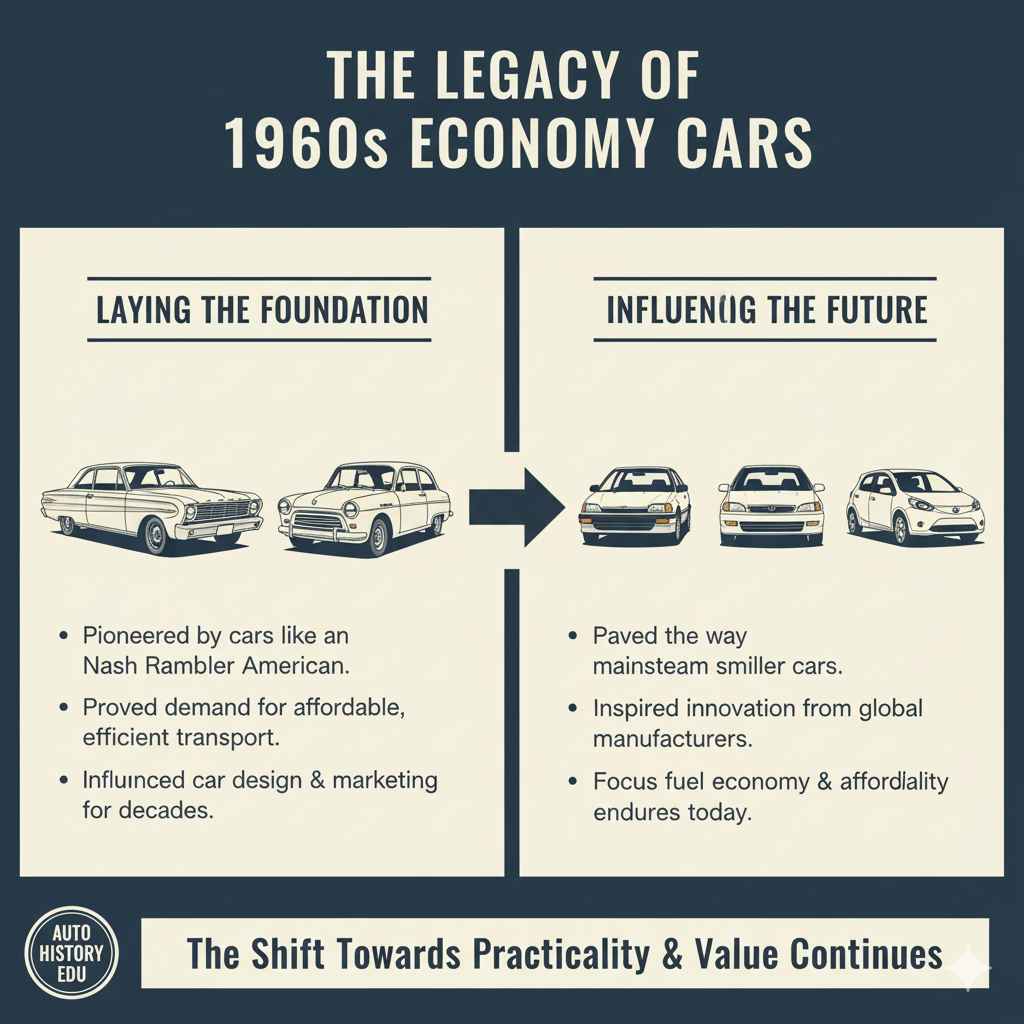
Cars like the Nash Rambler American laid the groundwork for future generations of affordable and fuel-efficient vehicles. They proved that there was a significant demand for practical transportation that didn’t require a huge financial commitment. This philosophy of providing essential function at a low cost influenced car design and marketing for decades to come.
The success of these early compacts helped pave the way for smaller cars becoming more mainstream in the American market, eventually influencing Japanese and European manufacturers to further innovate in this space. The focus on fuel economy, simplicity, and affordability remains a key consideration for many car buyers even today. These historical models remind us of the ingenuity and adaptability of the automotive industry in meeting consumer needs and economic realities.
Frequently Asked Questions (FAQ)
What was the base price of the cheapest car in 1960?
The cheapest car, the Nash Rambler American, typically had a base price of around $1,789 in 1960. This made it significantly more affordable than many other new cars available at the time.
Was the Nash Rambler American a reliable car?
Yes, the Nash Rambler American was generally considered a reliable and durable car. Its simpler mechanical design often contributed to its dependability and ease of maintenance.
Did the cheapest car in 1960 come with many options?
No, the focus of the cheapest cars like the Rambler American was on affordability, so they came with very basic features. Optional extras, if available, would increase the price.
Were there any imported cars cheaper than the Nash Rambler American in 1960?
The Volkswagen Beetle was often priced around $1,600, making it technically cheaper. However, it was an imported car with different market appeal and amenities compared to a domestic model like the Rambler American.
What kind of engine did the cheapest car in 1960 usually have?
The Nash Rambler American typically came with economical inline-four or inline-six cylinder engines. These were designed for fuel efficiency rather than high performance.
How did the fuel economy of the cheapest cars compare to larger cars in 1960?
Economy cars like the Rambler American offered significantly better fuel economy, often achieving 25 MPG or more, compared to larger American sedans that might struggle to reach 15-20 MPG.
What body styles were available for the Nash Rambler American?
The Nash Rambler American was usually available as a two-door sedan and, importantly for families, as a station wagon, offering a practical choice at a low price point.
Getting the Best Value: A Lesson Through Time
Looking back at 1960, it’s clear that the automotive landscape offered a stark contrast to today’s market. The quest for the cheapest car led us to the Nash Rambler American, a vehicle that prioritized affordability and practicality above all else. It proved that a new, functional car could be within reach for many Americans, not just a luxury item.
The lesson here extends beyond just historical curiosity. It reinforces the enduring value of understanding your needs and prioritizing them when making a purchase. Whether you’re buying a car today or in the future, focusing on sensible features, reasonable running costs, and a price that fits your budget will always be a smart strategy. The 1960s economy cars like the Rambler American serve as a timeless reminder that sometimes, the best value comes in the simplest packages. They were more than just cheap cars; they were intelligent choices for a generation.