
Where Do You Put Refrigerant in a Car? A Step-by-Step Guide
Hey there, friend! So, your car’s air conditioning isn’t blowing cold air anymore, and you’re wondering, “Where do you put refrigerant in a car?” I’ve been there—swelteringly uncomfortable in my car on a hot summer day, wishing I knew how to fix it. After diving into this topic and tinkering with my car, I’ve learned the ins and outs of adding refrigerant to get that AC back to icy perfection.
Think of me as your buddy sitting next to you, explaining it all step by step. Whether you’re a DIY newbie or a seasoned car enthusiast, this guide will show you exactly where to add refrigerant, how to do it safely, and what to watch out for. Let’s cool things down and get started!
Why Your Car’s AC Needs Refrigerant
Your car’s air conditioning system is like a mini fridge for your cabin. It uses refrigerant—a special chemical—to absorb heat and cool the air. Over time, though, refrigerant can leak out or get low, especially in older cars. I noticed my AC getting weaker a few years ago, and adding refrigerant made all the difference.
Refrigerant doesn’t just “run out” like gas. If it’s low, there’s usually a small leak somewhere. Adding refrigerant can be a quick fix, but it’s not a cure for bigger problems. Knowing where to add it and how to do it right is key to keeping your AC running smoothly. Let’s talk about how your AC system works so you understand where the refrigerant goes.
Understanding Your Car’s AC System
Your car’s AC system has a few main parts: the compressor, condenser, evaporator, expansion valve, and hoses. The refrigerant flows through these parts in a closed loop, turning from a gas to a liquid and back again. The compressor, which is like the heart of the system, pumps the refrigerant. The condenser, usually in front of your radiator, cools it down. The evaporator, inside your car, blows cold air into the cabin.
The refrigerant goes into the system through a specific port—either the low-pressure or high-pressure port. For most DIY jobs, you’ll use the low-pressure port. I learned this the hard way when I tried hooking up to the wrong port and got nowhere fast. Don’t worry, I’ll show you how to find the right spot.
Where to Find the Low-Pressure Port
So, where exactly do you put the refrigerant? In most cars, you add it through the low-pressure port, which is part of the AC system’s plumbing. This port is usually located under the hood, along the AC lines. Here’s how I find it:
- Pop the Hood: Open your car’s hood and look for the AC lines. These are metal or rubber hoses running from the compressor (near the engine) to the condenser (near the radiator).
- Spot the Ports: The AC system has two ports: low-pressure and high-pressure. The low-pressure port is usually larger and has a black or blue cap. The high-pressure port is smaller with a red cap. Always use the low-pressure port for adding refrigerant.
- Check Your Manual: If you’re not sure, your car’s owner’s manual or a repair manual (like Haynes or Chilton) will point you to the low-pressure port. I keep a manual in my garage—it’s a lifesaver.
- Look for Labels: Some cars have “L” (low) or “H” (high) marked on the ports or nearby lines. My old sedan had these, which made it super easy.
The low-pressure port is typically near the firewall (the back of the engine bay) or along the side of the engine. On my car, it’s next to the battery, but it varies by make and model. If you’re struggling to find it, check online forums for your car model—other owners often share photos.
Tools and Supplies You’ll Need
Before you start, gather the right tools. I’ve done this a few times, and having everything ready makes it so much easier. Here’s what you’ll need:
- Refrigerant: Most modern cars (1995 and newer) use R-134a refrigerant. Check your car’s manual or the sticker under the hood to confirm. Some newer cars (post-2017) use R-1234yf, which is different.
- AC Recharge Kit: These kits come with a can of refrigerant, a hose, and a pressure gauge. I use brands like A/C Pro or Interdynamics—around $20-$40 at auto stores.
- Safety Glasses and Gloves: Refrigerant is cold and can cause frostbite. Protect your eyes and hands.
- Microfiber Cloth: For cleaning the port and wiping up spills.
- Screwdriver or Wrench: Some cars have a cover over the port that needs to be removed.
- Thermometer (Optional): To check the AC’s output temperature after recharging.
You can find these at any auto parts store or online. I grabbed my recharge kit at AutoZone, and it came with clear instructions. Make sure you get the right refrigerant for your car—using the wrong one can damage the system.
Step-by-Step Guide to Adding Refrigerant
Alright, let’s get to the good stuff—how to add refrigerant to your car. I’ve done this on my own car, and it’s not as scary as it sounds. Follow these steps, and you’ll be chilling in no time.
Step 1: Prepare Your Car
Park your car on a flat surface, turn it off, and pop the hood. Let the engine cool down to avoid burns. I also like to work in the shade—it’s more comfortable, and the refrigerant behaves better when it’s not scorching hot outside. Put on your safety glasses and gloves now to stay safe.
Step 2: Find the Low-Pressure Port
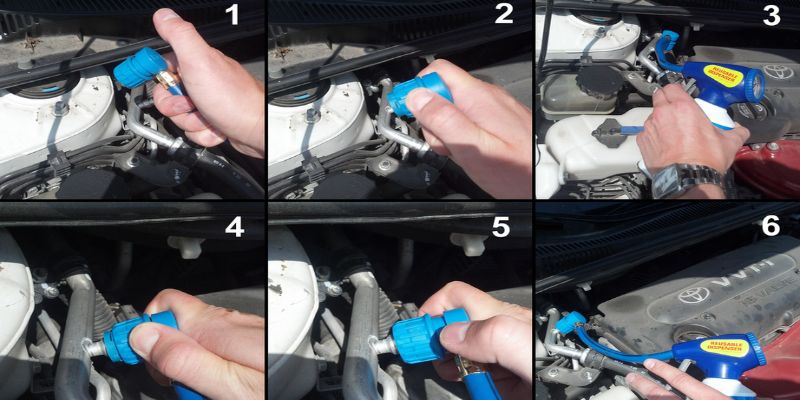
Locate the low-pressure port, as we talked about earlier. Remove the cap (it’s usually black or blue) and wipe the port with a microfiber cloth to keep dirt out. I keep the cap in my pocket so I don’t lose it.
Step 3: Connect the Recharge Kit
Take your AC recharge kit and attach the hose to the low-pressure port. It should snap on easily—don’t force it. The kit’s gauge will show the current pressure in the system. I always shake the refrigerant can gently before connecting it to mix the contents.
Step 4: Check the Pressure
Start your car and turn the AC to max cool with the fan on high. Let it run for a minute. Check the gauge on your recharge kit. Most cars need the low-pressure side to read between 25-45 psi when the AC is running. Your kit’s instructions will have a chart for your car’s ideal range. My car was way below 25 psi the first time I checked, which explained why the air was barely cool.
Step 5: Add Refrigerant
If the pressure is low, it’s time to add refrigerant. Hold the can upright and slowly press the trigger on the recharge kit. You’ll hear the refrigerant flowing into the system. I usually add it in short bursts—about 5-10 seconds at a time—while watching the gauge. Stop when the pressure hits the recommended range. Don’t overfill; too much refrigerant can damage the system. It took me about 2 minutes to get my car’s pressure just right.
Step 6: Disconnect and Test
Once the pressure is good, turn off the car and disconnect the hose from the port. Replace the cap tightly. Start the car again, turn on the AC, and feel the air coming out of the vents. It should be cold—ideally 35-50°F if you have a thermometer. I was amazed at how icy my AC felt after recharging.
Step 7: Check for Leaks
After adding refrigerant, keep an eye on your AC over the next few days. If it stops blowing cold again, you might leak. I had this happen once, and a mechanic found a tiny hole in a hose. You can buy a leak detection kit with UV dye to spot leaks yourself, or take it to a shop.
Common Mistakes to Avoid
I’ve made a few blunders recharging my AC, so let me save you some trouble. Here are mistakes to watch out for:
- Using the High-Pressure Port: Only add refrigerant to the low-pressure port. The high-pressure side is dangerous and can damage your kit.
- Overfilling the System: Too much refrigerant can strain the compressor. Stick to the pressure range on your kit’s gauge.
- Using the Wrong Refrigerant: R-134a and R-1234yf aren’t interchangeable. Check your car’s requirements.
- Working with a Hot Engine: Let the engine cool to avoid burns or inaccurate pressure readings.
- Ignoring Leaks: Adding refrigerant to a leaky system is a temporary fix. If the AC stops working again, get the leak fixed.
Taking your time and double-checking everything helps avoid these issues. I learned to read the gauge carefully after overfilling once—it wasn’t fun.
When to Recharge Your AC
How do you know when it’s time to add refrigerant? Here are the signs I look for:
- Warm Air from Vents: If your AC blows lukewarm air, low refrigerant is often the culprit.
- Hissing Sounds: A hissing noise from the AC system might mean a leak.
- AC Clutch Not Engaging: The compressor clutch (a spinning part on the compressor) might not turn on if refrigerant is too low.
- Visible Leaks: Oily spots under the car or on AC lines could indicate a refrigerant leak.
I check my AC every spring before the hot weather hits. If it’s not cooling well, I grab my recharge kit. But if the problem keeps coming back, it’s time to see a mechanic.
Safety Tips for Handling Refrigerant
Refrigerant is safe when handled properly, but it can be dangerous if you’re not careful. Here’s what I do to stay safe:
- Wear Protective Gear: Safety glasses and gloves protect against frostbite from cold refrigerant.
- Work in a Well-Ventilated Area: Refrigerant fumes aren’t great to breathe. I do this outside or in an open garage.
- Don’t Overpressurize: Follow the pressure guidelines to avoid damaging the system or causing leaks.
- Dispose of Cans Properly: Empty refrigerant cans should go to a recycling center, not the trash. My local auto shop takes them for free.
I always read the instructions on the recharge kit, too. They’re usually clear and help keep things safe.
When to Call a Professional
Adding refrigerant is a great DIY job, but sometimes it’s better to call a pro. If your AC system has a major leak, a damaged compressor, or needs a full recharge with specialized equipment, a mechanic is your best bet. I took my car to a shop once when the AC kept failing after a recharge—they found a bad seal that I couldn’t have fixed myself.
Professionals also have tools to recover old refrigerant safely, which is required by the EPA. A full AC service might cost $100-$200, but it’s worth it for big problems. If you’re not comfortable under the hood, a mechanic can handle it quickly.
Benefits of a Properly Charged AC
Keeping your AC system topped off with refrigerant has some awesome perks:
- Cool Comfort: A cold AC makes summer drives so much better. I love blasting the air on hot days.
- Better Fuel Efficiency: A struggling AC makes the engine work harder, burning more gas. A proper recharge saves fuel.
- Longer System Life: Adding refrigerant when needed prevents strain on the compressor and other parts.
- Cost Savings: A $30 recharge kit is way cheaper than a $500 compressor replacement.
Maintenance Tips to Keep Your AC Running
Once your AC is cold again, you want it to stay that way. Here are my go-to maintenance tips:
- Run the AC Regularly: Even in winter, turn on the AC for a few minutes every month to keep the system lubricated.
- Check for Leaks: If the AC gets warm again, use a leak detection kit or see a mechanic.
- Clean the Condenser: Dirt on the condenser (in front of the radiator) can make the AC less efficient. I hose mine down during car washes.
- Replace Cabin Air Filter: A clogged filter reduces airflow. I swap mine every year or so.
These simple steps keep my AC running like a champ all summer long.
Conclusion
There you go, buddy! Adding refrigerant to your car’s AC is a straightforward job once you know where to put it. The low-pressure port is your target, and with a recharge kit, some basic tools, and a little patience, you can have cold air blowing again in no time. I’ve saved a ton of money doing this myself, and it’s super satisfying to feel that icy breeze on a hot day. Just be sure to use the right refrigerant, follow safety tips, and check for leaks if the problem comes back. With these steps, you’ll be cruising in cool comfort all summer long. So, grab that recharge kit, pop the hood, and let’s get that AC chilling!
FAQs
Where is the low-pressure port on my car?
It’s usually under the hood, along the AC lines. Look for a larger port with a black or blue cap. Check your car’s manual or online forums for your model if you’re unsure.
Can I add refrigerant to the high-pressure port?
No, always use the low-pressure port. The high-pressure side is dangerous and can damage your recharge kit or the system.
What kind of refrigerant does my car need?
Most cars from 1995-2017 use R-134a. Newer cars (post-2017) might use R-1234yf. Check the sticker under the hood or your manual.
How do I know if my AC needs refrigerant?
If the air from your vents is warm, you hear hissing, or the AC clutch isn’t engaging, low refrigerant is likely the issue.
Can I add refrigerant if there’s a leak?
You can, but it’s a temporary fix. If the AC stops cooling again, use a leak detection kit or see a mechanic to fix the leak.
How often should I recharge my car’s AC?
Only recharge when the AC isn’t cooling well. If you need to recharge often, there’s probably a leak that needs fixing.
Is it safe to add refrigerant myself?
Yes, if you follow safety tips like wearing gloves and glasses, working in a ventilated area, and using the right port. Always read the recharge kit’s instructions.