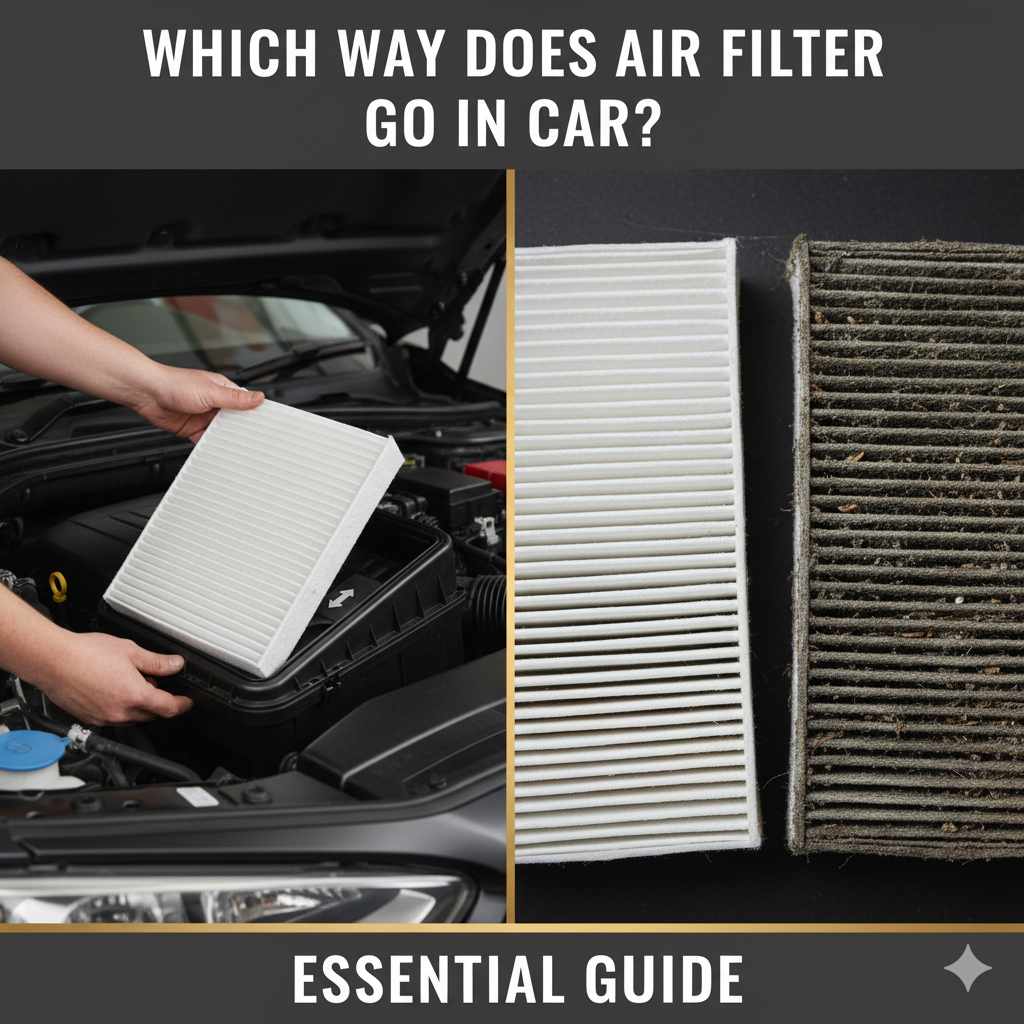
Which Way Does Air Filter Go In Car: Essential Guide
The air filter in your car can only be installed one way. Look for directional arrows or alignment tabs on the filter and the airbox. Installing it correctly is crucial for engine performance and fuel efficiency.
Ever popped your car’s hood, ready to swap out that dusty air filter, only to pause and wonder, “Which way does this thing even go?” You’re definitely not alone! Many car owners face this common, yet surprisingly important, question. It seems simple, but getting the air filter installed the wrong way can actually cause problems for your engine. Don’t worry, though! This guide is here to take the guesswork out of it. We’ll walk you through exactly how to identify the correct orientation, make the swap, and ensure your engine breathes easy. Let’s get your car running its best!
Why the Air Filter Direction Matters
Think of your car’s air filter as its lungs. It’s designed to catch dirt, bugs, and other debris before they can enter your engine and cause damage. If it’s installed backward, it won’t seal properly within the airbox. This means dirt can bypass the filter material entirely, leading to wear and tear on critical engine components. A properly sealed filter ensures clean air flows into the engine, which is vital for efficient combustion and optimal performance. For a deeper dive into the role of air filters, you can check out resources from the U.S. Environmental Protection Agency, which discusses vehicle emissions and efficiency.
Common Misconceptions & What to Look For
A common misconception is that air filters are symmetrical and can go in either way. While some very basic models might appear that way, most modern filters are designed with specific installation in mind. The key is to look for subtle, but important, clues. These clues are your roadmap to ensuring a correct installation every single time.
Identifying the Correct Air Filter Orientation
Manufacturers build these filters with precision. They don’t just aim to trap dirt; they aim to do it efficiently and protect your engine. Here’s how to find the right way:
1. Directional Arrows
This is your most reliable indicator. Most engine air filters will have small arrows printed or molded directly onto their rubber or plastic frame. These arrows typically indicate the direction of airflow. The arrow should point towards the engine, meaning the air flows through the filter in the direction the arrow is pointing. Think of it as showing where the air is going after it’s been cleaned.
2. Rubber Gasket or Seal
Examine the rubber or foam gasket that runs around the edge of the filter. This gasket is designed to create a tight seal with the airbox housing. The shape of the gasket, and how it fits against the airbox, is usually asymmetrical. It will only seat correctly in one direction, ensuring no gaps for air to sneak through unfiltered.
3. Filter Pleats
While less common as a primary indicator, the way the pleats (the folded sections of the filter material) are arranged can sometimes offer a clue. They are usually designed to channel air efficiently in one direction. However, always prioritize the arrows and gasket for clarity.
4. Airbox Shape and Notches
The air filter housing (airbox) is just as important as the filter itself. It’s often designed with specific shapes, clips, or notches that will only allow the filter to fit in the correct orientation. If you try to force a filter that feels like it doesn’t quite fit, stop and re-examine the filter and the airbox for clues about alignment.
When in Doubt: Consult Your Owner’s Manual
Your car’s owner’s manual is the ultimate authority. It will have specific instructions, often with diagrams, on how to replace your air filter, including its proper orientation. If you can’t find the manual, a quick online search for your car’s make, model, and year along with “air filter replacement” will likely yield helpful results, including videos and guides specific to your vehicle.

Step-by-Step Guide: Replacing Your Engine Air Filter
Now that you know why direction matters and how to identify it, let’s get this done! Replacing your engine air filter is one of the easiest DIY car maintenance tasks. It’s a great way to build confidence in your ability to care for your vehicle.
Tools You’ll Likely Need
For most vehicles, you won’t need many specialized tools. Here’s what’s typically handy:
- New engine air filter (make sure it’s the correct one for your car!)
- Basic screwdriver set (Phillips head is common)
- Possibly a socket wrench set (if your airbox uses nuts)
- A clean rag or shop towel
- Gloves (optional, to keep your hands clean)
Finding and Accessing the Air Filter Housing
The engine air filter is usually located in a black plastic box connected to a large hose that leads to the engine. This is called the air intake system or airbox. You can typically find it by following the large, flexible hose coming from the rear of the engine. In most cars, the airbox is easily accessible from the top or side of the engine bay.
The Replacement Process
Here’s the breakdown:
-
Locate the Airbox: Open your car’s hood. Look for a black, usually rectangular or oval, plastic box. It will have a large tube (intake hose) attached to it leading towards the engine.
-
Open the Airbox: The airbox is typically secured with clips, screws, or a combination of both. Carefully unfasten these. You might need a screwdriver or socket wrench. Sometimes, you just need to slide a tab or unhook a clip. Be gentle!
-
Remove the Old Filter: Once the airbox is open, you’ll see the old air filter. Carefully lift it out. Note its orientation as you remove it – this is your visual cue for the new filter.
-
Inspect and Clean: Before inserting the new filter, take a moment to wipe out any loose debris or leaves from inside the airbox with your rag. Be careful not to drop anything into the intake hose!
-
Insert the New Filter: This is the crucial step! Take your new air filter. Look for the directional arrows as we discussed. Align the filter with the shape of the airbox and ensure the arrows are pointing in the correct direction (towards the engine). The rubber gasket should seat snugly around the edges of the airbox opening.
- Double-Check: Once the filter is in place, press down gently around the edges to ensure it’s sealed. It should sit flat and securely.
-
Close the Airbox: Carefully replace the airbox lid. Secure all clips, screws, or fasteners you removed earlier. Make sure everything is snug and the lid is properly seated.
-
Start Your Engine: Turn on your car and let it run for a minute. Listen for any unusual noises. Typically, you won’t hear a difference, but it’s always good practice to ensure everything sounds normal.
Cabin Air Filter vs. Engine Air Filter: Don’t Get Them Mixed Up!
It’s important to note that cars have at least two types of air filters: the engine air filter (which we’ve been discussing) and the cabin air filter. They serve very different purposes:
| Feature | Engine Air Filter | Cabin Air Filter |
|---|---|---|
| Purpose | Filters the air entering the engine for combustion. | Filters the air entering the car’s passenger cabin. |
| Location | Under the hood, in a black plastic airbox connected to the engine intake. | Usually behind the glove box, under the dashboard, or behind the glove compartment. |
| Impact | Engine performance, fuel efficiency, emissions. | Air quality inside the car, HVAC system performance. |
| Directionality | Critical for proper seal and airflow. | Often has airflow arrows, but installation can sometimes be more flexible depending on design. |
While the engine air filter affects how your car runs, the cabin air filter affects how the air you breathe inside the car feels. Both are important for your car’s overall health and your comfort, but their installation and directional considerations are distinct. Always make sure you are purchasing and installing the correct filter for the job!
Signs Your Engine Air Filter Needs Replacing (or Was Installed Incorrectly)
Your engine air filter doesn’t last forever. Over time, it becomes clogged with dirt and debris. Here are some signs that it might be time for a replacement, or that it might not be installed correctly:
- Decreased Fuel Efficiency: A clogged filter restricts airflow, making your engine work harder and consume more fuel.
- Reduced Engine Power: You might notice sluggish acceleration or a general lack of responsiveness from your engine.
- Check Engine Light: In some cases, a severely restricted or improperly installed filter can trigger your car’s check engine light.
- Unusual Engine Noises: Rough idling or sputtering can sometimes be linked to air intake issues.
- Visible Dirt or Debris in the Airbox: If you open the airbox and see a lot of dirt inside, it might indicate the filter isn’t sealing properly.
- Dirty Filter Element: A visual inspection of the old filter shows it’s heavily discolored, clogged, or has debris stuck deep within the pleats. You can often look at a filter against a light source; if you can’t see much light through it, it’s time for a change.
For more information on engine maintenance and warning signs, the U.S. Department of Energy’s FuelEconomy.gov website is an excellent resource. Properly maintaining your air filter contributes to better gas mileage, which is highlighted on their site: fueleconomy.gov Maintenance.

Frequently Asked Questions (FAQ)
Q1: Can I damage my engine if I install the air filter backward?
While it’s unlikely to cause immediate, catastrophic damage, installing the air filter backward means it won’t seal properly. This allows unfiltered air and debris to enter your engine, which can lead to increased wear on internal components over time. It also significantly reduces the filter’s effectiveness, impacting performance and fuel economy.
Q2: How often should I replace my engine air filter?
This varies depending on your driving conditions. For most cars and typical driving, it’s recommended to inspect the air filter every 10,000-15,000 miles and replace it every 15,000-30,000 miles. If you drive in dusty conditions (like on dirt roads or in areas with lots of construction), you’ll need to replace it much more frequently.
Q3: Are all air filters the same for every car?
No, absolutely not. Engine air filters are vehicle-specific. They are designed to fit the exact dimensions and shape of your car’s airbox. Always purchase an air filter that is made for your car’s specific make, model, and year. Using the wrong filter won’t create a proper seal, defeating its purpose.
Q4: What if my air filter doesn’t have any arrows on it?
If there are no visible arrows, rely on the shape of the filter and the rubber gasket. The gasket is designed to mate with the airbox housing, creating a seal. Try fitting the filter into the airbox; it will typically only seat correctly in one position where the gasket aligns perfectly and the filter sits flat and flush. If you’re still unsure, consult your owner’s manual or a reliable online guide for your specific vehicle.
Q5: Can I just clean my old air filter instead of replacing it?
Some aftermarket high-performance air filters (like those made of gauze or foam) can be cleaned and re-oiled. However, most standard paper engine air filters are designed for single use and cannot be effectively cleaned. Attempting to wash or blow out a paper filter can damage its delicate material, making it less effective or even causing it to fail. It’s best to replace clogged paper filters with new ones.
Q6: Where can I find the air filter for my car?
The engine air filter is typically found under the hood in a black plastic box, often referred to as the airbox. It’s usually connected to a large hose that leads to the engine. You can often locate it by following this hose from the engine. The passenger cabin air filter is located elsewhere (often behind the glove box) and serves a different purpose.
Conclusion
Taking care of your car doesn’t have to be complicated, and replacing your engine air filter is a perfect example of a simple task that makes a big difference. By understanding the importance of directional airflow and knowing what to look for—those crucial arrows, the unique gasket shape, and the airbox design—you can confidently install your new air filter correctly every time. This ensures your engine gets the clean air it needs to perform at its best, stay fuel-efficient, and avoid premature wear. So next time you check under the hood, you’ll know exactly which way your air filter goes, saving you time, money, and a little bit of worry. Happy driving!