Who Do You Call If Your Car Breaks Down: Essential Guide Proven
If your car breaks down, you typically call a towing service, roadside assistance provider (like AAA), or sometimes the police if it’s a dangerous situation. This guide will walk you through exactly who to contact and what to do next to get back on the road safely.
Getting stranded on the side of the road can be a stressful experience. Your car, your trusty companion, decides to stop working, and suddenly you’re surrounded by uncertainty. What do you do? Who do you call? It’s a common worry for drivers, especially those new to car ownership or less familiar with vehicle troubles. But don’t fret! Knowing the right steps can turn a potential panic into a manageable situation. This guide is designed to give you clarity and confidence, so you’ll never feel lost when your car decides to take an unexpected break. We’ll break down exactly who to call and what information you’ll need.
Understanding Your Options for a Breakdown
When your car won’t start or has stopped running, it’s easy to feel overwhelmed. The good news is there are several reliable services ready to help. Your best option depends on your situation, your insurance, and any membership plans you might have. Let’s explore the main helpers available.
1. Towing Services
Towing companies are the go-to professionals for getting your vehicle from point A to point B when it’s not drivable. They have specialized trucks designed to safely lift and transport cars, from minor issues to major accidents.
When to Call a Towing Service:
- Your car won’t start at all (e.g., dead battery, engine failure).
- You have a flat tire but no spare or tools to change it.
- Your car is leaking fluids and you’re unsure of the problem.
- The car is making strange noises or showing critical warning lights that suggest it’s unsafe to drive.
- You’re involved in an accident and need the vehicle moved.
How to Find a Towing Service:
- Ask your mechanic: If you have a trusted repair shop, they often have preferred towing partners they can recommend.
- Online search: Use your smartphone to search for “towing services near me.” Look for companies with good reviews and clear pricing information.
- Ask friends or family: Personal recommendations can be very valuable.
What to Expect:
When you call, be ready to provide:
- Your exact location (street name, nearest cross-street, mile marker if on a highway).
- Your vehicle’s make, model, and color
- The nature of the problem (e.g., won’t start, in a ditch, flat tire).
- The destination for the tow (your home, a mechanic’s shop).
- Your contact information.
Towing services typically charge by the mile, with additional fees for hook-up, extra services (like winch-out), and after-hours calls. It’s always a good idea to get a quote upfront.
2. Roadside Assistance Programs
Roadside assistance services are designed to help with common car problems on the spot, often getting you moving again without needing a tow. These services are usually accessed through a membership.
Popular Roadside Assistance Providers:
- AAA (American Automobile Association): One of the most well-known, AAA offers various membership tiers with different levels of coverage for towing, jump starts, fuel delivery, tire changes, and lockout assistance. You can learn more about their services at AAA’s Automotive Services.
- Your Auto Insurance Provider: Many car insurance policies offer roadside assistance as a low-cost add-on. Check your policy details or call your insurance agent to see if you have coverage.
- Credit Card Benefits: Some premium credit cards offer limited roadside assistance benefits.
- Vehicle Manufacturer Programs: Newer cars, especially luxury brands, often come with complimentary roadside assistance for a certain period. Check your owner’s manual.
- Independent Providers: Companies like Good Sam Club (often for RVs but some car services too) or other local providers offer roadside help.
Common Services Offered:
- Battery Jump-Start: If your battery is dead, they can give you a jump.
- Flat Tire Change: If you have a spare tire, they can install it for you.
- Fuel Delivery: If you run out of gas, they can bring a small amount to get you to a station.
- Lockout Service: If you accidentally lock your keys in the car.
- Minor Mechanical Adjustments: Sometimes they can fix a small issue on the spot.
- Towing: If the problem can’t be fixed roadside, they will tow your vehicle to a repair facility, usually with a distance limit per incident.
How to Use Roadside Assistance:
If you have a membership, you’ll typically have a phone number or an app to call. Have your membership number ready. They will dispatch a service vehicle to your location.
3. The Police or Highway Patrol
In specific situations, contacting the authorities is the safest and most appropriate first step.
When to Call Law Enforcement:
- Dangerous Location: If your car has broken down in an active travel lane, on a blind curve, or in a location where it poses an immediate hazard to other drivers and pedestrians.
- After an Accident: If you’ve been involved in a collision, especially if there are injuries or significant damage.
- Suspicious Circumstances: If you suspect foul play or if the breakdown feels unsafe due to your surroundings.
What They Can Do:
The police can help secure the area, direct traffic, and potentially help you contact a towing service. They are not there to fix your car or provide mechanical assistance but to ensure safety and order. They can often recommend reliable local towing companies if you don’t have one in mind.
How to Contact Them:
For non-emergency situations (like a simple breakdown that isn’t immediately dangerous), call the non-emergency number for your local police department. For urgent, life-threatening situations or active hazards, always call 911.

Step-by-Step Guide: What to Do When Your Car Breaks Down
A breakdown can happen anywhere, anytime. Having a plan in place makes all the difference. Here’s a clear, actionable guide.
Step 1: Ensure Your Safety First
This is the absolute top priority the moment you realize something is wrong.
- Pull Over Safely: If your car is still moving, try to get it as far off the road as possible. Aim for the shoulder, a parking lot, or a quiet side street. Avoid stopping on a blind curve or in a narrow spot where visibility is poor.
- Turn on Hazard Lights: Immediately engage your emergency flashers to alert other drivers that you are stopped and there’s a problem.
- Assess Your Surroundings: If you’re on a busy highway, it might be safer to stay inside your locked vehicle with your seatbelt on until help arrives, especially if the shoulder is narrow or traffic is fast-moving. If you are in a safer location (like a parking lot), you can exit the vehicle.
- Be Visible: If you have reflective triangles or flares, place them behind your vehicle to give approaching drivers advance warning. The U.S. Department of Transportation recommends placing them at appropriate distances depending on your location (e.g., 100 feet on a two-lane road, 200 feet on a divided highway). For more safety guidelines, visit NHTSA’s Vehicle Safety Equipment page.
Step 2: Identify Who to Call
Once you and your vehicle are in a safe place, it’s time to figure out who can assist you.
Consider these questions:
- Do you have roadside assistance? (e.g., AAA, insurance add-on, credit card benefit)
- Is your location dangerous? (e.g., in a traffic lane, on a curve)
- Do you have a preferred mechanic?
Based on your answers, you’ll likely call:
- Roadside Assistance Provider: If you have a membership, this is usually the most cost-effective and efficient option for common issues like dead batteries or flat tires.
- Towing Service: If you don’t have roadside assistance, or if the issue requires a tow to a repair shop.
- Police (911 or non-emergency): If your vehicle is creating a traffic hazard or you feel unsafe due to your surroundings.
Step 3: Gather Necessary Information
Before you make the call, have this information ready. This expedites the process and ensures the right help is sent.
- Your Exact Location: Street name, nearest intersection, highway mile marker, landmarks.
- Vehicle Information: Make, model, year, and color of your car.
- Nature of the Problem: Briefly describe what happened or what is wrong (e.g., “car won’t start,” “flat tire,” “engine overheating”).
- Your Membership/Account Number: If you’re calling a roadside assistance provider.
- Your Contact Number: The best number to reach you at.
- Destination: Where you want the vehicle towed (your home, a specific mechanic).
Step 4: Make the Call and Wait
Dial the appropriate number and clearly explain your situation.
- Be Patient: During peak times or in bad weather, wait times can be longer. Stay calm and communicate any changes in your situation.
- Stay Safe While Waiting: Remain in your vehicle with doors locked if you’re on a busy road. If you’re in a safer spot, you can exit but remain aware of your surroundings.
- Communicate Updates: If your situation changes or you need to move, call the service provider back.
Step 5: When Help Arrives
The service technician will assess the situation.
- Verify Identity: Ensure the service vehicle and technician are legitimate representatives of the company you called. They should have company markings and identification.
- Explain the Problem: Describe the issue clearly to the technician.
- Understand the Solution: Ask questions if you’re unsure about what they are doing or if a tow is necessary.
- Get a Receipt: If you are paying directly for services, make sure to get a detailed receipt.
Comparing Your Options: Towing vs. Roadside Assistance
Choosing between a direct tow and a roadside assistance call often comes down to your existing memberships and the nature of the problem. Here’s a simple breakdown to help you decide.
| Feature | Towing Service (Direct Call) | Roadside Assistance (Membership) |
|---|---|---|
| Cost | Pay-per-incident, can be higher if no membership discount. | Annual membership fee, often covers multiple incidents with lower/no per-incident cost. |
| Common Issues Covered | Tows to shop, accident recovery, transport for any breakdown. | Jump-starts, tire changes, fuel delivery, lockout service, limited towing. |
| Speed of Service | Can be variable, depends on availability. | Often prioritized for members; response times can vary. |
| Best For | Major mechanical failures, accidents, when no membership coverage applies. | Most common minor issues, routine assistance needs, cost savings for frequent drivers. |
| When to Use | When the car absolutely cannot be fixed on the spot, or when you lack other coverage. | When you have a membership and the issue is one typically covered (battery, tire, fuel, lockout). |
Pros and Cons of Specific Services
To further illustrate the differences, let’s look at the advantages and disadvantages of each primary option.
Towing Services
-
Pros:
- Can handle virtually any vehicle transport need.
- Available 24/7.
- Can tow to any location you specify, even far away.
-
Cons:
- Can be expensive if not covered by insurance or a membership.
- Primary function is transportation, not repair.
Roadside Assistance Programs (e.g., AAA, Insurance add-ons)
-
Pros:
- Cost-effective for frequent breakdowns or common issues.
- Often includes services beyond towing, like jump-starts and tire changes.
- Can provide peace of mind for a predictable annual fee.
-
Cons:
- Requires an upfront membership fee.
- May have limitations on towing distance or number of calls per year.
- Not all services are covered (e.g., extensive mechanical repairs).
Police / Highway Patrol
-
Pros:
- Crucial for safety in hazardous situations.
- Can help control traffic and secure the scene.
- Can provide assistance in contacting towing if you’re unable to.
-
Cons:
- They do not offer mechanical assistance or towing.
- Only to be used in specific safety-related scenarios.
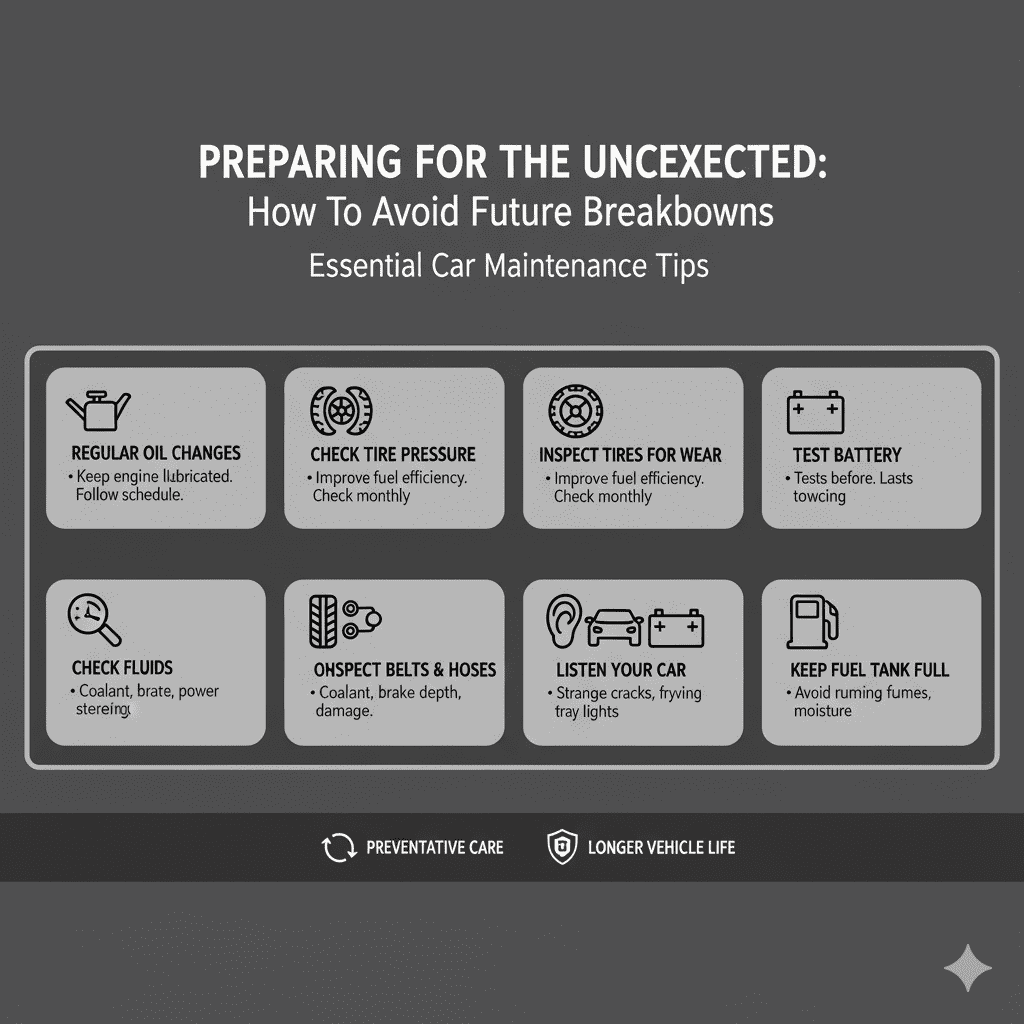
Preparing for the Unexpected: How to Avoid Future Breakdowns
While this guide helps you when a breakdown occurs, the best strategy is prevention. Regular maintenance is key to keeping your car running smoothly and minimizing the chances of being stranded.
Essential Car Maintenance Tips:
- Regular Oil Changes: A well-lubricated engine is a happy engine. Follow your car’s recommended oil change schedule. For best practices, consult your owner’s manual or resources like Edmunds’ maintenance guide.
- Check Tire Pressure: Properly inflated tires improve fuel efficiency, handling, and safety. Check them monthly.
- Inspect Tires for Wear: Look for tread depth and any signs of damage.
- Test Your Battery: Batteries typically last 3-5 years. Have it tested before winter or during regular service.
- Check Fluids: Regularly check coolant, brake fluid, power steering fluid, and windshield wiper fluid levels.
- Inspect Belts and Hoses: Look for cracks or fraying which can lead to sudden failure.
- Listen to Your Car: Strange noises, warning lights, or changes in performance are signals something might be wrong. Don’t ignore them!
- Keep Your Fuel Tank Reasonably Full: Especially before long trips, avoid running on fumes. This also prevents moisture from building up in the tank.
Frequently Asked Questions (FAQ)
Q1: What’s the first thing I should do if my car suddenly stops on the road?
Your absolute first priority is safety. Turn on your hazard lights immediately. If you can, pull over to the safest spot possible, off the main road. Then, assess if you need to call the police due to a dangerous location before calling for assistance.
Q2: Should I call AAA or a direct towing company?
If you have an AAA membership (or similar roadside assistance program), call them first. They are often more affordable than direct towing services for covered issues like jump-starts, tire changes, or short tows. If AAA can’t help, or you don’t have a membership, then call a direct towing service.
Q3: How do I find a reputable towing company if I don’t have roadside assistance?
You can search online for “towing services near me” and look for companies with good customer reviews. It’s also helpful to ask local auto repair shops for recommendations, as they often work with reliable tow operators.
Q4: What information will I need to give the tow truck driver?
Be ready to provide your exact location, your name and phone number, your vehicle’s make, model, and color, the nature of the problem, and the address where you want your car towed (e.g., your home or a mechanic’s shop).
Q5: Can the police help me if my car breaks down?
Yes, the police can help if your vehicle is creating a traffic hazard or if you feel unsafe. They can secure the area and help you contact a towing service, but they do not provide mechanical assistance or towing services themselves.