Who Do You Call If Your Car Gets Towed: Essential Guide
If your car gets towed, you typically call the towing company directly, your local police department’s non-emergency line, or the impound lot itself. Knowing who to contact depends on why your car was towed and by whom. This guide will help you figure that out quickly and safely get your vehicle back.
It’s a sinking feeling, isn’t it? You walk back to where you parked your car, and it’s just… gone. Panic might set in, but take a deep breath. This happens to many drivers, and there’s a clear path to getting your car back. Understanding who to call when your car is towed is the first step to resolving the situation efficiently and without too much stress.
We’ll walk you through exactly who to contact, what information you’ll need, and what to expect. We’ll break down the process so you can feel confident and in control. Let’s make getting your car back as smooth as possible.
Why Was My Car Towed? Understanding the Reasons
Before you can figure out who to call, it’s helpful to understand why your car ended up on a tow truck. Knowing the reason can point you directly to the right authority or company.
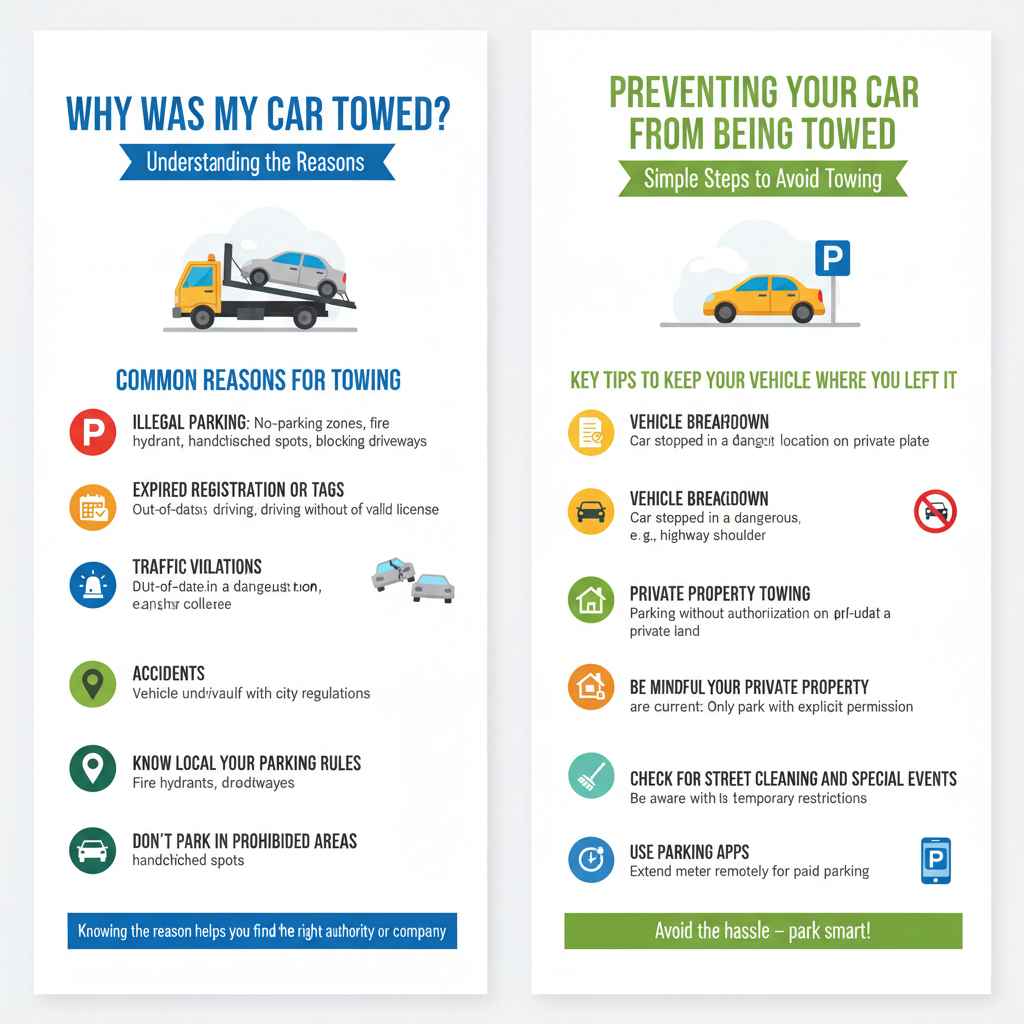
Common Reasons for Towing
Illegal Parking: This is a big one. Parking in a no-parking zone, blocking a fire hydrant, occupying a handicapped spot without a permit, or parking illegally in a residential area can all lead to your car being towed.
Expired Registration or Tags: If your vehicle’s registration or license plates have expired and you’re caught driving or even parking it, law enforcement might tow you. Some jurisdictions consider an expired registration a safety risk.
Traffic Violations: Beyond parking, serious traffic offenses like DUI (Driving Under the Influence), reckless driving, or driving without a valid license can result in your car being impounded by the police.
Accidents: After a car accident, if your vehicle is deemed undrivable, a tow truck will likely be called to remove it from the scene, often taking it to an impound lot or a repair shop.
Vehicle Breakdown: While not always a “tow company” situation, if your car breaks down in a dangerous location (like a highway shoulder) and you can’t move it yourself or get immediate help, authorities might have it towed to clear the road.
Private Property Towing: If you’re parked on private property, like a shopping mall or apartment complex parking lot, and you’re not authorized to be there (e.g., no valid permit, parking in a reserved spot), the property owner can have your car towed by a private towing company.
Foreclosure or Repossession: If you have outstanding payments on your vehicle, your lender may repossess it. This usually involves a specialized repossession service, not a standard tow truck.
Who Do You Call If Your Car Gets Towed? The First Steps
The initial moments after realizing your car is gone can be confusing. Here’s a straightforward approach to figuring out who to contact first.
Step 1: Look for Signs and Notifications
Check the Area: Look around where your car was parked. Are there any signs indicating towing, parking restrictions, or contact information for a towing company? Sometimes, a notice might be left on your windshield or door, though this isn’t always the case.
Look for Parking Enforcement: If you were parked illegally, there might be parking enforcement officers or signs indicating the department responsible for towing in that area.
Step 2: Contact the Right Authority Based on the Situation
This is where it gets specific. The entity that ordered the tow will be your primary contact.
If you suspect illegal parking or a minor traffic violation:
Your first call should generally be to the local police department’s non-emergency line. They can look up your vehicle’s license plate or VIN (Vehicle Identification Number) to see if it has been towed and where it was taken. It’s crucial to find the non-emergency number to avoid tying up dispatchers with urgent calls.
You can usually find the non-emergency police number on the city or county government’s official website. For example, if you’re in a major city, a quick search for “[City Name] Police Non-Emergency Number” will likely bring it up.
If you were involved in an accident:
A towing company would have been called by police or emergency services. In this case, the police department that responded to the accident scene is your best bet. They will have records of which tow truck company was dispatched and where the vehicle was taken.
If you parked on private property (and no police presence):
If you parked in a private lot (like a shopping center, apartment complex, or private business) and were towed, you’ll need to identify the property management or business owner. Look for signs that might list a specific towing company they contract with, or call the main number for the business/complex. They can tell you which towing company has your car.
If you believe your car was stolen:
This is a different situation than being towed. If you can’t find your car and the police don’t have a record of it being towed, you should contact the police department immediately to file a stolen vehicle report. Do not assume it was towed; a theft report is vital.
Step 3: Gather Essential Information
Once you know who to call, have this information ready. It will speed up the process significantly.
License Plate Number: This is often the easiest way for authorities to search for your vehicle.
Vehicle Identification Number (VIN): You can usually find this on your insurance card, registration document, or on the dashboard of your car (visible from the driver’s side windshield).
Your Vehicle’s Make and Model: (e.g., 2020 Toyota Camry).
The Location Where You Last Parked: Be as specific as possible (street address, cross streets, landmark).
Date and Time You Noticed the Car Was Missing: This helps narrow down the search.
Contacting the Towing Company or Impound Lot Directly
Sometimes, you might be able to bypass the police and find the towing company or impound lot information directly.
Finding the Towing Company
Law Enforcement Records: As mentioned, the easiest way to find the towing company is often through the police non-emergency line. They maintain databases of authorized towing services.
Private Property Signs: If you were towed from private property, the signs in the lot might explicitly state the name and number of the towing company used by the property owner.
Online Searches: If you know the general area and suspect a specific towing company might have been involved (especially if you parked near their lot), you can try searching online. However, you must be careful to only deal with legitimate towing companies.
Contacting the Impound Lot
Once you know which towing company has your car, you’ll need to find out where they’ve taken it. This is the impound lot.
Key Information to Get from the Impound Lot:
- The exact address of the impound lot.
- Their operating hours (these can be very restrictive!).
- The total fees required to release your vehicle.
- What forms of payment they accept.
- What documents you need to bring to claim your car.
Important Note on Impound Lot Hours: Many impound lots have limited hours, often closing in the evenings, on weekends, or holidays. This can significantly delay your ability to retrieve your vehicle. Be prepared for this possibility.
What to Expect When Picking Up Your Car
Retrieving your towed vehicle involves a process and often a significant cost. Being prepared can make the experience less frustrating.
Required Documents and Information
When you arrive at the impound lot, you’ll need to prove that you are the rightful owner and that you have the authority to reclaim the vehicle. Typically, you will need:
- Valid Government-Issued Photo ID: This is for identification purposes (e.g., driver’s license, state ID).
- Proof of Ownership: This could be the vehicle’s title, a current registration, or even a bill of sale that has your name on it.
- Proof of Insurance: You will likely need current car insurance documentation showing the vehicle is insured. Many jurisdictions require this to operate a vehicle legally. You can check requirements according to your state’s Department of Motor Vehicles (DMV) website, for example, the USA.gov’s Motor Vehicle Services page for overall guidance.
- Key to the Vehicle: You’ll need to be able to drive it off the lot.
- Payment for Fees: Be ready to pay the towing fee and storage fees.
Understanding the Fees
Towing and storage fees can add up quickly. These are usually set by state or local regulations for licensed tow companies, but they can still be substantial.
Typical Fees Associated with Towing
| Type of Fee | What it Covers | Notes |
|---|---|---|
| Towing Fee | The cost of hooking up your car and transporting it to the impound lot. | Can vary based on distance, type of vehicle, and time of day (e.g., after-hours may cost more). |
| Storage Fee | A daily charge for storing your vehicle at the impound lot. | These accrue daily, so retrieving your car quickly is important to minimize cost. |
| Administrative Fee | A processing fee charged by the towing company or impound lot. | Often a flat fee, sometimes regulated by local ordinances. |
| Lockout Fee (if applicable) | If the tow operator had to force entry into your locked vehicle. | Less common unless initiated by the driver’s request or specific circumstances. |
Average Costs: While variables exist, you might expect towing fees to range from $100 to $300, and daily storage fees from $20 to $60. These are estimates, and actual costs can be higher depending on your location and the circumstances of the tow.
It’s always best to ask for a detailed breakdown of all charges before paying. If you believe the fees are excessive or unjustified, you may have recourse through local consumer protection agencies or the relevant governing body that oversees towing operations.
What If You Can’t Afford the Fees?
This is a tough situation, and unfortunately, impound lots are typically not flexible with payment. If you cannot afford the towing and storage fees, your vehicle may be sold at a public auction to recover the costs.
Options to consider:
- Borrow Money: Reach out to family or friends for a temporary loan.
- Payment Plans (Rare): Some towing companies might offer a very short-term payment plan, but this is uncommon. It’s worth asking, but don’t count on it.
- Contact Authorities About Hardship: In rare cases, if the tow was due to circumstances beyond your control (and not a severe violation), you might try contacting the department that ordered the tow to explain your financial hardship. They may or may not be able to offer assistance or guidance.
- Vehicle Auction: If you cannot pay, be aware that the vehicle will likely be auctioned off. You may be able to recover some money by finding and bidding on your own car there, but this is not guaranteed.
It’s crucial to act swiftly if you can’t afford the fees to explore any potential solutions before the storage costs escalate too much or the vehicle is put up for auction.
When to Call a Towing Company vs. Police vs. Other Services
Let’s clarify who you should be reaching out to in different scenarios.
When to Call the Police (Non-Emergency Line)
You believe your car was towed for illegal parking or a minor traffic violation and you don’t know where it is.
You were involved in an accident and need to know where your car was taken by emergency services.
You’ve found your car vandalized and believe it might have been involved with law enforcement activity.
When to Call the Towing Company or Impound Lot Directly
You have been directly informed by a towing company that they have your vehicle.
You found a notice on your car or saw a sign at the location specifying a towing company and its contact details.
You are certain it was a private tow from a business or residential lot and the property owner/manager directed you to a specific company.
When to Call for a Breakdown (Not a Tow Due to Violation)
If your car has simply broken down and you need it towed to a repair shop, you’ll typically call:
Your Auto Insurance Provider: Many insurance policies include roadside assistance or towing coverage. This is often the most cost-effective option.
A Reputable Local Towing Service: If you don’t have roadside assistance or it doesn’t cover the situation, you’ll find and call a towing company yourself. Websites like YourMechanic offer tips on finding a good service.
Roadside Assistance Provider: Services like AAA or a similar membership organization.
Preventing Your Car From Being Towed
The best way to deal with a towed car is to avoid the situation altogether. Here are some key tips to keep your vehicle where you left it.
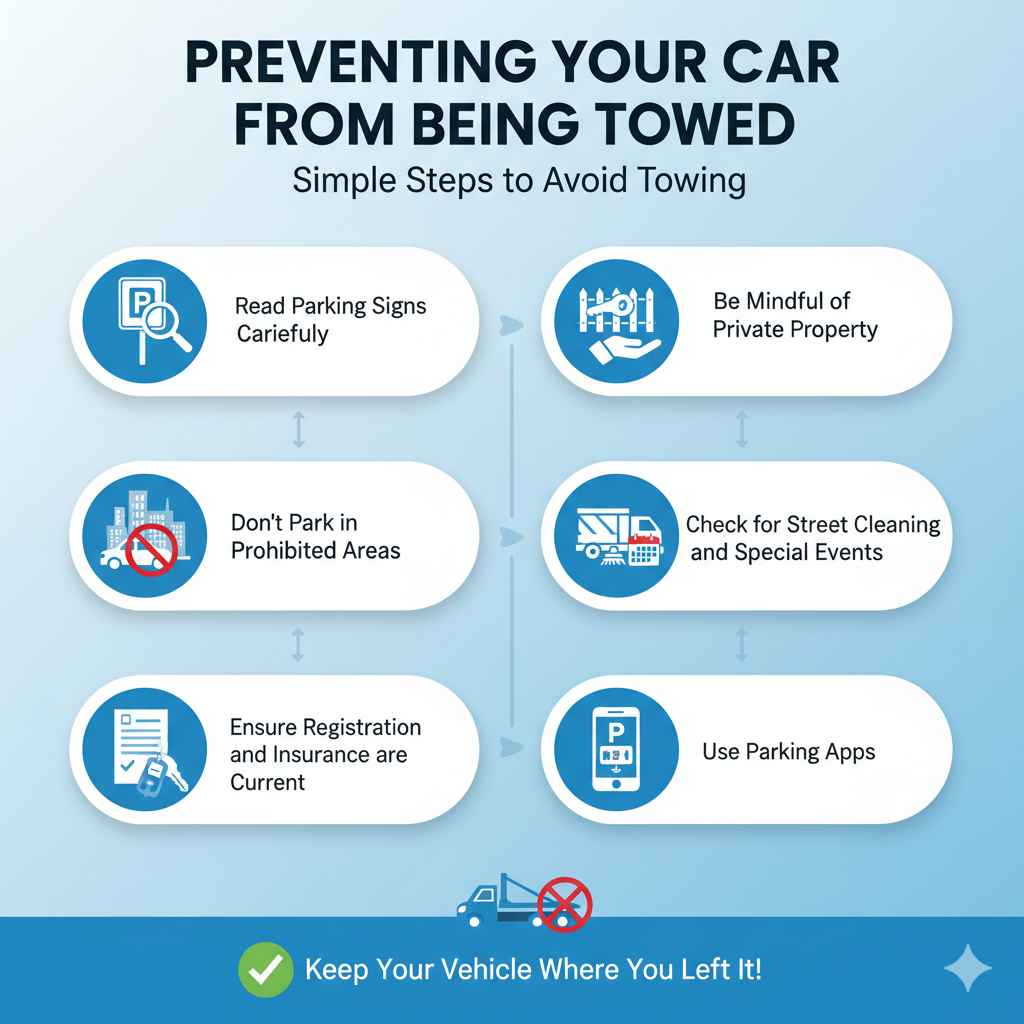
Simple Steps to Avoid Towing
Read Parking Signs Carefully: Pay close attention to all posted signs, especially those indicating hours of operation, permit requirements, tow-away zones, or street cleaning schedules.
Know Local Parking Rules: Familiarize yourself with the parking regulations in your area, especially if you’re visiting a new town or city. City government websites are great resources.
Don’t Park in Prohibited Areas: Avoid parking near fire hydrants, in front of driveways or alleyways, on sidewalks, in handicapped spots without a permit, or in areas clearly marked for no parking.
Ensure Registration and Insurance are Current: Keep your vehicle’s registration, license plates, and insurance up-to-date.
Be Mindful of Private Property: Only park in areas where you have explicit permission. If you’re unsure, ask or park elsewhere.
Check for Street Cleaning and Special Events: Many cities have daily or weekly street cleaning schedules that can result in towing. Be aware of any temporary parking restrictions due to parades, construction, or other events.
* Use Parking Apps: For paid parking, use reputable parking apps that allow you to extend your meter remotely if needed.
Frequently Asked Questions (FAQs)
Here are some common questions people have when their car gets towed.
Q1: My car was towed, and I don’t know why. Who should I call first?
A1: If you don’t know why your car was towed, your best first step is to call the local police department’s non-emergency line. They can access databases to see if law enforcement initiated the tow and where your vehicle was taken.
Q2: How long can a car be legally stored at an impound lot?
A2: The maximum storage time before a vehicle can be auctioned varies significantly by state and local laws. Some areas might have a 30-day limit, while others could be longer. It’s best to check your local regulations.
Q3: Can I get my car back immediately after it’s towed?
A3: Typically, yes, but only after you’ve paid all accrued towing and storage fees and provided the required documentation. However, impound lots have specific operating hours, so you might have to wait until they are open to retrieve your vehicle.
Q4: What if I can’t pay the towing fees?
A4: If you cannot pay the fees, the impound lot may sell your vehicle at a public auction to recoup their costs. It’s critical to try and arrange payment or explore options immediately. Contacting the towing company or authorizing entity to explain hardship is a long shot but might be worth trying.
Q5: Is there a grace period before storage fees start?
A5: Generally, no. Storage fees often begin accruing the moment the vehicle arrives at the impound lot, sometimes even from the time it was initially hooked up by the tow truck. Reclaiming your car as soon as possible is key to minimizing costs.
Q6: Can a towing company charge me extra without telling me?
A6: Legitimate towing companies are usually required to adhere to regulated fee schedules. While there might be additional fees for specific services (like a winch-out or after-hours pickup), they should be transparent about costs. If you feel you were overcharged unfairly, inquire about appealing the fees through the local authority that licenses tow operators.