Types of Race Cars Explained for Beginners
Have you ever found yourself captivated by the roar of engines and the blur of speed on a racetrack? It’s easy to get lost in the excitement. But sometimes, when you’re watching different races, you might wonder just how many kinds of race cars there really are.
It can be a bit confusing with so many different designs and names floating around.
We’re here to clear that up for you. Think of this as your friendly guide to the whole race car family. We’ll look at the main types you’ll see out there.
We’ll explain what makes each one special. And we’ll help you understand why they are built the way they are. Get ready to learn about the amazing variety of machines that compete on tracks around the world.
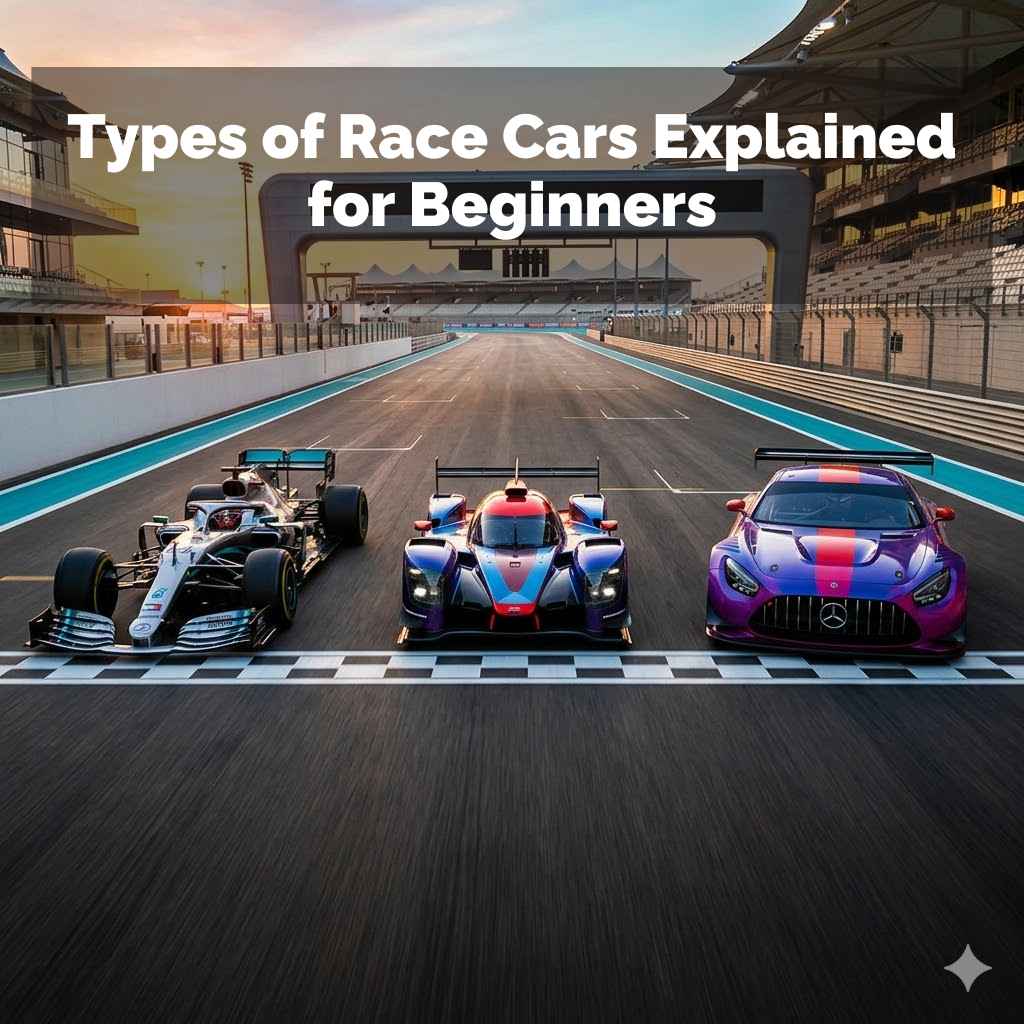
There are many distinct types of race cars, each designed for specific racing disciplines. These include open-wheelers like Formula 1, stock cars used in NASCAR, sports prototypes for endurance racing, touring cars, rally cars built for varied terrain, dragsters built for extreme acceleration, and many more specialized vehicles. Each type has unique engineering and performance characteristics tailored to its competitive environment — see our related guide, Are All NASCAR Tracks Oval? No, Road Courses Are Growing.
Understanding the World of Racing Machines
Race cars are not just souped-up versions of your everyday car. They are highly specialized machines. Engineers design them with one goal: to go as fast as possible on a specific type of track or course.
This means they often look very different from each other. They also perform very differently.
The type of racing is the biggest clue. Is it on a smooth, paved oval? Or a twisty road course?
Maybe it’s on dirt or even a snowy mountain? Each of these surfaces needs a different kind of car. The rules for each racing series also play a huge role.
These rules dictate everything from engine size to car weight. They help keep competition fair and drivers safe.
We can break down race cars into a few main categories. These categories help us understand the vast world of motorsport. We’ll explore these types one by one.
You’ll start to see the patterns and the reasons behind their designs.
My First Trip to the Indy 500
I remember my first time at the Indianapolis 500 like it was yesterday. I was a kid, maybe ten years old. The sheer noise hit me first.
It was a physical wave of sound that vibrated through my whole body. But what really blew my mind were the cars. They looked like sleek, low-slung rockets.
They were so different from the big, boxy cars I saw on TV in other races.
I kept asking my dad, “Why do those cars look like that?” He explained that they were special. They were built just for those oval tracks. They had to go super fast in one direction for a long time.
He pointed out how wide they were and how the wheels stuck out. It seemed so simple, yet so complex. It was my first real taste of how different race cars can be.
And it made me want to learn everything about them.
Open-Wheel Racers: Sleek and Fast
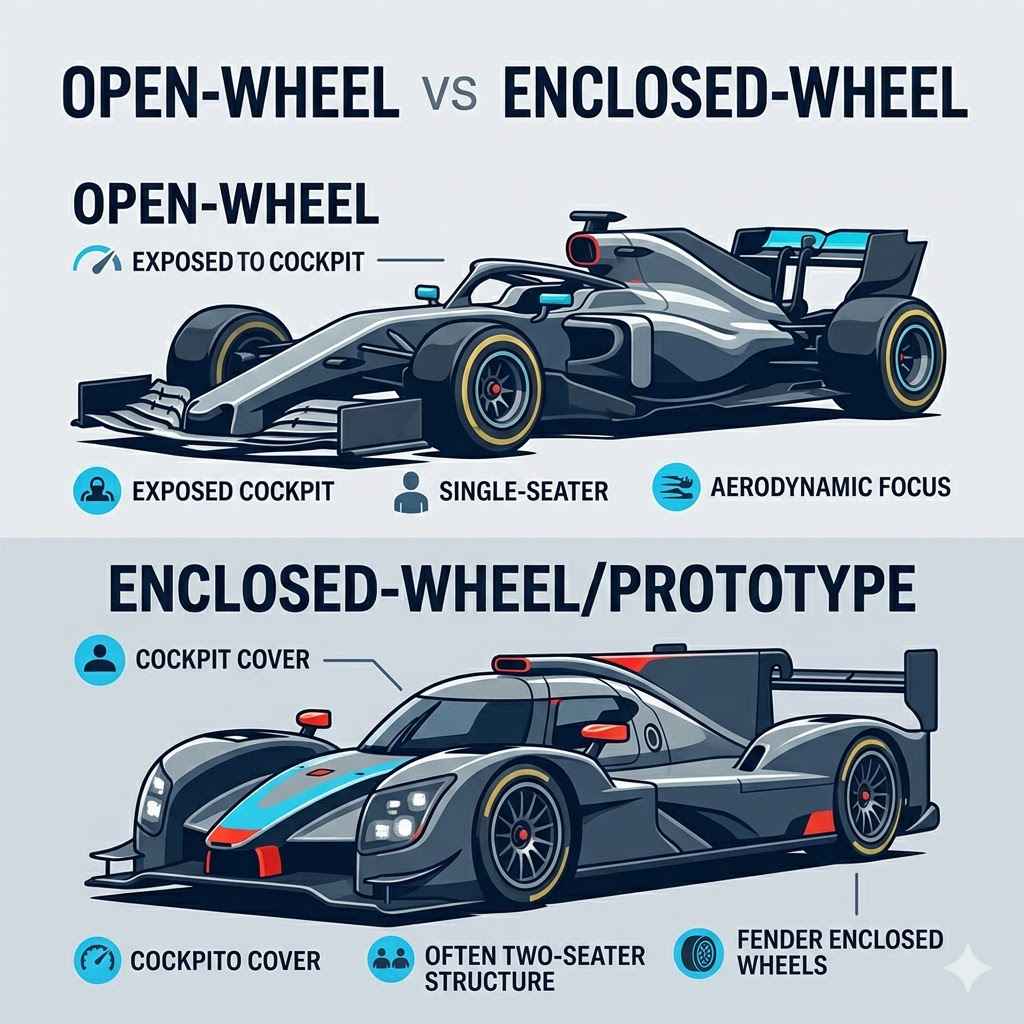
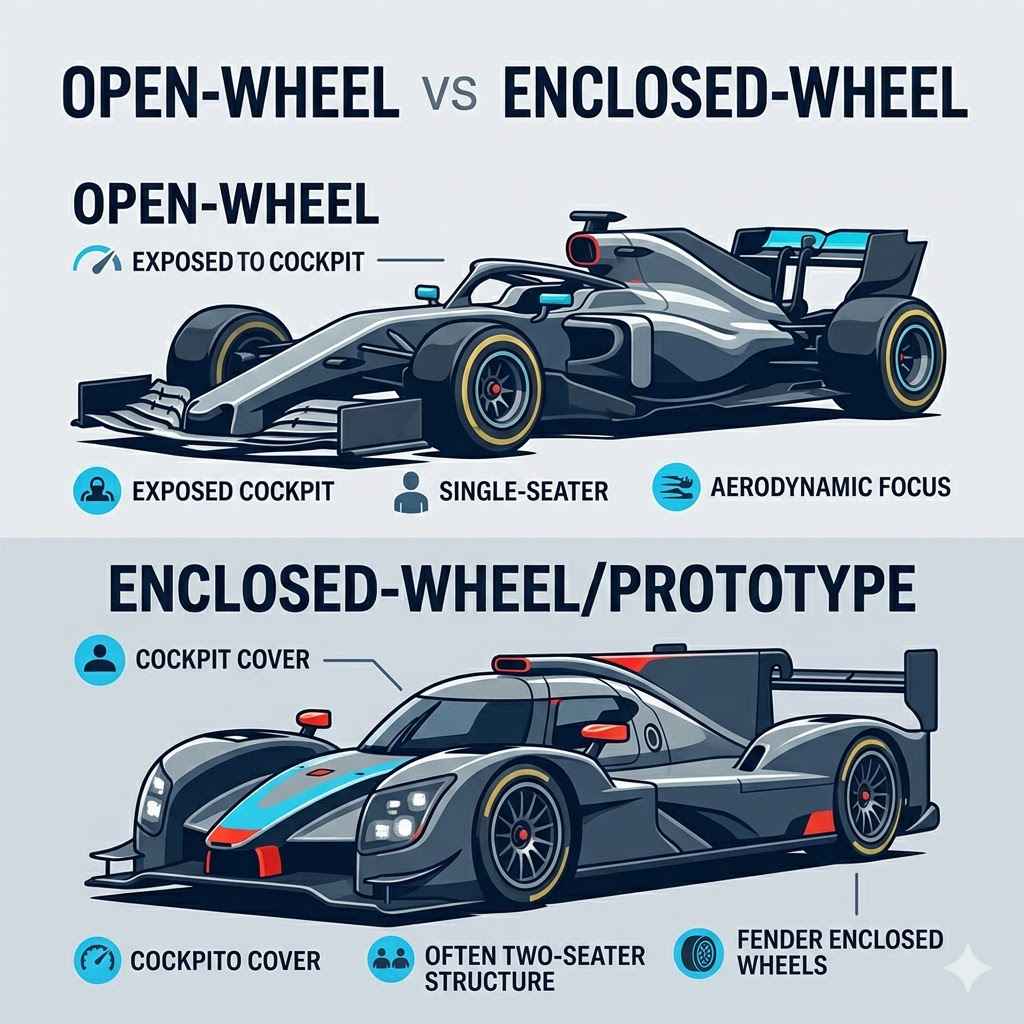
These cars are known for having their wheels exposed, not covered by the body. This design helps with aerodynamics. It lets air flow smoothly around the car.
They are usually very lightweight and powerful. This makes them incredibly fast on circuits and ovals.
The Iconic Open-Wheel Racers
When many people think of race cars, they often picture the sleek, low-slung vehicles with exposed wheels. These are called open-wheel cars. Their design is all about cutting through the air as efficiently as possible.
This is crucial for achieving the extremely high speeds seen in their respective racing series.
The most famous example is undoubtedly Formula 1. These cars are the pinnacle of motorsport technology. They are incredibly sophisticated.
Every part is designed to be as light and as aerodynamic as possible. The driver sits in a small cockpit, fully exposed to the elements, but protected by a strong safety cell. F1 cars use complex wings and bodywork to generate downforce.
Downforce pushes the car onto the track. This allows for higher cornering speeds.
Then there’s IndyCar, famous for races like the Indianapolis 500. IndyCars also have open wheels. They are designed to be versatile.
They compete on both high-speed oval tracks and road courses. While they share the open-wheel concept with F1, there are key differences in their design and the series rules. IndyCars are generally a bit heavier and have less complex aerodynamic packages than F1 cars.
But they are still incredibly fast.
Other open-wheel series exist around the world, like Formula 2 and Formula 3. These often serve as stepping stones for drivers aspiring to reach F1. They use slightly less advanced technology.
This helps control costs and allows drivers to develop their skills. Each series has its own set of regulations. These rules shape the cars’ appearance and performance.
Key Characteristics of Open-Wheel Cars
- Exposed wheels
- Low profile and sleek bodywork
- Extensive use of wings and aerodynamic elements
- Lightweight construction
- High power-to-weight ratio
- Designed for maximum speed and downforce
Formula 1 vs. IndyCar: A Quick Look
Formula 1
Focus: Cutting-edge tech, maximum downforce, road courses.
Design: Highly complex aero, hybrid power units.
Speed: Incredible cornering ability.
IndyCar
Focus: Versatility, ovals and road courses, close racing.
Design: Simpler aero, powerful V6 engines.
Speed: Very high top speeds, especially on ovals.
The Mighty Stock Cars
Next up, we have the cars that might look more familiar to some. These are stock cars, famously associated with NASCAR in the United States. The name “stock car” implies they are based on production models you could theoretically buy off a showroom floor.
However, in professional racing, this is more of a tradition than a strict rule.
Modern NASCAR Cup Series cars, for instance, share a visual resemblance with production cars. They have a steel body and a familiar shape. But beneath the surface, they are purebred race machines.
They feature powerful V8 engines that produce immense horsepower. They have robust chassis and suspension systems designed to withstand the rigors of oval racing. The cars are built to be durable and to handle close-quarters racing, often at speeds exceeding 200 miles per hour.
Stock cars are designed primarily for oval tracks. This means they are built to turn left consistently. Their suspension and steering are set up to bias towards left-hand turns.
They don’t have the extreme aerodynamic wings found on open-wheel cars. Instead, their aero is more about stability and managing airflow around the car at high speeds. They have a larger, heavier profile compared to open-wheelers.
Beyond NASCAR, other series use stock cars, though the specific designs and rules can vary. The International 500, for example, uses a slightly different rule set. The key takeaway is their connection to the idea of a “standard” car, even if the reality is far more specialized.
Their enduring appeal comes from their raw power and the close, often thrilling, racing they provide.
Stock Car Essentials
- Based on production car styling
- Powerful V8 engines
- Built for durability and close racing
- Primarily used on oval tracks
- Heavier and larger than open-wheel cars
- Less aggressive aerodynamic elements
Exploring the World of Sports Cars and Prototypes
Now, let’s venture into a category that encompasses a wide variety of racing machines: sports cars and prototypes. These cars are built for endurance racing and grand touring. They are often the stars of events like the 24 Hours of Le Mans.
Sports prototypes are purpose-built racing cars. They don’t resemble any road-going production car. They are designed with aerodynamics as a top priority.
They often feature sleek, closed-cockpit designs to improve airflow and driver comfort over long races. Examples include the LMP1 and LMP2 (Le Mans Prototype) cars. These cars are incredibly fast and technologically advanced.
They focus on efficiency and reliability for races that can last 24 hours or even longer.
GT (Grand Touring) cars, on the other hand, are more closely related to production sports cars. There are different classes within GT racing, like GT3 and GTE. GT3 cars are based on high-performance road cars.
They undergo significant modifications for racing, but they must retain many original components. This keeps them more accessible to privateer teams and manufacturers.
GTE cars (often seen in the FIA World Endurance Championship and IMSA) are also derived from road-going sports cars. They are typically more focused on straight-line speed and less on extreme aero compared to prototypes. They offer a thrilling blend of production-car styling and genuine racing performance.
The diversity within GT racing means you see a range of beautiful, high-performance cars battling it out.
The appeal of endurance racing with these cars is the mix of raw speed, strategic driving, and the ultimate test of machine and driver endurance. It’s a different kind of challenge than a sprint race. It requires precision, consistency, and the ability to push a car to its limits for extended periods.
Sports Prototypes vs. GT Cars
Sports Prototypes (e.g., LMP)
Basis: Purpose-built racing cars.
Design: Extreme aerodynamics, closed cockpit, focus on speed and efficiency.
Performance: Highest speeds and cornering in endurance racing.
GT Cars (e.g., GT3, GTE)
Basis: Modified production sports cars.
Design: Road-car styling, racing modifications, emphasis on racing close to production.
Performance: Strong performance, often seen in larger fields.
The Wild World of Rally Cars
Moving away from paved tracks, we find ourselves in the rugged domain of rally cars. These machines are built to conquer the most challenging and unpredictable terrains imaginable. Think gravel roads, muddy tracks, snowy passes, and even tarmac stages.
Rally cars are the epitome of versatility and driver skill.
Unlike circuit racers, rally cars are designed to handle bumps, jumps, and sudden changes in surface grip. They are typically based on road-going hatchbacks or small sedans. However, they are heavily modified for racing.
Key features include robust suspension systems with significant travel to absorb impacts. They also have powerful four-wheel-drive systems to provide traction on loose surfaces.
Safety is paramount in rally. Rally cars are equipped with strong roll cages to protect the driver and co-driver. They have specialized safety harnesses and fire suppression systems.
Aerodynamics are less about downforce and more about protecting the car’s underside from damage and managing airflow for cooling.
The World Rally Championship (WRC) is the premier series for these incredible cars. The drivers and co-drivers work as a team, navigating treacherous stages with incredible speed and precision. They rely on pace notes given by the co-driver to guide them through corners and hazards.
It’s a discipline that demands immense bravery and a deep understanding of car control.
The variety in rally stages means that cars need to be adaptable. A car that excels on a fast gravel stage might struggle on a slick, wet tarmac stage. Manufacturers often develop specific setups and tire choices to optimize performance for different conditions.
Rally cars represent a unique blend of engineering and sheer grit.
Rally Car Highlights
- Based on production cars (often hatchbacks/sedans)
- Four-wheel drive for maximum traction
- Robust suspension for rough terrain
- Advanced safety features (roll cages, harnesses)
- Designed for varied surfaces (gravel, tarmac, snow)
- Emphasis on durability and driver skill
Types of Rally Stages
Gravel: Loose stones and dirt, requires good traction and suspension.
Tarmac: Paved roads, similar to circuit racing but often with tighter corners and less forgiving barriers.
Snow/Ice: Requires specialized tires with studs, extremely slippery conditions.
Mud: Deep mud requires excellent grip and power management.
The Specialists: Dragsters and More
Some race cars are built for very specific forms of racing. They are masters of their niche. One of the most extreme examples is the dragster.
Dragsters are designed for one thing: straight-line acceleration. They compete in drag racing. The goal is to cover a quarter-mile (or eighth-mile) strip in the shortest time possible.
These machines are incredibly powerful. They often use supercharged engines that produce thousands of horsepower. Their bodies are long and narrow.
They have massive rear tires for grip.
The launch from the starting line is critical. Dragsters experience immense G-forces. This is like being pushed back in your seat with incredible force.
The speed they reach is astonishing, often over 300 miles per hour in just a few seconds. They are not built for turning. They are purely for raw, unadulterated speed over a short distance.
Then there are touring cars. These are race cars that look very much like their road-going counterparts. They compete in series like the British Touring Car Championship (BTCC).
These cars are based on common sedan or hatchback models. They are fitted with racing engines, suspension, and safety equipment. The racing is known for being very close and action-packed, with cars often bumping and weaving.
Other specialized categories include Formula Student cars (built by university teams), off-road trucks (like those in the Baja 1000), and even bizarre vehicles like the electric cars in the Formula E series. Each type of race car exists because there is a specific type of competition that demands its unique design and capabilities.
Specialized Racers in Action
- Dragsters: Extreme acceleration, quarter-mile sprints.
- Touring Cars: Production-based sedans/hatchbacks, close circuit racing.
- Formula E: Electric open-wheel cars, city street circuits.
- Off-Road Trucks: Built for rugged desert racing and jumps.
The Evolution and Future of Race Car Design
Race cars are not static. They are constantly evolving. Technology advances rapidly in motorsport.
This leads to new designs and improved performance.
Aerodynamics is always a key focus. Engineers use advanced computer simulations and wind tunnels. They try to make cars faster and more stable.
Safety has also become a huge priority. Innovations in materials and chassis design have made racing much safer than it used to be. Think about the HANS device and stronger roll cages.
Sustainability is another big trend. Formula 1 and Formula E are leading the way with hybrid powertrains and electric technology. This pushes the boundaries of what’s possible.
It also helps develop greener technologies for road cars. We might see more cars powered by sustainable fuels or advanced battery systems in the future.
The rules in racing series also change. This is done to control costs, improve safety, or promote closer racing. Sometimes, these rule changes lead to entirely new types of cars emerging.
Or they might cause existing types to change significantly.
Looking ahead, the integration of AI and advanced data analysis will play a bigger role. This will help optimize car setups and race strategies. Race cars will continue to be amazing examples of engineering.
They will push the limits of speed, safety, and efficiency. The passion for racing will always drive innovation.
Key Trends Shaping Race Cars
Aerodynamics
Constant pursuit of better airflow for speed and stability.
Safety
Advanced materials and designs to protect drivers.
Sustainability
Hybrid power, electric powertrains, and eco-friendly fuels.
Data & AI
Using technology for performance optimization.
When is a Race Car “Normal”?
It’s interesting to think about what constitutes a “normal” race car. In the world of motorsport, the definition of normal is very different from what we see on public roads.
For fans of Formula 1, a normal race car is an open-wheel, high-downforce machine. For NASCAR followers, a normal car is a V8-powered, V-shaped beast built for oval racing. If you’re into rallying, a normal car is a tough, all-wheel-drive vehicle ready for any terrain.
What might seem “normal” in one series could be completely alien in another. The key is that each car is normal for its specific type of racing. The rules and demands of the sport define what is practical and competitive.
So, a touring car that looks like a street car is normal in its series, while a prototype that looks like a spaceship is normal in endurance racing.
When you see a car designed purely for speed, it’s normal within its racing context. It’s when a car is being used outside its intended environment that it might seem unusual. For instance, taking a Formula 1 car off-road would be strange and likely damaging.
It’s not designed for that.
What This Means for the Enthusiast
Understanding the different types of race cars helps you appreciate the sport more. You can start to see why certain cars perform the way they do.
If you prefer raw speed and precision on smooth tracks, open-wheel racing might be your passion. If you enjoy close, physical battles and the rumble of V8s, NASCAR and stock cars could be what you love. For fans of endurance and a mix of production-car beauty and racing prowess, sports car racing is fantastic.
And for those who admire sheer driver skill and car control in challenging environments, rally is unparalleled.
Each category offers a unique spectacle. Each showcases different aspects of automotive engineering and human skill. It’s not about one type being “better” than another.
It’s about finding the style of racing and the type of machine that excites you the most.
When you watch a race now, you’ll know a bit more about the car’s purpose. You’ll understand why it has certain features. This deeper knowledge can really enhance your viewing experience.
You can also start to follow specific series or drivers with more informed interest.
Quick Tips for Identifying Race Cars
Here’s a simple way to start identifying different race cars when you see them:
- Wheels: Are they exposed (open-wheel) or covered by the car’s body (stock, GT, touring)?
- Shape: Is it a sleek, low, single-seater (open-wheel)? A boxier, more traditional car shape (stock)? A more aerodynamic, closed-cockpit design (prototype)? Or a rugged, practical-looking car (rally)?
- Wings: Does it have large, prominent wings for downforce (F1, prototypes)? Or smaller, more subtle aero elements (stock, GT)?
- Environment: Where is it racing? A paved oval? A winding road course? A dirt track? This is a huge clue!
Frequent Questions About Race Car Types
Are Formula 1 cars the fastest type of race car?
Formula 1 cars are among the fastest, especially around a road course due to their incredible cornering speeds. However, dragsters achieve much higher top speeds in a straight line over a short distance. Other specialized cars might be faster on their specific terrain, like some rally cars on loose surfaces.
What’s the difference between a GT car and a sports prototype?
GT cars are based on production sports cars and must retain many of their road-going characteristics. Sports prototypes are purpose-built racing machines that do not resemble any road car. Prototypes are typically faster and more aerodynamically advanced than GT cars — see our related guide, How Fast Do NASCAR Drivers Actually Go?.
Can a stock car race on a road course?
Yes, stock cars can and do race on road courses. NASCAR and other stock car series include road course events. However, their design is primarily optimized for oval racing, meaning they handle differently on a road course compared to cars designed for that specific type of track.
How do rally cars handle different surfaces?
Rally cars use advanced four-wheel-drive systems and specialized suspension to adapt. Tires are crucial, with different treads and compounds used for gravel, tarmac, snow, and ice. Drivers also adjust the car’s setup, like differential settings, to match the conditions.
What is an open-wheel car?
An open-wheel car is a type of race car where the wheels are not covered by the car’s body. This design allows for better airflow and is common in Formula 1, IndyCar, and many other single-seater racing series. It helps create downforce and reduce drag.
Are there different classes within each race car type?
Yes, absolutely. For example, within sports car racing, you have GT3, GTE, and prototypes like LMP2, each with different performance levels and rules. Even within open-wheel racing, there are junior formulas like F2 and F3 that have less advanced technology than F1.
Wrapping Up Our Race Car Journey
It’s clear that the world of race cars is wonderfully diverse. From the aerodynamic wonders of Formula 1 to the brutal power of stock cars, and the all-terrain capability of rally machines, there’s a machine for every kind of speed and challenge. Each type is a testament to ingenuity and a specific pursuit of performance.
Hopefully, this deep dive has given you a clearer picture of the many different types of race cars out there. You can now look at a race and have a better idea of what you’re seeing and why those cars are built that way. The passion for racing continues to drive incredible innovation.
It’s exciting to see what’s next.
Products related to this article
Sponsored / affiliate links. As an Amazon Associate I earn from qualifying purchases. I may earn additional commission from eligible campaigns.