Why Is My Car Air Conditioner Blowing Hot Air: Essential Fixes
Your car’s AC blowing hot? It’s likely a straightforward issue like a low refrigerant level, a blown fuse, a faulty condenser fan, or a clogged cabin air filter. These common fixes are often manageable for beginners, saving you a costly trip to the mechanic.
Ah, that sinking feeling. You push the AC button, expecting immediate cool relief, but instead, a blast of warm air greets you. It’s a common problem many drivers face, especially when the weather heats up. Don’t worry, though! This isn’t necessarily a sign of a massive, expensive repair. Often, the culprits behind a hot car AC are quite simple to understand and even fix yourself with a little guidance. We’ll walk through the most common reasons your car’s air conditioner might be blowing hot air and what you can do about it, step by step. Get ready to feel the cool breeze again!
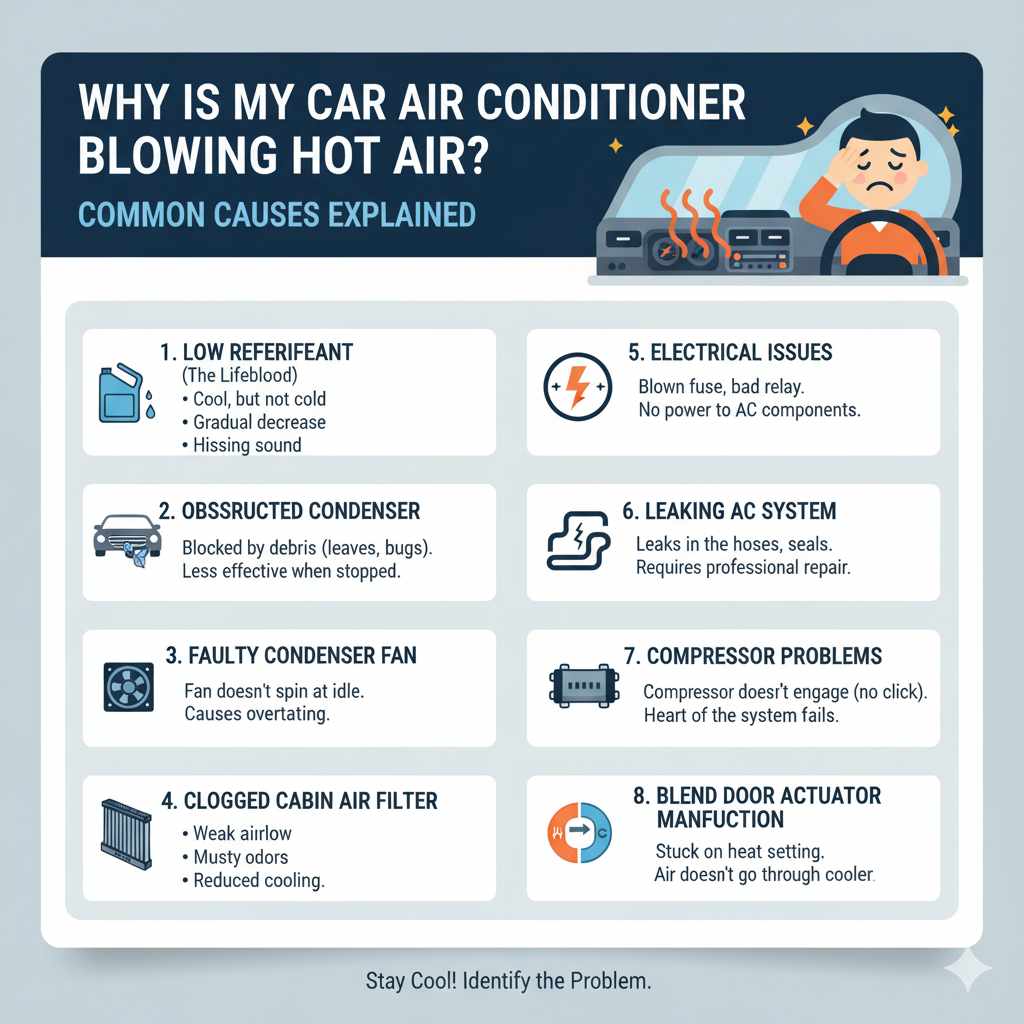
Why Is My Car Air Conditioner Blowing Hot Air? Common Causes Explained
It can be frustrating and uncomfortable when your car’s air conditioning system decides to take a personal vacation during a heatwave. Before you panic or assume the worst, let’s break down the most frequent reasons this happens. Understanding these can empower you to identify the problem and decide if it’s something you can tackle yourself or if it’s time to call in a professional.
1. Low Refrigerant (The Lifeblood of Your AC)
Think of refrigerant, often called Freon, as the special fluid that absorbs heat from your car’s cabin and releases it outside. If this level is too low, the system simply can’t cool the air effectively. Why does it get low? Usually, it’s due to a small leak somewhere in the AC system. Over time, even a tiny leak can deplete enough refrigerant to make your AC blow warm.
Signs of Low Refrigerant:
- Air is cool, but not cold enough.
- AC performance decreases gradually over time.
- You might hear a hissing sound from the AC system.
2. Obstructed Condenser
The condenser is like the radiator for your AC system. It sits at the front of your car, usually in front of the engine radiator. Its job is to release the heat from the refrigerant into the outside air. If it’s blocked by debris like leaves, bugs, or dirt, it can’t do its job properly. This overheating can directly lead to warm air blowing into your car.
What to Look For:
- Visible debris covering the condenser fins.
- The AC system is less effective when the car is stopped or moving slowly (when airflow is minimal).
3. Faulty Condenser Fan
This electric fan works with the condenser. When your car is moving, the outside air helps cool the condenser. But when you’re stopped, this fan kicks in to pull air through the condenser, keeping it cool. If this fan isn’t working, the condenser can overheat, and your AC will blow hot air, especially at idle or low speeds.
Troubleshooting the Fan:
- Listen for the fan when the AC is on and the car is idling.
- Visually inspect if the fan is spinning.
4. Clogged Cabin Air Filter
This is one of the easiest and most common causes! The cabin air filter cleans the air entering your car’s interior through the AC system. If it’s clogged with dust, pollen, and debris, it restricts airflow. This means less air moves over the evaporator (the part inside the car that cools the air), and what does get through might not be as cold, or the fan might struggle to push it out.
Symptoms of a Clogged Filter:
- Weak airflow from the vents, even on high fan settings.
- Musty or unpleasant odors from the vents.
- Reduced AC cooling effectiveness.
5. Electrical Issues (Blown Fuse or Relay)
Your car’s AC system has various electrical components, including fuses and relays, that control its functions, like the compressor and the condenser fan. A blown fuse or a faulty relay can simply shut down a part of the system, preventing it from cooling. This is a relatively common and often simple fix.
Where to Check:
- Your car’s owner’s manual will show the location of the fuse box(es).
- Look for fuses labeled for AC, blower, or compressor.
6. Leaking AC System
As mentioned with low refrigerant, leaks are a primary reason the refrigerant level drops. These leaks can occur in hoses, O-rings, seals, or even the evaporator or condenser themselves. If you suspect a leak, it’s often best to have it diagnosed by a professional. For a beginner, refilling refrigerant without finding and fixing the leak is usually a temporary solution.
7. Compressor Problems
The AC compressor is the heart of the system. It pressurizes the refrigerant, allowing it to circulate and do its cooling job. If the compressor isn’t engaging (you might not hear a distinct click when you turn on the AC) or has internal issues, it won’t compress the refrigerant, and you’ll get warm air. This is usually a more significant repair.
8. Blend Door Actuator Malfunction
Inside your dashboard is a system of “blend doors.” These doors control whether air passes through the heater core (for heat) or the evaporator (for AC), or a mix of both. If the blend door actuator fails, it might be stuck on the “heat” setting, or unable to move to the “cool” position, leading to warm air even when you select AC.
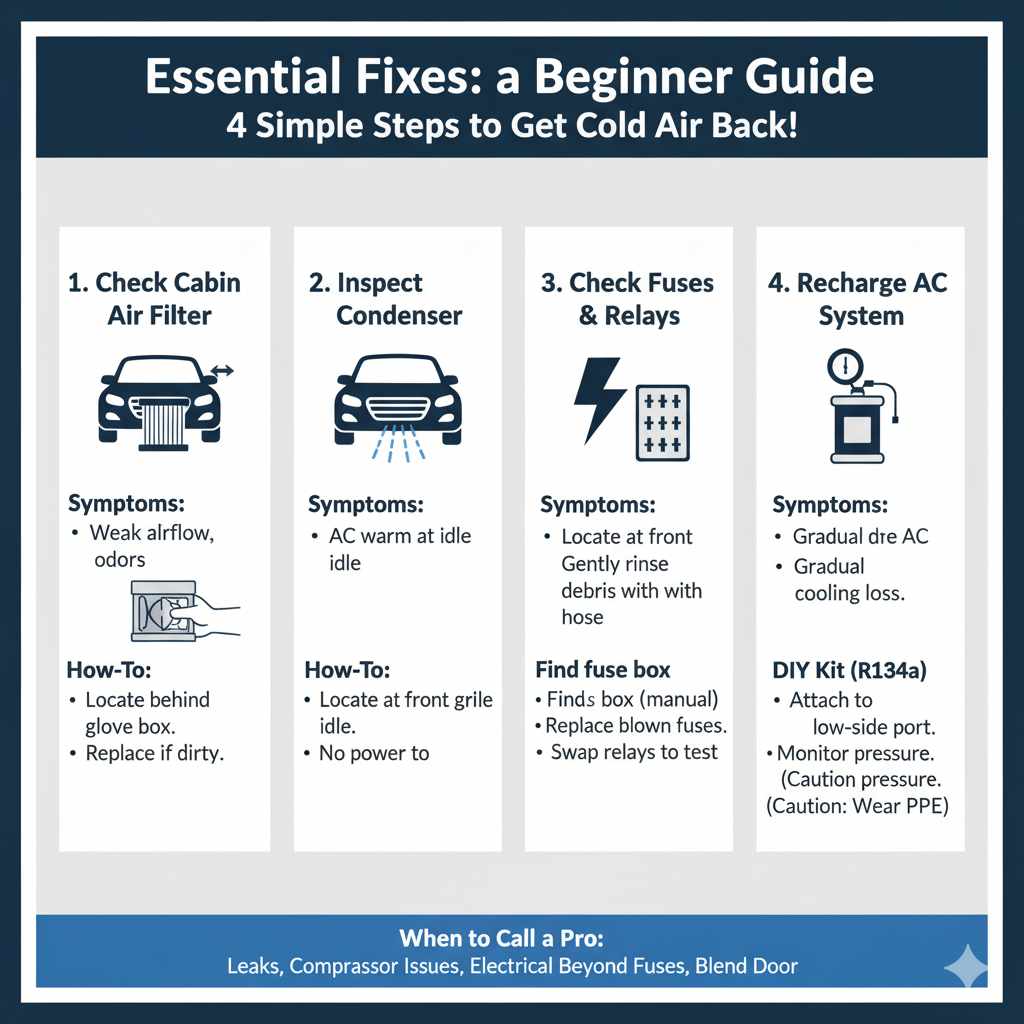
Essential Fixes: A Beginner’s Guide
Now that we know some common reasons why your AC might be blowing hot, let’s dive into the fixes. I’ll guide you through the easiest ones first, so you can get your car’s AC back to blowing cold air!
Step 1: Check the Cabin Air Filter
This is the easiest and often the most overlooked fix. A dirty cabin air filter can significantly reduce airflow and cooling. Here’s how to check and replace it:
Tools You Might Need:
- New cabin air filter (check your car’s manual for the correct part number)
- Screwdriver (if needed for access panels)
- Gloves (optional)
How to Do It:
- Locate the Filter: The cabin air filter is usually located behind the glove box or sometimes under the dashboard on the passenger side. Consult your car’s owner’s manual for the exact location. Many modern cars have an easy-access panel near the glove box.
- Access the Filter Housing: You might need to remove the glove box. This often involves pushing in clips or removing a few screws. Some filters are behind a simple plastic cover.
- Remove the Old Filter: Note the airflow direction arrow on the old filter. Gently pull it out. It might be dirty and dusty!
- Install the New Filter: Insert the new filter, making sure to align it with the airflow arrow pointing in the correct direction (usually towards the back of the car).
- Reassemble: Put the glove box or access panel back in place.
Why it helps: A clean filter allows maximum air to flow through the AC system, ensuring efficient cooling. This simple replacement can dramatically improve your AC’s performance.
Step 2: Inspect the Condenser
The condenser is at the front of your car and needs clear airflow to work. Bugs, leaves, and road grime can block it.
Tools You Might Need:
- Garden hose with spray nozzle
- Soft brush or compressed air (optional)
- Gloves
How to Do It:
- Safety First: Make sure your engine is off and cool to the touch.
- Locate the Condenser: It’s usually in front of the main engine radiator. You should be able to see it through the front grille.
- Visual Inspection: Look closely at the fins of the condenser. Are they clogged with debris?
- Gentle Cleaning: If it’s dirty, use a garden hose to gently spray water through the fins from the front. Work from top to bottom. Avoid high pressure, as it can bend the delicate fins.
- Deeper Cleaning (Optional): For stubborn grime, you can use a soft brush or compressed air, blowing from the back of the condenser towards the front, to dislodge debris.
Why it helps: A clean condenser can dissipate heat more effectively, allowing your AC system to cool the refrigerant properly.
Step 3: Check AC System Fuses and Relays
A blown fuse or a bad relay is a common electrical hiccup that can stop your AC in its tracks. Your car’s manual is your best friend here.
Tools You Might Need:
- Your car’s owner’s manual
- Fuse puller tool (often included in the fuse box)
- Replacement fuses (correct amperage)
How to Do It:
- Locate the Fuse Box(es): Your car likely has one under the dashboard and possibly one under the hood. Your manual will show you where.
- Identify Relevant Fuses: Look for fuses related to the AC, blower motor, or compressor clutch. The manual will have a diagram.
- Inspect the Fuses: Pull out the suspect fuse using the fuse puller or your fingers (if it’s safe and easy). Hold it up to the light. If the metal filament inside is broken or burnt, the fuse is blown and needs replacing.
- Replace Blown Fuses: Insert a new fuse of the EXACT same amperage rating. Using a higher amperage fuse can cause damage or a fire.
- Check Relays (If Comfortable): Some AC components are controlled by relays. These look like small black boxes. You can often swap a suspect relay with an identical one from a non-essential system (like the horn) to test if it’s the culprit. If the AC starts working after swapping, you’ve found the problem.
Why it helps: This ensures that the electrical signals needed to power the AC’s components are getting through.
For more detailed information on checking fuses and relays, resources like the AutoZone repair guides can offer specific diagrams for various vehicle makes.
Step 4: Recharging the AC System (Use Caution!)
If you’ve confirmed your cabin air filter is clean, the condenser is clear, and fuses are good, and the air is still not cold (especially if it was cold before and gradually got warmer), you might have low refrigerant. This is where you need to be a bit more cautious. Adding refrigerant can be a simple DIY task, but doing it incorrectly can cause damage or be ineffective if there’s a significant leak.
Tools You Might Need:
- AC Recharge Kit (available at auto parts stores). Make sure it’s compatible with your car’s refrigerant type (check your manual or a sticker under the hood – R134a is common for newer cars, but older cars might use R12, which requires professional service).
- Gauges (often built into recharge kits)
- Gloves and eye protection
How to Do It (General Steps for R134a, always follow kit instructions):
- Safety First: Wear gloves and eye protection. Work in a well-ventilated area.
- Locate Low-Pressure Port: With the engine running and AC set to MAX COLD and HIGH fan, find the low-pressure service port on your AC system. It’s usually a larger diameter line and has a blue or black plastic cap. Your manual can help locate it.
- Connect the Recharge Hose: Follow the instructions with your recharge kit. Typically, you’ll attach the hose to the can and then connect the fitting to the low-pressure port.
- Read the Gauge: The gauge will show the system pressure. This helps determine if you need to add refrigerant and how much.
- Add Refrigerant: If the pressure is low, you can start adding refrigerant by opening the valve on the can as per the kit’s instructions. Add small amounts at a time, monitoring the gauge. Overcharging can be just as bad as undercharging and can damage the system.
- Disconnect and Cap: Once the correct pressure is reached (or if the can is empty), disconnect the hose and replace the service port cap securely.
Important Note: If your AC system is completely empty of refrigerant, there’s likely a significant leak. Simply recharging it will be a temporary fix. Ideally, the system should be leak-tested and repaired by a professional.
For a visual guide on how to use an R134a recharge kit, I recommend checking out tutorials from reputable sources like This Old House or other automotive DIY channels.
When to Call a Professional Mechanic
While many AC issues can be addressed with basic DIY steps, some problems require specialized knowledge and tools. If you’ve tried the simpler fixes and your AC is still blowing hot, it’s time to seek professional help. This is especially true for:
- Suspected refrigerant leaks
- Compressor or clutch issues
- Electrical problems beyond fuses/relays
- Blend door actuator failures
- When the AC system has lost all its refrigerant
A certified mechanic has the equipment to safely evacuate, leak test, repair, and recharge your AC system, ensuring it’s done correctly and safely.
Troubleshooting Table: AC Blowing Hot Air
Here’s a quick reference to help you pinpoint common AC problems and their likely causes:
| Symptom | Potential Cause | DIY Check/Fix Possible? | Likely Professional Repair Needed? |
|---|---|---|---|
| Weak airflow from vents | Clogged cabin air filter | Yes (Replace filter) | No |
| Warm air, especially at idle; clutch not engaging | Low refrigerant, clutch issue, electrical | Check fuses/relays, check condenser fan | Yes (Leak detection, clutch repair, compressor) |
| Warm air, system never cooled well | Low refrigerant, condenser blocked/faulty fan | Yes (Clean condenser, check fan) | Yes (Recharge, leak detection, fan replacement) |
| Air is cool, but not cold | Low refrigerant | Yes (Cautious recharge if within comfort level) | Yes (Leak detection & repair is best) |
| AC works fine when driving, but blows hot when stopped | Faulty condenser fan, low refrigerant | Yes (Clean condenser, check fan) | Yes (Fan replacement, leak detection) |
| Only hot air comes out, no matter the setting | Blend door actuator failure, electrical issue preventing compressor engagement | Check fuses/relays | Yes (Blend door replacement, compressor issues) |
Frequently Asked Questions (FAQ)
Q1: How often should I service my car’s AC system?
A: While there’s no strict schedule like oil changes, it’s a good idea to have your AC system inspected roughly every two years or if you notice a decline in performance. Regular checks can catch small issues before they become big problems.
Q2: Can I just add refrigerant without knowing if there’s a leak?
A: You can, but it’s often a temporary fix. If there’s a leak, the refrigerant will escape again, and you’ll be back to warm air. It’s best practice to find and repair the leak first. Overcharging the system can also cause damage.
Q3: What does it mean if my AC blows cold, then warm, then cold again?
A: This intermittent cooling can indicate a few things: low refrigerant, a partially functioning compressor clutch, or an electrical issue that causes a component to cut in and out. It’s a sign that the system isn’t stable and should be checked.
Q4: Is it safe to work on my car’s AC system?
A: Basic checks like inspecting the condenser and replacing the cabin air filter or fuses are generally safe. However, dealing with refrigerant requires caution. Refrigerant can cause frostbite and is harmful to the environment if released. Always wear protective gear and consider professional help for refrigerant handling.
Q5: How much does it typically cost to fix an AC that blows hot air?
A: Costs vary widely. Replacing a cabin air filter might be $20-$50. Adding refrigerant could be $50-$150. However, if you need a new compressor or a significant leak repair, it can range from several hundred to over a thousand dollars.
Q6: Can a clogged AC drain hose cause warm air?
A: A clogged AC drain hose typically leads to water leaking into the car’s cabin or a wet passenger side floorboard, and sometimes a musty smell. While it doesn’t directly cause the AC to blow hot, a very blocked system could indirectly affect performance or lead to mold issues.
Conclusion
Experiencing warm air from your car’s AC can be a real bummer, but as we’ve seen, it’s often due to issues you can diagnose and sometimes even fix yourself. Starting with simple checks like the cabin air filter, condenser cleanliness, and fuses can save you time and money. If these basic steps don’t bring back the cool breeze, it might be time to consider adding refrigerant cautiously or seeking the help of a qualified mechanic. By understanding these common problems and their solutions, you can approach your car’s AC troubles with confidence and get back to enjoying a comfortable ride, no matter how hot it gets outside.