Why Lights Radio Drain Car Battery Fast
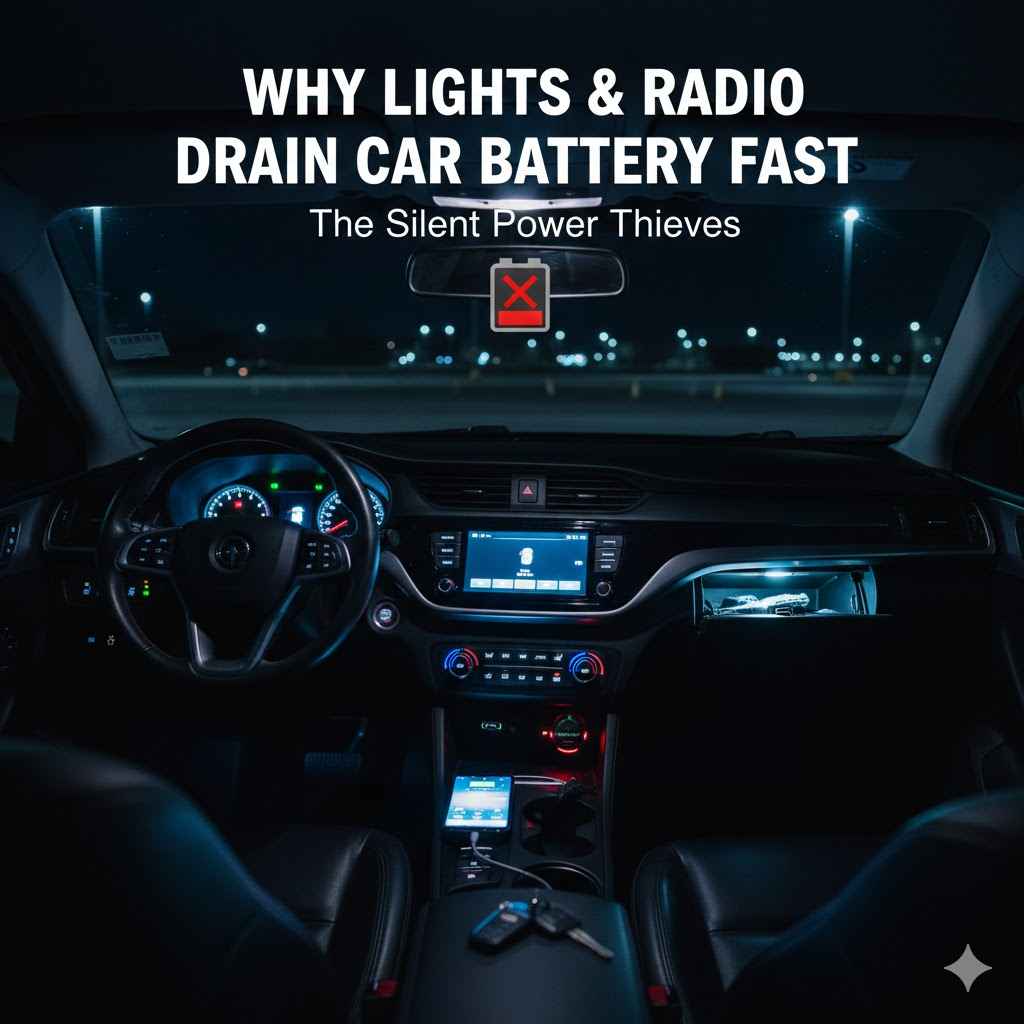
Ever wondered why your car battery seems to die quickly when you leave the lights or radio on? It’s a common problem, especially for folks new to car care. It can feel tricky to figure out what’s going on.
But don’t worry, it’s simpler than you might think. We’ll break down exactly Why Do Lights or Radio Drain a Car Battery Fast? in easy steps. Let’s get to the bottom of it and get your car running smoothly again.
Understanding Car Battery Drain
Why Do Lights or Radio Drain a Car Battery Fast Causes
This section explores the main reasons your car battery might be draining faster than expected, focusing on electrical components like lights and the radio. We’ll look at how these systems use power and what happens when they are left on or have issues. Understanding these common culprits is the first step to solving battery drain problems.
We aim to make this clear and straightforward so you can pinpoint the cause.
Lights As Battery Drainers
Car lights, whether they are headlights, interior dome lights, or even parking lights, are designed to use electricity from the battery. When your engine is off, the alternator isn’t generating power to recharge the battery. So, any lights left on will continuously draw power directly from the battery.
This can be a significant drain, especially for older batteries or those that are already low on charge.
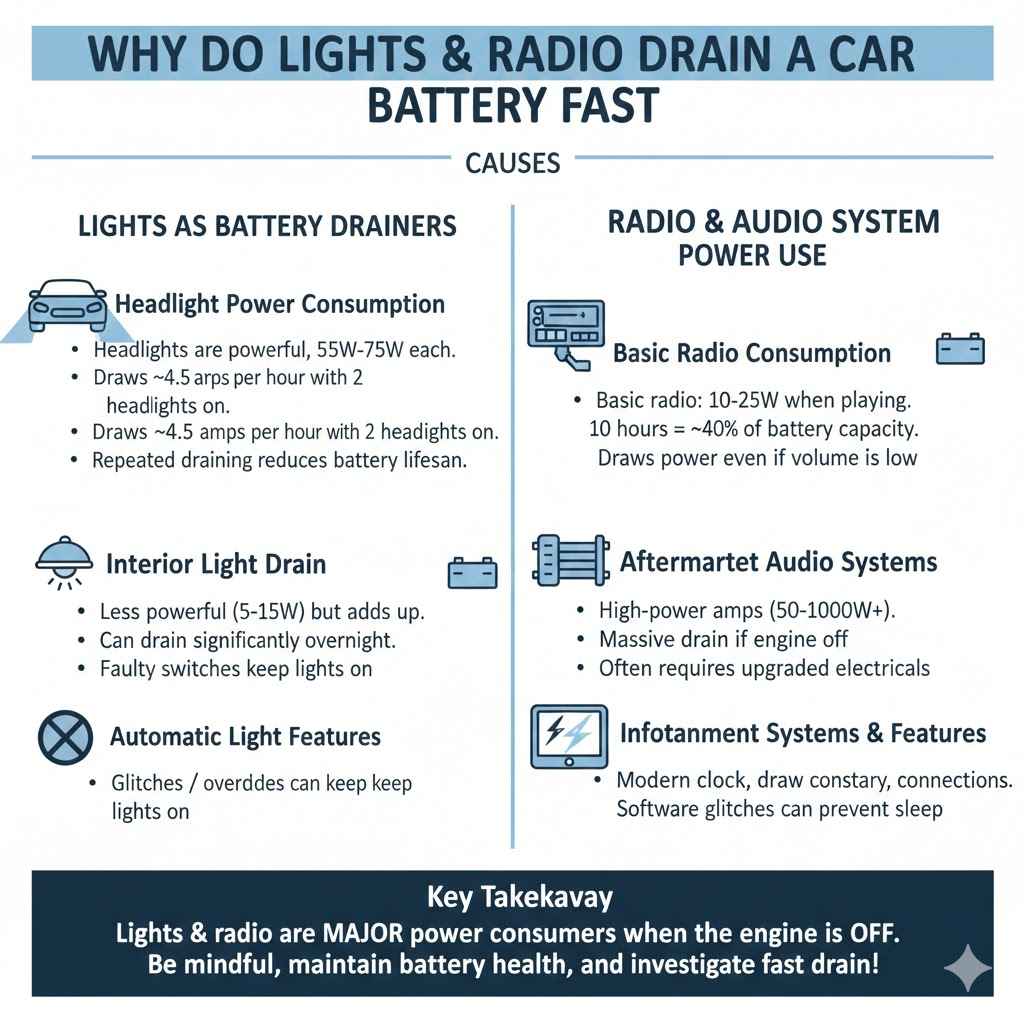
Headlights, for instance, are quite powerful. A typical low-beam headlight bulb can draw around 55 watts. If you have two on, that’s 110 watts.
Over an hour, this can use up a considerable amount of the battery’s stored energy. Interior lights, like dome lights or vanity mirror lights, are smaller but can still add up if left on for extended periods. Their power draw is usually much lower, often in the range of 5-15 watts.
One common oversight is forgetting to turn off your headlights completely. Some cars have automatic headlights, but many still require manual switching. Similarly, leaving the interior dome light on its “always on” setting when you close the door can also drain the battery, especially overnight.
Even a small light left on for many hours can deplete a car battery.
Headlight Power Consumption
Headlights are a primary concern when discussing battery drain. They are rated in watts, indicating how much electrical power they consume. For example, a standard halogen headlight bulb might be rated at 55W for the low beam and 75W for the high beam.
If both low beams are on for an hour, that’s 110 watt-hours of energy consumed. The total capacity of a car battery is measured in amp-hours (Ah) or cold-cranking amps (CCA). A typical car battery might have around 50 Ah capacity.
Consuming 110 watt-hours means drawing roughly 4.5 amps for an hour (110 watts / 12 volts ≈ 4.5 amps). Repeatedly draining the battery like this without a recharge can shorten its lifespan.
Interior Light Drain
Interior lights are less powerful than headlights but can still contribute to battery drain. A typical dome light might be 5-10 watts. If this light stays on for 8 hours, it would use about 40-80 watt-hours of energy.
This is a smaller drain than headlights but can still be significant if the battery is not in optimal condition or if other small electrical loads are also active. Many cars have features where interior lights dim and turn off automatically after a set period to prevent this, but not all do.
Automatic Light Features
Many modern cars come equipped with automatic headlights that turn on when it gets dark or off when the engine is switched off. While convenient, there can be glitches or settings that cause them to stay on longer than intended. Some systems might have a delay or a manual override that can accidentally be engaged.
It’s important to understand your car’s specific automatic light system and ensure it’s functioning as expected to prevent unintended battery drain.
Radio and Audio System Power Use
Car radios and audio systems are another common source of battery drain. Even when the engine is off, the radio can still be powered, especially if it’s a modern infotainment system with features like Bluetooth, GPS, or satellite radio. These systems draw power constantly to maintain their memory, clock, and sometimes to receive signals.
A basic car radio might draw only a few watts when playing. However, more advanced sound systems with amplifiers, subwoofers, and multiple speakers can consume a significant amount of power. These high-power systems are designed to draw heavily when the engine is running and the alternator is producing ample electricity.
When the engine is off, this load can quickly deplete the battery.
Leaving the radio on for extended periods while the engine is off is a classic way to drain a car battery. This is especially true for older car batteries that may not hold a full charge as well as newer ones. Even if the sound isn’t loud, the system is still active and drawing power.
Basic Radio Consumption
A standard car radio, without a powerful amplifier, typically uses about 10-25 watts when playing music. This means that for every hour it’s left on with the engine off, it can drain between 10 and 25 watt-hours of energy. If your car battery has a capacity of 50 Ah, which is equivalent to 600 Wh (50 Ah * 12 V), a radio running for 10 hours could consume up to 250 Wh, or about 40% of the battery’s total capacity.
This illustrates how quickly even a seemingly low-power device can impact the battery.
Aftermarket Audio Systems
Aftermarket car audio systems, particularly those with powerful amplifiers and multiple speakers, are notorious for draining car batteries. These systems are designed for high performance and can draw a substantial amount of current. A single amplifier can consume anywhere from 50 watts to over 1000 watts.
When the engine is off, the car battery must supply all this power.
For example, a car with a 500-watt amplifier and a large subwoofer might have a total audio system draw of 700-1000 watts when running at a decent volume. If this system is left on for just 30 minutes with the engine off, it could consume 350-500 watt-hours, which is a massive drain on a typical car battery. Many enthusiasts install upgraded alternators and secondary batteries to cope with the power demands of these systems.
Infotainment Systems and Features
Modern infotainment systems are more than just radios. They often include touchscreens, navigation, Bluetooth connectivity, USB ports, and even internet access. These complex systems require constant power to maintain their internal clocks, memory, and active connections.
Even when the screen is off, the system’s central processing unit and communication modules are often still running in a low-power standby mode.
A sophisticated infotainment system can draw anywhere from 10 to 30 watts or more, even when seemingly idle. This continuous draw, though lower than peak audio output, can significantly affect battery life over several hours or days, especially if the battery is not regularly recharged by driving. Issues with these systems, such as software glitches that prevent them from entering deep sleep mode, can lead to much higher unexpected battery drain.
Why Do Lights or Radio Drain a Car Battery Fast and Other Electrical Gremlins
While lights and the radio are common culprits, other electrical components in your car can also contribute to battery drain. These can include faulty wiring, parasitic draws from accessories that are supposed to turn off but don’t, or even problems with the car’s charging system itself. Identifying these less obvious issues is key to fully solving battery drain.
A parasitic draw is essentially a small but continuous drain of power from the battery even when the car is turned off and all accessories are presumed to be off. This is different from leaving a light on; it’s often an unintended drain caused by a faulty component or switch that is preventing a circuit from fully shutting down. Some draw is normal for modern cars to keep memory functions alive, but excessive draw is problematic.
Problems with the car’s charging system, like a weak alternator or a bad voltage regulator, can also lead to a battery not being fully recharged. If the battery isn’t getting enough charge when you drive, it will be more susceptible to draining quickly from normal electrical use. This creates a cycle where the battery is always struggling.
Parasitic Battery Drain
A parasitic battery drain occurs when a component in your car draws power from the battery even when the ignition is off and all accessories are switched off. This is an electrical leak. Every car has some level of parasitic draw; this is needed for systems like the car’s clock, alarm system, and the computer’s memory to retain settings and data.
A normal parasitic draw is typically between 25 and 50 milliamperes (mA).
However, if a faulty component or a short circuit causes this draw to increase significantly, it can drain the battery. For example, a draw of 200 mA (0.2 A) would drain a 50 Ah battery completely in about 10 days (50 Ah / 0.2 A = 250 hours, which is roughly 10 days). This is why a battery might die overnight or after a couple of days of not being driven if there’s a significant parasitic draw.
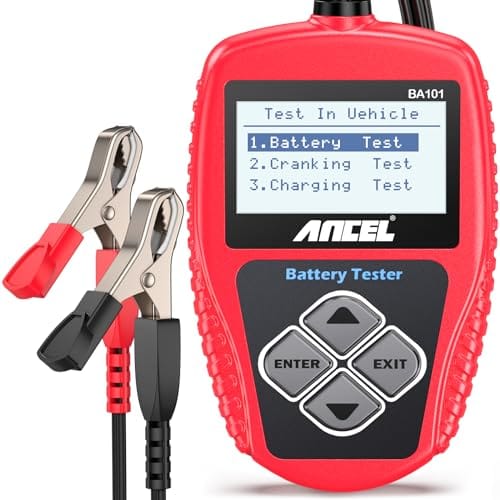
Diagnosing this involves using a multimeter to measure the current draw.
Common causes of excessive parasitic draw include malfunctioning door lock actuators, faulty interior lights that don’t turn off, aftermarket alarm systems that are improperly installed, or even issues with the car’s computer modules. If you suspect a parasitic draw, it’s best to have it professionally diagnosed, as it requires systematic testing.
Alternator and Charging System Issues
The alternator is responsible for recharging the car battery while the engine is running and for powering the car’s electrical systems. If the alternator is weak, failing, or has a faulty voltage regulator, it may not be able to provide enough power to keep the battery fully charged. This means the battery is constantly running on less than a full charge, making it more susceptible to draining from normal usage, like running the radio or lights.
Symptoms of a failing alternator include dimming headlights or interior lights, especially when the engine is idling or under load (like when the AC is on), a warning light on the dashboard (often a battery symbol), or the car battery dying frequently even when you’re not leaving anything on. The voltage regulator, often built into the alternator, controls the output voltage. If it fails, the battery could be overcharged (leading to damage) or undercharged.
A car’s battery voltage should typically be around 13.7 to 14.7 volts when the engine is running. If you measure lower than this, it indicates a problem with the charging system. A simple test involves using a voltmeter to check the battery voltage with the engine off (should be around 12.6V) and then with the engine running.
Faulty Switches and Relays
Switches and relays are electrical components that control the flow of power to various systems in your car. A faulty switch, such as a door jamb switch for the interior lights, or a problematic relay for the radio or headlights, can cause these components to remain active even when they shouldn’t be. For instance, if a door jamb switch fails to signal that the door is closed, the interior lights might stay on indefinitely.
Similarly, a sticking relay can keep power flowing to a circuit when the ignition is off. This is often difficult to diagnose without specialized knowledge and tools, as switches and relays can fail in subtle ways. A visual inspection might not reveal the problem.
Testing often involves checking for voltage at various points in the circuit when the car is supposed to be off.
Battery Health and Age Factors
The condition and age of your car battery play a significant role in how quickly it drains. An older battery simply doesn’t hold a charge as well as a new one. Even when fully charged, its capacity is reduced.
This means that the same electrical load will drain it faster.
Environmental factors also matter. Extreme temperatures, both hot and cold, can affect battery performance and lifespan. Batteries in very hot climates can degrade faster due to increased chemical activity, while very cold temperatures can reduce their available power.
Regular maintenance, like keeping the battery terminals clean, also ensures it’s receiving and delivering power efficiently.
A battery’s lifespan is typically around 3 to 5 years, though this can vary based on usage, climate, and battery quality. When a battery reaches the end of its life, its ability to store and deliver power diminishes significantly. This is why seemingly minor electrical drains can become major problems with an aging battery.
Battery Age and Capacity
Car batteries have a finite lifespan, generally ranging from 3 to 5 years. As a battery ages, the chemical processes inside that store and release energy become less efficient. This leads to a reduced overall capacity.
A new battery might have a capacity of 50 Ampere-hours (Ah), meaning it can theoretically deliver 50 amps for one hour or 5 amps for ten hours.
An older battery, even if it still starts the car, might have its effective capacity reduced to 30 Ah or even less. This means that leaving the headlights on for an hour, which might have consumed 4.5 amps and only slightly depleted a new battery, could now drain a significant portion of the older battery’s charge. This reduction in capacity makes the battery much more susceptible to being drained by common accessories like the radio or interior lights.
Battery Maintenance
Proper battery maintenance is crucial for its longevity and performance. This includes keeping the battery terminals clean and free of corrosion. Corrosion can build up over time, creating a barrier that hinders the flow of electricity.
This means the battery might not be receiving a full charge from the alternator, and it might also struggle to deliver its full power to the car’s electrical systems.
Checking the electrolyte levels (in non-sealed batteries) and ensuring the battery is securely mounted are also important. A loose battery can experience internal damage from vibrations. Many modern batteries are “maintenance-free,” meaning you don’t need to check electrolyte levels, but keeping the terminals clean is still essential.
A simple wire brush can often remove mild corrosion.
Environmental Impact on Batteries
Extreme temperatures significantly impact battery performance. Very hot weather accelerates the chemical reactions inside the battery, which can lead to faster degradation of the internal components and reduced lifespan. The heat can also cause the water in the electrolyte to evaporate, potentially damaging the battery if it’s not a sealed unit.
Conversely, very cold temperatures reduce a battery’s cranking power. While it doesn’t permanently damage the battery as much as heat, it means that a battery that might seem okay in warm weather could struggle or fail to start the car in the cold, especially if it’s already weakened. A battery’s ability to deliver energy decreases significantly as temperatures drop.
For instance, a battery might have 100% of its capacity at 80°F (27°C) but only 50-60% at 0°F (-18°C).
Common Scenarios and Solutions
Let’s walk through some typical situations where lights or the radio can drain your car battery and discuss simple solutions. Often, it’s a matter of habit, a minor oversight, or a component that needs a simple fix. By understanding these common scenarios, you can proactively prevent battery drain.
One of the most frequent issues is simply forgetting to turn off your headlights or interior lights when you park the car. This is particularly common with older vehicles or in situations where you’re distracted. The fix here is straightforward habit formation and being mindful.
For modern cars with automatic features, ensuring those features are working correctly is key.
Another scenario involves leaving the car radio on for an extended period, perhaps while waiting for someone. While tempting, this can quickly drain a battery, especially if it’s not in peak condition. The solution is to be aware of how long the radio is playing and to monitor the battery’s state.
Scenario One Leaving Lights On
Imagine you’ve just finished grocery shopping and are loading bags into your car. You might have your interior dome light on, and perhaps you’ve left your headlights on by mistake because you were in a hurry. If you then spend 30 minutes in the store or run another quick errand without turning them off, those lights are continuously drawing power from your battery.
Example: You leave your headlights (110W total) and dome light (10W) on for 30 minutes (0.5 hours) with the engine off. This would consume approximately (110W + 10W) * 0.5h = 60 watt-hours of energy. For a 50 Ah battery (600 Wh total capacity), this is about 10% of its total energy.
While not enough to kill the battery completely in one go, doing this regularly, or with an older battery, can lead to it not having enough power to start your car.
Solution: Develop a habit of checking your lights before exiting the vehicle. Make a conscious effort to turn them off. For headlights, get used to the feel of the switch.
For interior lights, make sure they are in the “off” position or set to turn off automatically after a short delay if your car has that feature.
Scenario Two Extended Radio Use
You’re waiting for a friend who is running late, so you decide to listen to the radio for an hour to pass the time. Your car’s radio is a standard unit consuming about 20 watts. You’re not paying close attention to the battery charge.
Example: Listening to a 20W radio for 1 hour with the engine off consumes 20 watt-hours. If your battery has a reserve capacity of 600 Wh, this is about 3.3% of its total energy. However, if your battery is older and only has 60% of its capacity (360 Wh), then 20 Wh is about 5.5% of its remaining energy.
If this is repeated over several hours, or combined with other small drains, it can lead to a significantly depleted battery.
Solution: Be mindful of how long you’re using the radio with the engine off. If you anticipate being stationary for a long period, consider turning the radio off periodically or starting the engine for a few minutes to let the alternator recharge the battery.
Scenario Three Parasitic Draw Unknown
Your car has been sitting for two days, and when you try to start it, the battery is dead. You’re sure you didn’t leave any lights or the radio on. This points towards a parasitic draw.
Example: Let’s say your car has a parasitic draw of 150 mA (0.15 A). Over 48 hours (2 days), this draw consumes 0.15 A * 48 hours = 7.2 Ah. If your battery’s usable capacity is reduced to 40 Ah due to age, then 7.2 Ah represents nearly 18% of its total stored energy.
This significant drain, happening silently, can leave you with a dead battery surprisingly quickly.
Solution: If you suspect a parasitic draw, it’s best to have it professionally diagnosed. A mechanic can use a multimeter to measure the current draw and systematically disconnect components to find the source of the problem. This might involve checking fuses, relays, and individual circuits.
Preventative Measures and Maintenance Tips
Keeping your car battery healthy involves a mix of good habits and regular maintenance. By taking a few simple steps, you can greatly reduce the chances of experiencing sudden battery drain. These preventative measures are often less about complex repairs and more about being aware and proactive.
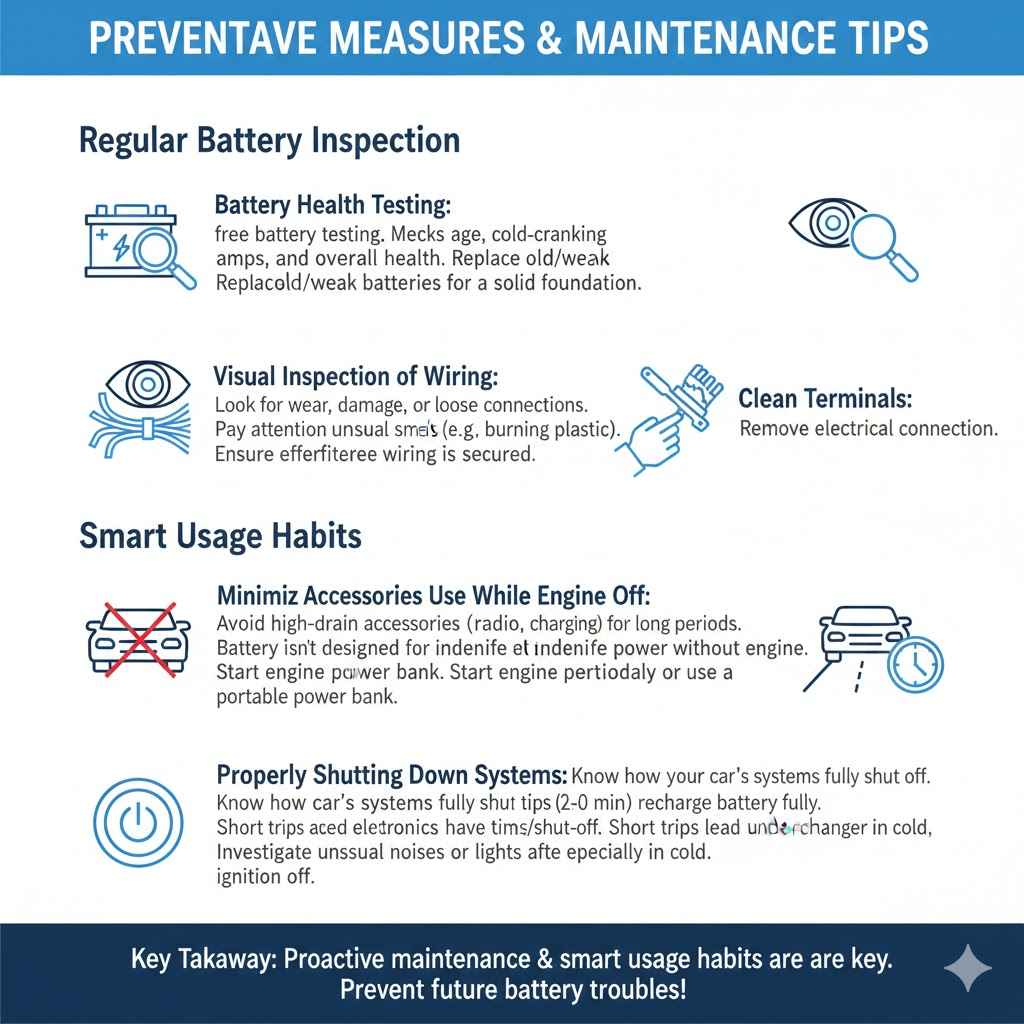
Regularly checking your battery’s condition and cleaning its terminals are key. Also, be mindful of your driving habits. Frequent short trips where the engine doesn’t get enough time to fully recharge the battery can also contribute to its gradual depletion.
Ensuring all your electrical accessories are turned off when you leave your car is the most basic but often overlooked tip. It’s a simple habit that can save you a lot of trouble. If you have aftermarket accessories, ensure they are installed correctly and don’t draw power when they shouldn’t.
Regular Battery Inspection
Visually inspecting your car battery every few months can catch potential issues early. Look for any signs of corrosion on the battery terminals and the cables connected to them. This white or bluish powdery substance can significantly impede electrical flow.
Cleaning the terminals with a wire brush and a mixture of baking soda and water can help maintain good contact.
Also, check if the battery is securely mounted in its tray. A loose battery can be damaged by vibrations, and its connections might become intermittent. Ensure the hold-down clamp is tight.
For older batteries that require maintenance, check the electrolyte levels and top them up with distilled water if they are low, following the manufacturer’s instructions.
Mindful Electrical Usage
Be conscious of how you use your car’s electrical accessories, especially when the engine is off. Make it a routine to check that all lights (headlights, interior lights, parking lights) are turned off before you lock your car. If you plan to listen to the radio for an extended period, consider starting the engine periodically to allow the alternator to recharge the battery.
Avoid running high-draw accessories like powerful inverters or personal electronics chargers for long durations with the engine off, unless your battery is known to be in excellent condition and you’re only planning a short period of use. Understanding the power draw of your devices can help you make informed decisions.
Driving Habits and Battery Charging
The way you drive can impact your battery’s health. Frequent short trips, where the engine is started and then shut off after only a few minutes, do not allow the alternator enough time to fully recharge the battery. Over time, this can lead to a battery that is chronically undercharged, making it more prone to draining quickly from normal electrical use.
If your daily commute involves many short trips, try to incorporate a longer drive (at least 20-30 minutes) once a week to ensure the battery gets a proper recharge. This is especially important in colder weather, as starting the engine uses a significant amount of battery power, and colder temperatures reduce battery efficiency.
Frequently Asked Questions
Question: How long can a car battery last if I leave the radio on?
Answer: It depends on the radio’s power draw, the battery’s age and condition, and other factors. A basic radio might last several hours, while a powerful stereo system could drain the battery in under an hour.
Question: Is it bad to start my car just for a few minutes?
Answer: Starting your car uses a lot of battery power. If you only run it for a few minutes, the alternator may not have enough time to put that power back into the battery, leading to a gradual drain over many short trips.
Question: My car battery died. Is it always the lights or radio?
Answer: Not always. While lights and the radio are common causes, issues like parasitic draws, a faulty alternator, or a generally old and weak battery can also lead to a dead battery.
Question: How can I check for a parasitic draw on my car battery?
Answer: This typically requires a multimeter to measure the current draw from the battery when the car is off. It’s often best left to a mechanic as it involves careful testing of different circuits.
Question: Should I disconnect my battery when I park my car for a long time?
Answer: Disconnecting the battery can prevent parasitic drain, but it will reset your car’s clock, radio presets, and potentially other electronic settings. For very long storage periods (months), it’s a viable option, but for shorter periods, ensuring no accessories are left on is usually sufficient.
Summary
So, why do lights or radio drain a car battery fast? It boils down to electricity usage versus battery capacity. Leaving lights on or playing the radio consumes power.
Older or weak batteries hold less charge, so this drain happens quicker. Parasitic draws and charging system issues also play a big role. Be mindful, check your battery, and address any faults.