Armor All Car Care Products: Trim Restorer, Detailer & Protectant
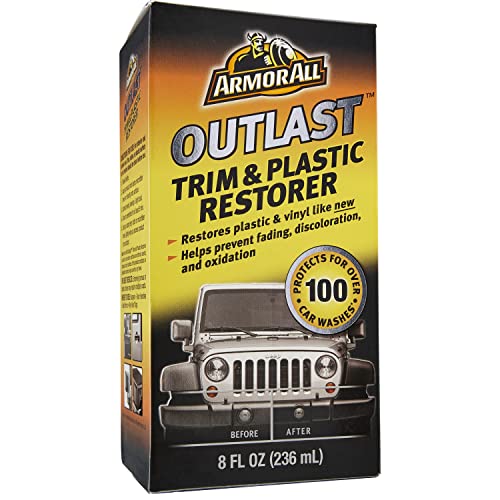
Use Trim Restorer for faded, unpainted plastic and exterior rubber. Use Detailer for quick dust and fingerprint cleanup on painted panels, glass, and other screen-safe hard surfaces. Use Protectant for UV-safe vinyl, plastic, and rubber when a dry protective film is desired. Use the wrong one and you can leave trim dull, smear glossy residue on paint, or skip UV protection altogether. This guide breaks down each product by surface, finish, and failure mode.
Choose by surface condition first, then by finish


These three products solve different problems. Trim Restorer is for faded exterior trim that has turned gray or chalky from UV exposure and oxidation. Detailer is for light cleaning and fast wipe-downs. Protectant is for routine UV-focused care on interior vinyl, plastic, and rubber when you want a dressed finish and added fade resistance.
The wrong choice usually shows up in the finish. Trim Restorer can revive dark color on weathered trim, but it is not a cleaning spray for heavy dirt. Detailer can clean light dust and fingerprints, but it will not rebuild color on sun-faded plastic. Protectant can leave a satin or gloss look, but it is not the right fix for severely oxidized exterior trim.
A simple rule helps: choose by surface condition first, then by finish. If the part is faded and outside, start with Trim Restorer. If the part is mostly clean and you want a quick wipe-down, use Detailer. If the part is interior vinyl, plastic, or rubber and you want UV protection, use Protectant.
Armor All product decision table
Use this as a surface-by-surface shortcut. The same product can look acceptable on one material and fail on another, so the finish, risk, and reapplication timing matter as much as the label name.
| Surface | Best Armor All product | Expected finish | Main risk | Reapplication cadence |
|---|---|---|---|---|
| Faded exterior plastic trim | Trim Restorer | Darker, restored black or deepened satin look | Uneven coverage or short-lived color if the trim is dirty or heavily oxidized | After wash cycles and sun exposure reduce the look, often every few weeks to a few months |
| Dashboard | Protectant or Detailer | Matte to satin with Protectant; matte with most Detailer formulas | Greasy glare, overspray on glass, slick feel if overused | Protectant every few weeks to monthly; Detailer as needed for dust |
| Door panels | Protectant or Detailer | Low-gloss to satin | Residue on high-touch areas and switches | Protectant every few weeks to monthly; Detailer after light soiling |
| Rubber seals | Protectant or Trim Restorer if the seal is exterior and dull | Natural satin | Slippery residue if the product pools in the channel | Every few weeks, sooner in intense sun |
| Wheels | Detailer only for light wipe-downs on safe surfaces | Light clean, usually no dressing effect | Brake dust needs a wheel cleaner, not a quick detailer | As needed for dust or light film |
| Glass | Detailer only if the label explicitly allows glass | Clear finish when fully wiped | Streaking, haze, and glare if the formula is not glass-safe | As needed for fingerprints and dust |
| Pedals | None recommended | No dressing should remain | Slick surfaces can reduce pedal grip | Do not apply |
Say your SUV has gray, chalky roof rails and bumper trim but the cabin surfaces are only dusty. Trim Restorer belongs on the exterior trim after you clean and dry it. Detailer belongs inside for the dash and door tops. Protectant is the better choice for the dashboard if you want UV defense and a controlled sheen.
What Trim Restorer does on faded trim
Trim Restorer is meant for faded, unpainted exterior plastic and some exterior rubber. It is designed to darken the surface again, which is different from cleaning or adding a temporary shine. If the trim is oxidized from sun exposure, a restorer can make it look closer to its original color, but it will not make the material permanent or new again.
Best surfaces and surface prep
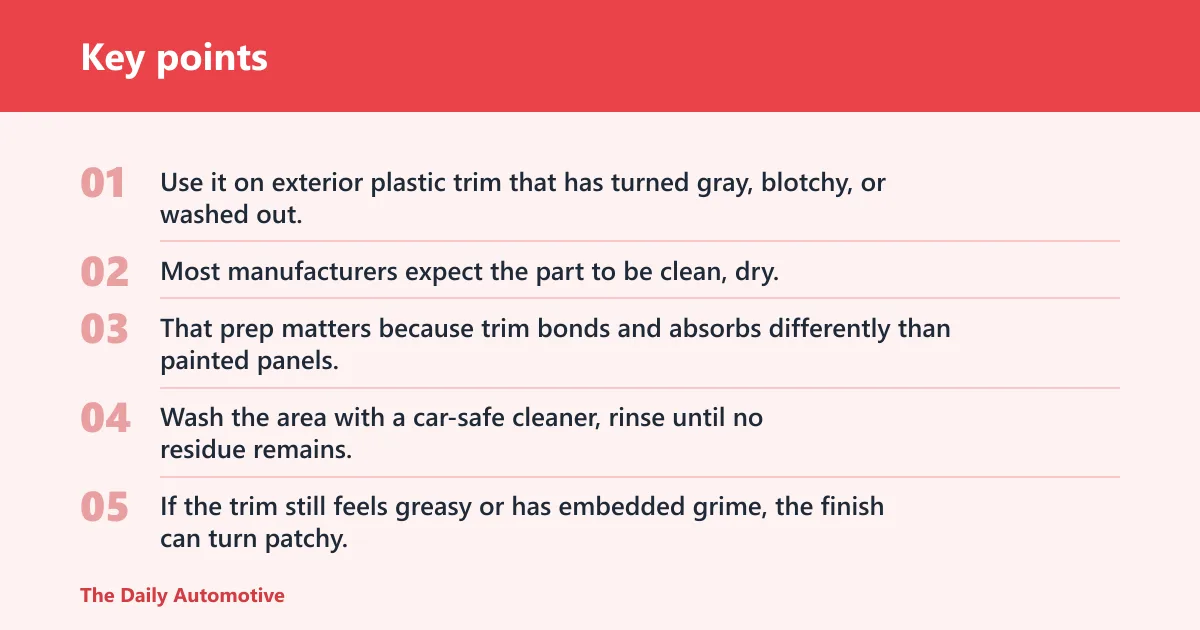
Use it on exterior plastic trim that has turned gray, blotchy, or washed out. Most manufacturers expect the part to be clean, dry, and free of wax or road film before application. That prep matters because trim bonds and absorbs differently than painted panels, so leftover grime can block even coverage.
Wash the area with a car-safe cleaner, rinse until no residue remains, and dry it completely with a clean towel. If the trim still feels greasy or has embedded grime, the finish can turn patchy. A test spot on a hidden section is worth doing because some plastics darken more than others.
Application method, dwell time and wipe-off
Put a small amount on an applicator pad instead of flooding the panel. Spread it in thin, even passes across the trim. Most product directions call for a short dwell period before wiping off any excess with a microfiber towel, which helps prevent streaks and shiny buildup on adjacent paint.
The goal is controlled coverage, not saturation. Too much product can streak into seams or leave a greasy edge around textured plastic. A lint-free microfiber towel is the last step because it removes loose residue without leaving fibers behind.
Expected finish and reapplication cadence
Trim Restorer usually leaves a darker, renewed look rather than a wet gloss. The exact finish depends on the formula, the texture of the plastic, and how much product remains after buffing. On highly sun-exposed parts, the effect often fades sooner than the label claims for sheltered trim.
Reapply when the trim starts to look gray again or after repeated washing and UV exposure dull the finish. That can mean every few weeks for exposed trim or less often for parts under shade. It is a maintenance product, not a permanent fix.
When should you use Detailer?
Use Detailer when the surface is basically sound and you need a fast clean, not restoration. It is made for dust, fingerprints, and light grime on surfaces that can be wiped safely, including many painted, plastic, and glass-safe areas if the label allows them. It is not the answer for heavy contamination or faded trim.
Dust and light grime removal
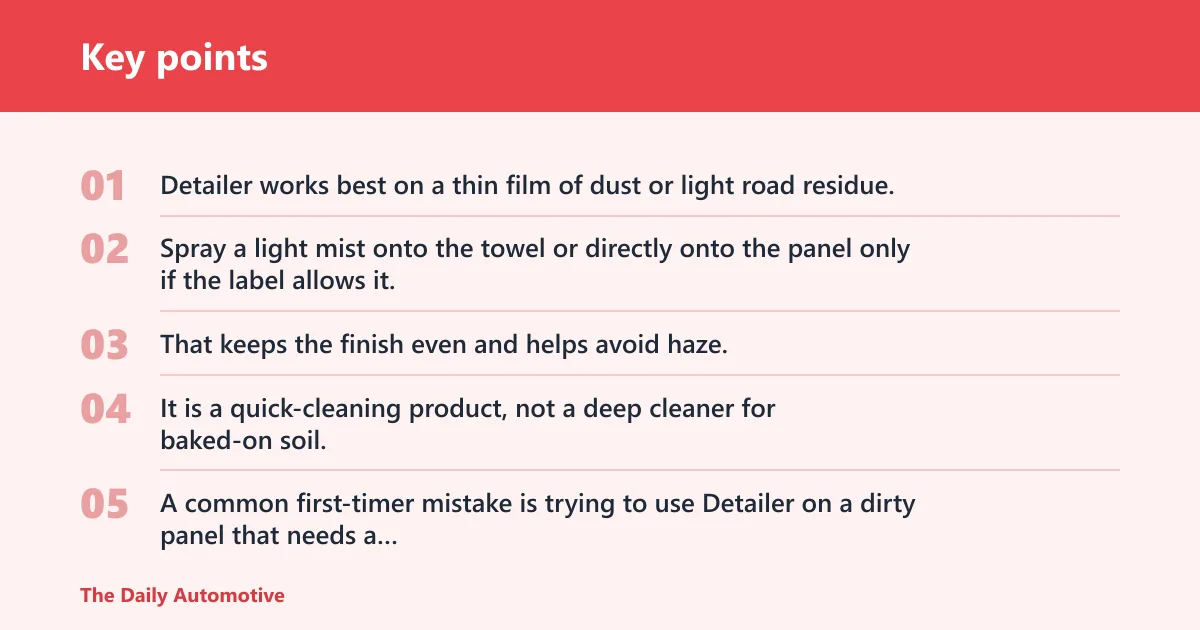
Detailer works best on a thin film of dust or light road residue. Spray a light mist onto the towel or directly onto the panel only if the label allows it, then wipe before the product dries on the surface. That keeps the finish even and helps avoid haze. It is a quick-cleaning product, not a deep cleaner for baked-on soil.
A common first-timer mistake is trying to use Detailer on a dirty panel that needs a wash first. That can drag grit across the finish and leave smears. If the surface feels gritty, stop and clean it properly before reaching for a detailing spray.
Interior and exterior-safe surfaces
On the interior, Detailer can work on dashboards, door tops, and other hard surfaces that the label lists as safe. On the exterior, it can help remove fresh dust from paint or wipe light residue from trim and glass if the formula says so. Always check the product label, because not every version is safe on every material.
Do not use Detailer as a blanket solution for wheels, pedals, or touch-sensitive controls. Wheels often need a dedicated wheel cleaner, and pedals should stay free of any residue that could reduce grip. Screen-safe surfaces also deserve caution; if the label does not explicitly allow it, skip it.
Microfiber wipe-off for a clean finish
Use a clean microfiber towel for the final wipe. That towel matters because it lifts residue without scratching and helps prevent streaking on glossy trim or glass. A second dry towel can help remove any last film if the first pass leaves a trace of product behind.
Finish level depends on the formula and how much you use. Some Detailer products leave a matte finish, while others read a bit satin after wiping. If the surface looks shiny, too much product was likely used.
How does Protectant differ from Trim Restorer?
Protectant is for ongoing UV defense on interior vinyl, plastic, and rubber, while Trim Restorer is for reviving faded exterior trim. Protectant is about slowing future fading and cracking; Trim Restorer is about correcting a faded appearance that has already happened. They can overlap on some materials, but they do not do the same job.
UV protection and anti-fading purpose
UV exposure is a major reason trim fades and plastic dries out. Protectant is positioned to help slow that damage on parts that live inside the cabin or on other label-approved surfaces. It is a maintenance product, so repeated use matters more than one heavy application.
Do not treat Protectant as a once-and-done shield. Sun exposure, wash frequency, and cabin heat shorten its life. If the vehicle sits outdoors often, reapplication becomes part of the routine.
Interior vinyl, plastic and rubber use
Use Protectant on dashboards, vinyl trim, door panels, and similar rubber or plastic pieces when the label approves them. It can leave a matte, satin, or light gloss result depending on the formula and how much remains after wiping. A dry-looking finish is usually the safer target for interiors because it avoids distracting glare.
Apply a light coat to a foam pad or microfiber applicator, let it sit for the time listed on the bottle, then buff with a microfiber towel until the surface feels dry to the touch. If the panel still looks oily, too much product is on the surface. Thin coats work better than one wet pass.
How to avoid a greasy finish
Start with a clean, dry panel. Spray onto an applicator pad or towel rather than directly onto sensitive areas when possible, then spread a small amount evenly. Wipe the excess off before it dries in place, especially on high-touch surfaces like steering-column plastics and door trims.
Picture a dashboard that catches morning sun through the windshield. A heavy coat of Protectant can turn that panel reflective and slick-looking. A thin coat, buffed with microfiber, keeps the finish controlled and lowers the chance of glare.
Armor all car care checklist
The label matters more than the brand name here. Surface compatibility changes by formula, and some products are safe on one material but wrong for the next one. If a surface is delicate, touch-sensitive, or safety-related, check the bottle before you spray anything.
- Glass: Use only if the label says the Detailer is glass-safe. Otherwise expect streaking or haze.
- Touch surfaces: Skip screens and sensitive controls unless the formula explicitly allows them.
- Pedals: Avoid all dressings and protectants. Slippery residue is a safety problem.
- Steering controls: Avoid overspray on buttons, stalks, and wheel-mounted controls.
- Exterior painted panels: Use only products meant for the panel and wipe fully clean afterward.
- Unpainted trim: Clean first, then use Trim Restorer or a compatible Protectant depending on the job.
Test every new product on an inconspicuous spot first. That simple check can reveal unwanted darkening, streaking, or sheen before it shows up across the whole panel. If the result looks wrong in the hidden area, stop there.
Application steps that reduce streaks
Streaks usually come from too much product, poor spreading, or skipping the final wipe. A careful application sequence keeps the finish even and lowers the chance of residue on paint, glass, or seams. Work on one small area at a time.
- Clean the surface and let it dry fully.
- Shake the bottle if the label instructs it.
- Apply a small amount to an applicator pad for trim or to a microfiber towel for wipe-down work.
- Spread the product in a thin, even layer.
- Allow any short dwell time listed on the bottle.
- Buff with a lint-free microfiber towel until the surface looks even and dry.
- Check edges, seams, and nearby glass for overspray or residue.
Using an applicator pad on trim gives better control than spraying directly at the part. It helps distribute product evenly across textured plastic and reduces waste. A microfiber towel handles the final buff and catches the excess that can leave a glossy halo around the treated area.
Frequently asked questions
What is the difference between armor all trim Restorer, Detailer, and Protectant?
Trim Restorer is meant for faded exterior plastic and some rubber, Detailer is for quick dust and light grime cleanup, and Protectant is for UV-focused care on interior vinyl, plastic, and rubber. The finish and result differ because each product is built for a different surface condition and goal.
Which Armor All product should I use on plastic trim, dashboard, or exterior trim?
Use Trim Restorer on faded exterior plastic trim, Protectant on a dashboard if you want UV defense and a controlled sheen, and Detailer for light cleanup on surfaces that just need dust removed. If the surface is heavily dirty, clean it first rather than using any of these as a substitute wash.
How do I apply Armor All protectant without leaving a greasy finish?
Apply a thin coat to a clean, dry surface, then wipe off the excess with a microfiber towel before it sets. If possible, use an applicator pad for even spread and less overspray. The greasy look usually comes from too much product, not from the formula itself.
Does Armor All Trim Restorer work on faded plastic trim?
Yes, that is its main use. It is intended for faded, unpainted exterior plastic and some exterior rubber, where it can darken the surface again and reduce the chalky look. It is not permanent, though, and results depend on prep, exposure to sun, and how evenly the product is applied.
How often should I reapply Armor All protectant?
Reapply when the finish starts to look dry, dull, or less protected, often every few weeks to about monthly on interior parts that see a lot of sun. Strong UV exposure and frequent washing shorten the interval, so vehicles parked outside usually need attention sooner than garage-kept ones.
What surfaces should I avoid when using Armor All car care products?
Avoid pedals, touch-sensitive controls, and any glass or screen surface that the label does not explicitly approve. Those areas can become slippery, streaked, or hard to read if the wrong formula is used. When in doubt, test a hidden spot first and follow the bottle directions exactly.
Products related to this article
Sponsored / affiliate links. As an Amazon Associate I earn from qualifying purchases. I may earn additional commission from eligible campaigns.