12 Volt Cooler for Car: Best Types and Picks
A 12-volt cooler for car use is best chosen by how long you will be parked, how much power the unit draws, and the temperature it has to hold. Use a compressor cooler for hot climates or multi-day travel, a thermoelectric unit only for short drives, and confirm your vehicle can supply 12V without draining the battery. Choose wrong, and your drinks warm up, your food risks spoilage, and a parked vehicle can end with a dead battery. This guide compares the right cooler type, capacity, and power setup for commuting, camping, and road trips.
Top pick: compressor cooler for road trips


A compressor 12V cooler is the best default choice for most road trips and camping because it cools faster, holds a set temperature better, and can reach fridge mode near 32°F with freezer-capable models dropping below 0°F. It is the safest all-around pick when cabin heat, parking time, and food safety all matter.
That is why the strongest overall pick usually comes from the compressor class. Car and Driver’s top overall pick is the BougeRV 21-Quart Portable Cooler, while The Drive names the Dometic CFX3 35-Liter Portable Refrigerator and Freezer as its best overall. Those kinds of picks fit the use case better than small thermoelectric boxes when the vehicle sits in the sun or the trip lasts more than a few hours. (Caranddriver) (Thedrive)
Why it beats thermoelectric models
Compressor coolers pull temperatures down quickly and keep them there with less dependence on outside conditions. Thermoelectric units can cool and warm, but their cooling is much weaker. In a hot cabin, that difference matters immediately. If the cabin stays warm after shutdown, a thermoelectric cooler can struggle to keep food cold.
Compressor units also give you more control over packing. If you need one section for drinks and another for chilled meals, or if you want freezer space for ice cream or frozen meat, this is the class that can do that work. Modern electric coolers can run on a car socket, wall socket, or battery power, so the same unit can move from car to campsite without changing your packing plan.
Who should skip it?
Skip a compressor cooler only if your trips are short, your budget is tight, and you mainly want a chilled lunch box for a commute or a quick grocery run. In that case, a smaller thermoelectric unit may be enough. A compressor cooler is better, but not always necessary.
📊 Car and Driver names the Anker Solix Everfrost 2 for off-grid camping. Source: Caranddriver.
Quick picks by trip type
Match the cooler to the way you travel, not just the price tag. Trip length, how long you park, and access to AC or DC power do more to shape satisfaction than capacity alone.
| Use case | Best cooler class | Capacity range | Power setup | Battery-risk level |
|---|---|---|---|---|
| Day trips and grocery runs | Thermoelectric | 11QT to 23QT | 12V DC socket | Low if engine stays on |
| Camping and overnight stays | Compressor | 30QT to 61QT | 12V DC plus AC 110-240V | Medium to high if parked without protection |
| Trucks, RVs, and long parked hours | Compressor | 30QT to 61QT | 12/24V DC compatibility, often AC | Medium with battery protection; high without it |
| Short drives on a budget | Thermoelectric | 11QT to 23QT | 12V DC socket | Low during driving, higher if parked too long |
Best for day trips and grocery runs
Choose a compact thermoelectric cooler if you only need chilled drinks, snacks, or a small lunch load for a few hours. The Drive’s best budget pick is the Wagan 12V Personal Cooler/Warmer, and The Drive says it can hold up to 12 soda cans. That size makes sense when you want convenience more than deep cooling.
Best for camping and overnight stays
Choose a compressor model with AC 110-240V support so you can plug it into home power, a campsite outlet, or a generator, along with battery protection for the drive. That gives you flexibility at the campsite and on the drive home. Car and Driver names the Anker Solix Everfrost 2 for off-grid camping, which points to the kind of cooler that makes sense when power access changes during the trip.
Best for trucks, RVs, and long parked hours
Look for 12/24V DC compatibility and a battery protection system. Trucks and RVs often have different electrical setups, and 24V support broadens where the cooler can work. If the vehicle will sit parked for several hours, low-voltage shutoff matters more than a bargain price.
Best budget option for short drives
A thermoelectric cooler is the right budget answer for short trips if you accept limited cooling. It can chill contents and, on some models, warm food. The Drive says the Wagan cooler can heat food to a maximum of 140 degrees Fahrenheit, which suits lunch runs better than summer camping.
What kind of 12V cooler do you need?
The right type depends on how long the cooler must hold temperature, how hot the cabin gets, and whether you need food-safe cooling or just a modest temperature drop. For multi-day use, or any trip that includes parking in heat, compressor models are the safer choice. For short drives, thermoelectric models can be enough.
Compressor cooler versus thermoelectric cooler
Compressor coolers act like portable fridges and freezers. They are built for fast pull-down cooling and stable temperatures. Thermoelectric coolers use a different system that can cool or warm, but they do not pull temperatures down nearly as far, especially when the cabin is hot or the box sits in direct sun.
That gap shows up most clearly after shutdown. If the cooler must keep food cold while the car is parked, compressor models hold the line much better. Thermoelectric units are more sensitive to ambient heat, weaker insulation, and frequent lid opening.
When fridge-freezer capability matters
Choose a compressor cooler if you need dairy, meat, frozen meals, or ice cream to stay cold for more than a brief stop. A freezer-capable model can also hold ice packs solid and give you more flexibility when packing a family meal. The advertised cooling range varies by model, so check the minimum temperature before buying.
When a cooling-and-warming unit is enough
A cooling-and-warming thermoelectric unit is enough for commuters, tailgates, and day trips with a light food load. It can keep drinks cooler than cabin air and warm a takeout container on the return drive. That does not make it a substitute for a fridge on hot weekends or long parking stretches.
How the power setup affects real use
Power details decide whether a cooler works in one vehicle or several. Socket type, cord length, and whether you can plug into wall power all change placement and usefulness. A cooler that fits the trunk but has a short cord can become awkward fast.
12V DC socket limits and cord length
The 12V DC car socket is the common power source, but placement matters. A short cord can keep the cooler stuck near the front seats, block rear-seat access, or force the lid to open in a cramped spot. Measure the route from socket to cooler location before buying.
Suppose your SUV’s cargo area socket sits on the left side and your cooler is on the right. If the cord barely reaches, you may have to place the cooler where it is harder to load, or stretch the cable across foot traffic. That is a small issue on paper and an annoyance every day.
12/24V DC compatibility for cars and trucks
12/24V DC compatibility matters if you move between passenger cars, pickups, and RVs. A cooler that accepts both voltages can travel farther with less worry about electrical mismatch. Many of these models also add AC support, which makes them more versatile for home storage or campsite use.
AC 110-240V support for home or campsite use
AC 110-240V support means you can run the cooler from a household outlet, a campsite hookup, or compatible shore power, then load it cold before you leave. That is especially useful when you want to pack chilled drinks at home or keep food cold after the drive ends. It also reduces the need to keep the vehicle running.
Battery protection and parked-time risk
A battery protection system is not optional on a serious car cooler. Low-voltage shutoff reduces dead-battery risk, especially when the engine is off or the vehicle sits parked for several hours. The lower the ambient temperature, the less stressful the cooling load; the hotter the cabin, the more important the cutoff becomes.
Low-voltage shutoff and multi-level protection
Look for a cooler with 3-level protection or a similar low-voltage cutoff system. This feature tells the cooler to stop drawing power before the battery falls too low to start the vehicle. That matters far more than a few dollars of price difference.
What changes when the engine is off
With the engine off, the cooler draws directly from the battery reserve. A compressor model can still perform well, but runtime depends on ambient heat, battery size, how often you open the lid, and whether the cooler is full. A thermoelectric unit may use less aggressive cooling, but it can still drain power over time.
How to reduce dead-battery risk
- Use a cooler with low-voltage shutoff.
- Run it from AC when parked at home or a campsite.
- Pre-chill food and drinks before loading them.
- Keep the cooler shaded and out of direct sun.
- Limit lid openings during long stops.
Picture a tailgate where the cooler sits in a sunny truck bed for four hours. A compressor unit with battery protection and a full load of cold items has a far better chance of staying safe than a small thermoelectric box with a weak cord and no cutoff.
Cooling range, capacity, and noise
These three factors decide whether a cooler feels practical or irritating. Temperature range affects food safety. Capacity affects meal planning. Noise affects sleep. The best unit is the one that fits all three without making the trip harder.
Fridge mode near 32°F and freezer-capable claims
Fridge mode near 32°F is the target for chilled food storage, but freezer-capable performance below 0°F depends on model and ambient conditions. Do not assume every compressor cooler can freeze the same way. Check the published range and remember that a hot cabin can narrow the real-world margin.
11QT to 61QT capacity ranges
Capacity in quarts or liters should match meals, not just passenger count. Compact 11QT to 23QT models are commonly used for a few drinks and lunches. Mid-size 30QT to 32QT units are often a better fit for couple trips or short family outings. Large 48QT to 61QT coolers are commonly used for longer trips, bulk groceries, or several days of food.
Why 31 dB and 40-45 dB matter at camp
Noise level matters most when the cooler sits beside your bed platform or runs inside a tent-adjacent campsite. A quiet class around 31 dB is easier to live with overnight. A commonly reported 40-45 dB range is still usable, but it is more noticeable in a still vehicle or a small camper.
A common first-timer mistake is choosing a 12-volt cooler based only on size and overlooking how well it fits a car’s power setup. A 61QT unit may fit the food load, but if it crowds the hatch area and blocks the lid, it becomes annoying every time you want a drink.
Cooler decision matrix
This matrix turns the buying choice into a practical match between trip type, passenger count, parking time, and power access. Use it to rule out the wrong class before you compare brands.
| Trip type | Passenger count | Hours parked | Power access | Recommended cooler class | Capacity range | Battery-risk level |
|---|---|---|---|---|---|---|
| Commute or grocery run | 1-2 | 0-2 | 12V DC socket | Thermoelectric | 11QT to 23QT | Low |
| Weekend road trip | 2-4 | 2-6 | 12V DC plus AC at stopovers | Compressor | 30QT to 32QT | Medium |
| Family camping | 4-6 | 6-10 | 12/24V DC and AC 110-240V | Compressor | 48QT to 61QT | Medium to high without protection |
| Overlanding or off-grid camping | 2-4 | 10+ | 12/24V DC, battery system, and AC backup | Compressor | 30QT to 61QT | High unless protected |
How to choose the right model
Start with capacity, then check power, then look at extras. A good cooler for one driver may be a poor fit for a family of five. A model with app control is nice, but it should never outweigh cooling ability, battery protection, or cord reach.
Match capacity to meals and drinks
Estimate the number of meals, bottles, and cans you need to keep cold. If you only need lunch and drinks, stay small. If you pack dinner ingredients and breakfast for several people, move into mid-size or large capacity. Bigger is not better if it steals cargo room.
Check placement in trunk or cabin
Measure the footprint and check lid clearance before buying. A cooler can fit in the trunk and still be difficult to use if the lid hits the hatch or the cord cannot reach the socket cleanly. Rear-seat placement may be better for access, but it can reduce legroom.
Decide if app control is worth paying
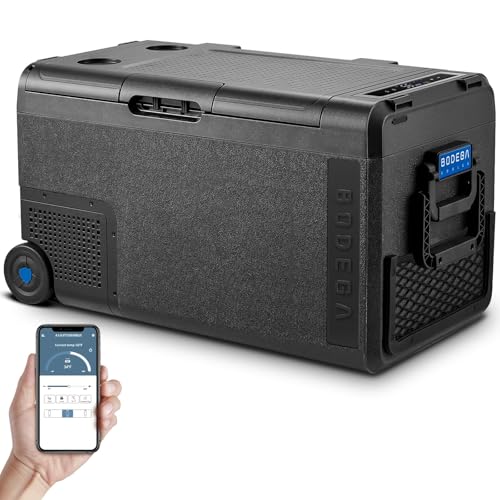
App control is a convenience feature, not a core reason to buy. Bluetooth controls can help you adjust temperature, lock or unlock settings, or check status without opening the lid. That is useful on a packed campsite, but it should come after the basic cooling and power features are right.
Say your sedan has only one accessible 12V socket near the front console and you plan to park for three hours in summer heat. A 21-quart compressor with battery protection makes far more sense than a larger thermoelectric box that has to sit awkwardly on the floor and cannot hold temperature as well.
Frequently asked questions
What is the best 12 volt cooler for a car?
The best 12 volt cooler for a car is usually a compressor model with battery protection and AC support. Car and Driver’s top overall pick is the BougeRV 21-Quart Portable Cooler, while The Drive’s best overall is the Dometic CFX3 35-Liter Portable Refrigerator and Freezer. Both fit road-trip use better than basic thermoelectric units.
How long does a 12V car cooler keep things cold?
Run time depends on the cooler class, ambient heat, battery size, and how often you open it. A compressor cooler can maintain fridge temperatures for long stretches if it has power or protection. A thermoelectric cooler is more limited and works best for short drives, not all-day parked use in summer.
Will a 12V cooler drain my car battery?
Yes, it can if the engine is off long enough and the unit lacks low-voltage protection. That risk rises in hot weather and with larger compressors. A battery protection system cuts the draw before the battery gets too low, which is why it should be on your shortlist from the start.
What size 12V cooler do I need for road trips?
For one or two people on short trips, 11QT to 23QT is often enough. For couples or small families on weekend drives, 30QT to 32QT is a better fit. For several days of food, or for family camping, 48QT to 61QT gives you more packing room without constant restocking.
Is a compressor cooler better than a thermoelectric cooler?
Yes, for most road trips and camping. A compressor cooler cools faster, handles heat better, and can reach fridge or freezer temperatures depending on the model. A thermoelectric cooler is cheaper and fine for short drives, but it is not a true fridge substitute in a hot parked vehicle.
Can I run a 12V car cooler with the engine off?
You can, but only with battery protection and a clear plan for runtime. The cooler will draw from the vehicle battery, so the safe window depends on battery health, outside temperature, and cooler size. For long stops, AC power or a secondary power source is the better answer.
How noisy are electric coolers for cars?
Noise varies by model. A quiet class around 31 dB is easier to live with at night, while many models fall in the 40-45 dB range. That is fine for driving, but it can be noticeable in a small camper or next to a sleeping bag at camp.
Are 12V coolers worth it for camping and tailgating?
Yes, if you want cold food without buying ice and dealing with soggy packaging or repeated ice runs. They are especially worthwhile for camping, tailgating, and long road days because they hold temperature better than a cooler full of melting ice. For short drives, a cheaper thermoelectric unit may be enough.
Products related to this article
Sponsored / affiliate links. As an Amazon Associate I earn from qualifying purchases. I may earn additional commission from eligible campaigns.