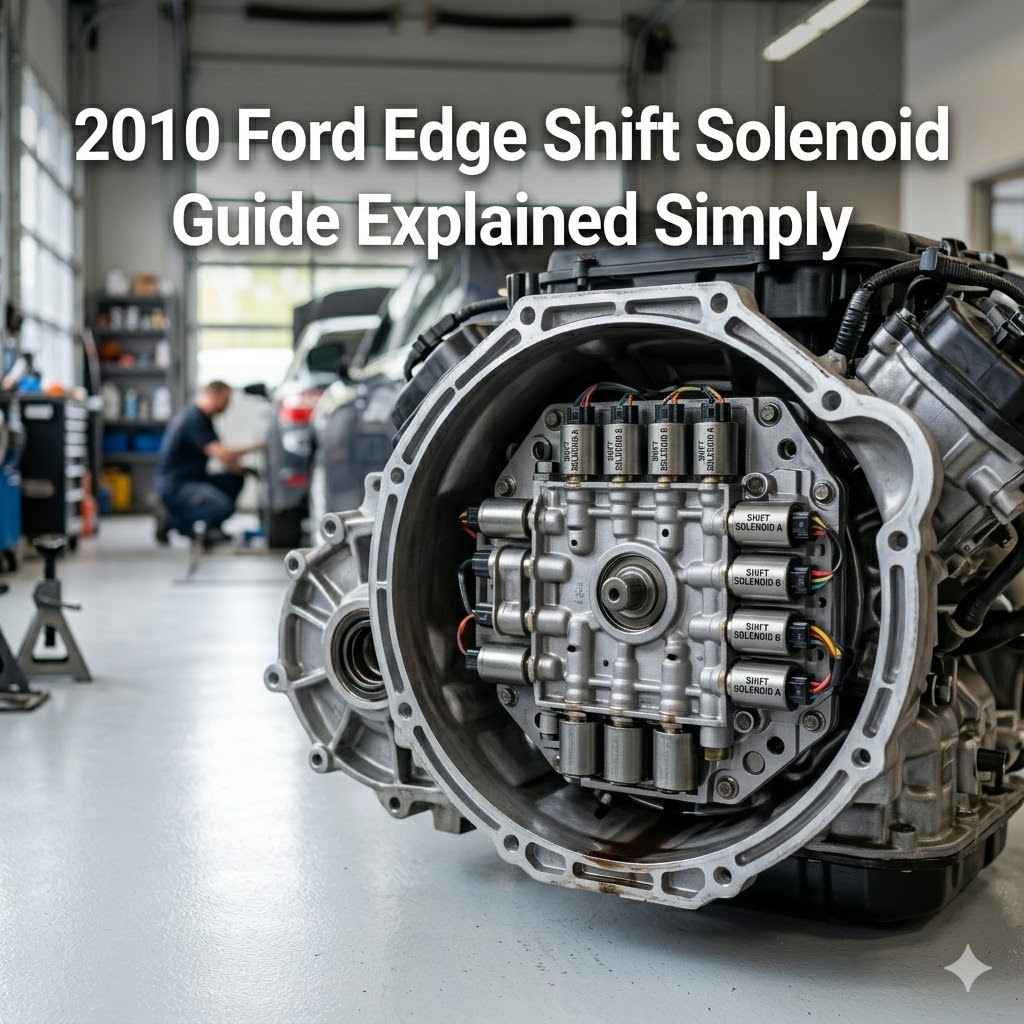
2010 Ford Edge Shift Solenoid Guide Explained Simply
Figuring out your 2010 Ford Edge shift solenoid can seem tricky at first, especially if you’re new to car repair. Many people find themselves wondering what this part does and why it might be causing trouble. Don’t worry!
This guide is here to make it super easy to understand. We’ll walk through everything step-by-step so you can get your Edge running smoothly again. Let’s break down the 2010 Ford Edge Shift Solenoid Guide together.
Understanding The 2010 Ford Edge Shift Solenoid
This section helps you get to know your 2010 Ford Edge shift solenoid. It’s a small but very important part of your car’s transmission. Think of it as a tiny valve that helps the transmission change gears.
When it works right, your car shifts smoothly. When it doesn’t, you might notice rough shifting or even that your car won’t shift at all. Learning about this part is the first step to fixing any transmission issues you might be having with your Ford Edge.
What Is A Shift Solenoid
A shift solenoid is an electronic component in an automatic transmission. It’s basically an electromagnet that controls the flow of transmission fluid. This fluid is what allows your car to shift gears.
When the car’s computer tells the transmission to change gears, it sends an electrical signal to the solenoid. The solenoid then opens or closes a small valve, directing fluid to the correct parts of the transmission to make the gear change happen.
These solenoids are crucial for smooth gear changes. If one fails, the transmission may not be able to select a particular gear or it might shift very roughly. There are usually several solenoids in a transmission, each controlling different gear selections or functions.
For your 2010 Ford Edge, understanding the role of these solenoids is key to diagnosing transmission problems.
How It Works In The 2010 Ford Edge
In your 2010 Ford Edge, the shift solenoids work as a team with the transmission control module (TCM), which is like the transmission’s brain. The TCM receives information from various sensors about things like vehicle speed, engine load, and throttle position. Based on this data, the TCM decides when to shift gears.
To make the shift happen, the TCM sends electrical signals to the specific shift solenoids that need to activate. For instance, if the TCM decides to shift from first to second gear, it will energize the solenoid responsible for enabling second gear and de-energize the solenoid for first gear. This action redirects transmission fluid pressure, engaging the clutches and bands necessary for second gear.
The timing and accuracy of these electrical signals are vital. A faulty solenoid might not respond quickly enough, or it might not respond at all, leading to a variety of transmission issues. Problems like slipping gears, delayed shifting, or even getting stuck in one gear can often be traced back to a malfunctioning shift solenoid in your 2010 Ford Edge.
Symptoms Of A Bad Shift Solenoid
When a shift solenoid starts to go bad, your 2010 Ford Edge might show several signs. The most common is a problem with shifting gears. You might notice that your car hesitates or clunks when it tries to change gears.
Sometimes, it might feel like the car is struggling to shift, or it might not shift into certain gears at all.
Another symptom is a “check engine” light appearing on your dashboard. The car’s computer can detect when a solenoid isn’t working correctly and will trigger this warning light. You might also experience your car getting stuck in “limp mode,” where it only allows you to drive at a very low speed to prevent further damage.
This is a safety feature.
Sometimes, you might even smell a burning odor. This can happen if the transmission is overheating because it’s not shifting properly and the gears are slipping. If you experience any of these issues, it’s a good idea to have your 2010 Ford Edge checked out, as a failing shift solenoid could be the culprit.

Diagnosing Shift Solenoid Issues
Finding out if a shift solenoid is the problem for your 2010 Ford Edge requires a bit of detective work. It’s not always as simple as looking at the part. Mechanics use special tools and knowledge to confirm the issue.
This process helps make sure you’re fixing the right thing and not wasting time or money on something else.
Checking For Diagnostic Trouble Codes
The first thing a mechanic will likely do is connect a diagnostic scanner to your 2010 Ford Edge. This scanner plugs into a port under your dashboard. It reads codes that the car’s computer has stored.
These codes, called Diagnostic Trouble Codes (DTCs), act like error messages from the computer.
For shift solenoid issues, you might see codes related to transmission performance, specific solenoid circuits, or gear ratio errors. For example, a code like P0750 might indicate a “shift solenoid A malfunction.” These codes are very helpful because they point directly to the system that’s having trouble.
However, a code doesn’t always mean the solenoid itself is bad. Sometimes, the wiring to the solenoid can be damaged, or there could be a problem with the transmission control module. The code just tells you where to start looking for the problem.
It’s a crucial first step in accurately diagnosing issues with your 2010 Ford Edge shift solenoid.
Testing The Solenoid Electrical Circuit
Once you have an idea of which solenoid might be at fault, the next step is to test its electrical circuit. This involves checking if the solenoid is receiving the correct power and ground signals from the car’s computer. A mechanic will use a multimeter for this.
They will check the resistance of the solenoid winding. Each solenoid has a specific resistance value. If the multimeter shows a resistance that is too high, too low, or infinite (meaning an open circuit), it suggests the solenoid itself might be faulty.
Additionally, they will check the wiring harness that connects the solenoid to the TCM. They look for any breaks, corroded connections, or shorts. A damaged wire can prevent the signal from reaching the solenoid or cause incorrect signals to be sent, leading to transmission problems.
Testing the electrical circuit helps confirm if the solenoid is getting the signals it needs.
Transmission Fluid Inspection
The transmission fluid in your 2010 Ford Edge is like the blood of your transmission system. Its condition can tell you a lot about what’s going on inside. A simple inspection of the fluid can reveal problems that might be mistaken for solenoid issues, or even be caused by them.
When checking the fluid, a mechanic will look at its color and smell. Healthy transmission fluid is usually bright red and has a slightly sweet smell. If the fluid is dark brown or black, it could mean it’s old, burnt, or there’s internal damage.
A burnt smell is a strong indicator of overheating, which can happen if the transmission isn’t shifting correctly due to solenoid problems.
They also check for metal shavings or debris in the fluid. These particles suggest that internal transmission parts are wearing down or breaking. If there are a lot of metal bits, it might mean there’s a more serious mechanical problem in the transmission beyond just a faulty solenoid.
This inspection is a vital part of a comprehensive diagnosis for your 2010 Ford Edge.
Replacing A 2010 Ford Edge Shift Solenoid
Replacing a shift solenoid in a 2010 Ford Edge is a task that can be done by a DIY mechanic, but it requires care and the right tools. It often involves getting into the transmission pan. Following the correct steps will help ensure the job is done right and your transmission works properly afterward.
Tools and Materials Needed
To replace a shift solenoid, you’ll need a few things. First, you’ll need the correct replacement solenoid for your 2010 Ford Edge. It’s important to get the exact part number to make sure it fits and functions correctly.
You will also need new transmission fluid of the type recommended by Ford for your vehicle, and a new transmission filter and gasket.
Other tools you’ll need include a socket set, wrenches, a drain pan for the old fluid, a funnel, rags, and possibly a torque wrench to tighten bolts to the correct specifications. Safety is also important, so you’ll need jack stands to safely lift your car and safety glasses. Some specialized tools might be helpful depending on the specific location of the solenoid.
Step-By-Step Replacement Process
First, make sure your car is safely lifted and supported with jack stands. Place a large drain pan under the transmission pan. Then, carefully remove the bolts holding the transmission pan in place, but leave a few in to let the fluid drain slowly.
Once most of the fluid is out, remove the pan completely.
After the pan is removed, you’ll see the transmission filter and the solenoids. The solenoids are usually mounted on a valve body. You might need to remove the filter first.
Then, you can unbolt the old solenoid. It’s often held in place by a few bolts and has an electrical connector.
Disconnect the electrical connector and remove the bolts. Take out the old solenoid and install the new one, making sure it’s oriented correctly. Reinstall any other parts you removed, like the filter.
Clean the transmission pan and install a new gasket, then reattach the pan, tightening the bolts in a star pattern to the specified torque. Finally, refill the transmission with the correct amount and type of new fluid.
Post-Replacement Checks
After you’ve finished installing the new shift solenoid and reassembled the transmission pan, it’s time to check your work. Lower your 2010 Ford Edge carefully from the jack stands. Start the engine and let it run for a few minutes.
While the engine is running, shift through all the gears (Park, Reverse, Neutral, Drive, etc.) and then back to Park. This helps circulate the new fluid and ensures the transmission is functioning correctly. Check again for any leaks around the transmission pan gasket.
Next, check the transmission fluid level. With the engine still running and the transmission in Park or Neutral, use the transmission dipstick to check the fluid level. Add more fluid if it’s low, but be careful not to overfill it.
Take your car for a test drive to see if the shifting is smoother and if any previous symptoms are gone. If the “check engine” light was on, it might turn off on its own after some driving, or you may need to clear the codes with a scanner.
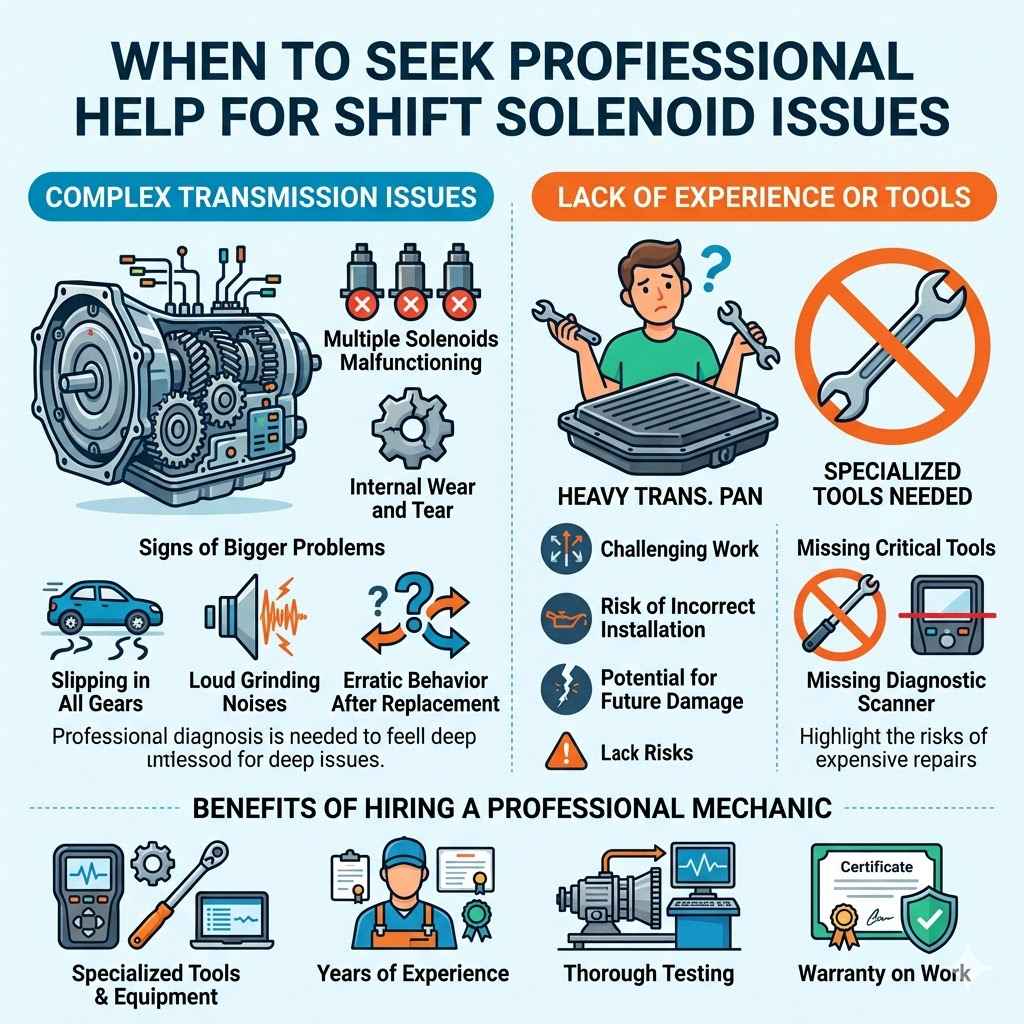
When To Seek Professional Help
While replacing a shift solenoid can be a DIY project for some, there are times when it’s best to let the experts handle it. If you’re not comfortable working on your car’s transmission or if the problem seems more complex than a simple solenoid swap, calling a professional mechanic is a smart choice. They have specialized tools and experience that can save you time and prevent further damage.
Complex Transmission Issues
Sometimes, the symptoms you’re experiencing might point to a problem that’s bigger than just a single shift solenoid. If your 2010 Ford Edge has multiple solenoids acting up, or if there are signs of internal wear and tear within the transmission, a professional will be able to diagnose and address these deeper issues.
Signs of more complex problems can include consistent slipping in all gears, loud grinding noises, or the transmission behaving erratically even after a solenoid replacement. Mechanics have advanced diagnostic equipment to thoroughly test the entire transmission system, ensuring all components are functioning as they should.
Lack of Experience or Tools
Transmission work can be challenging, especially if you don’t have much experience with car repairs. The transmission pan can be heavy and difficult to handle, and incorrect installation of the solenoid or gasket can lead to leaks or further damage. If you lack the specific tools required, like a torque wrench or specialized diagnostic scanners, it’s safer to rely on a professional.
Trying to perform a repair without the right knowledge or tools can sometimes lead to more expensive repairs down the line. Professional mechanics have access to all the necessary equipment and years of experience to perform the job correctly the first time. They can also offer a warranty on their work, giving you peace of mind.
Frequently Asked Questions
Question: How much does it cost to replace a shift solenoid in a 2010 Ford Edge
Answer: The cost can vary greatly, but typically you might expect to pay between $300 and $700 for parts and labor. The price depends on the shop, your location, and which solenoid needs replacing. Some solenoids are easier to access than others.
Question: Can I drive my 2010 Ford Edge if a shift solenoid is bad
Answer: It’s generally not recommended to drive extensively with a bad shift solenoid. The car might enter “limp mode” with reduced power and speed, or it could cause further damage to the transmission if driven normally. It’s best to get it fixed soon.
Question: How do I know which shift solenoid is bad
Answer: A mechanic will use diagnostic trouble codes from the car’s computer and perform electrical tests on each solenoid to identify the faulty one. Sometimes, the DTC will directly point to a specific solenoid like “Shift Solenoid A” or “Shift Solenoid B.”
Question: How often should transmission fluid be changed in a 2010 Ford Edge
Answer: It’s typically recommended to change the transmission fluid and filter every 30,000 to 60,000 miles, or as specified in your owner’s manual. Regular fluid changes help keep the transmission healthy.
Question: Can a transmission fluid flush fix a bad shift solenoid
Answer: A transmission fluid flush might help if the solenoid is sticking due to dirty fluid, but it won’t fix a mechanically or electrically failed solenoid. It’s more of a maintenance item than a repair for a faulty part.
Summary
This guide explored the 2010 Ford Edge shift solenoid, covering its function, common issues, and how to address them. You learned about the symptoms of a failing solenoid, the diagnostic steps like checking codes and testing circuits, and the process for replacing the part. We also touched on when to get professional help.
Taking care of your transmission ensures a smoother ride and longer vehicle life.