Best Generator for Car: 3 Picks Compared by Use Case
The best generator for car use matches the job: a 3000-watt inverter for trunk backup, a quiet 2000-watt inverter for car camping, and a portable jump starter for dead batteries. Pick the wrong one and you waste money, still cannot power what you need, or end up stranded with a dead battery. This guide compares those three options by use case, so you choose by task instead of peak-watt hype.
Which car power option fits your trip?
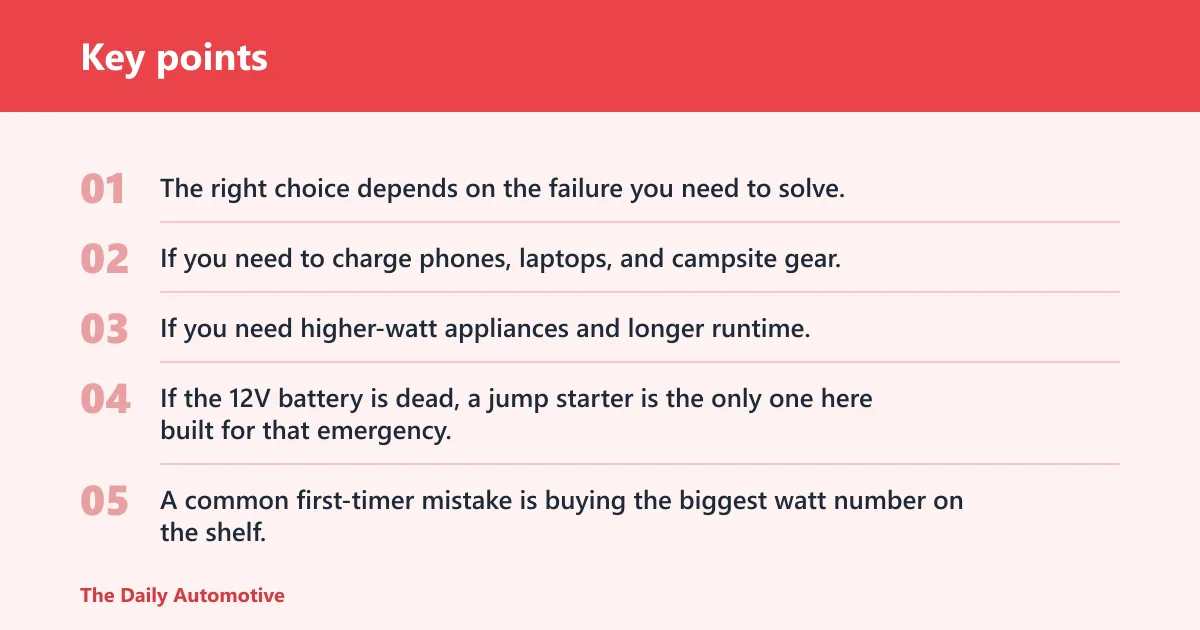
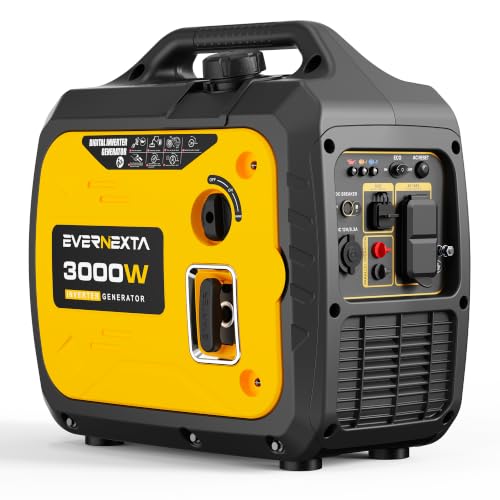

The right choice depends on the failure you need to solve. If you need to charge phones, laptops, and campsite gear, a portable power station is usually the cleanest fit. If you need higher-watt appliances and longer runtime, an inverter generator makes more sense. If the 12V battery is dead, a jump starter is the only one here built for that emergency.
Car power comparison matrix
| Use case | Recommended range | Required ports or outputs | Runtime or use expectation | Noise tolerance | Red-flag mistake |
|---|---|---|---|---|---|
| Car camping | Portable power station, roughly 300Wh to 1,000Wh for phones, tablets, camera batteries, and a small cooler; 1,000Wh+ if you want longer off-grid stays | AC outlets, USB-C, USB-A, and 12V DC; car charging input helps on travel days | Hours to a full day depending on load; higher-capacity units stretch runtime, but size and weight rise too | Low noise preferred | Buying an open-frame gas unit for overnight charging |
| Roadside emergencies | Portable jump starter with an integrated jump-start port and reverse polarity protection | Battery clamps, protected jump output, and basic USB charging for the pack itself | Single-start emergency use, not whole-car power | Quiet or silent matters less than fast access and safe hookup | Assuming a power station can crank a dead starter battery |
| Long off-grid travel | Inverter generator around 2,000 to 3,000 running watts for flexible appliance use; larger only if you need RV loads or repeated compressor starts | 120V AC outlets, 12V DC if available, and RV-ready 30A only when your setup actually needs it | Fuel runtime at 50% load matters more than peak watts; some units also support fast refueling and extended use | Lower noise is better, especially at camp or a trailhead | Choosing peak watts alone and ignoring fuel burn, sound, and outdoor-only placement |
A common first-timer mistake is buying the biggest watt number on the shelf. If your trip only needs two phones, a laptop, and a camera battery pack, a 4,000-watt open-frame generator is bulky, loud, and unnecessary when a compact power station or a small inverter generator does the job more cleanly.
What specs actually matter?
The useful specs change by product type. For battery stations, watt-hours tell you how long you can run loads. For inverter generators, running watts, starting watts, fuel type, and runtime at 50% load matter more. For jump starters, safe clamp design and reverse polarity protection matter more than wattage.
Wh capacity vs runtime
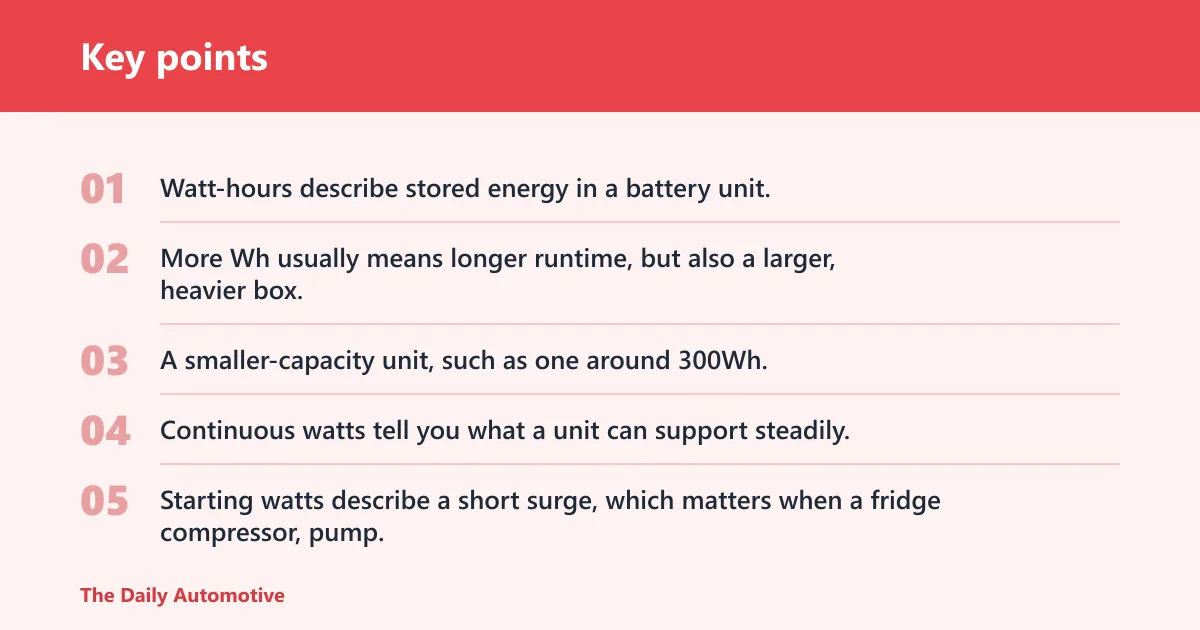
Watt-hours describe stored energy in a battery unit. More Wh usually means longer runtime, but also a larger, heavier box. A smaller-capacity unit, such as one around 300Wh, fits light charging better than long appliance duty, while a larger-capacity unit, such as one around 1,000Wh, gives much more room for laptops, small fridges, and repeated device charging.
AC continuous watts vs starting watts
Continuous watts tell you what a unit can support steadily. Starting watts describe a short surge, which matters when a fridge compressor, pump, or tool kicks on. If a load exceeds the continuous rating, the unit may shut down or trip protection. That is why a lower-output battery station, such as one around 300W, will not run the same loads as a higher-output unit around 2,000W.
Pure sine wave output and sensitive electronics
Pure sine wave output matters for phones, laptops, camera gear, and other electronics that want stable AC power. A pure sine wave inverter usually stays under 3% THD, which is the kind of output many sensitive devices handle best. That clean output is one reason battery stations and inverter generators are preferred over cheap modified-wave solutions.
Ports, recharge methods, and noise
Check the port mix before you buy. Many car users need AC outlets plus USB-C and USB-A, and some also need 12V DC for a tire inflator or fridge. Battery stations add wall charging, car charging, solar charging, and fast recharge options. Inverter generators add fuel type, noise level, and outdoor-only use requirements, often with RV-ready 30A outlets on larger models.
If a road-trip family packs a 12V cooler, two phones, and a laptop, a battery station with AC outlets, USB-C, USB-A, and 12V DC can cover that load without fumes or fuel, but only if its watt-hour rating is high enough for the expected runtime. Add a microwave or induction cooktop, and the better pick is an inverter generator.
Which pick is best for car camping?
For car camping, a portable power station is usually the best first buy because it powers electronics, small coolers, and lighting without fuel, noise, or exhaust. If the campsite load includes a microwave, a coffee maker, or repeated compressor starts, a compact inverter generator becomes the better fit, provided you can live with the sound and outdoor placement.
Portable power station sizing for camp use
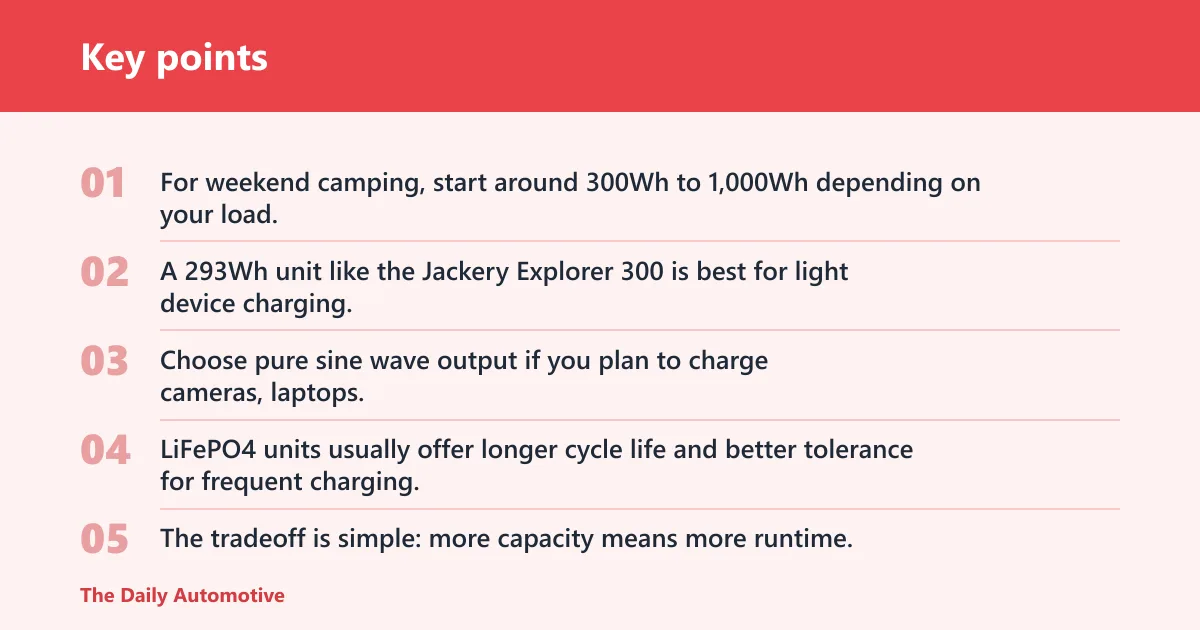
For weekend camping, start around 300Wh to 1,000Wh depending on your load. A 293Wh unit like the Jackery Explorer 300 is best for light device charging, while a 1,024Wh pack such as the Anker SOLIX C1000 Gen 2 fits heavier campsite use and gives a 2,000W continuous AC ceiling. Choose pure sine wave output if you plan to charge cameras, laptops, or other sensitive electronics.
Battery chemistry matters too. LiFePO4 units usually offer longer cycle life and better tolerance for frequent charging, while Li-ion packs often stay lighter for the same capacity. The tradeoff is simple: more capacity means more runtime, but also more weight and slower top-offs if your recharge source is weak.
When an inverter generator makes more sense
If the camping load includes a fridge with a startup surge, multiple AC appliances, or a trailer that needs more than a battery pack can supply, an inverter generator is the better tool. A Honda EU2200i is a 2200W super quiet portable inverter generator, and a Westinghouse iGen2800 is a 2800 peak watt lightweight inverter generator. Those numbers matter more for appliance headroom than a battery station’s Wh rating.
Gas units need outdoor placement only. CO sensor or CO-Minder safety tech can shut a unit down automatically if carbon monoxide rises, but that does not make it safe to run in a tent, garage, or enclosed hatch area. Outdoor use remains the rule.
Noise and storage tradeoffs at camp
Noise affects more than comfort. It affects campsite acceptance, stealth camping, and whether you can run a unit overnight without bothering anyone nearby. A portable power station is nearly silent in operation, while an inverter generator trades quiet for fuel-based runtime. Trunk storage also matters: a smaller battery pack is easier to keep in the vehicle than a fuel-burning unit with vents, oil, and exhaust concerns.
Which pick is best for roadside emergencies?
For roadside emergencies, a portable jump starter is the best fit when the problem is a dead 12V battery. It is built for a one-time crank assist, not for running cabin electronics or powering camp loads. If you want a backup for phones and a tire inflator too, pair the jump starter with a small power station rather than replacing it.
Dead battery jump-start use
A proper jump starter needs enough cranking current for the vehicle, an integrated jump-start port, and reverse polarity protection. VTOMAN’s Jump 600X includes a car jump-start function, which is the right category of feature for this job. That function is about starting the car, not powering the car’s accessories for hours.
Reverse polarity protection and safe clamps
Reverse polarity protection helps prevent damage if the clamps are connected incorrectly. That matters because roadside emergencies are stressful and lighting is often poor. Good clamps, a clear indicator layout, and a protected jump output are more important here than AC outlet count or long runtime.
When a power station can help and when it cannot
A power station can charge a phone, run a compressor briefly, or keep a dashcam alive through a stop, but it usually cannot replace a jump starter for a dead starter battery. The reason is simple: a battery station is meant to supply loads through AC or DC ports, not deliver the burst current needed to crank an engine.
Picture a sedan that will not start after a cold night. A 1,024Wh power station may still have plenty of charge left, but that does not mean it can jump the engine. A compact jump starter with protected clamps and a dedicated jump port is the correct tool, and it takes far less room in the trunk.
Which pick works best for long off-grid travel?
For long off-grid travel, the best choice depends on whether your priority is runtime without fuel or repeatable high-output power. Large battery stations are clean and quiet but need regular recharge planning. Inverter generators run longer on fuel and handle bigger loads, which is why they suit multi-day travel with repeated appliance use.
Runtime expectations for battery units
Battery runtime depends on Wh capacity and the load you draw. A 293Wh station can cover short device charging, while a 1,024Wh unit is far better for multi-day travel. Recharge methods also matter: wall charging is fastest at home, car charging is useful on the move, solar charging helps in sunny conditions, and fast recharge shortens downtime between stops.
Fuel runtime and 50% load for gas units
For gas models, runtime at 50% load is the number to watch. Honda’s EU2200i has a listed runtime of 3.2 hours at full load. The BILT HARD gas generator delivers 2500W peak and 2000W running output, with two 120V 15A AC outlets and one 12V 8A DC output, plus up to 5.5 hours runtime at 50% load. Those figures show why fuel runtime, not peak wattage alone, drives trip planning.
Solar, wall, and car recharge planning
Long travel rewards a recharge plan. If you carry a battery station, decide where it will refill: campground shore power, vehicle charging during driving breaks, or solar charging during daylight. If you carry a gas generator, add fuel storage, oil checks, and an outdoor-safe operating spot to the plan. The total ownership cost includes those extras, not only the sticker price.
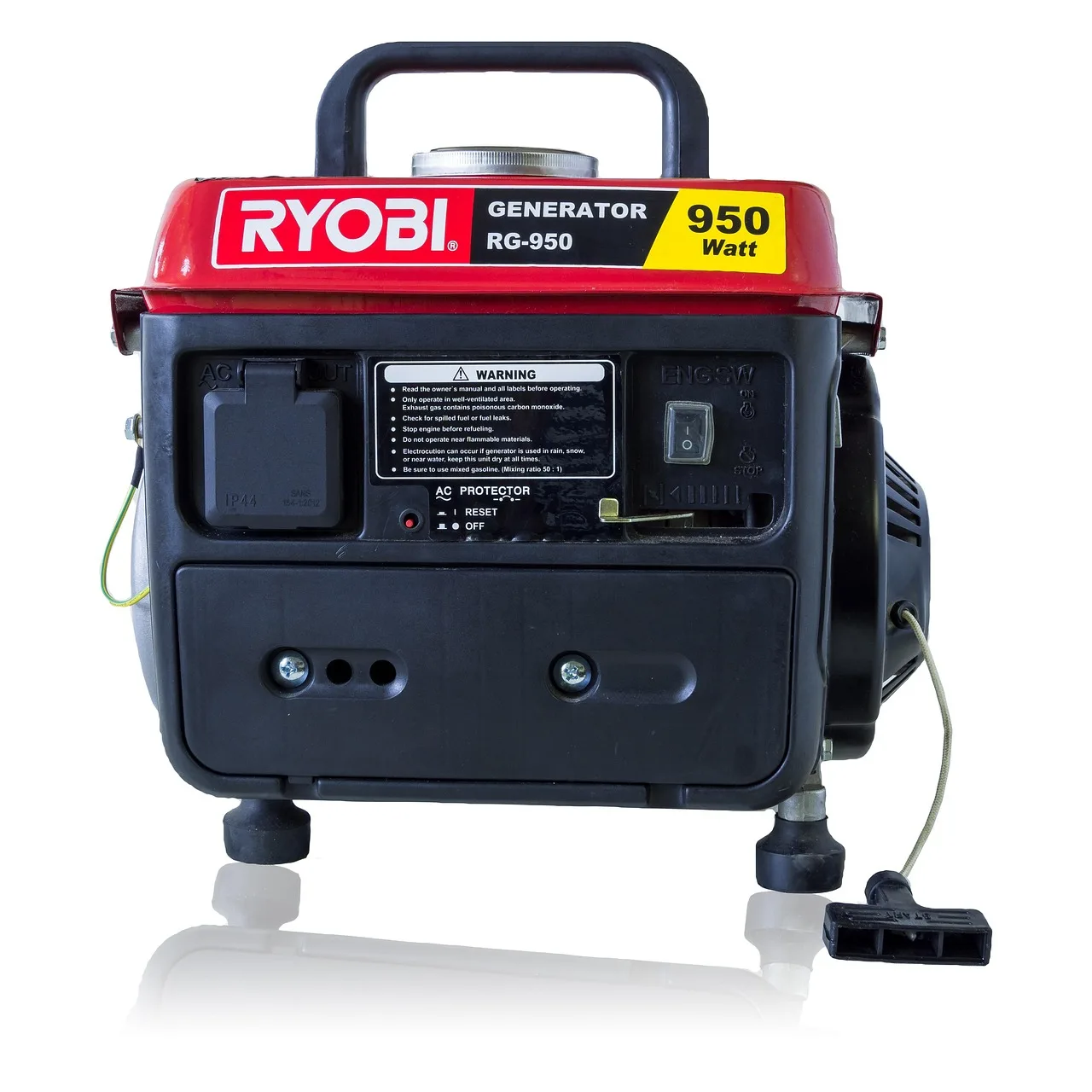
One red-flag mistake is buying an oversized open-frame generator for simple vehicle charging. Open-frame units can be useful for rough-duty, higher-watt tasks, but they are poor trunk companions for a weekend trip where the main load is a phone, laptop, and cooler. The extra noise, fuel handling, and bulk rarely pay off there.
Choose portable power station if… / Choose inverter generator if… / Choose jump starter if…
Choose a portable power station if you want quiet operation, indoor-safe battery chemistry, and clean AC for phones, laptops, camera batteries, and small campsite loads. Choose an inverter generator if your loads need more continuous power, longer runtime, or repeated motor starts. Choose a jump starter if your main problem is a dead battery and you want the fastest trunk solution.
Choose portable power station if…
Choose this if you want silent operation at camp, pure sine wave output for sensitive electronics, and recharge options such as wall charging, car charging, solar charging, or fast recharge. A LiFePO4 pack makes sense if you expect frequent cycling. A Li-ion pack makes sense if lower weight matters more than cycle life.
Choose inverter generator if…
Choose this if you need higher running watts, better support for fridge starts or appliance loads, or longer runtime at 50% load than a battery pack can provide. Check noise level, fuel type, and outlet options before buying. If your setup needs RV-ready 30A, verify that outlet now, not after delivery.
Choose jump starter if…
Choose this if your goal is to recover from a dead starter battery, especially in cold weather or after short-trip battery drain. Look for reverse polarity protection, a dedicated battery emergency function, and an integrated jump-start port. Do not expect it to replace a power station for campsite electronics or trunk charging.
Frequently asked questions
Which generators are best for car travel?
The best options for car travel are a portable power station for electronics and campsite loads, an inverter generator for heavier AC use, and a jump starter for battery emergencies. If you need trunk storage and silence, start with a battery station. If you need appliance power, move to an inverter generator.
What is the best type of generator for a car?
For a car’s trunk, the best type is usually a portable power station or a jump starter, not a full gas generator. A power station covers charging and small loads. A jump starter solves dead-battery emergencies. A gas unit only makes sense when you need much higher output away from the vehicle.
How do I choose a generator size for my car?
Match size to the load. Use watt-hours for battery stations, running watts for inverter generators, and cranking support for jump starters. Small device charging needs a modest Wh pack, while a fridge or coffee maker pushes you toward a larger inverter generator. Always include surge demand, not just steady draw.
What’s the best generator to buy for road trips?
For most road trips, a portable power station is the best starting point because it covers phones, laptops, cameras, and other electronics without fuel. If your trip includes compressor appliances or RV power needs, an inverter generator may be better. For dead batteries only, buy a jump starter first.
Can I use a generator to power electronics in my car?
Yes, but the right tool is usually a portable power station or an inverter generator, not a bare open-frame unit for trunk use. For electronics, pure sine wave output is the safer choice. Use the right ports too: USB-C and USB-A for devices, AC for chargers, and 12V DC for car gear.
Which is better for car use: a gas generator or a portable power station?
A portable power station is better for quiet, clean, short-duration car use. A gas generator is better for longer runtime and higher loads. If you want trunk backup, choose battery. If you want to run appliances for many hours, choose inverter gas power. If the car will not start, choose a jump starter instead.
Products related to this article
Sponsored / affiliate links. As an Amazon Associate I earn from qualifying purchases. I may earn additional commission from eligible campaigns.