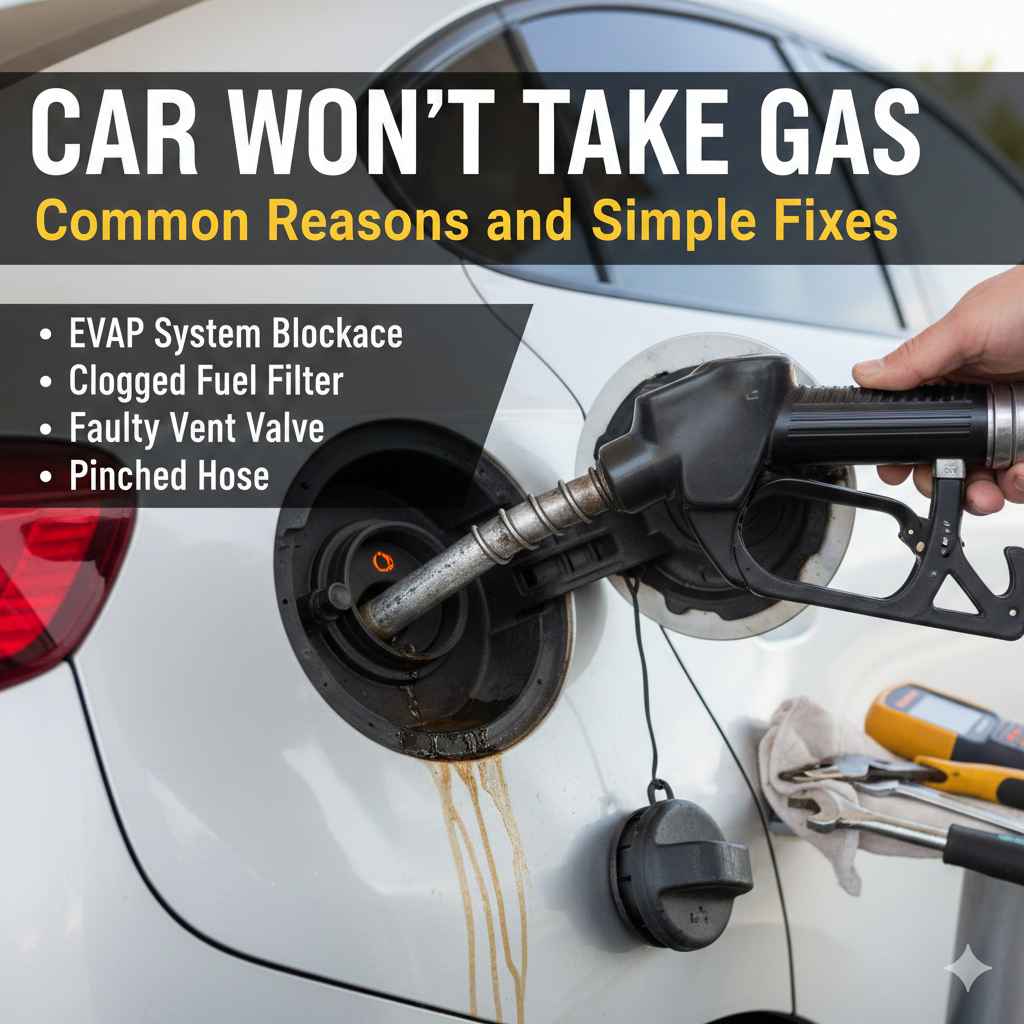
Car Won’t Take Gas: Common Reasons and Simple Fixes
When your Car Won’t Take Gas: Common Reasons Explained can seem like a major problem, especially if you’re new to car ownership. It’s frustrating when you pull up to the pump, and your car just won’t cooperate. Don’t worry, though; this is a pretty common issue, and the solutions are often easier than you think. This guide will walk you through the most frequent causes, making it simple to identify and resolve them. Let’s explore the possible problems and how to get your car back on the road.
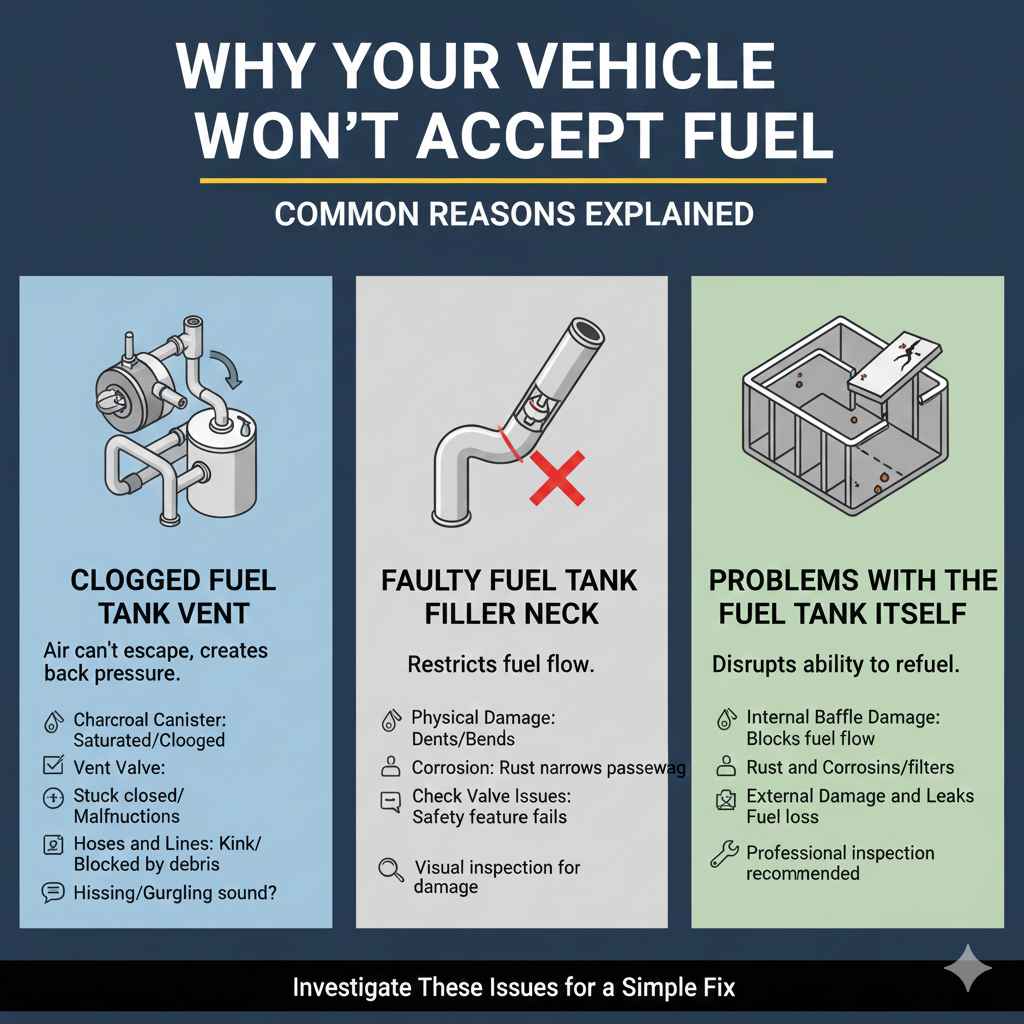
Why Your Vehicle Won’t Accept Fuel
One of the first things to investigate when a Car Won’t Take Gas: Common Reasons Explained is the gas tank itself. The fuel tank, typically made of steel or plastic, is designed to store gasoline safely. Issues within the tank or with related components can prevent fuel from flowing into it correctly. These problems can range from simple clogs to more serious damage.
Clogged Fuel Tank Vent
Your car’s fuel system has a vent system to allow air to escape as the tank fills with gas. This is a critical component for proper refueling. If the vent system is blocked, air can’t escape, creating back pressure and causing the gas pump to shut off prematurely. The vent system includes a charcoal canister to capture fuel vapors, a vent valve, and hoses. Over time, these parts can get clogged with dirt, debris, or even spider webs, particularly if the vehicle has been stored for an extended period.
- The charcoal canister: This component absorbs fuel vapors to prevent them from entering the atmosphere, a requirement for environmental compliance. If the canister becomes saturated or clogged, it can restrict airflow, causing the pump to shut off.
- Vent valve: The vent valve controls the flow of air. If it gets stuck closed or malfunctions, it can prevent air from escaping the tank during refueling.
- Hoses and lines: Hoses within the vent system can crack, kink, or become blocked by debris, leading to airflow restrictions. This is frequently a result of wear and tear, age, or damage.
A simple check involves listening for hissing or gurgling sounds when you try to refuel. These sounds often indicate a pressure imbalance in the tank. Cleaning or replacing these components is usually the solution, which can restore normal refueling operations.
Faulty Fuel Tank Filler Neck
The filler neck is the tube that connects the gas cap to the fuel tank. This component can develop problems that impact your ability to refuel. It can be susceptible to damage from impacts, corrosion from exposure to the elements, or even blockages from debris. Issues with the filler neck can directly impede the flow of gas. For example, a dent or kink can restrict the flow, while corrosion can cause leaks and fuel evaporation. Moreover, the filler neck houses the check valve, a crucial safety feature to prevent fuel from spilling in the event of a rollover. Its malfunction can result in difficulties filling your car.
- Physical damage: Dents or bends in the filler neck can restrict the flow of fuel, making it difficult for the gas to enter the tank. This may be caused by an accident or accidental impact.
- Corrosion: Rust or corrosion inside the filler neck can narrow the passageway and block fuel from entering. This can occur with older vehicles or those exposed to harsh conditions.
- Check valve issues: The check valve, a safety feature within the filler neck, can malfunction and impede fuel flow. This valve is designed to prevent fuel from escaping if the car is inverted.
Checking the filler neck requires a visual inspection. Examine it for signs of damage or blockage. Replacement is the usual fix if you detect any problems.
Problems with the Fuel Tank Itself
Although fuel tanks are designed to be durable, they can still experience issues. The fuel tank itself might have internal baffles that can get dislodged, causing blockages. In some situations, the tank can rust internally, especially in older cars or those driven in climates where road salt is used, contributing to fuel delivery problems. Over time, the tank might suffer from physical damage, such as dents or leaks. These issues disrupt the ability to refuel properly.
- Internal Baffle Damage: Fuel tanks have baffles to control the movement of fuel. If these become loose or damaged, they can block fuel flow.
- Rust and Corrosion: Rust can accumulate inside the tank, especially in older vehicles or in humid environments. Rust particles can clog fuel lines and filters, leading to fueling problems.
- External Damage and Leaks: Impacts can damage the tank, causing leaks that result in fuel loss and make it impossible to fill the tank.
Inspecting the fuel tank involves checking for visible damage, leaks, and signs of corrosion. This may require a professional inspection to assess the tank’s internal condition.
Fuel Delivery System Issues
The fuel delivery system is a network of components that work to transport fuel from the tank to the engine. Problems in this system can be a major reason for your Car Won’t Take Gas: Common Reasons Explained. These include the fuel pump, fuel lines, fuel filter, and fuel injectors. When any of these parts malfunction, fuel delivery can be disrupted, leading to issues like a car that stalls, won’t start, or can’t be refueled properly. Understanding the role each component plays is important for diagnosing problems.
Malfunctioning Fuel Pump
The fuel pump is a vital component. Its primary job is to deliver fuel from the gas tank to the engine under the correct pressure. If the fuel pump fails or weakens, it may not generate enough pressure to allow the fuel to flow into the engine or even to overcome back pressure when refueling. Fuel pumps can fail due to electrical problems, wear and tear, or overheating. When the fuel pump is failing, you might notice issues with starting the car or a loss of engine power, in addition to refueling problems.
- Electrical Issues: Wiring problems or a faulty relay can stop the fuel pump from running.
- Wear and Tear: Fuel pumps, like all mechanical parts, have a lifespan and can fail over time.
- Overheating: Continuous operation and poor fuel circulation can lead to overheating, causing pump failure.
Testing the fuel pump usually involves checking fuel pressure with a gauge. A mechanic can assess the pump’s output and determine if it’s the source of your problems. If the pump is weak, you’ll need a replacement.
Blocked Fuel Filter
The fuel filter’s job is to protect the fuel system from contaminants. It does this by trapping dirt, rust, and other particles that could otherwise clog fuel lines and damage the engine. A clogged fuel filter restricts fuel flow, and this can lead to starting problems, engine hesitation, or, in some cases, the inability to refuel properly. A clogged fuel filter, in particular, may contribute to the back pressure during refueling.
- Filter Material: The filter material becomes saturated with debris, blocking fuel flow.
- Fuel Quality: Poor fuel quality, with contaminants, can accelerate filter clogging.
- Replacement Intervals: Regular filter replacement is essential to prevent these issues. Most manufacturers have recommended intervals, ranging from 15,000 to 30,000 miles, or every one to two years.
Regularly replacing the fuel filter as specified in your car’s manual can prevent these problems. If your car won’t take gas, the fuel filter should be one of the first components to check. Replacing a clogged filter can often restore proper refueling.
Clogged Fuel Lines
Fuel lines, made of metal or rubber, carry fuel from the tank to the engine and back. These can become blocked due to the accumulation of debris. Fuel lines can also suffer from kinks or damage, which will restrict the fuel flow. Additionally, the interior of the fuel lines may corrode over time, especially in older cars or those in humid environments. This corrosion can cause the lines to narrow, reducing fuel flow.
- Rust and Corrosion: Over time, rust can accumulate inside the fuel lines, particularly in older vehicles or those in humid environments.
- Debris: Dirt, rust particles, or other contaminants from the fuel tank or the fuel filter can accumulate.
- Kinks and Damage: Physical damage from impacts can crush the fuel lines and obstruct fuel flow.
Checking the fuel lines involves visually inspecting them for any obvious signs of damage, leaks, or blockages. In some situations, a mechanic may need to remove and clean or replace these lines to ensure unobstructed fuel flow.
Gas Pump and Refueling Issues
Sometimes, the issue isn’t with your car, but with the gas pump or the way you’re using it. Gas pumps can experience mechanical problems that interrupt refueling, or the way you insert the nozzle might cause it to shut off prematurely. Understanding these factors will help you get gas without issue.
Faulty Gas Pump Nozzle
The gas pump nozzle can sometimes malfunction, even at reputable gas stations. These nozzles have several components that might fail. These include the automatic shut-off mechanism, which can become overly sensitive or stop working entirely. The nozzle may have internal valves or filters that become clogged or damaged. This can result in a flow restriction. The nozzle’s design also involves vapor recovery systems that, if compromised, can cause issues with the refueling process.
- Automatic Shut-Off: A faulty shut-off mechanism can prematurely end the fueling process.
- Nozzle Blockage: Debris or damage can restrict fuel flow.
- Vapor Recovery Issues: Problems with the vapor recovery system can interfere with refueling.
If you suspect the nozzle, try refueling at a different pump at the same station or at a different station entirely. This helps determine if the problem is specific to the nozzle. If the issue is with the nozzle, it should be reported to the gas station attendant, who will likely remove the nozzle from service for repair.
Incorrect Refueling Techniques
The way you insert the gas nozzle into your car’s fuel filler neck can also contribute to fueling issues. Inserting the nozzle too deeply or at an incorrect angle can trigger the pump’s automatic shut-off mechanism. This is particularly common in cars with complex fuel filler designs or those with vent systems that are sensitive to the nozzle’s position. Tilting the nozzle or pulling it out too early can also lead to premature shut-off. Understanding the proper way to insert the nozzle can help prevent problems.
- Nozzle Insertion: Inserting the nozzle too far into the filler neck can sometimes trigger the automatic shut-off.
- Angle of Insertion: The angle at which you insert the nozzle can affect the flow.
- Early Removal: Pulling the nozzle out before the fueling is complete can cause problems.
To avoid these problems, insert the nozzle fully but not excessively. Maintain a steady angle, and wait until the pump has finished before removing the nozzle. If your car won’t take gas, try pulling the nozzle out slightly.
Fuel Tank Overflow Prevention
Modern vehicles are designed with safeguards to prevent fuel tank overflows. These systems usually include a rollover valve and an internal baffle system. These components are designed to manage fuel vapors and prevent fuel from spilling in the event of an accident or overfilling. If the gas tank is overfilled, the fuel can enter the vent system and cause problems. This can damage the charcoal canister, which is responsible for absorbing fuel vapors.
- Rollover Valve: This valve closes to prevent fuel from spilling during a rollover.
- Baffle System: Internal baffles help to manage fuel movement and prevent sloshing, but can also cause problems.
- Charcoal Canister: The charcoal canister can become saturated with fuel if overfilling occurs, leading to vent system malfunctions.
Avoid overfilling your fuel tank. Stop fueling when the pump automatically shuts off. This will prevent damage to your vehicle’s emissions system and help ensure proper operation of the fuel system.
Environmental Factors and Car Care
Environmental factors like weather conditions, as well as the overall maintenance of your car, can affect its ability to take gas. Extreme temperatures, high humidity, or the buildup of static electricity can all play a role in refueling issues. Routine care, such as regular inspections and the use of quality fuel, will help prevent problems.
Impact of Temperature and Humidity
Weather conditions can affect the refueling process. In the summer, higher temperatures cause gasoline to expand, potentially triggering the pump’s automatic shut-off early. Higher humidity levels can lead to condensation inside the fuel tank, which can introduce water into the fuel system. This can affect the fuel pump and cause corrosion in metal fuel system components. Extreme cold weather can sometimes cause fuel to thicken, affecting flow.
- Temperature: Higher temperatures can increase fuel expansion and affect refueling.
- Humidity: High humidity levels can lead to condensation and corrosion.
- Cold Weather: Extremely cold temperatures can affect the fuel’s viscosity.
While you can’t control the weather, you can be aware of the effects. Avoid refueling in extreme heat if possible, and make sure your fuel tank is always properly sealed.
Effects of Static Electricity
Static electricity can pose a safety hazard during refueling. When fueling, static electricity can build up between the car and the fuel nozzle. This build-up can result in a spark, which could ignite fuel vapors. For this reason, you should always touch a grounded surface before fueling. This will discharge any static electricity. Static electricity buildup is more frequent in dry, cold weather and when using certain types of clothing or fabrics.
- Spark Hazard: Static electricity can create a spark that can ignite fuel vapors.
- Precautions: Always touch a grounded surface before refueling.
- Clothing and Materials: Certain fabrics can generate static electricity.
Always follow safety guidelines when refueling. Touching the car’s metal body before starting the pump will minimize the risk of a static discharge.
Importance of Car Maintenance
Regular car maintenance can prevent many refueling problems. Routine maintenance will help ensure that your fuel system components are in good condition. This includes replacing the fuel filter as specified in your car’s manual, checking fuel lines for leaks or damage, and inspecting the fuel tank and filler neck for corrosion. A clean fuel system minimizes the risk of issues.
- Regular Inspections: Regularly inspect your fuel system components.
- Fuel Filter Replacement: Replace the fuel filter according to your car’s recommended schedule.
- Quality Fuel: Use high-quality fuel to minimize contaminants.
Following your car’s recommended maintenance schedule will help prevent many issues, including problems with refueling.
Simple Troubleshooting Steps
If your Car Won’t Take Gas: Common Reasons Explained and you’re at the pump, there are some simple steps you can take to try to solve the issue. These initial actions can often resolve the problem quickly, saving you time and stress. By trying these steps first, you may avoid needing professional help.
Check the Gas Cap
A loose or improperly sealed gas cap can create problems with the fuel system. When the gas cap isn’t sealed properly, it can lead to a vacuum. A vacuum in the tank can create back pressure, which makes it hard for fuel to enter. The gas cap also affects the emissions system. A bad gas cap can trigger the check engine light and cause the car to fail an emissions test. The gas cap is a common and easy fix.
- Tightness: Ensure the gas cap is securely tightened.
- Seal Condition: Inspect the rubber seal on the gas cap for damage.
- Replacement: A worn or damaged gas cap should be replaced.
Check and tighten the gas cap first. If it is damaged or worn, replace it. Sometimes, just tightening or replacing the gas cap can solve the problem.
Try a Different Pump
The gas pump itself might be the issue. Gas pumps, like any mechanical equipment, can malfunction. Problems with the pump, such as a faulty nozzle or a vapor recovery system, can prevent refueling. If one pump isn’t working, trying a different one is a smart move. Switching pumps can show whether the problem is with the pump or with your car’s fuel system. This is an easy way to troubleshoot the problem without having to do anything under the hood.
- Pump Malfunctions: Gas pumps have mechanical components that can fail.
- Vapor Recovery Issues: Problems with the vapor recovery system can interfere with refueling.
- Nozzle Issues: A faulty nozzle can shut off the fuel flow.
If the problem persists with a different pump, it’s likely your car’s fuel system. But switching pumps is a quick first step.
Listen for Gurgling Sounds
When you try to refuel, listen closely for any unusual sounds, such as gurgling or hissing noises. These sounds often indicate a problem with the vent system or the fuel tank itself. If air can’t escape the tank, pressure builds up, causing the pump to shut off prematurely. These noises help identify a blockage. The gurgling sound means the pressure can’t escape.
- Vent System Blockage: A clogged vent can cause pressure to build up.
- Fuel Tank Issues: Damage or blockages inside the tank can affect the fuel flow.
- Pressure Imbalance: Gurgling sounds usually signal a pressure imbalance in the fuel tank.
If you hear these sounds, the vent system or fuel tank may be blocked. You may need a professional inspection.
Sample Scenarios
Seeing how these problems show up in real situations can make it easier to diagnose problems. Here are a couple of examples of how the problems we’ve talked about can play out in day-to-day driving.
- Scenario 1: Sarah’s car is slow to fill at the gas station. The pump keeps clicking off, and she has to keep starting and stopping. She has to add just a little bit of gas at a time. It turns out the charcoal canister is clogged. Replacing the canister solves the issue, and she can fill her tank without problems.
- Scenario 2: John notices his car’s check engine light is on. He has trouble refueling; the gas pump keeps shutting off, even when the tank isn’t full. After a mechanic checks the car, they find that the gas cap seal is bad. Replacing the gas cap resolves the problem.
These scenarios highlight how different issues will cause the same symptom: trouble with refueling.
Real-Life Examples and Results
Knowing that these problems are common, and how they’re solved, can be a big help. Here are some real-life cases that explain these problems and their results.
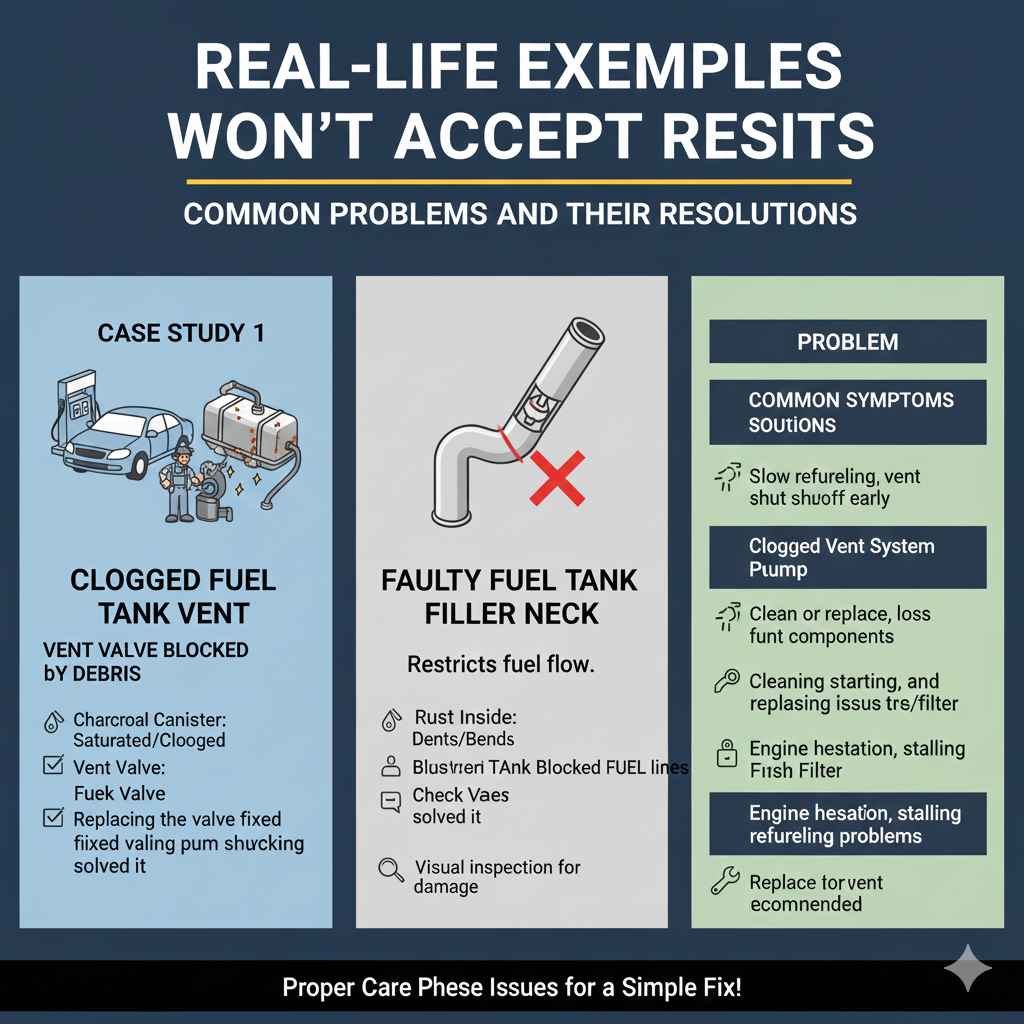
- Case Study 1: A local repair shop dealt with a car that wouldn’t take gas. After checking the car, the mechanic realized the vent valve was blocked by dirt and debris. Replacing the valve fixed the problem, and the car refueled like new.
- Case Study 2: A car owner found the gas pump kept shutting off. The cause was rust inside the fuel tank, which had partially blocked the fuel lines. Cleaning the tank and replacing the lines and filter fixed the problem, enabling normal refueling.
These examples illustrate how common the problems are and how they are solved. Proper care will prevent problems.
| Problem | Common Symptoms | Solutions |
|---|---|---|
| Clogged Vent System | Slow refueling, pump shuts off early | Clean or replace vent components |
| Faulty Fuel Pump | Difficulty starting, loss of power, refueling issues | Replace the fuel pump |
| Clogged Fuel Filter | Engine hesitation, stalling, refueling problems | Replace fuel filter |
Frequently Asked Questions
Question: Why does my gas pump keep shutting off?
Answer: The pump shutting off early is often due to a blocked vent system, a clogged fuel filter, or a problem with the gas pump nozzle. Check the gas cap and try a different pump.
Question: What should I do if my car won’t take gas at all?
Answer: If your car won’t take gas, first check your gas cap. After that, look for any unusual sounds, and try a different pump. If these do not work, consult a mechanic.
Question: Can a bad gas cap cause refueling problems?
Answer: Yes, a bad gas cap can cause refueling issues. If the gas cap doesn’t seal properly, it can create a vacuum in the fuel tank. This back pressure will cause the pump to shut off. Examine your gas cap for problems.
Question: How often should I replace my fuel filter?
Answer: You should replace your fuel filter according to your car’s manufacturer’s recommendations. This is usually between 15,000 and 30,000 miles, but see your owner’s manual for specific details.
Question: Are there any safety measures I should take when refueling?
Answer: Yes, always touch the car’s metal body before fueling to discharge any static electricity. Avoid overfilling the tank, and do not use a cell phone near the pump.
Final Thoughts
Having a Car Won’t Take Gas: Common Reasons Explained can be frustrating, but knowing the most frequent issues makes it less of a headache. Problems like clogged vents, faulty fuel pumps, and gas pump nozzle problems are very common. It’s often the small things, like a bad gas cap or an incorrect refueling technique, that cause the trouble. If you’re facing this issue, you now have the knowledge to troubleshoot it.
Remembering simple fixes like checking the gas cap or trying a different pump can save you time and money. With some basic steps, you can often fix the problem yourself. If you’re still having trouble, the next step is a professional inspection.