Best Engine Flushes for Cars (2026): We Compared
The best engine flush treatments for most car owners fall into four buckets, based on sludge severity: use a mild flush for preventive maintenance, a stronger flush only for heavy varnish, and avoid aggressive cleaners in high-mileage engines with unknown history. Pick the wrong flush and it can loosen debris, clog oil pickup screens, and turn a cheap oil change into an expensive repair. This guide ranks the top 4 picks by real use case and maps each one to sludge level, engine type, and risk.
Quick comparison
| Product | Badge | Best for | Price | ||
|---|---|---|---|---|---|
 |
Johnsen’s 4608 Engine Flush – 32 oz.Johnsen’s | Our pick | 32 oz. · · Engine Flush | $21.20
Price as of 23 Oct 2026
|
View |
 |
Liqui Moly Pro-Line Engine Flush | 500 ml | Oil additive |Liqui Moly | Also great | 500 ml · · Oil additive | $19.99
Price as of 23 Oct 2026
|
View |
The split is straightforward: low-risk maintenance or more aggressive cleaning. If the engine is clean and maintained, choose a gentle formula. If deposits are present, move up only as far as the oiling system and service history justify.
Ratings below come from published product details, compatibility claims, and the kind of engine condition each formula is built for. No flush cures a blocked pickup screen or neglected maintenance.
Engine flush decision matrix
| Pick | Sludge severity | Turbo or NA | Gasoline, diesel, or hybrid | Seal safety | Treatment time | Bottle size | When to avoid use |
|---|---|---|---|---|---|---|---|
| Liqui Moly Pro-Line Engine Flush | Light to moderate deposits | Turbo or naturally aspirated | Gasoline and diesel 4-stroke | Neutral to seals; safe for catalytic converters and DPFs | About 10 minutes | 500 ml | Skip it if sludge is severe, the oil screen may already be blocked, or the service history is unknown |
| TRIAX Pro Engine Flush | Moderate deposits with anti-wear focus | Turbo or NA | Gasoline and diesel | Use when you want a synthetic, anti-wear flush rather than a harsh solvent approach | 10–15 minutes | 16 oz | Avoid if the engine has severe sludge, oil starvation symptoms, or no proof of regular oil changes |
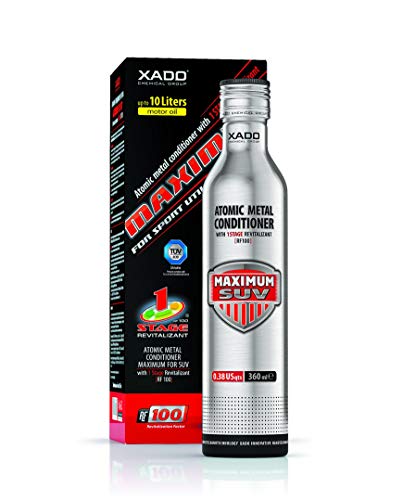
| XADO Engine Oil Cleaner | Older engines, varnish, or carbon-prone engines | Especially useful on high-performance or older layouts | Pre-oil-change cleaner for engines that need a gentler approach | Gentler profile than aggressive deep-clean products | Used before oil change | 250 ml | Do not rely on it to rescue a heavily sludged engine with restricted oil passages |
| Motul Engine Clean | Routine maintenance and light-to-moderate buildup | Turbocharged, naturally aspirated, and hybrid | Gasoline, diesel, and hybrid | Solvent-free formula for a lower-risk approach | About 15 minutes at idle | Not stated in the supplied product data | Avoid if you need a deep cleanup for severe sludge or if the oiling system may already be restricted |
Core trade-off: the gentler the flush, the better it fits routine maintenance and sensitive hardware. The stronger the cleaner, the more carefully you need to judge deposit load, oil flow, and service history before you add it.
How we chose
The ranking weighs four things: compatibility with gasoline, diesel, turbocharged, and hybrid engines; seal and emissions-system risk; treatment time and dose size; and the likely use case for each formula.
That matters because an engine flush is not one category. A solvent-free maintenance cleaner, a synthetic anti-wear formula, and a revitalizant-style cleaner can all be “good,” but for very different engines.
We also favored products with a clearer no-go zone. A flush should be easier to place, not harder to judge.
Liqui Moly Pro-Line Engine Flush: best all-around pick
Liqui Moly Pro-Line Engine Flush is the best low-risk general pick for gasoline and diesel engines. It is a 500 ml product, carries SKU 2037, is described as safe for catalytic converters and DPFs, and is neutral to seals. The about 10-minute flush window makes it practical for a routine oil change.
Start here if the engine is maintained, the sludge load is not extreme, and you want broad compatibility without leaning into a harsher chemical profile. It works with gasoline and diesel 4-stroke engines, so it fits a wide range of daily drivers.
The drawback is simple: it is still a flush, not a miracle cure. If the engine has heavy sludge or a questionable oil-change history, a mild cleaner can loosen deposits without fixing the underlying restriction.
Picture a 2.0-liter turbo sedan with regular service, a clean cap, and only a light varnish ring under the filler. That is the kind of case where a 10-minute, seal-neutral flush makes sense before fresh oil goes in.
TRIAX Pro Engine Flush: best for added anti-wear protection
TRIAX Pro Engine Flush is the more technical option for gasoline and diesel engines when you want cleaning plus anti-wear chemistry. It uses a 16 oz bottle, a 100% synthetic oil base, polar esters, PIB succinimide, and ZDDP for turbocharger protection.
That mix fits engines that are not filthy but still need a cleaner that helps support the oil film during the flush interval. The 10–15 minute runtime gives it more dwell time than the shortest flushes, which can help on moderate deposits.
The drawback is that the formula is aimed at a narrower buyer. If the car only needs a simple, low-risk pre-change cleanup, this may be more product than necessary. And like any flush, it is not the right choice for an engine with severe sludge or signs of blocked oil passages.
A common first-timer mistake is choosing a “stronger” flush for a neglected engine because the label sounds more powerful. With sludge, more chemistry is not always better; sometimes it just means more loosened debris at once.
XADO Engine Oil Cleaner: best for older or high-performance engines
XADO Engine Oil Cleaner is the pick for older or high-performance engines that need a gentler pre-oil-change cleaner. It comes in a 250 ml size and uses revitalizant technology with an anti-carbon focus, so the pitch is less about aggressive solvent action and more about cleaning before fresh oil goes in.
That matters on engines where deposit control, ring cleanliness, or carbon loading is the concern rather than outright sludge removal. In that setting, a softer cleaner can fit better than an aggressive flush that risks moving too much debris at once.
The drawback is scope. A gentle cleaner can help with varnish and carbon, but it should not be treated as a fix for an engine with severe sludge, unknown service history, or restricted oil flow.
Suppose a high-mileage performance coupe still runs well but shows varnish around the cap and on visible valvetrain surfaces. That is a better match for a pre-change cleaner with a gentler profile than for a deep-clean flush.
Motul Engine Clean: best solvent-free option
Motul Engine Clean is the best solvent-free option for routine maintenance. It works on gasoline, diesel, turbocharged, naturally aspirated, and hybrid engines, and it is designed for about 15 minutes of idle time before the oil is drained.
The solvent-free approach matters when you want cleaning without the more aggressive character that some flushes bring. That makes it attractive for maintenance-minded owners who want a lower-risk option and broad engine compatibility, including hybrid use cases.
The drawback is that “gentle” cuts both ways. If the engine has heavy sludge, blocked oil return paths, or unknown maintenance, a solvent-free cleaner is not the product to lean on for rescue work.
For a hybrid that sees short trips, cold starts, and ordinary deposit buildup, this is the kind of formula that fits a sensible oil-change schedule rather than an emergency cleanup.
Which one should you buy?
Choose by sludge level first. For light maintenance cleaning, Liqui Moly Pro-Line Engine Flush is the safest broad pick. For moderate deposits where anti-wear chemistry matters, TRIAX Pro Engine Flush fits better. For older or performance engines that need a gentler pre-change cleaner, XADO is the better match. For solvent-free maintenance across gasoline, diesel, turbo, and hybrid setups, Motul is the cleanest fit.
Choose by service history second. If you do not know what the previous owner did, skip the aggressive instinct. Unknown history is exactly where a flush can free deposits faster than the oil system can move them.
Choose the mild flush if…
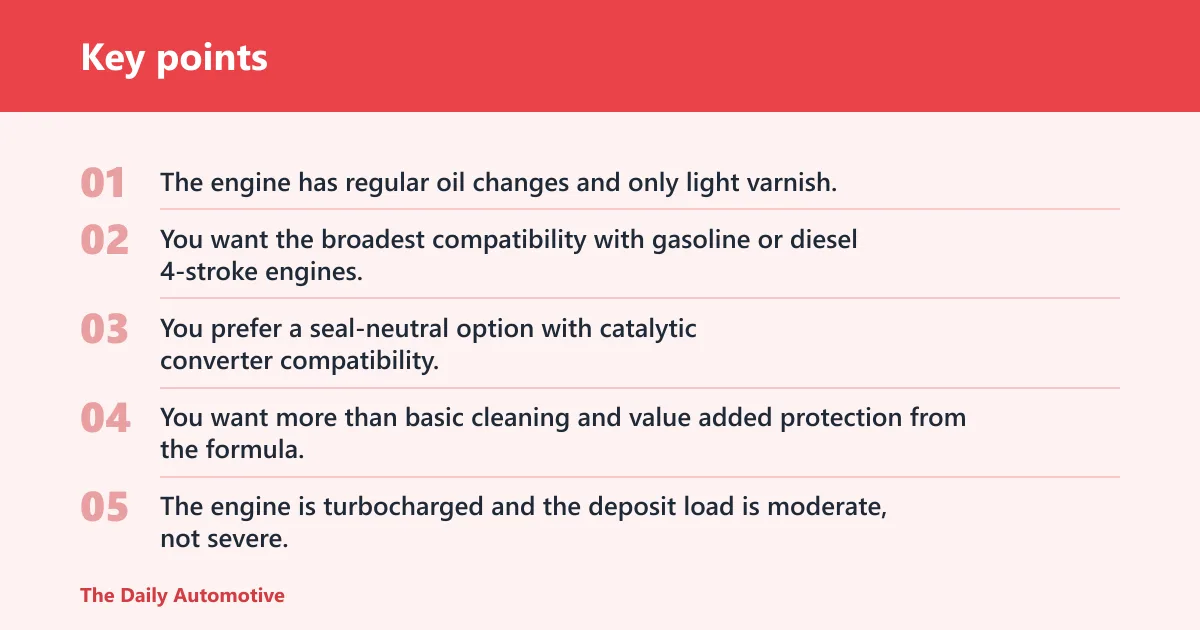
- The engine has regular oil changes and only light varnish.
- You want the broadest compatibility with gasoline or diesel 4-stroke engines.
- You prefer a seal-neutral option with catalytic converter compatibility.
Choose the synthetic anti-wear flush if…
- You want more than basic cleaning and value added protection from the formula.
- The engine is turbocharged and the deposit load is moderate, not severe.
- You are comfortable with a 10–15 minute runtime.
Choose the gentler cleaner if…
- The engine is older or high-performance and you want a less aggressive pre-change cleaner.
- Carbon control matters more than a hard flush.
- You are trying to avoid a harsh solvent profile.
Choose the solvent-free option if…
- You want routine maintenance for gasoline, diesel, turbocharged, naturally aspirated, or hybrid engines.
- You prefer a 15-minute idle treatment over a more aggressive cleaner.
- The engine needs regular upkeep, not rescue work.
When not to use a flush
Do not use an engine flush as a first move when sludge is severe, oil pressure is already questionable, or the service history is unknown. In those cases, the problem may be physical restriction, not just dirty oil. A flush can loosen debris and send it toward the pickup screen or oil control circuits.
Turbocharged engines deserve extra caution because loosened deposits can travel into narrow oiling paths and restricted control passages. That is why a formula’s cleaning strength matters less than whether the engine can safely move the loosened material out with the drain.
Best engine flush treatments at a glance
The best engine flush treatment for cars depends on the engine you have, not just the label on the bottle. A low-risk maintenance cleaner suits most routine oil changes. A more aggressive choice only makes sense when the deposits justify it and the engine’s oiling system is healthy enough to handle it.
That is why this ranking puts Liqui Moly first for broad use, TRIAX for anti-wear support, XADO for older or performance-oriented engines, and Motul for solvent-free routine service.
What is the best engine flush treatment for cars?
The best engine flush treatment for cars is the one that matches sludge level, engine design, and risk tolerance. For most owners, that means a mild, seal-safe flush for routine maintenance. Liqui Moly Pro-Line Engine Flush is the safest broad recommendation here because it works with gasoline and diesel 4-stroke engines and is described as neutral to seals.
If the engine is already heavily sludged, no flush is automatically “best.” At that point, the risk of loosening debris may outweigh the benefit of cleaning.
Which engine flush is safest for turbocharged engines?
The safest choice for turbocharged engines is the formula that balances cleaning with the least chance of dislodging large deposits all at once. Motul Engine Clean is commonly presented as a fit for routine turbo service and is listed for turbocharged engines, while Liqui Moly is also often described as a conservative pick for broad compatibility and seal neutrality.
Turbo safety is about oil-path risk as much as chemistry. If the engine has heavy sludge, any flush can move debris into the turbo oil feed or control circuits, so the safest answer may be to skip a flush entirely.
Are engine flushes safe for catalytic converters and seals?
Some are, some are not equally reassuring. Liqui Moly Pro-Line Engine Flush is described as safe for catalytic converters and DPFs and neutral to seals, which is why it ranks as the low-risk broad pick. Other flushes may still be compatible, but the product-specific details matter more than the category label.
On seals, the key issue is whether the cleaner is formulated to be seal-neutral rather than solvent-heavy. On emissions hardware, you want a product that explicitly says it is safe for catalytic converters or DPFs rather than assuming compatibility.
How long should you run the engine after adding a flush?
Run it only for the product’s stated time, then drain the oil and replace the filter. In this group, Liqui Moly is about 10 minutes, TRIAX is 10–15 minutes, Motul is about 15 minutes at idle, and Lubegard is formulated for 5 to 10 minutes. Longer is not better.
If the engine starts sounding rough, oil pressure warning behavior appears, or the idle becomes unstable, shut it down and drain the oil rather than extending the flush window.
Which engine flush works best for gasoline and diesel engines?
Liqui Moly Pro-Line Engine Flush and TRIAX Pro Engine Flush are the clearest broad-use answers for gasoline and diesel engines. Liqui Moly is the more conservative all-around pick, while TRIAX adds synthetic base oil chemistry, polar esters, PIB succinimide, and ZDDP for turbocharger protection.
If you want the gentler maintenance path, Liqui Moly leads. If you want more chemistry behind the cleaner, TRIAX is the stronger specialty option.
Can an engine flush help with sludge buildup and varnish?
Yes, but only within limits. A flush can help with sludge buildup and varnish when the deposits are moderate and the oiling system is still open enough to drain cleanly. It can also help free restricted passages, which is why detergent-based formulas are often used right before an oil change.
It cannot reliably fix severe sludge. If the engine is packed with deposits, a flush may remove loose material while leaving the real restriction in place.
How much engine flush do I need for a typical car engine?
Use the bottle size and dose instructions on the product, not a generic rule. In this group, Liqui Moly is a 500 ml bottle, TRIAX is 16 oz, XADO is 250 ml, Lubegard is 15 oz, and Motor Medic MF3 is a 32 oz bottle with 16 oz per flush. Those sizes matter because some formulas are single-use while others are built for multiple treatments.
For a typical passenger car, one treatment is the norm. Multi-use bottles only save money if the engine and the product directions actually let you split the dose safely.
What is the difference between a gentle flush and a deep-clean flush?
A gentle flush is built for routine maintenance, lighter deposits, and lower risk. A deep-clean flush is aimed at heavier buildup and may use stronger chemistry or longer dwell time. The trade-off is simple: the stronger the cleaner, the more caution you need about sludge release, oil pickup blockage, and sensitive oil passages.
For most clean or lightly used engines, a gentle flush is the better fit. For a neglected engine, the real question is often whether any flush is appropriate at all.
Products related to this article
Sponsored / affiliate links. As an Amazon Associate I earn from qualifying purchases. I may earn additional commission from eligible campaigns.