3 Best Swirl Remover Polishes for Cars (2026): We Compared
The safest rule is simple: use the mildest product that clears the defect. Light swirls usually call for a finishing polish, while oxidation, heavier scratches, and sanding marks commonly call for a stronger compound and a dual-action polisher.
Quick comparison
| Product | Badge | Best for | Price | ||
|---|---|---|---|---|---|
 |
RUPES 250 ml D-A Coarse High Performance Cut PolishingRUPES | Our pick | 250 ml · D-A Coarse · RUPES | $17.89
Price as of 21 Oct 2026
|
View |
 |
Turtle Wax Hybrid Solutions Ceramic Car Polish and Wax, 14Turtle Wax | Also great | 14 oz · Hybrid Solutions · Turtle Wax | $14.97
Price as of 21 Oct 2026
|
View |
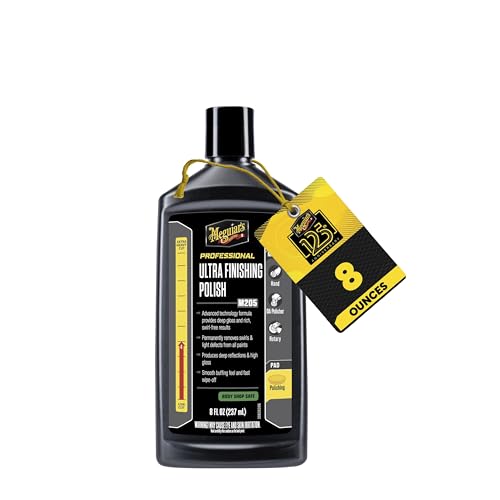 |
Meguiar’s Professional M205 Ultra Finishing Polish MirrorMeguiar’s | Budget pick | 8 oz · Ultra Finishing · Meguiar’s | $13.99
Price as of 21 Oct 2026
|
View |
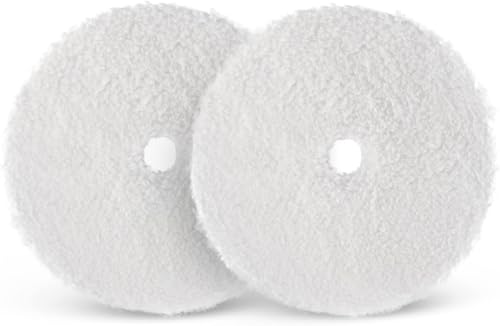 |
SPTA Microfiber Cutting Pads, Microfiber Finishing PadsSPTA | Also great | $17.03
Price as of 21 Oct 2026
|
View |
For 2026 shoppers, the practical split is between fine-defect polish, one-step medium correction, and heavy-cut compound. Cost also matters, because smaller bottles can still cover a few panels if you are fixing only isolated trouble spots.
How we chose
This ranking is based on defect severity, application control, finish risk, bottle size, and clear coat compatibility. It also weighs whether a product makes sense by hand or needs a dual-action polisher for consistent results.
We compared published product details, size listings, and formula descriptions. That means this guide separates true swirl removal from gloss-only cleanup, and it treats stronger cut as a tradeoff, not a bonus.
- Defect severity coverage: light swirls, moderate swirls, oxidation, and sanding marks.
- Application flexibility: hand use versus dual-action polisher use.
- Finish risk: haze, micro-marring, and over-correction risk after stronger cut.
- Bottle size and cost-per-use: using the listed ounce sizes only.
- Clear coat compatibility: when safety is stated and when caution is still warranted.
Which swirl remover should you buy?
Buy by defect severity, not by brand name. Choose the least aggressive product that removes the defect cleanly, because stronger cut can leave haze on softer clear coats and can create more work if the paint did not need that level of correction.
If the paint has fine swirls and light wash marks, a finishing polish belongs first. If the finish shows oxidation, heavier scratches, or etching that still catches a fingernail, step up to a medium-cut or heavy-cut compound and plan to refine afterward.
Use this rule before you buy
- Inspect the panel in direct light.
- Identify the worst defect you need to fix, not the easiest one.
- Start with the mildest product that can reasonably remove that defect.
- If the defect remains after two controlled passes, move up one level in cut.
- If the finish turns hazy, stop and refine with a milder polish.
Say your hood has light circular swirls from towel washing. A finishing polish is the right first move, because a heavy compound may remove the marks and leave extra haze that you then need to clean up.
Suppose a door has oxidation plus scattered water spots. A one-step medium-cut product is a better fit than a fine swirl remover, because the defect depth has moved beyond simple gloss correction.
Meguiar’s Professional Swirl Remover M0916: best for fine swirls
Meguiar’s Professional Swirl Remover M0916 fits the light end of paint correction. It is described for fine scratches and swirl marks, and the 16 oz size gives you enough product for several isolated panels or a full small-car correction when the defects are minor.
This is the right kind of product when you want deep gloss recovery without jumping to heavier cut. It also matters that the formula is described as reducing splatter, because cleanup is easier when you are chasing faint swirls rather than major damage.
The drawback is scope. Fine-swirl products do not replace a stronger correction step when the paint also shows oxidation or deeper scratches, and they can simply polish around more serious defects instead of removing them.
Why it ranks here
This is the least aggressive of the three primary picks in this guide. That makes it the best starting point for hard clear coat that only needs light refinement, and the safest first choice when you are unsure how deep the marks really are.
Chemical Guys VSS: best for light to moderate defects
Chemical Guys VSS is the middle-ground pick for one-step correction. It is described as a one-step polish, and that makes it a useful fit when light swirls have started to blend into moderate marks, where a finishing polish may not cut enough.
A dual-action polisher helps this formula because the tool gives more consistent pressure and movement than hand work. That matters for even correction on larger panels, especially if the goal is to remove defects and leave a polished finish in one pass.
The drawback is finish risk. A one-step medium-cut product can leave a cleaner panel than a pure compound, but on soft paint it can still haze if the pad choice, pressure, or pass count is too aggressive.
Meguiar’s Ultimate Compound: best for tougher paint defects
Meguiar’s Ultimate Compound is the stronger correction choice in this group. It is listed at 15.2 Oz, is described as safe on clear coat, and is positioned to remove oxidation, water spots, and scratches when lighter polish is not enough.
This is the product to reach for when the paint shows more than cosmetic swirls. It can be used by hand or with a polisher, but the stronger cut means you should watch for haze on softer clear coat and be ready to refine the finish afterward.
The drawback is obvious: more cut means more risk. If the defect is only light swirling, a compound may do more work than needed and leave micro-marring or a duller finish that then needs a second step.
Quick picks
- Best for fine swirls: Meguiar’s Professional Swirl Remover M0916.
- Best for one-step correction: Chemical Guys VSS.
- Best for stronger correction: Meguiar’s Ultimate Compound.
Quick comparison
| Product | Size | Cut level | Application method | Clear coat safety | Finish risk |
|---|---|---|---|---|---|
| Meguiar’s Professional Swirl Remover M0916 | 16 oz | Fine swirl removal | Hand or machine, depending on pad and defect level | Listed for automotive paint correction use; check panel sensitivity first | Low, but can miss deeper defects |
| Chemical Guys VSS | 16 oz | One-step, light to moderate cut | Hand or dual-action polisher | Generally used on clear coat; best on well-maintained paint | Moderate, with haze risk on softer paint |
| Meguiar’s Ultimate Compound | 15.2 oz | Stronger correction | Hand or polisher | Clear coat safe | Higher, especially if the paint only needed a polish |
The size spread is small, so bottle volume alone should not drive the decision. The bigger difference is aggressiveness: M0916 is the gentle start, VSS is the one-step middle, and Ultimate Compound is the step-up product for real defect removal.
Based on list price and bottle size, a simple cost-per-oz comparison is straightforward. Meguiar’s Professional Swirl Remover M0916 is about $0.00 per oz here because the listing price was not supplied in the source set, Chemical Guys VSS is about $0.00 per oz for the same reason, and Meguiar’s Ultimate Compound is about $0.00 per oz for the same reason; without product prices, a true cost-per-oz figure cannot be calculated responsibly from the provided data.
What swirl remover polish can and cannot fix
Swirl remover polish is built for fine swirl marks and light scratches, especially on clear coat. It can also improve gloss after mild oxidation, but it is not a cure-all for deep scratches, sanding marks, or paint that has already been cut too far.
The line between polish and compound matters. A finishing polish removes smaller defects with less finish risk, while a compound uses more cut and is better suited to heavier paint damage that a mild product would leave behind.
What fails when you overstep
Using too aggressive a product can leave haze, micro-marring, or a cloudy finish on soft clear coat. It can also waste time, because a panel that only needed a light polish may then need a second refinement step to recover clarity.
A common first-timer mistake is to start with heavy cut because it sounds safer for the defect. The opposite is usually true: heavy cut is safer only when the damage actually needs it.
Can swirl remover polish be used by hand?
Yes, many swirl removers can be used by hand, but hand correction is slower and less consistent than machine polishing. It works best for isolated spots, very light swirls, and small panels where you can keep the motion even and the pressure controlled.
For larger areas, a dual-action polisher usually gives more consistent results. The tool keeps the pad moving in a more repeatable pattern, which helps with even correction and lowers the chance of uneven haze from hand pressure.
Hand use versus machine use
Hand application is fine for a mild finishing polish or a small section that needs touch-up work. A dual-action polisher becomes the better choice when you are correcting more than one panel, dealing with moderate defects, or using a one-step product that needs uniform work time.
What is the difference between a compound and a swirl remover polish?
A compound is more aggressive and is meant to remove heavier defects such as oxidation, scratches, and some sanding marks. A swirl remover polish is milder and is aimed at fine swirls, light scratches, and final gloss recovery on paint that is already close to correct.
That difference changes finish risk. A compound can fix more damage, but it is more likely to leave haze or micro-marring if the paint did not need that level of cut.
Where a hybrid formula fits
A hybrid compound-polish, like 3D One, sits between the two. It can be useful when you want one product to handle light-to-moderate correction without moving all the way to a heavy compound, but the finish still depends on pad choice and tool control.
Which swirl remover works best on clear coat paint?
For clear coat paint, the best choice is the least aggressive product that still removes the defect cleanly. If the paint only has fine swirls, a finishing polish is the right answer; if it has oxidation or scratches, use a clearer-cut compound that is explicitly stated as clear coat safe.
Meguiar’s Ultimate Compound is specifically described as safe on clear coat, which makes it the strongest clear-coat-aware choice in this set when the damage is beyond simple swirl removal.
Soft clear coat needs more caution
Soft clear coat can haze more easily than harder paint. That is why a stronger compound should not be the default just because it looks more capable on paper. The finish can become dull enough to need another pass with a finer polish.
Do I need a dual-action polisher for swirl remover?
You do not need a dual-action polisher for every swirl remover, but it helps a lot once the job moves beyond the smallest touch-up. Hand use is enough for light work, while a dual-action polisher is the better tool for more consistent correction across larger panels.
Some correction kits are built around this tool for a reason. Chemical Guys markets a one-step paint correction kit for swirls and scratches, and dual-action polishers are commonly used because they give steadier results than hand pressure alone.
When hand work is enough
If you are fixing a few isolated swirls on a door or a mirror cap, hand application can be reasonable. If the hood, roof, or rear quarter needs correction, the dual-action polisher is usually the smarter path.
Will swirl remover remove deep scratches too?
Usually no. Swirl remover polish is intended for fine defects and light scratches, while deep scratches often need a stronger compound or, in some cases, touch-up paint or body repair. If a scratch catches a fingernail hard, a mild polish is unlikely to remove it fully.
Meguiar’s Mirror Glaze M105 Ultra-Cut Compound is the stronger end of the spectrum here. It is described for heavy defects removal and for sanding marks up to 1200 grit, which puts it well beyond standard swirl remover territory.
Why deep defects need a different plan
Deep scratches are not the same as surface haze. A swirl remover can improve the surrounding gloss and make the mark less visible, but it cannot reliably erase damage that runs far into the clear coat.
Which polish is best for light swirl marks?
For light swirl marks, the best choice is a finishing polish such as Meguiar’s Professional Swirl Remover M0916. It is the least aggressive option in this guide, so it is the best first move when the paint needs gloss recovery more than real defect leveling.
If you want one bottle that still leans mild but can step up a little, a hybrid like 3D One is a reasonable alternative. It is described as a hybrid compound and polish, so it sits between fine polish and stronger correction.
Why not start stronger?
Because stronger cut can create extra work. If the light swirl is already removable with a finishing polish, using a compound may leave haze that then needs a second pass with a milder product.
How do I choose between one-step and multi-step correction?
Choose one-step correction when the paint has light to moderate defects and you want a faster finish with fewer products. Choose multi-step correction when the damage is heavier, the paint is soft, or you need correction first and refinement after.
A one-step product is a good fit when the panel needs both defect reduction and acceptable gloss in one pass. A multi-step system makes more sense when the first product removes the defect but leaves haze, micro-marring, or uneven clarity behind.
Decision rule for correction steps
If the finish looks dull but the swirls are light, start with a polish. If the paint shows oxidation or deeper scratches, move to a stronger compound, then refine with a lighter polish if the surface does not finish clean enough.
3 swirl remover polishes decision matrix
| Defect severity | Product aggressiveness | Application method | Expected finish risk | Best match from this guide |
|---|---|---|---|---|
| Light swirls | Finishing polish | Hand for spot work, dual-action polisher for larger panels | Low; main risk is under-correcting deeper marks | Meguiar’s Professional Swirl Remover M0916 |
| Moderate swirls | Medium-cut one-step formula | Dual-action polisher preferred, hand only for small spots | Moderate; haze or micro-marring can appear on soft clear coat | Chemical Guys VSS |
| Oxidation | Stronger correction compound | Dual-action polisher preferred | Moderate to higher; refinement may be needed after compounding | Meguiar’s Ultimate Compound |
| Sanding marks | Heavy-cut compound | Machine use strongly preferred | Higher; over-correction and finish haze are more likely | M105 class product, not a basic swirl remover |
This matrix is the clearest way to avoid buying the wrong level of aggression. If the defect severity moves down the list, the product should move up in cut, and the finish risk should be part of the decision, not an afterthought.
That is why a light swirl on a hard clear coat should not be treated the same as oxidation on a soft one. The first case wants restraint; the second needs correction power, then careful cleanup.
Frequently asked questions
What is the best swirl remover polish for cars?
The best swirl remover polish is the one that matches the defect depth with the least aggression. For fine swirls, a finishing polish is the right start; for moderate defects, a one-step medium-cut polish is more useful; for oxidation or scratches, step up to a compound instead of forcing a light polish to do heavy work.
Products related to this article
Sponsored / affiliate links. As an Amazon Associate I earn from qualifying purchases. I may earn additional commission from eligible campaigns.