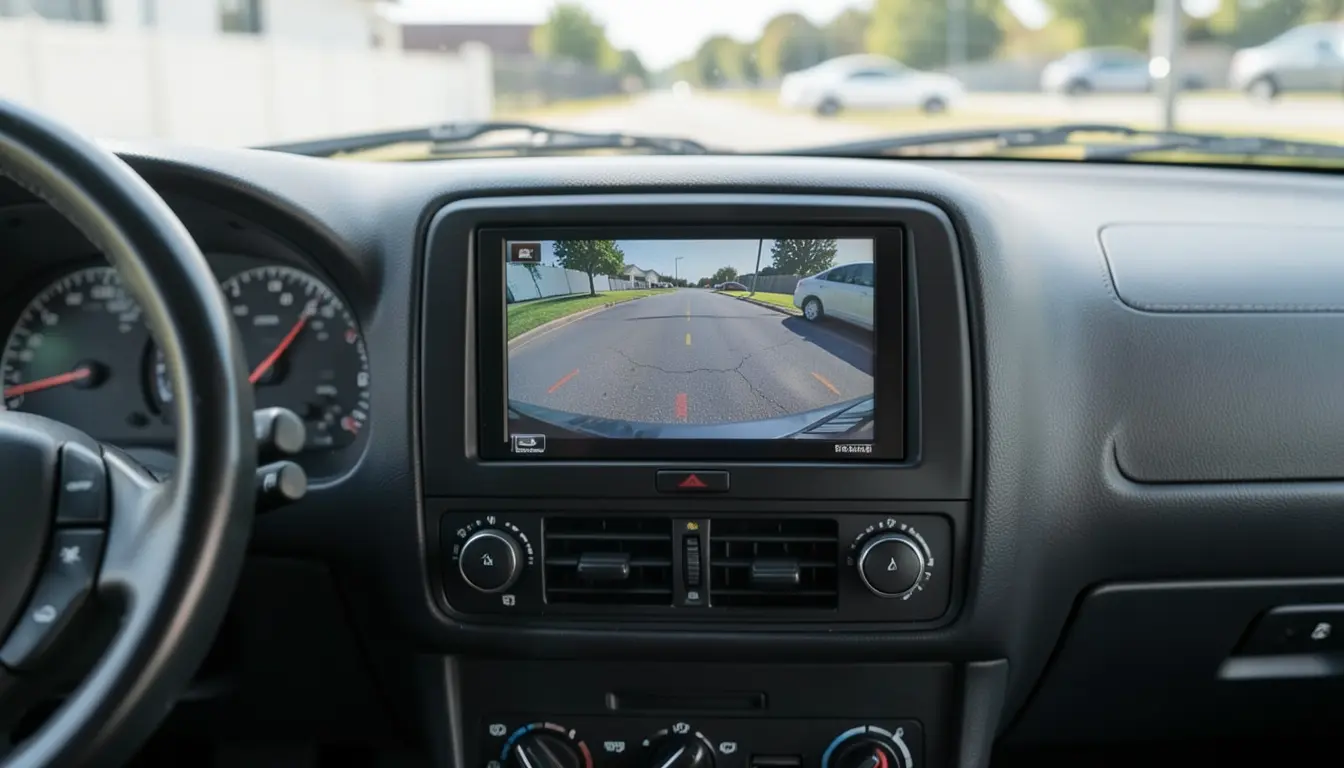
Backup Camera for Old Cars: Complete Buying and Install Guide
Yes, you can add a backup camera to almost any older car, even one built years before backup cameras existed. A plug-and-play kit with its own monitor costs as little as $18 and typically installs in under an hour without touching the factory wiring harness.
Backover accidents caused roughly 210 deaths and nearly 15,000 injuries a year in the US before federal regulators required backup cameras on new vehicles sold after May 1, 2018. That rule only applies going forward, so the millions of cars, trucks, and SUVs built before that date are still reversing blind unless an owner adds a camera themselves.
This guide covers the real difference between wired and wireless backup camera kits, what a complete setup actually costs, what to check before you buy one, and the step-by-step process for installing a backup camera in a car that has never had one.
Why Older Cars Do Not Have a Backup Camera
The National Highway Traffic Safety Administration’s rearview visibility rule (FMVSS 111) only required backup cameras on new vehicles under 10,000 pounds manufactured after May 1, 2018. Anything built before that date, and plenty of models built after it in trims that predate the rule’s phase-in, simply never came with a camera, a rear-facing wire, or a dashboard screen wired to accept a video signal. Retrofitting one is a completely separate job from “using” a factory camera, because there is no existing wiring to tap into. The good news is that aftermarket kits are built around that exact problem: they bring their own camera, their own cable, and often their own monitor, so nothing about the car’s original wiring needs to change.
SELF-CONTAINED KIT, NO EXISTING SCREEN NEEDED
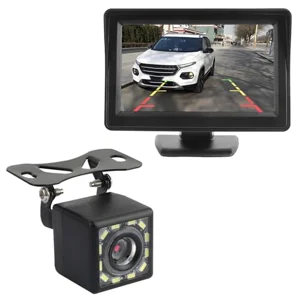 |
Plug & Play Backup Camera with 4.6″ Monitor – $17.99 This kit adds a complete backup camera and its own dashboard monitor to a car with no factory screen or backup wiring, exactly the gap described above.
|
Wired vs Wireless Backup Camera Kits: Which Is Better for an Old Car
Every aftermarket backup camera kit falls into one of two categories, and the choice affects both the install and how reliable the picture is once it is done.
| Feature | Wired Kit | Wireless Kit |
|---|---|---|
| Signal reliability | Very reliable, no interference | Can lag or drop out near other 2.4GHz devices |
| Install difficulty | Harder; a cable must be routed from bumper to dash | Easier; only power wires need routing |
| Typical price | $18 to $40 for a basic kit with monitor | $35 to $90 for a basic kit with monitor |
| Video delay | Essentially none | Small delay, usually under half a second |
| Best for | Sedans, SUVs, and trucks where a cable can be hidden along the body | Cars where running a physical cable is impractical, or trailers and RVs |
For a typical old car, a wired kit is usually the better call. The cable runs mostly along existing weatherstripping and trim, the picture never lags, and there is no wireless interference to troubleshoot later. Wireless kits earn their keep on trucks, trailers, and RVs, where running a cable the full length of the vehicle is either impractical or impossible.
How Much Does It Cost to Add a Backup Camera to an Old Car
- Basic wired kit with its own monitor: $18 to $40
- Wireless kit with its own monitor: $35 to $90
- HD kit with a larger screen or built-in DVR recording: $80 to $180
- Professional installation, if you skip the DIY route: roughly $75 to $150 in labor, on top of the cost of the kit itself
The jump from a basic kit to an HD one usually buys a bigger, sharper monitor and sometimes a built-in recorder, not a fundamentally different camera. For most old cars, a $20 to $40 wired kit covers the actual safety benefit: a clear, wide-angle view of what is directly behind the bumper before backing up.
What to Check Before You Buy a Backup Camera for an Old Car
- Does it come with a monitor? If your old car has no dashboard screen with a video input, you need a kit that includes one, not just a camera.
- Resolution and night vision: Look for at least 720p, and check that “night vision” means actual infrared LEDs, not just marketing language.
- Viewing angle: 120 to 150 degrees is the practical range. Wider angles show more but can distort distances near the edges of the frame.
- Waterproof rating: Since the camera itself lives outside, an IP67 or higher rating matters more than any spec on the monitor.
- Wired vs wireless: Use the comparison above to match the kit to how easily a cable can be run in your specific vehicle.
- Mounting style: License-plate-frame cameras are the easiest universal fit; bumper-mounted cameras usually need a drilled hole and are closer to a factory look.
- Warranty: Most budget kits carry a one- to two-year warranty. Confirm the seller handles warranty claims directly rather than routing you back to an overseas manufacturer.
How to Install a Backup Camera in an Old Car
Most kits follow the same basic sequence, whether the camera is wired or wireless.
- Pick a mounting spot. A license-plate-frame bracket is the easiest, fully reversible option; a drilled bumper mount looks more factory-installed but is permanent.
- Route the camera’s cable forward along the underside of the car, following existing wiring harnesses and weatherstripping so nothing is left exposed to the road.
- Tap power for the camera from the reverse light circuit, not a constant power source. This is what makes the camera turn on automatically only when the car is in reverse.
- Mount the monitor somewhere visible on or near the dash, or connect the camera’s video output to an existing screen if it has a compatible video input.
- Test the camera with the engine running and the car in reverse before permanently securing any cables, so any wiring mistake is easy to fix.
- Seal every point where a cable passes through the body with weatherproof tape or grommets to keep water out of the cabin and trunk.
A wired kit with a rear-light power tap and a cable run through the trunk usually takes 30 to 60 minutes for someone comfortable with basic tools. If the reverse-light wiring is hard to reach or the cable run is complicated by the body style, a professional installer can usually finish the same job in under an hour.
Frequently Asked Questions
Can I install a backup camera in a car that never had one?
Yes. Aftermarket backup camera kits are built specifically for this situation. They include their own camera, cable, and often a monitor, so there is no need for any factory wiring or an existing dashboard screen.
Do I need a professional to install a backup camera?
Not necessarily. Most plug-and-play kits come with clear instructions and can be installed by hand in under an hour. A professional is worth considering if you want the cable fully hidden inside the body panels or if the reverse-light wiring on your specific model is hard to reach.
What is the difference between a wired and wireless backup camera?
A wired camera sends video through a physical cable run from the bumper to the monitor, which is more reliable and has no lag. A wireless camera transmits video over a 2.4GHz signal, which is easier to install since no cable needs to be routed the length of the car, but it can occasionally lag or drop out near other wireless devices.
Will a backup camera work with my old car’s existing stereo or screen?
Only if that screen has a video input (usually labeled AV-IN or RCA). Most factory radios in older cars do not have this, which is why the kits built specifically for old cars usually include their own small dedicated monitor instead.
How much does it cost to add a backup camera to an old car?
A basic wired kit with its own monitor runs $18 to $40. Wireless kits run $35 to $90, and HD kits with a larger screen or built-in recording run $80 to $180. Professional installation adds roughly $75 to $150 in labor if you choose not to do it yourself.
Is a backup camera required by law on older cars?
No. The federal rule requiring backup cameras only applies to new vehicles manufactured after May 1, 2018. It does not require owners of older vehicles to add one, though doing so is a low-cost way to add the same safety benefit.
Conclusion
An old car built before 2018 was never required to have a backup camera, but that does not mean it has to stay without one. A basic wired kit with its own monitor costs under $40, installs in about an hour, and closes the exact blind spot that federal regulators eventually required every automaker to address on new vehicles.
Match the kit to how easily a cable can be routed in your specific vehicle, confirm the resolution, night vision, and waterproof rating are real rather than just marketing terms, and tap power from the reverse light circuit so the camera only activates when you need it.
Products related to this article
Sponsored / affiliate links. As an Amazon Associate I earn from qualifying purchases. I may earn additional commission from eligible campaigns.