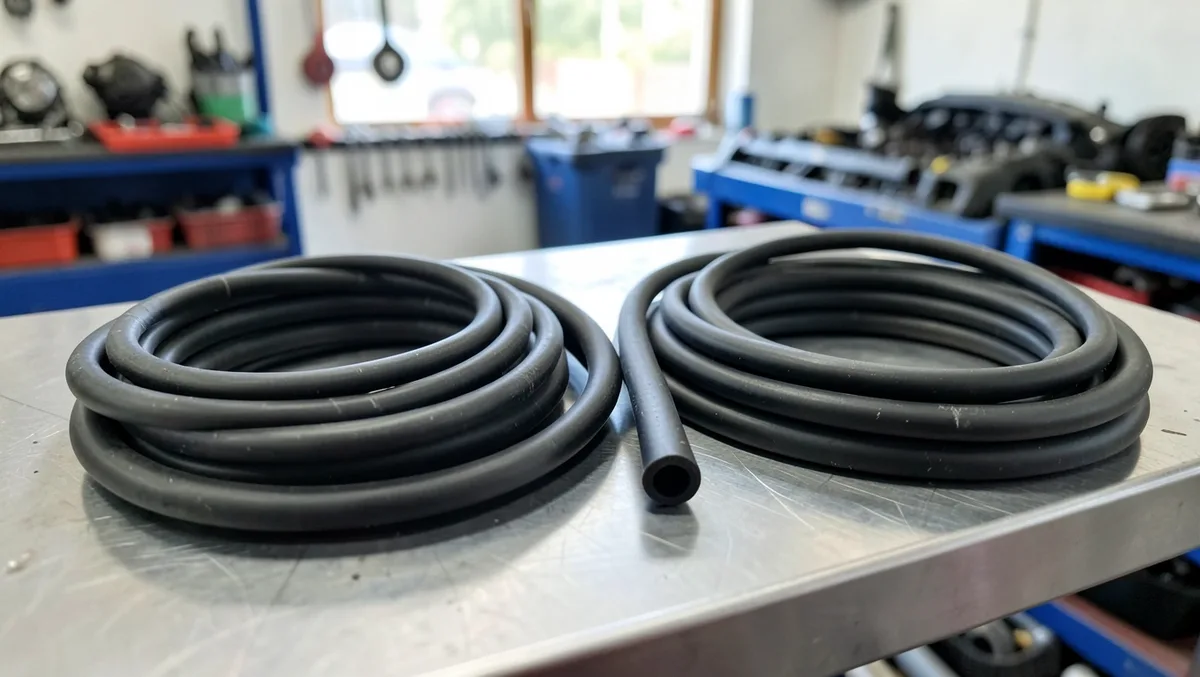
Best Car Hoses for Fuel and Vacuum Lines (Silicone & Rubber)
A cracked, hardened, or collapsed hose is one of the most common reasons a car develops a vacuum leak, a fuel smell, or a rough idle. Vacuum lines need heat-resistant silicone built for engine-bay temperatures, while fuel lines need NBR rubber rated to handle gasoline and ethanol at real operating pressure — plain vacuum tubing is not safe to use as a fuel line. Below are three specific hoses worth buying for each job, plus how to check the inner diameter and PSI rating before you order.
Which Type of Hose Does Your Car Actually Need?
Cars use several different hoses, and putting the wrong type in the wrong spot is a common mistake. Coolant hoses — the upper and lower radiator hose, plus the heater hose feeding the heater core — carry hot, pressurized coolant and need EPDM rubber or silicone rated for at least 250°F. Vacuum hoses are smaller-diameter lines that run engine vacuum to the brake booster, HVAC controls, and emissions components; they never see fuel or extreme pressure, so silicone tubing rated around 130 PSI, like the hose below, is more than enough and resists cracking far longer than cheap vinyl tubing. Fuel hoses are the one place you cannot cut corners: they need SAE J30-rated NBR (nitrile) rubber that resists swelling from gasoline and ethanol blends, rated for at least 100 PSI on a carbureted engine or 300 PSI on anything near a fuel-injected system’s supply side.
Once you know which category you need, match the inner diameter to the fitting you are replacing — measure the old hose’s inside opening, not the outside — and secure every connection with a correctly sized hose clamp. A hose that is the right diameter but held on with the wrong clamp will still leak.
Shineyoo Silicone Vacuum Tubing Hose – Best for Vacuum Lines
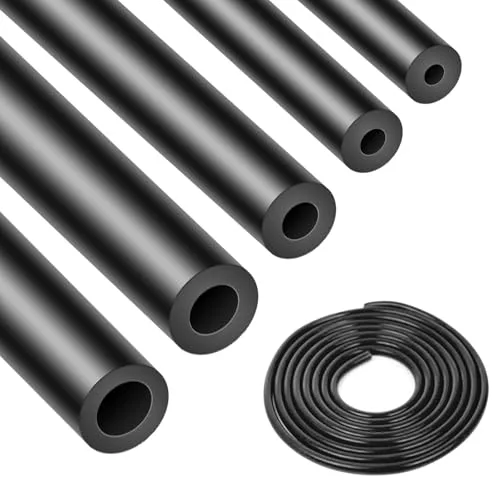
The Shineyoo kit ships as five separate silicone hoses — 1/8″, 5/32″, 1/4″, 5/16″, and 3/8″ inner diameter, each 6.6 feet long — so you can match almost any vacuum port without buying five different products. Silicone tolerates underhood heat and UV exposure better than standard rubber or vinyl tubing, and this line is rated to 130 PSI, well above what an engine’s vacuum or low-pressure lines will ever see.
Pros
- Rated to 130 PSI, more headroom than a vacuum line needs
- Five inner diameters (1/8″ to 3/8″) in one kit
- Silicone construction resists heat, cracking, and UV aging better than rubber or vinyl
- Flexible enough to route through tight engine-bay spaces
Cons
- Sold only in black, so color-matching an engine bay build is not an option
- 130 PSI is more capacity than a pure vacuum application needs — it is not meant as a fuel hose
Because it comes in one color and one wall thickness, this hose is built specifically for vacuum, PCV, and brake booster lines, not as a fuel hose substitute. To buy this product, click here.
smseace 25-Piece Fuel Line Hose Kit – Best Multi-Size Kit
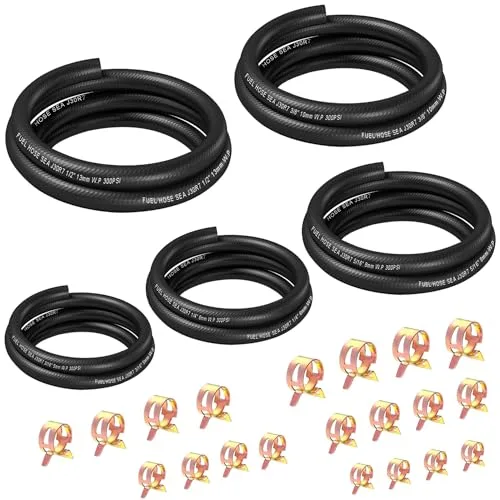
This kit bundles 25 pieces across five sizes — 3/16″, 1/4″, 5/16″, 3/8″, and 1/2″ inner diameter, each about 3.3 feet long — and includes matching hose clamps, so one purchase covers most small-engine and passenger-car fuel line jobs without a separate clamp order. The hose itself is NBR (nitrile) rubber, the same rubber family automakers use for OEM fuel lines because it resists swelling from gasoline and ethanol blends.
Pros
- Five sizes and 25 total pieces cover most fuel line repairs in one kit
- NBR rubber resists fuel and oil better than generic rubber tubing
- Hose clamps are included, so there is no separate clamp purchase needed
- Useful for small engines (mowers, generators) as well as cars
Cons
- Each piece is only 3.3 feet, too short for a full fuel line run on a larger vehicle
- Sold only in black
For anything longer than 3.3 feet per connection, or for a higher-pressure fuel-injected supply line, step up to a longer single length like the one below. To buy this product, click here.
3/8-Inch NBR Fuel Line Hose, 10 ft – Best for High-Pressure Systems
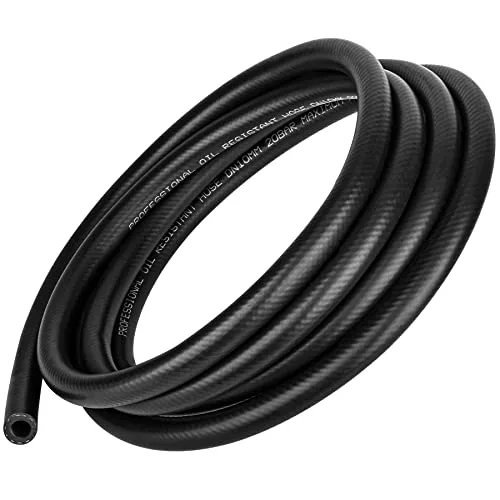
This is a single 10-foot length of 3/8-inch (10mm) inner diameter NBR rubber hose rated to 300 PSI — enough headroom for a fuel-injected engine’s supply side, not just a low-pressure carbureted return line. The push-lock design is meant to seat over a barbed fitting without a clamp, though adding a clamp is still worth it on anything running real fuel pressure.
Pros
- 300 PSI rating covers fuel-injected supply lines, not just gravity-fed carbureted systems
- 10-foot length is enough for a full custom fuel line run without splicing
- NBR rubber resists gasoline, diesel, and ethanol blends
Cons
- Sold only in black
- The push-lock fitting still benefits from a proper hose clamp on a pressurized line, despite the name
To buy this product, click here.
Frequently Asked Questions
What Is the Shineyoo Silicone Vacuum Tubing Hose Used For?
It is built for engine vacuum lines, PCV routing, and brake booster hoses, not fuel delivery. The silicone material handles underhood heat and pressure up to 130 PSI without cracking or hardening the way rubber or vinyl tubing eventually does.
How Durable Is the smseace Fuel Line Hose Kit?
It is made from NBR rubber, which resists degradation from gasoline, diesel, and oil far better than generic rubber tubing. The included hose clamps help each connection stay sealed, and the kit is rated for long-term use in both small engines and automotive fuel systems.
Can the 3/8-Inch Fuel Line Hose Handle High Pressure?
Yes. It is rated to 300 PSI, which covers fuel-injected supply lines as well as low-pressure carbureted systems. The NBR rubber construction is the same material family used in OEM automotive fuel hoses.
What Sizes Are Available in the Shineyoo Silicone Hose Kit?
The kit includes five inner diameters in one package: 1/8″, 5/32″, 1/4″, 5/16″, and 3/8″. Each hose is 6.6 feet long, so you can cut it to the length each vacuum line actually needs.
Are Hose Clamps Included in the smseace Kit?
Yes. The kit includes hose clamps sized for all five hose diameters, so there is no need to buy clamps separately. A properly sized clamp is what actually keeps a fuel connection from leaking, even with the right hose.
How Do I Know What Size Hose My Car Needs?
Measure the inside opening of the old hose, not the outside diameter, since wall thickness varies between rubber and silicone. If you no longer have the old hose, check the fitting or nipple it slides over; the inner diameter should match that fitting closely enough for a clamp to seal it without over-stretching the hose.
Conclusion
Match the hose to the job, not the other way around. For vacuum, PCV, or brake booster lines, the Shineyoo silicone kit’s five sizes and 130 PSI rating cover almost any port on the engine. For fuel delivery, NBR rubber is the safer standard: the smseace kit is the most convenient option because it bundles five sizes with clamps already included, while the single 10-foot, 300 PSI hose is the better pick for a longer run or a higher-pressure fuel-injected system. Whichever hose you choose, measure the inner diameter of the fitting first and finish the job with a hose clamp sized to match — a leak-free connection depends on both parts working together.
Products related to this article
Sponsored / affiliate links. As an Amazon Associate I earn from qualifying purchases. I may earn additional commission from eligible campaigns.