Beam Light for Car: Best Bulbs and Legal Upgrade Guide
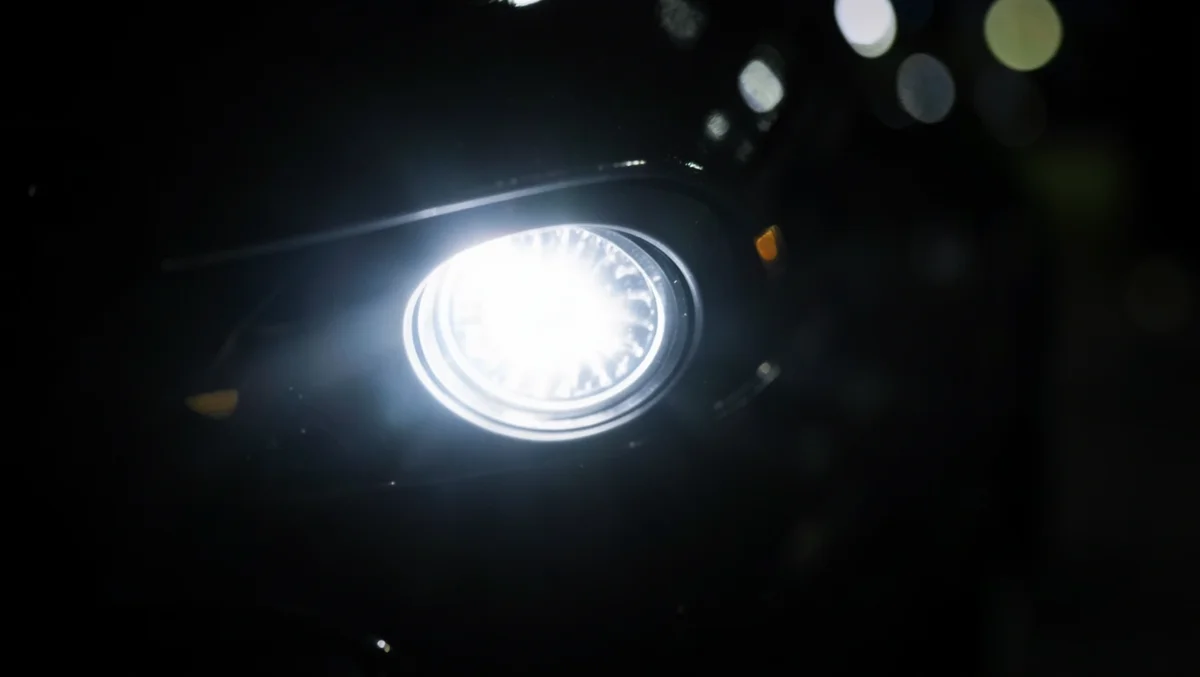
A beam light for your car is the bulb or auxiliary light that produces your headlight or fog light’s high and low beam on the road ahead. Whether you’re swapping a dim factory halogen bulb for a brighter LED, or thinking about bolting on an off-road light bar, the right upgrade depends on matching the correct bulb to your factory socket — and knowing which lights are actually legal to run on public roads.
Quick note before you buy: not every bright bulb or light bar is legal to use as your primary headlight beam. Off-road light bars, in particular, are built for off-road and auxiliary use only in nearly every U.S. state, not as a headlight replacement. We cover the legal side in detail further down, along with our picks for headlight bulbs and off-road light bars.
Best LED and Halogen Beam Bulbs for Your Headlights
If your goal is simply a brighter, whiter beam from your existing headlight or fog light housing, a direct-fit LED or halogen replacement bulb is the more practical — and more likely street-legal — upgrade compared to an external light bar. Look for a bulb that matches your factory socket size (H11, H9, H8, 9005/HB3, and so on) exactly. Check your owner’s manual or the old bulb itself before ordering.
TOP PICK FOR HEADLIGHT & FOG LIGHT BULBS
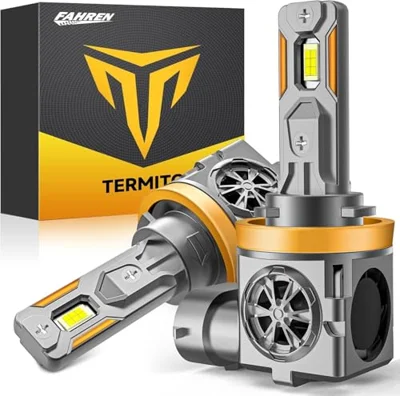 |
Termitor H11/H9 LED Headlight Bulbs – $49.99 A direct plug-and-play replacement for factory H11/H9/H8 halogen bulbs — the exact socket size most sedans, SUVs, and trucks already use.
|
Before you buy, check whether your headlights use a reflector housing or a projector housing — LED bulbs generally throw a cleaner, less scattered beam in projector housings. If yours is a reflector housing, expect some light scatter regardless of which LED bulb you pick. Not confident swapping a bulb yourself? Our step-by-step guide to installing LED lights in your car walks through the process.
Best Off-Road LED Light Bars (Off-Road Use Only)
Off-road light bars like the two below are built for auxiliary lighting on trails, job sites, and private property — not as a replacement for your car’s actual headlight beam. In most U.S. states, wiring a light bar to activate with your headlights, or mounting it facing forward on a street-driven vehicle, can result in a fix-it ticket for excess glare or improper equipment. Wire them to a separate switch, and use them only when off-road or parked.
BEST FOR OFF-ROAD & WORK LIGHTING
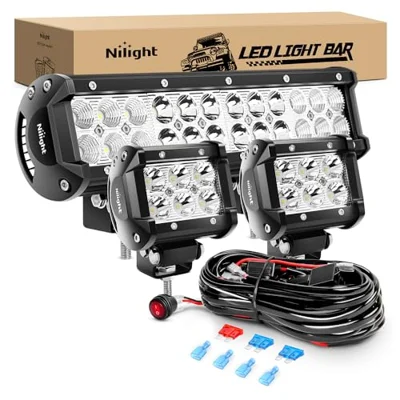 |
Nilight 12-Inch 72W Spot/Flood Combo Light Bar – $38.69 A combo spot/flood light bar plus two 4-inch pods for off-road trails, job sites, or auxiliary lighting on trucks, ATVs, and UTVs — not a street-legal headlight replacement.
|
BUDGET PICK FOR SMALLER VEHICLES
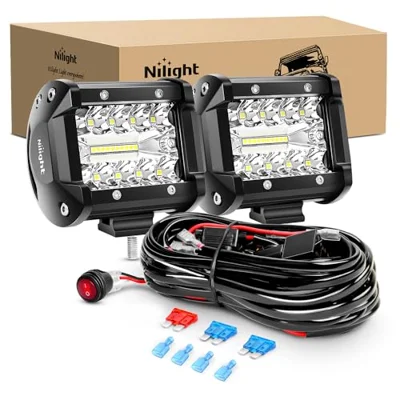 |
Nilight 4-Inch 60W Flood/Spot Combo LED Pods – $29.99 A smaller, lower-wattage flood/spot combo pair for drivers who want extra off-road visibility without the size or cost of a full-width bar.
|
If you do add a light bar, mount it securely on a proper bracket rather than zip-tying it to the bumper. Our guide to mounting a light on your car covers bracket placement and wiring basics.
Is It Legal to Upgrade Your Car’s Beam Light?
In the U.S., federal regulation (FMVSS 108) sets standards for headlamp equipment, and most states additionally regulate bulb color and glare through their own vehicle equipment codes. Practically, that breaks down into a few rules worth knowing before you buy:
- Replacing a halogen bulb with an LED “conversion” bulb in a housing that wasn’t designed for LED — most reflector-style housings — often produces a scattered, unfocused beam that can blind oncoming drivers. That’s the most common reason these bulbs fail a state inspection or draw a citation, not the LED technology itself.
- Bulb color matters. Most states only allow white or slightly yellow-tinted headlight output, roughly in the 3000K–6000K range. Noticeably blue or purple-tinted bulbs are illegal to run as your primary headlights in most states.
- Off-road light bars are explicitly labeled and sold for off-road use. They are not DOT-approved as a vehicle’s primary forward lighting — use them only off public roads, or as a rear-facing work light when parked.
One more point worth correcting: a hotter color temperature (6000K or higher, bluish-white) does not actually improve visibility in fog or heavy rain. Shorter, bluer wavelengths scatter more off fog and rain droplets, which is why traditional fog lights use warmer, more amber light around 3000K — it cuts through moisture better than a bright white or blue-tinted beam does. If you drive in fog often, see our guide to using your car’s lights correctly in fog for the full breakdown.
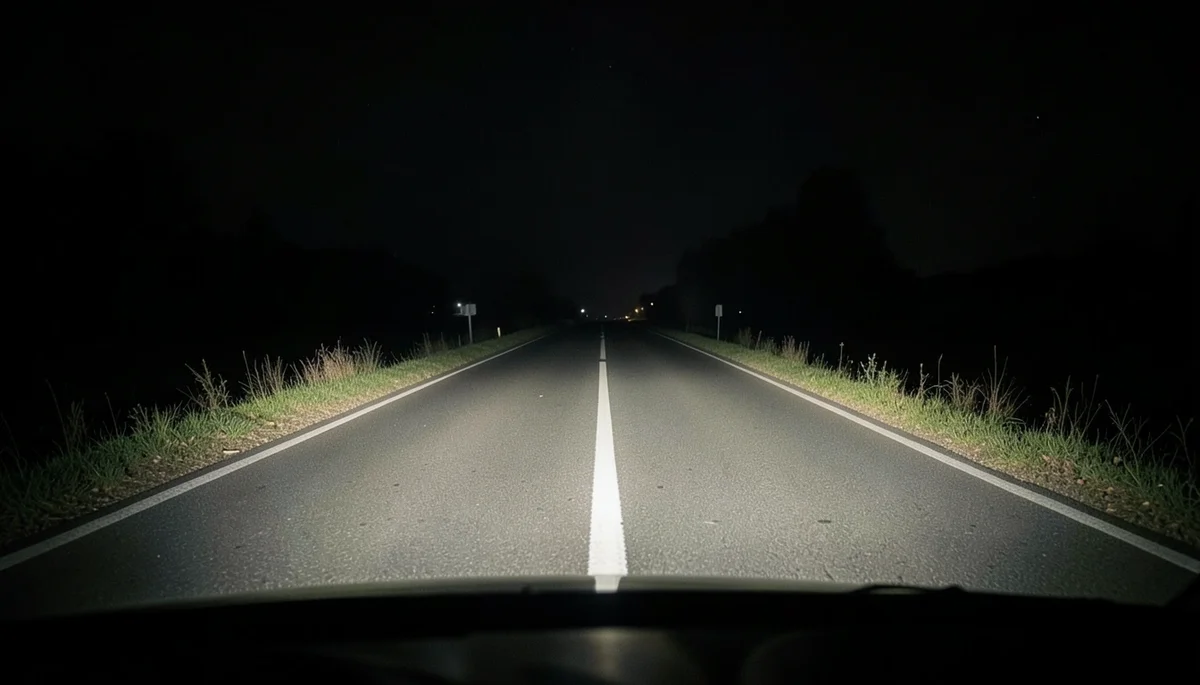
How to Choose the Right Beam Light for Your Car
- Match the bulb size exactly. H11, H9, H8, 9005/HB3, and similar codes are stamped on the base of your old bulb, or listed in your owner’s manual. The wrong size simply won’t seat correctly.
- Check your housing type. Projector housings handle LED beam patterns more predictably than older reflector housings.
- Don’t chase lumens alone. Marketing claims like “16,000LM” or “100,000LM” describe the LED chip’s raw output, not what actually reaches the road — real-world usable brightness is far lower, and beam pattern and aim matter more than the number on the box.
- Look for a waterproof (IP65/IP67) rating on any bulb or bar that sits in or near the engine bay.
- Running HID (xenon) bulbs instead of halogen? LED conversion bulbs generally aren’t the right swap for HID housings — see our Termitor D3S HID bulb review for a housing-matched option.
- Before spending money on new bulbs, rule out hazy, yellowed headlight lenses as the real problem — our headlight lens polishing guide can restore lost brightness for a few dollars in supplies.
Frequently Asked Questions
What Is a Beam Light on a Car?
A beam light is the bulb inside your headlight or fog light housing that produces the high and low beam pattern used to see the road at night. The term also gets used loosely for auxiliary lights, like off-road light bars, that add extra illumination beyond the factory headlights.
Is It Legal to Replace Halogen Bulbs With LED in My Car?
It depends on the bulb and your state. A well-fitted LED bulb in a compatible housing, producing white or slightly yellow light in roughly the 3000K–6000K range, is generally treated the same as a halogen bulb. Bulbs that scatter light due to a mismatched housing, or that produce a strongly blue or purple tint, can fail inspection or draw a citation for glare in many states.
Can I Use an Off-Road Light Bar as My Car’s Headlight?
No. Off-road light bars are built and labeled for off-road, auxiliary use only, not as DOT-approved primary headlights. Running one as your main forward lighting on public roads is illegal in nearly every U.S. state and can also produce excessive, blinding glare for other drivers.
What Are the Benefits of Fanless LED Bulbs?
Fanless LED bulbs run quieter and have one less moving part that can fail compared to fan-cooled designs. Their compact size also makes them easier to fit into tight housings, including many fog light sockets, without the fan itself rubbing against the housing wall.
Does a Higher Kelvin Rating Mean Better Visibility in Fog?
No, and it’s a common misconception. A higher Kelvin rating (6000K or more) produces a bluer-white light, and bluer wavelengths scatter more off fog and rain droplets, which can actually reduce how far you can see. Warmer, more amber light around 3000K historically cuts through fog and rain better, which is why dedicated fog lights are usually amber or warm white rather than blue-white.
How Do I Know Which Bulb Size Fits My Car?
Check your owner’s manual, or pull the existing bulb and read the code printed on its base (common sizes include H11, H9, H8, and 9005/HB3). Many auto parts retailers also have a free bulb lookup tool by year, make, and model if you’d rather not remove the old bulb first.
Bottom line: match your bulb size and housing type first, keep any off-road light bar wired separately from your headlight circuit, and don’t assume a higher Kelvin number means better visibility — especially in fog. Get those basics right, and either upgrade path above will genuinely improve how well you see (and are seen) at night.
Products related to this article
Sponsored / affiliate links. As an Amazon Associate I earn from qualifying purchases. I may earn additional commission from eligible campaigns.