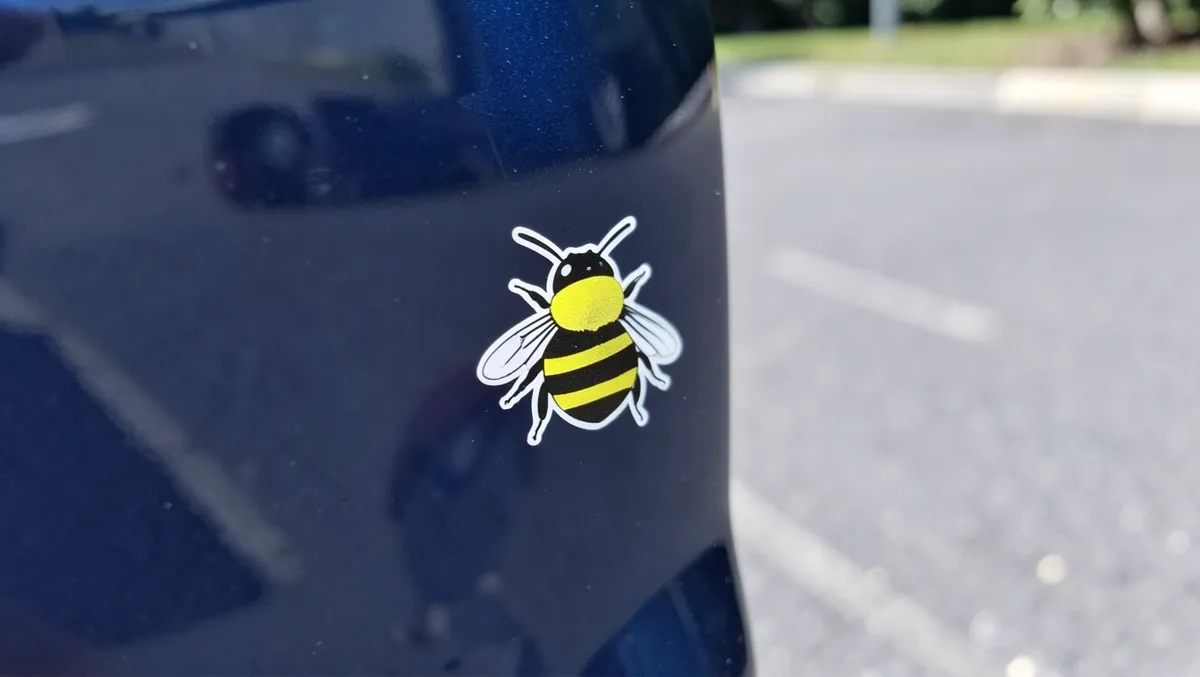
Bee Decals for Cars: Vinyl, Rhinestone and Bee Kind Picks
Vinyl decals are often a practical all-around choice for cars because they tend to balance visibility, weather resistance, and easier removal better than rhinestone or message-only styles. Pick the wrong finish or panel, and you can lose visibility, peel adhesive too soon, or end up with a decal that looks crooked from the curb. This guide compares bee-themed car decals by finish, durability, placement on doors, windows, and bumpers, and removal risk before you buy.
Quick picks
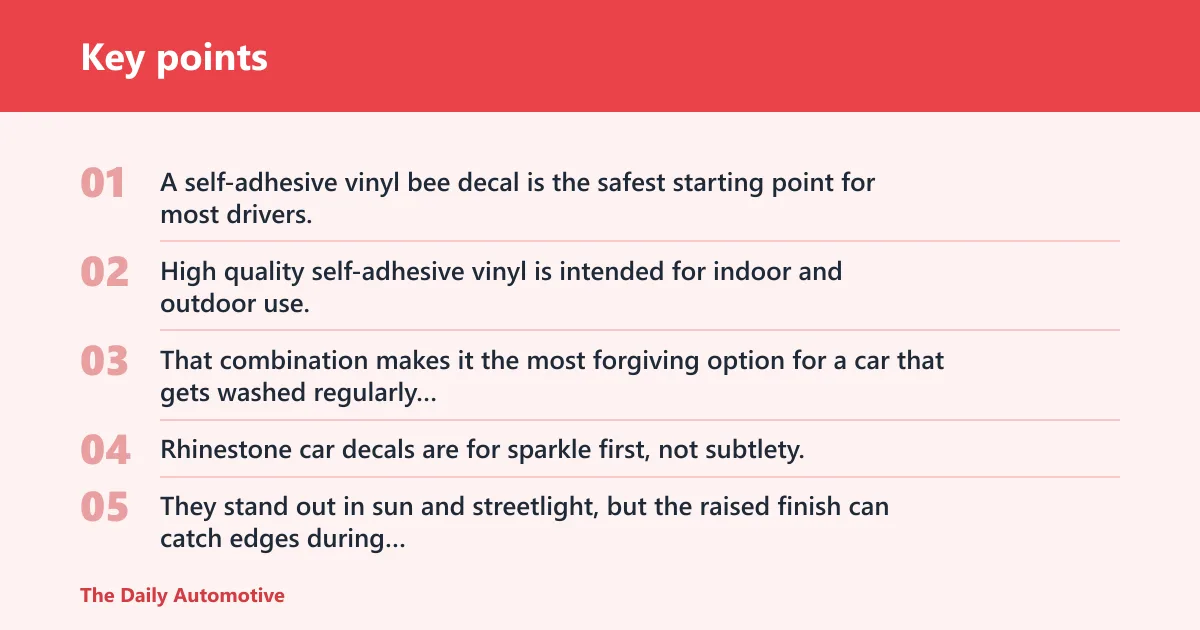


| Pick | Best for | Key fit note | Practical tradeoff |
|---|---|---|---|
| Vinyl bee decal | Daily use | Works on doors, glass, and smooth bumpers | Best mix of clarity, wash durability, and removal |
| Rhinestone bee decal | Accent styling | Best on exterior glass or a clean painted panel | High sparkle, but more edge lift and wash sensitivity |
| Bee Kind decal | Message-first look | Reads best on larger flat areas or rear glass | Words need more space than a small bee icon |
| Honeycomb motif | Subtle theme detail | Fits small spaces and layered layouts | Less obvious from a distance than a bold bee graphic |
Best vinyl bee decal for daily use
A self-adhesive vinyl bee decal is the safest starting point for most drivers. High quality self-adhesive vinyl is intended for indoor and outdoor use, and the material is described as weather-resistant, simple to apply, and easy to remove. That combination makes it the most forgiving option for a car that gets washed regularly or parked outside.
Best rhinestone bee decal for accent styling
Rhinestone car decals are for sparkle first, not subtlety. They stand out in sun and streetlight, but the raised finish can catch edges during washing and can look busier on curved panels. They are often used as a small accent on exterior glass or on a flat body area where the sparkle is the main point.
Best Bee Kind decal for a message-first look
Bee Kind decals suit drivers who want the slogan to carry the design. The message needs more width than a tiny icon, so medium or large sizes tend to read better on rear glass, a door panel, or a hatch. A message decal usually looks cleaner than a crowded graphic when the goal is simple readability.
Best placement choice by vehicle panel
Windows are often the cleanest placement for detailed designs and message decals, doors can offer a useful balance of size and visibility, fenders suit small accent graphics, and bumpers are generally better for compact vinyl or simple motifs. Panel shape matters. Curved or heavily textured areas raise the chance of poor adhesion and lifted edges.
Bee decal decision matrix
This matrix ranks the main bee decal options by the factors shoppers usually care about most. It separates finish from function, because a sparkling decal and a practical daily-use decal are not the same buy.
| Style | Finish | Visibility | Wash durability | Install difficulty | Removal risk | Best placement |
|---|---|---|---|---|---|---|
| Vinyl bee icon | Clean matte or gloss vinyl | High | High | Low to moderate | Low to moderate | Door, rear glass, fender |
| Bee Kind text decal | Text-forward vinyl | High on larger panels | High | Moderate | Low to moderate | Rear window, door, hatch |
| Honeycomb motif | Patterned vinyl | Moderate | High | Low to moderate | Low | Door, fender, quarter panel |
| Rhinestone bee decal | Sparkly decorative finish | Very high in direct light | Moderate | Moderate to high | Moderate | Exterior glass, flat body panel |
Finish and visibility
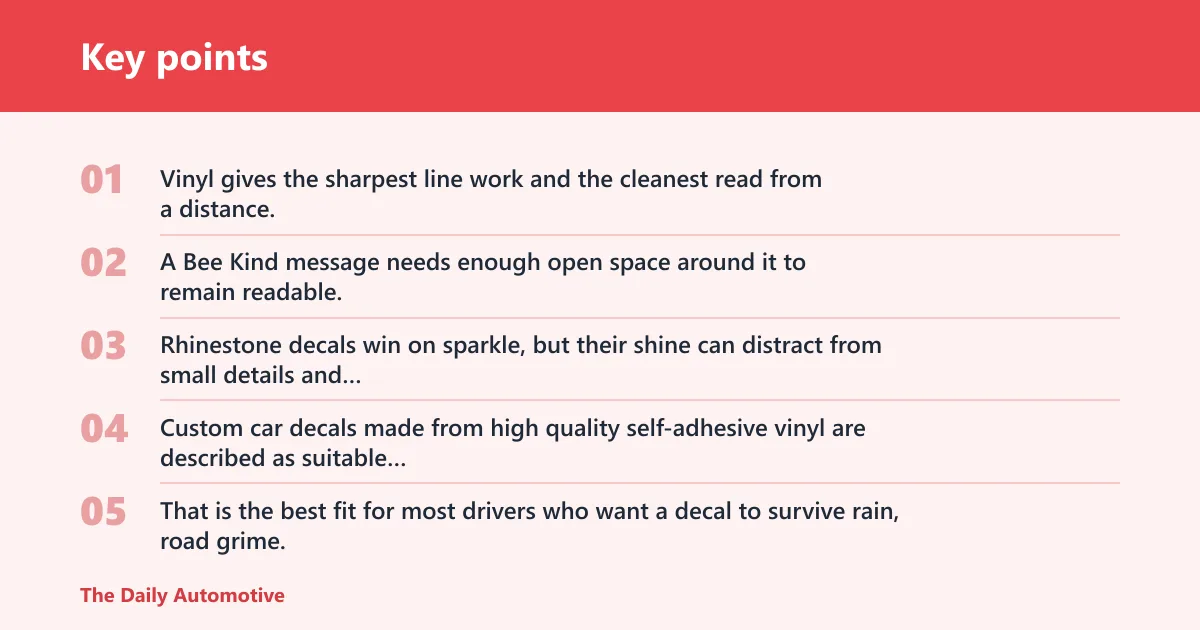
Vinyl gives the sharpest line work and the cleanest read from a distance. A Bee Kind message needs enough open space around it to remain readable, while a honeycomb motif works as a softer visual cue. Rhinestone decals win on sparkle, but their shine can distract from small details and make fine lettering harder to read.
Wash durability and weather resistance
Custom car decals made from high quality self-adhesive vinyl are described as suitable for indoor and outdoor use and able to withstand wind and weather. That is the best fit for most drivers who want a decal to survive rain, road grime, and periodic washing. Rhinestone styles are more decorative, so their longevity depends more on edge adhesion and careful cleaning.
Install difficulty and removal risk
Vinyl transfer stickers are the easiest to place cleanly because they are designed for easy application and easy removal, and they can work across multiple smooth surfaces. Rhinestone decals take more patience because the thicker finish is less forgiving when you squeegee around curves. Removal is generally simpler with flat vinyl than with layered decorative pieces.
Best placement by panel
Doors suit medium vinyl decals and Bee Kind text because there is enough flat area for clear spacing. Windows are a strong choice for smaller icons and transfer stickers. Fenders work best for compact bee graphics, while bumpers should be reserved for simple shapes that can tolerate minor contour changes.
Which bee decal style fits your car?
The best style depends on whether you want a clean graphic, a sparkle accent, or a message that reads from across a parking lot. Vinyl is the most flexible choice, rhinestone is the loudest, and Bee Kind decals are the most text-driven. Choose the look that matches the panel size and your tolerance for upkeep.
Vinyl bee decals
Vinyl bee decals are the practical choice for most drivers. They can be colored or used as transparent-background vinyl transfer stickers, which helps them blend into paint or glass without a heavy border. That makes them a good fit for buyers who want a tidy design that still reads clearly on a moving car.
Rhinestone bee decals
Rhinestone car decals work best as accent pieces. They add visible sparkle, especially on darker paint or tinted glass, but they are less forgiving on rough edges and curved panels. If the goal is a statement piece rather than a daily-use graphic, rhinestone can be the right choice.
Bee Kind message decals
Bee Kind decals are for drivers who want the phrase to matter as much as the bee graphic. These decals need a size large enough for the words to stay legible, especially on rear glass or a door. Small versions can look cramped if the typeface is too thin or the panel is too busy.
Honeycomb and bee icon motifs
Honeycomb-inspired patterns and simple bee icons are the easiest way to add theme without filling the whole panel. A honeycomb edge can frame a badge, while a single bee icon can sit on a fender or door corner. These are the best options when you want a hint of personality rather than a full graphic.
Where should you put a bee decal?
Put the decal where the panel is smooth, visible, and large enough for the design to breathe. Windows are best for smaller or text-heavy pieces, doors are best for medium statement decals, fenders suit compact accents, and bumpers only work well when the decal is short, simple, and centered on a flat zone.
Windows
Rear and side windows are strong choices for vinyl transfer stickers and Bee Kind text because the flat glass helps the decal read cleanly. They also keep the graphic away from heavy stone chips and door dings. Make sure the design is sized so it does not disappear into tint or defroster lines.
Doors and fenders
Doors give you the broadest placement options for medium decals, while fenders are better for smaller icon-style pieces. A door panel can hold a larger Bee Kind message or honeycomb design without looking crowded. A fender usually needs a smaller graphic so the decal does not overpower the panel.
Bumpers
Bumpers can take a bee decal, but only if the design is compact and the surface is smooth enough for adhesion. A large, detailed decal on a bumper can look distorted because of curves and seams. For this area, a simple vinyl bee icon usually performs better than a thick rhinestone design.
Placement to avoid poor adhesion
Avoid textured plastic, heavy contour lines, peeling clear coat, and dirty edges near trim. Decals need a dry, smooth surface to bond well. If a panel has deep grooves or a rough finish, the adhesive will have less clean contact and the risk of early edge lift goes up.
How do you choose the right size?
Size should match the panel and the viewing distance. Small decals work for subtle accents, medium sizes fit most doors and windows, and large decals are for statement panels with enough flat space to keep the design readable. If the letters or bee details are tiny, they can disappear from several feet away.
Small decals for subtle accents
Small bee decals are best for mirrors, fender corners, and narrow glass sections. They add detail without turning the car into a rolling billboard. A small icon also fits better when you want the design to look intentional rather than oversized.
Medium decals for doors and windows
Medium decals are usually the safest size for everyday use. They remain visible from a normal curbside distance and give Bee Kind text enough room to breathe. On a door or rear window, medium size usually offers the best balance of presence and proportion.
Large decals for statement placement
Large decals are for drivers who want the design to be noticed right away. They work best on broad side panels or rear glass. The larger the decal, the more careful you should be about alignment, because even a slight angle becomes obvious fast.
Readability from distance
If the goal is to read “Bee Kind” from across a parking lot, the letters need open spacing and enough height to stay legible on tinted glass or dark paint. Picture a 360 x 130 mm vinyl decal on a rear window: that size reads more clearly than a tiny icon, but it still needs a flat, clean panel to look right.
Bee decal buying checklist
Use this checklist to narrow the field before you buy. The right decal is not only about the design. It is also about surface type, climate, and whether you want a clean vinyl look or a more decorative finish.
| Check | What to look for | Why it matters |
|---|---|---|
| Material | Self-adhesive vinyl for daily use | Best mix of weather resistance and easy removal |
| Use case | Indoor and outdoor rating | Helps for parked-outside cars and weather exposure |
| Surface | Glass, painted metal, or smooth bumper | Improves adhesion and lowers edge lift risk |
| Color contrast | Light decal on dark paint or dark decal on light paint | Improves visibility and read distance |
| Customization | Vinyl transfer sticker with a design tool | Lets you adjust size, color, and layout before ordering |
Material and outdoor use
High quality self-adhesive vinyl is the baseline to look for if the decal will live outside. Signomatic describes its custom car decals as intended for indoor and outdoor use, with material that can withstand wind and weather. For a parked-outside commuter car, that matters more than sparkle.
Surface compatibility
Vinyl transfer stickers are useful because they can work on multiple smooth surfaces. That makes them a better fit for glass, painted metal, and some smooth trim than a thick decorative decal. If the panel is rough or heavily curved, look for a smaller design instead of forcing a large one.
Color contrast on dark and light cars
Contrast affects whether the bee graphic pops or disappears. Light decals usually read best on dark cars, while darker graphics stand out on white, silver, or pale paint. Rhinestone works well for dark vehicles because the sparkle catches light, but the design still needs enough size to read cleanly.
Customization and transfer-sticker options
A design tool that lets you choose size and background is useful because bee decals are not one-size-fits-all. Colored vinyl gives a bolder outline, while transparent-background options can look cleaner on glass. If you want a specific fit, a 297 x 210 mm vinyl decal is one common medium size, and a 89 x 30 mm version is better suited to a small accent.
Applying and removing decals safely
Good prep matters more than most buyers expect. Clean the surface, let it dry fully, and use the right tool to push out air. For removal, expect the process to be cleanest when the decal was applied correctly and the surface stayed in good condition under it.
Surface prep and dry conditions
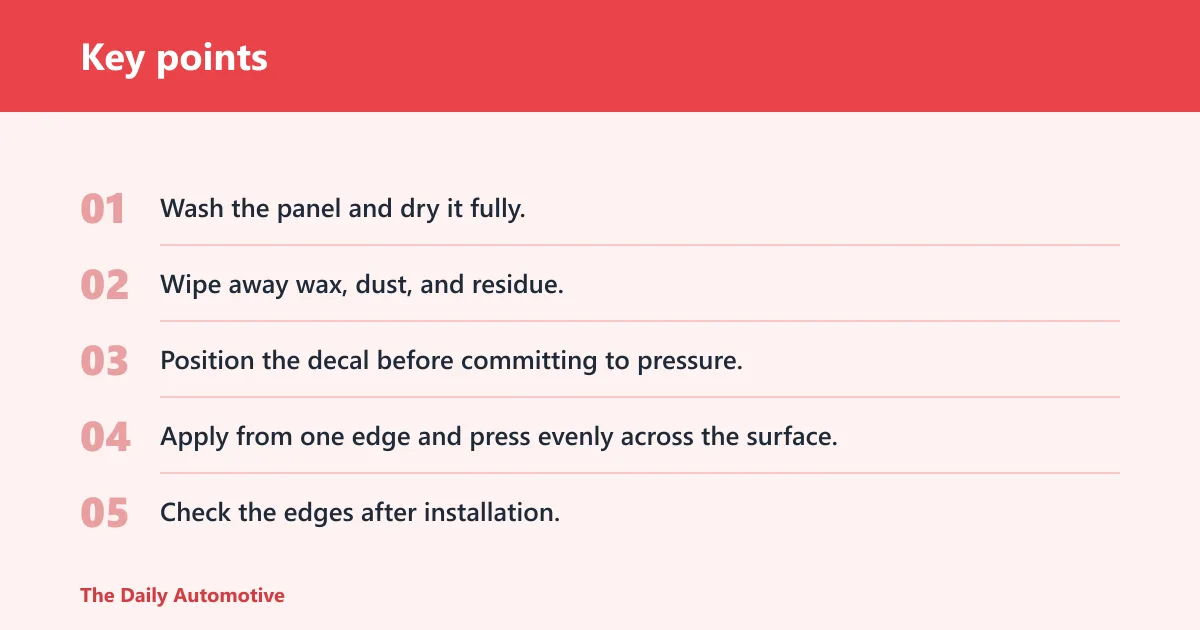
Start with a cleaning cloth or surface prep product, then work only on a dry, smooth surface. The same source recommends cleaning the surface before applying a decal. That step matters because dust, wax, and road film interfere with the adhesive and can cause the edges to lift earlier than they should.
- Wash the panel and dry it fully.
- Wipe away wax, dust, and residue.
- Position the decal before committing to pressure.
- Apply from one edge and press evenly across the surface.
- Check the edges after installation.
Using a squeegee or scraper
A squeegee or scraper helps spread pressure across the decal so the adhesive makes even contact. That is especially useful for vinyl transfer stickers, where the image needs to sit flat without trapped air. On larger decals, work slowly so the design does not skew while you press it down.
Bubble removal
Air bubbles are easiest to manage if you work from the center outward. That is the method Signomatic recommends, and it is the right one for most smooth panels. If a bubble is trapped near a letter or edge, lift only enough to release it rather than pulling the whole decal loose.
Heat-assisted removal and residue
Most decals are described as easy to remove, but removal is not the same as damage-free removal in every case. If a decal has aged in sun and weather, gentle heat can help soften the adhesive. For leases or painted panels, remove slowly and expect that residue may still need careful cleanup.
Say your car is dark blue and you want a Bee Kind decal on the rear window. A medium vinyl transfer sticker usually reads better than a tiny rhinestone design, because the wording stays legible and the flat glass helps the edges sit cleanly. The same decal on a curved bumper would be more likely to look distorted.
Suppose you want a small bee icon on a leased sedan. A compact vinyl decal on the side window or upper door panel is a safer choice than a large body-side graphic, because removal tends to be simpler on smooth glass than on painted panels that have been exposed to sun for months.
Frequently asked questions
What are the best bee decals for cars?
Vinyl bee decals are the best all-around choice for most cars. They balance visibility, weather resistance, and easier removal better than decorative options. Choose rhinestone only if sparkle matters most, and choose Bee Kind text only if the message should be the main feature of the design.
Are vinyl bee decals better than rhinestone decals?
For daily use, yes. Vinyl is easier to size, apply, and remove, and it usually handles washing and weather better. Rhinestone decals are stronger on sparkle and visual impact, but they are more sensitive to placement, panel curve, and cleaning habits.
Will a bee decal damage car paint when removed?
Usually not, if the decal was applied to a clean, sound painted surface and removed carefully. The risk rises with old adhesive, heat exposure, or weak paint. Heat-assisted removal can help, but slow removal and residue cleanup are still important, especially on leased or older vehicles.
Where should I put a bee decal on my car?
Windows are best for smaller or text-heavy decals, doors are best for medium graphics, fenders suit small icons, and bumpers work only for simple compact designs. Avoid rough or heavily textured areas because they reduce adhesion and make the decal more likely to lift early.
How do I apply a vinyl decal without bubbles?
Clean and dry the surface first, then apply the decal slowly while pressing from the center outward with a squeegee or scraper. That pushes air to the edges instead of trapping it under the vinyl. If a bubble appears, lift only the affected section and smooth it again.
Are custom car decals waterproof and weatherproof?
Many high quality self-adhesive vinyl decals are intended for indoor and outdoor use and are described as weather-resistant. That makes them suitable for rain, wind, and normal driving conditions. Waterproof and weatherproof still depend on the material, the surface prep, and how well the edges were sealed.
Products related to this article
Sponsored / affiliate links. As an Amazon Associate I earn from qualifying purchases. I may earn additional commission from eligible campaigns.