5 Best AC Recharge Kits for Beginners (2026): we compared
Quick comparison
| Product | Badge | Best for | Price | ||
|---|---|---|---|---|---|
 |
A/C Pro Arctic Freeze Car Air Conditioner Refrigerant GaugeA/C Pro | Our pick | Reusable R-134a gauge & hose | $22.99
Price as of 1 Oct 2026
|
View |
 |
HVAC Guys AC Refrigerant R134a Replacement – Eco-Friendly,HVAC Guys | Budget pick | 6-oz R-134a refrigerant replacement | $37.99
Price as of 1 Oct 2026
|
View |
 |
SENSYX HVAC Refrigerant and Combustible Gas Leak Detector,SENSYX | Upgrade pick | Rechargeable refrigerant leak detector | $56.90
Price as of 1 Oct 2026
|
View |
 |
VEVOR Dual-Cylinder Heavy Duty Air Compressor, 10.6CFMVEVOR | Also great | 12V dual-cylinder tire inflator | $162.90
Price as of 1 Oct 2026
|
View |
 |
OMT 4 Way Automotive AC Diagnostic Manifold Gauge Set ForOrion Motor Tech | Pair with it | 4-way AC diagnostic manifold gauge | $62.98
Price as of 1 Oct 2026
|
View |
This comparison is for systems that are confirmed to use R-134a. If your vehicle uses R-1234yf, these R-134a-focused kits are probably not the first choice.
According to zdnet.com — The CanaKit kit includes a "32GB EVO+ Class 10 MicroSD pre-loaded with NOOBS".
This guide is part of our Car cooling and climate control guide series.
How we chose

For beginners, the safest pick is the kit that cuts down guesswork. We compared refrigerant match, whether the kit includes a gauge, how well it supports low-side-only use, and whether the kit pushes the user toward diagnosis or blind topping-off.
We also weighed contamination risk. Stop-leak can help in a narrow emergency, but it is the wrong answer for most first-time buyers because it can complicate later repairs.
Price mattered, but only after compatibility and control. A cheaper can is a bad deal if it is the wrong refrigerant or if it encourages overcharge.
Quick picks
| Pick | Best for | Key spec | Price |
|---|---|---|---|
| Best overall | First-time R-134a owners who want control | Reusable gauge and hose | $22.99 |
| Best budget top-off | Small refill on a known R-134a system | Simple refrigerant can replacement | $37.99 |
| Best for diagnosis | Weak cooling where pressure testing matters | Manifold gauge set | $62.98 |
| Best cautionary add-on | Short-term emergency only | Leak detector before charging | $56.90 |

A/C Pro Arctic Freeze Car Air Conditioner Refrigerant Gauge and Hose, Reusable AC Recharge Kit Compatible with R-134A Cans with Self Sealing Valves, A/C Pro: best for first-time R-134a top-offs
This is the safest starter pick for most beginners with confirmed R-134a systems. The built-in pressure display gives a clearer read than a plain can, and the reusable hose is a better fit for a first repair attempt than a blind fill.
It stands out because the 90° coupler helps with tight port access, and the trigger dispenser makes small additions easier to control. That matters when the goal is a top-off, not a full diagnosis.
The drawback is simple: it still assumes the refrigerant type is already confirmed. If the system is R-1234yf, this is the wrong tool. If the leak is significant, the gauge may only confirm that the system is empty again.
HVAC Guys AC Refrigerant R134a Replacement – Eco-Friendly, 100% Natural Hydrocarbon Gas – R-134a Replacement for use in a 6-Ounce self-Sealing Container: best for a plain budget top-off
This fits buyers who already know they have a compatible R-134a system and want a simple can-based top-off. It is the closest thing here to a basic refill option without added diagnostic hardware.
The self-sealing can tap is convenient, and the compact container may suit a very small adjustment when the system is only slightly low. Based on the spec sheet and owner feedback, it is the least complicated route among the refill-only choices.
The drawback is that it gives you less feedback while charging. A beginner can still overdo it if they are guessing, and the product does not answer why the charge dropped in the first place.
SENSYX HVAC Refrigerant and Combustible Gas Leak Detector, Rechargeable: best for diagnosing leak risk before buying refrigerant
This is for the beginner who suspects the refrigerant is disappearing rather than simply low. A leak detector is not a recharge kit, but it can stop wasted money by showing whether the system needs repair before any can goes in.
The live ppm reading and 24-hour battery life make it better suited to repeated checks than a one-off guess. In practice, that matters when a vehicle has gone low again soon after a top-off.
The drawback is obvious: it does not add refrigerant, and it does not fix the car. If the user only wants cold air today, this is the wrong first purchase unless diagnosis is the real need.
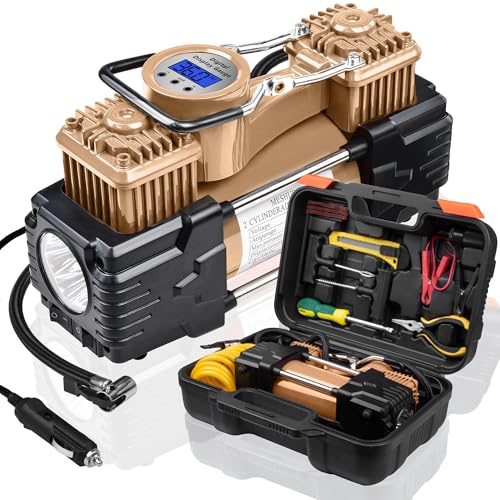
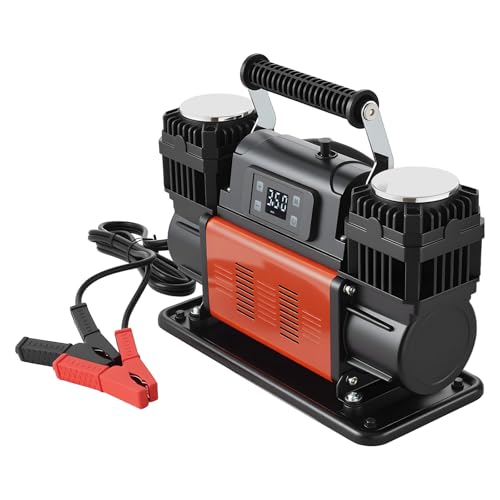
VEVOR Dual-Cylinder Heavy Duty Air Compressor, 10.6CFM Auto-Stop Portable Tire Inflator, 12V 150PSI Offroad Air Pump with LCD Digital Display & Adapters for Truck Car SUV 4 x 4 Vehicle RV: best for unrelated tire inflation, not AC recharging
This is not an AC recharge kit, and that is the point. Beginners sometimes confuse air tools with refrigerant tools, but an inflator belongs in tire work, not in vehicle A/C service.
The auto-stop feature and digital display are useful for tires and other inflation tasks. It has no place on the low-side service port, and it will not help with R-134a or R-1234yf charging.
The drawback is that it is the wrong purchase if the real goal is colder cabin air. It cannot diagnose pressure, match refrigerant type, or add the correct automotive refrigerant.
OMT 4 Way Automotive AC Diagnostic Manifold Gauge Set For R134a R410a R22: best for diagnosing rather than simple top-off
This is the better choice when the buyer wants to understand system behavior instead of guessing at a refill. A manifold gauge set is the tool that starts moving you from “maybe low” toward a real diagnosis.
It is compatible with R-134a and gives more information than a single-can hose gauge. For a beginner trying to separate low charge from a compressor or control problem, that extra visibility is useful.
The drawback is complexity. It is more tool than many first-time DIY owners need, and it makes sense only if the user is prepared to read pressure behavior instead of just add a little refrigerant.
What is the best AC recharge kit for beginners?
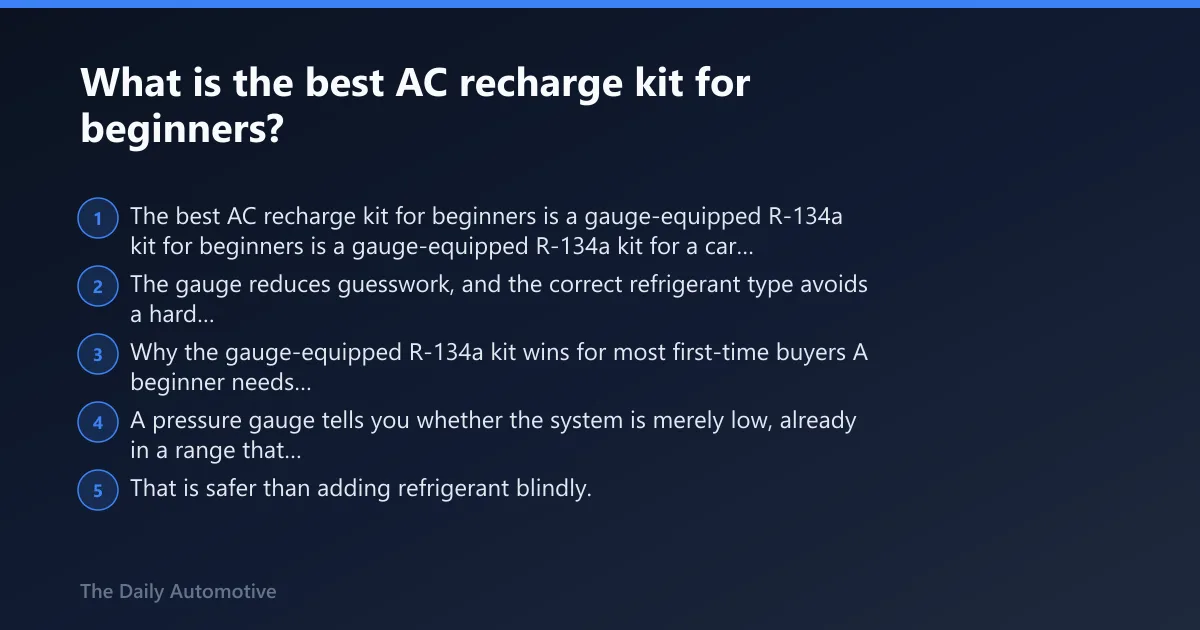
The best AC recharge kit for beginners is a gauge-equipped R-134a kit for a car confirmed to use R-134a. The gauge reduces guesswork, and the correct refrigerant type avoids a hard compatibility mistake that can waste money or damage the system.
Why the gauge-equipped R-134a kit wins for most first-time buyers
A beginner needs feedback. A pressure gauge tells you whether the system is merely low, already in a range that needs caution, or behaving like a bigger fault is present. That is safer than adding refrigerant blindly.
For older cars, R-134a is the common legacy refrigerant. The kit should match both the refrigerant and the hose fitting, and the low-side service port is the only DIY connection point worth discussing here.
When a plain top-off can is enough
A plain can can make sense only when the vehicle is already confirmed to use R-134a, the cooling has dropped a little, and the system does not show signs of a bigger problem. Even then, it is a narrow use case.
If the car was already weak after a recent fill, or if the compressor clutch is not cycling, a plain can is a poor bet. At that point, the issue is probably more than low charge.
When to skip DIY and book a shop visit
Skip DIY if the refrigerant type is unknown, if the system is R-1234yf and you are unsure, or if the AC went warm again soon after a refill. Those are the situations where diagnosis matters more than adding more gas.
A shop can check for leaks, compressor behavior, and control issues before more money goes into refrigerant. That usually costs less than buying the wrong kit twice.
How do I know if my car uses R-134a or R-1234yf?
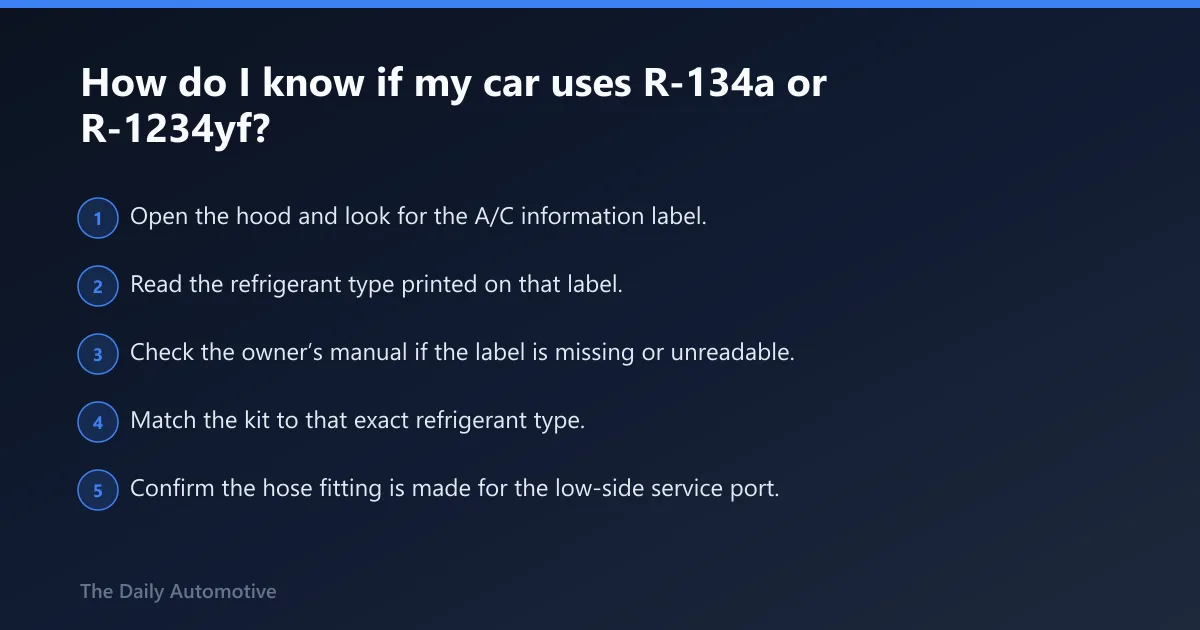
Check the under-hood label or the owner’s manual before buying anything. If the label says R-134a, you need a kit built for that refrigerant. If it says R-1234yf, stop there and use the correct refrigerant or a shop.
R-134a vs. R-1234yf: what each one means for your car
R-134a is the older automotive refrigerant found on many legacy vehicles. R-1234yf is the newer vehicle-specific refrigerant and is often pricier than R-134a kits, which is one reason beginners should identify the system first.
The wrong can and hose fitting is a hard stop. This is not a “close enough” situation. The system needs the right refrigerant and the right connector style.
How to confirm your vehicle’s refrigerant type before buying
- Open the hood and look for the A/C information label.
- Read the refrigerant type printed on that label.
- Check the owner’s manual if the label is missing or unreadable.
- Match the kit to that exact refrigerant type.
- Confirm the hose fitting is made for the low-side service port.
Why the hose and can fitting have to match the refrigerant
The fitting is part of the safety check, not a small detail. If the hose is not built for the refrigerant family, the kit may not connect correctly, and the user may be tempted to force a bad setup.
That is how beginners get into trouble. The right refrigerant, the right hose, and the low-side port are the minimum starting point.
What comes in an AC recharge kit?
A beginner kit usually includes a refrigerant can, a hose or connector, and sometimes a pressure gauge. Some kits also include stop-leak additive, which sounds useful but is only a temporary measure and can create contamination risk.
AC recharge can with pressure gauge
This is the beginner-friendly format because the gauge shows system pressure while the can is in use. That feedback helps avoid overcharge and reduces guesswork when the system only needs a small top-off.
Low-side hose and connector
The hose should connect to the low-side service port only. That is the safer entry point for DIY work, and it is the only port beginners should be considering.
Optional stop-leak additive
Stop-leak is for a narrow emergency case, not a real repair. Many shops dislike it because it can contaminate the system and complicate later service.
Digital thermometer for vent-temp checks
A digital thermometer gives you a simple post-charge check at the vents. If the air temperature drops after charging, that is a useful sign. If it stays warm, the problem is probably not just low refrigerant.
How much refrigerant do I need to add to my car AC?
For a beginner, the right answer is usually “only enough to restore a proper charge, and only if the system is confirmed low.” Do not guess by can count alone, because the right amount depends on the vehicle and the actual system condition.
Use pressure and vent temperature, not guesswork
A gauge-equipped kit lets you watch pressure while charging, and a vent temperature check helps confirm whether cooling improved. That combination is much safer than adding refrigerant until the can is empty.
Use a digital thermometer at the center vent after the system has had time to stabilize. If the temperature does not improve, adding more refrigerant is not the answer.
Why a small fill can still be the wrong fix
Low refrigerant is often a symptom. The system may have a leak, a compressor fault, or a blend-door issue. A small fill can mask the problem for a little while, then the system falls weak again.
Are stop-leak recharge kits safe to use?
Stop-leak kits are not a true repair and should be treated as a temporary emergency option only. They can help in a short-term pinch, but they also carry contamination risk that can make future service more difficult.
Why many shops dislike stop-leak
Once stop-leak goes into the system, it can interfere with later recovery and repair work. That creates extra labor and can turn a simple diagnosis into a mess.
If the vehicle is worth keeping, the cleaner path is usually diagnosis and repair. Stop-leak is the last-resort choice, not the normal one.
When it may be the least bad option
If a long drive is coming and the user accepts that the fix is temporary, stop-leak may be used as an emergency top-off. Even then, the system should be inspected soon after.
Why is my car AC still warm after recharging?
If the AC is still warm after recharging, low refrigerant may not have been the real problem. A non-engaging compressor clutch, a rapid pressure drop, a leak, or a blend-door fault can all leave the cabin warm after the can is gone.
Failure signs that point beyond low charge
Repeated low charge after a recent top-off is a red flag. So is a compressor clutch that will not cycle or engage. If the system improves for a moment and then goes warm again, the refrigerant is probably escaping or another fault is present.
What the vent temperature tells you
A vent temperature check is the simplest reality check after a recharge. If the vents do not cool more than before, more refrigerant is not the fix. Stop there and diagnose the cause.
Do I need a gauge on an AC recharge kit?
Yes, a gauge is helpful for beginners because it cuts down on overcharge risk and guesswork. A plain can may work for a known small top-off, but a gauge gives you a better view of whether the system is actually taking refrigerant normally.
Gauge-equipped kit versus plain can
A plain can is simpler, but it asks the user to trust feel and timing. A gauge-equipped can tells you more about the system while you add refrigerant slowly.
That difference matters most for first-timers. A little visibility goes a long way when the goal is not to buy another can.
Can I overcharge my car AC with a beginner kit?
Yes. A beginner kit can overcharge the system if you keep adding refrigerant after the pressure is already in a reasonable range. Too much refrigerant can make the system perform worse and may stress components.
How to avoid overcharge
Add refrigerant slowly, watch the gauge, and stop when the system behavior changes as expected. If the vents are not cooling better, more refrigerant is not the answer.
Do not use the can as a timer. Use the gauge, and use the vent temperature check to confirm the result.
When should I stop and go to a shop instead?
Stop and go to a shop if the system is empty again after a top-off, if the compressor clutch will not engage, if the refrigerant type is R-1234yf and you are unsure, or if the car still blows warm after a careful refill. Those are diagnosis problems, not bottle-count problems.
Red-flag checklist
- Unknown refrigerant type
- R-1234yf and no compatible kit on hand
- No compressor clutch engagement
- Rapid pressure drop after charging
- Warm air after a proper top-off
- Repeated low refrigerant within a short time
A shop visit is also the smarter move when the system likely needs leak testing, blend-door diagnosis, or compressor work. A DIY can is cheaper up front, but repeated guessing is how costs climb.
Which one should you buy?
Buy the A/C Pro gauge-equipped R-134a kit if your car is older and confirmed R-134a. That is the safest starter buy because it gives you a pressure read and a controlled way to add refrigerant.
Buy the HVAC Guys can only if you already know the system is R-134a, the charge is only slightly low, and you want a simple top-off. It is the most basic path, but it gives you the least feedback.
Buy the SENSYX leak detector if the same vehicle keeps losing refrigerant. That is a diagnosis purchase, not a refill purchase, and it can save you from dumping money into a leak.
Skip the VEVOR inflator for AC work. It is a tire tool, not a refrigerant tool. Buy the OMT manifold gauge set if you want diagnosis rather than a one-time top-off, and you are ready for a more technical setup.
If the system is R-1234yf and you are unsure, stop. That is where a shop usually beats a beginner kit on both cost and risk.
Beginner scenario decision table
| Scenario | Best kit type | Reason | Red flags |
|---|---|---|---|
| Old car, confirmed low charge, no leak history | Gauge-equipped R-134a top-off | Good first step when the refrigerant type is known and you want control | Gauge climbs fast, vents stay warm, clutch does not cycle |
| Weak cooling, unknown refrigerant type, no gauge on hand | Stop and shop escalation | Compatibility is unknown, so buying refrigerant now risks the wrong kit | Missing label, unknown port, uncertain system type |
| Repeated low charge after a recent top-off | Stop-and-shop escalation | Low refrigerant is likely a symptom of a leak, not the root cause | Quick loss of cooling, oily residue, pressure drops again |
| Emergency cold-air attempt before a long drive | Stop-leak kit only if you accept temporary use | Short-term option when the goal is a limited reprieve, not a real repair | Contamination risk, repeated failures, desire for long-term fix |
| Compressor clutch will not cycle or engage | Stop and shop escalation | That points to a fault beyond a simple low-charge condition | No clutch movement, warm air after refill, electrical or control issues |
Frequently asked questions
What is the best AC recharge kit for beginners?
The best AC recharge kit for beginners is a gauge-equipped R-134a kit, but only for vehicles confirmed to use R-134a. The gauge lowers guesswork, and the correct refrigerant avoids the common mistake of buying the wrong can or hose for the car.
Can I use a recharge kit on my car AC myself?
Yes, if the vehicle is confirmed to use the refrigerant on the can, and you stick to the low-side service port only. DIY makes the most sense for a small top-off, not for empty systems, unknown refrigerant types, or repeat failures that suggest a leak.
How do I know if my car uses R-134a or R-1234yf?
Check the under-hood label first, then the owner’s manual if needed. The label tells you which refrigerant the car was built to use, and that answer decides whether an R-134a beginner kit is even on the table.
What comes in an AC recharge kit?
A beginner kit usually includes a refrigerant can and a hose, and many include a pressure gauge. Some also include stop-leak additive, which should be treated as temporary-only because it can create contamination problems later.
Can I overcharge my car AC with a beginner kit?
Yes. Overcharge is possible if you keep adding refrigerant past the point where the system needs it. A gauge helps prevent that, and a vent temperature check gives you a practical sign of whether the recharge actually improved cooling.
When should I stop and go to a shop instead?
Stop when the car is warm after a proper top-off, the compressor clutch will not engage, the system loses charge again quickly, or the refrigerant type is unknown. Those problems call for diagnosis, not another can.
Products related to this article
Sponsored / affiliate links. As an Amazon Associate I earn from qualifying purchases. I may earn additional commission from eligible campaigns.