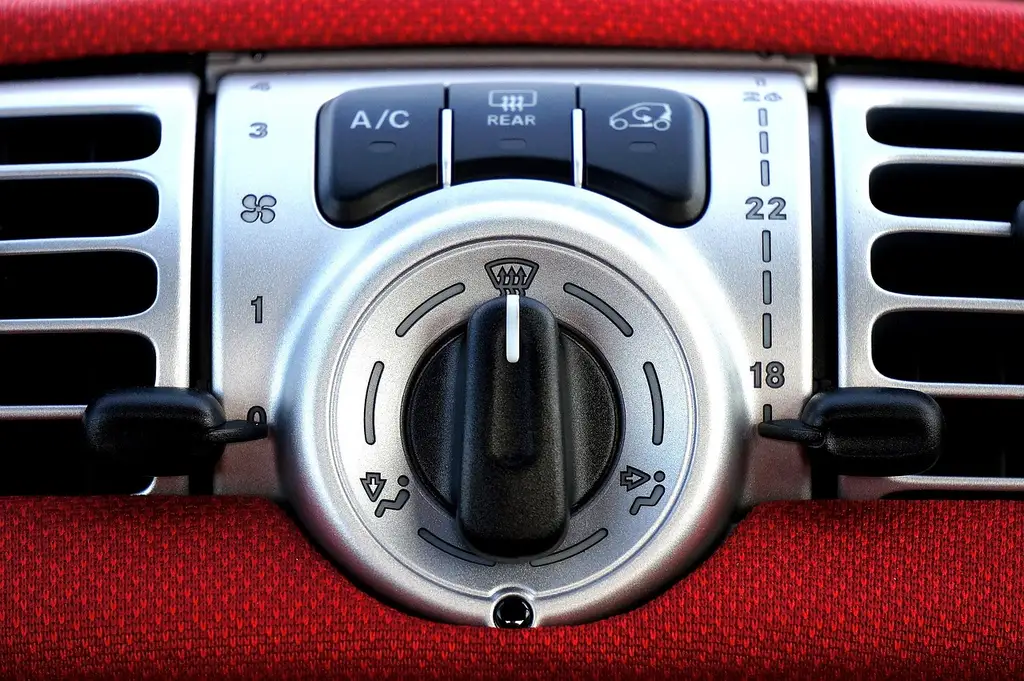
Car Cooling and Climate Control Guide for Common Faults
Car AC not cooling, weak heat, windshield fogging, or engine temperature climbing should be diagnosed by system, not by guesswork. A practical car cooling and climate control guide starts with one rule: match the symptom to the system. Engine overheating points to coolant flow or fans, while weak cabin heat or AC usually points to HVAC controls, refrigerant, blend doors, or airflow. I have seen plenty of owners guess wrong here, and guessing gets expensive fast, because a low-cost relay, clogged cabin filter, or coolant leak can turn into compressor damage, overheating, or a wasted diagnostic bill. This maps common symptoms to likely parts, home checks that are safe, and the stop points where booking service makes sense.
Drivers often mix three separate systems. The first is AC cooling, where refrigerant moves heat out of the cabin. The second is cabin heating, where engine coolant feeds the heater core. The third is engine cooling, where coolant, fans, thermostat, and radiator keep the engine itself at temperature. That system split is also how I keep DIY checks safe: start with the symptom, match it to the likely subsystem, then stop before refrigerant handling or major disassembly.
That separation matters. A car that overheats on the gauge but still blows cold can have an engine cooling fault. A car with weak heat and normal engine temperature can have low coolant, an air pocket, a stuck blend door, or a heater core problem. A car with warm air from the vents in summer may have poor condenser airflow, low refrigerant, bad control logic, or a compressor issue.
The safe DIY boundary is simple. Airflow checks, filter inspection, fuse checks, condenser debris checks, coolant level checks on a cold engine, and listening for actuator noise are fair game. Refrigerant recovery, charge diagnosis, compressor internals, evaporator leaks, and dash disassembly are service-bay jobs. For temperature-management basics and hot-weather cabin safety, manufacturer guidance and NHTSA heat-safety advice are better references than DIY recharge marketing.
Quick symptom-to-system check


If you want the fastest route to the likely fault, start with the table below before reading the deeper sections. In my experience, this is where most owners save money: weak airflow is usually not the same problem as warm air with normal airflow, and one-side-only temperature problems usually point to doors or controls rather than the compressor.
| Complaint | Likely subsystem | Quick home check | When to stop DIY |
|---|---|---|---|
| Weak airflow from vents | Cabin air filter, blower motor, evaporator icing, blocked ducts, failing blower resistor/module | Check fan speeds, inspect cabin filter, see if airflow improves after the system sits and ice melts | If blower speed is erratic, airflow stays weak with a clean filter, or dash access is needed |
| Warm air at idle, cooler while driving | Condenser airflow, radiator fan, condenser blockage, weak compressor at low speed | With AC on, confirm radiator/condenser fan operation and inspect condenser face for debris | If the fan does not run, pressure diagnosis is needed, or compressor noise appears |
| One-side-only temperature difference | Blend door, actuator, dual-zone control logic, sensor input error | Change each side from full cold to full hot and listen for actuator movement or clicking | If clicking persists, one side never changes, or actuator replacement requires dash work |
| Windows fog up even with AC on | AC not dehumidifying, fresh/recirc misuse, low airflow, heater-core leak, drain issue | Select defrost, verify compressor engagement behavior, check for sweet coolant smell or damp carpet | If fogging persists, coolant smell is present, or windshield film returns quickly |
| Clicking behind dash | Blend-door actuator, mode-door actuator, door binding, lost calibration | Cycle mode and temperature settings and note which command triggers the noise | If the noise repeats every key cycle or vent mode/temperature stays wrong |
| Intermittent compressor cycling | Charge fault, pressure sensor, evaporator freeze control, control module command issue | Note whether cooling fades before cycling, and whether the pattern changes at road speed | If gauges, refrigerant recovery, or scan-tool data are needed to continue |
Stop DIY and book service now if: the engine is overheating, the radiator/condenser fan will not run with AC requested, you smell coolant inside the cabin, the windshield keeps fogging with a sweet film, you hear compressor noise, or diagnosis requires refrigerant gauges, recovery equipment, scan-tool data, or dash disassembly. That is usually the line between useful home triage and making the repair bill worse.
How does car climate control work?
Car climate control works by combining cooling, heating, dehumidifying, airflow routing, and electronic decision-making in one HVAC box. In practice, it reads cabin temperature, outside temperature, sun load, humidity effects on the glass, and where air needs to go, then it changes blower speed, air mix, vent selection, and compressor operation to keep the cabin near the set point. Most systems use HVAC plus a control module to interpret temperature settings and sensor data, then adjust blower speed, air mix, outlet mode, and compressor operation. That broad system description matches manufacturer HVAC training material and service-information layouts used by automakers and suppliers such as Denso and Valeo.
The cooling cycle in driver terms
The cooling side starts with the compressor. It takes low-pressure refrigerant vapor from the evaporator, squeezes it into a hot high-pressure vapor, and keeps it moving through the air conditioning circuit. In many internal-combustion vehicles, compressor load is tied to engine operation, so weak idle performance can point toward fan airflow, condenser heat rejection, or a compressor that struggles at low shaft speed.
From there, hot high-pressure refrigerant moves to the condenser. The condenser releases heat from refrigerant to outside air, usually mounted near the radiator. Because it sits at the front of the car on the high-pressure side, blocked fins, bent fins, bugs, leaves, or a lazy radiator fan often show up as poor cooling at idle and better cooling once the car is moving. That idle-versus-road-speed pattern is consistent with OEM service manuals and supplier diagnostic literature because condenser performance depends heavily on airflow.
Next comes the expansion valve or orifice tube. The expansion device drops refrigerant pressure sharply before it enters the evaporator. That pressure drop controls how much refrigerant enters the cold side, so restrictions here can mean poor cooling, erratic vent temperatures, or evaporator icing.
Then refrigerant enters the evaporator inside the HVAC housing. It absorbs cabin heat and changes state through phase change. This is also where humidity gets pulled from cabin air, which is why AC helps clear windows. Poor evaporator temperature control can let it freeze, cutting airflow until the ice melts. The moisture-removal role of the evaporator is a standard HVAC principle described in automaker owner manuals and supplier training references.
The heating and air-routing side
Cooling alone does not set cabin temperature. The heater core uses hot engine coolant to warm incoming air. Even with the AC operating, the final vent temperature is often set by how much air is directed through or around the heater core by the blend doors.
Mode doors route air to the dash vents, floor vents, or defrost outlets. If air only comes from one outlet no matter what button is pressed, suspect a mode door, actuator, vacuum supply on older cars, or command issue from the control head.
The blower motor pushes air through the HVAC case. Fan speed does more than affect comfort. It changes evaporator heat load, demist speed, cabin pull-down time, and whether a marginal system feels usable or weak.

When a climate control reset tool actually works
A climate control reset tool only helps if your vehicle supports HVAC relearn or actuator calibration and the fault started after a battery disconnect or module replacement. It cannot repair a broken blend door, failed sensor, or damaged motor.
The supporting guide explains how to match symptoms like uneven heating or cooling to calibration faults rather than hardware failures, and when an OBD2 scanner or professional diagnosis is the smarter investment. Understanding this distinction prevents spending money on a device that leaves the real problem untouched. Review the full breakdown in this climate control reset review to determine whether a relearn procedure applies to your specific situation before buying any equipment.
What parts make up a car HVAC system?
A car HVAC system includes the refrigerant circuit that cools the cabin, the heater circuit that borrows heat from engine coolant, the ducts and doors that move and mix air, and the electronics that decide what each part should do. The main cooling parts are the compressor, condenser, expansion valve or orifice tube, evaporator, and refrigerant. Airflow and heat depend on the blower motor, cabin air filter, heater core, blend doors, and mode doors. Control logic comes from the climate module and its sensors.
Cooling-side hardware
- Compressor: Pressurizes refrigerant and keeps the cooling cycle moving.
- Condenser: Mounted near the radiator, dumps refrigerant heat to outside air.
- Expansion valve or orifice tube: Meters refrigerant flow and drops pressure before the evaporator.
- Evaporator: Absorbs cabin heat and removes moisture from the air.
- Refrigerant: Usually R134a in many older vehicles and R1234yf in many newer ones.
Airflow and heat hardware
- Blower motor: Pushes air through the system; weak output means weak cabin airflow even if the refrigerant side is healthy.
- Cabin air filter: Protects the evaporator and limits dust, but when clogged it cuts airflow and can hurt demist performance.
- Heater core: Uses engine coolant heat for cabin warming.
- Blend doors: Mix hot and cold air to hit the requested temperature.
- Mode doors: Route air to face, feet, or defrost vents.
Control hardware and sensors
The climate control module is the traffic cop. Automatic climate control can use cabin, ambient, sunload, evaporator, and coolant temperature sensors. Climate control systems may use algorithms to keep the cabin close to the target temperature, and in modern cars the module can integrate with the vehicle’s CAN bus.
The cabin temperature sensor reports interior air temperature. The ambient temperature sensor tells the system how hot or cold the outside air is before the blower drags it in. The sunload sensor, usually on top of the dash, tells the module when sunlight is adding heat to the cabin even though the cabin sensor may still read a moderate temperature.
What is the difference between air conditioning and climate control in a car?
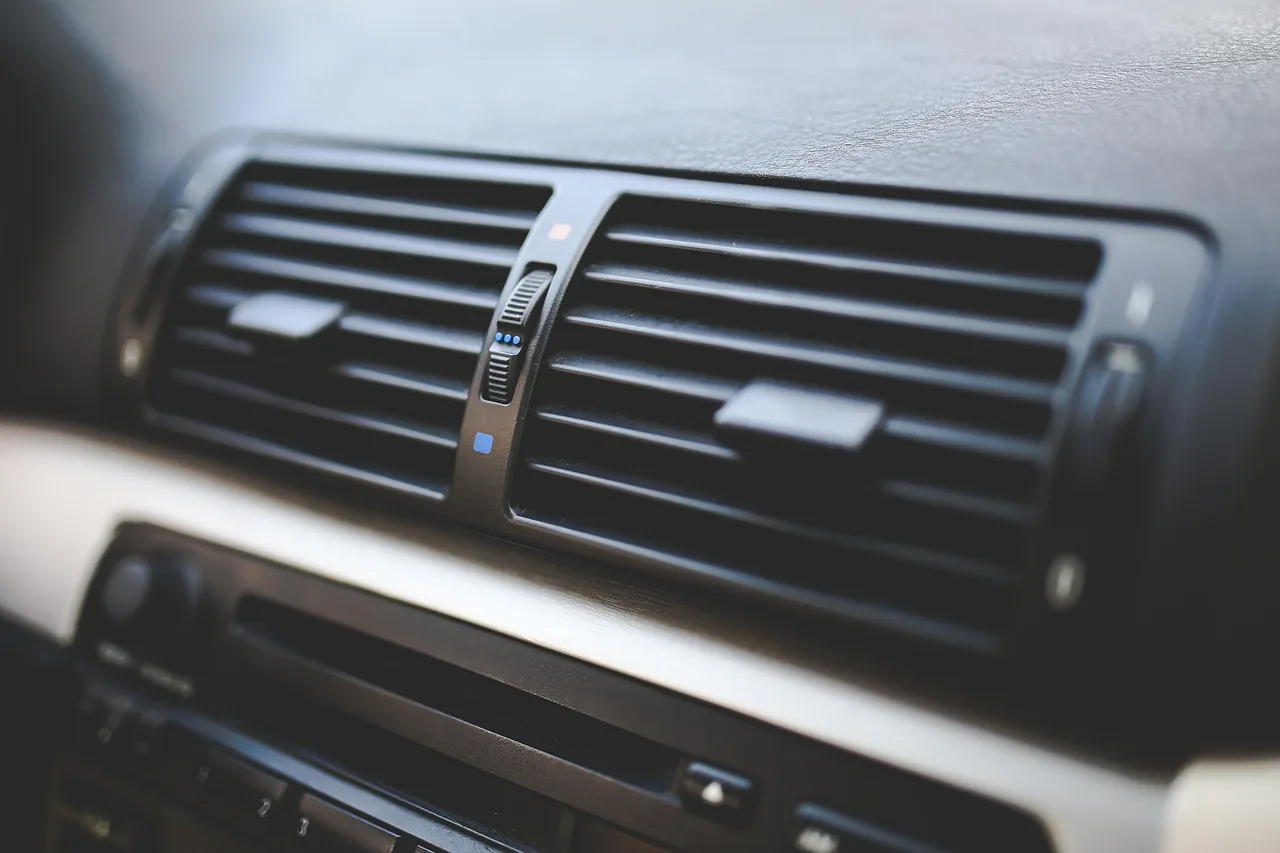
Air conditioning is the cooling function. Climate control is the automatic management layer that decides how much cooling, heating, airflow, and vent routing the cabin needs. Auto Express says climate control lets occupants set a desired temperature and the system maintains it automatically, often within settings that can range from around 16 to 30 degrees Celsius. That 16 to 30 degrees Celsius range is typical of many digital climate-control systems, though exact limits can vary by manufacturer and model year.
Manual AC versus automatic climate control
Manual AC asks the driver to choose fan speed, outlet mode, and temperature mix directly. If the cabin gets hotter because the sun comes out, the system does nothing unless the driver changes a knob or button.
Automatic climate control reads sensor data, compares it with the target temperature, then chooses blower speed, compressor request, air mix, and vent mode. That is the useful difference in daily driving. It is not a different refrigerant cycle. It is smarter control of the same box of parts.
What dual-zone changes, and what it does not
Dual-zone systems mainly add more air-mix control and more logic. They do not create two separate compressors in most cars. In many dual-zone systems, there is still one evaporator and one compressor, with side-to-side temperature differences often created by split airflow paths and separate blend doors.
That matters for diagnosis. If the left side is cold and the right side is warm, the fault often sits in a blend door, actuator, temperature sensor input, or climate module logic, rather than in the compressor itself.
Why is my car AC not cooling like it used to?
When AC cooling drops off, first separate weak airflow from weak cooling capacity. Low airflow points toward the cabin filter, blower motor, evaporator icing, or blocked ducts. Normal airflow with warm vent air points toward refrigerant circuit faults, condenser airflow problems, compressor control issues, blend-door errors, or sensor-driven commands that are no longer matching cabin conditions.
Low airflow versus low cooling capacity
If the fan sounds strong but very little air comes from the vents, start with the cabin air filter and blower output. A packed filter can choke airflow enough to make a healthy refrigerant system feel empty. If airflow starts strong, then fades, an evaporator that is icing is more likely.
If airflow is normal but the air is not cold, watch operating conditions. Is it worse at idle than on the road? Does one side cool better than the other? Does the compressor click on and off rapidly? Those clues narrow the path fast.
Warm at idle but cooler on the move
This pattern often points to condenser airflow. At speed, ram air helps the condenser release heat. At idle, the radiator fan has to do the work. If the fan is not running correctly, condenser pressure rises and vent temperature climbs. A bug-packed condenser can do the same thing.
It can also point to a compressor that cannot maintain performance at low speed, especially on engine-driven systems. I would still not treat that as a signal to buy a recharge can. First check whether the cooling fan runs when AC is requested and whether the condenser face is blocked.
Intermittent cooling and rapid compressor cycling
Intermittent cooling usually means control logic or refrigerant-side instability. Low charge, an overcharge, a sticky pressure sensor, an evaporator temperature control issue, or a restricted expansion device can all trigger short cycling. The evaporator can also freeze if poorly controlled, then thaw and cool again.
Cheap single-gauge kits usually do not solve intermittent cooling problems. They cannot tell you enough about the whole system, and they can make a small fault more expensive.
One-side-only warm air
One side warm and the other cold is classic blend-door or actuator territory, especially on dual-zone systems. It can also happen if a cabin temperature sensor lies to the module, or if the climate control head loses track of actuator position.
Clicking behind the dash while changing temperature is another strong clue. That usually means a stripped actuator gear, a binding door, or an actuator that lost calibration.
When a 12V fan beats replacing your compressor
Portable 12V car fans provide targeted airflow for mild cabin comfort or rear-seat ventilation, but they do not lower interior temperatures like functional air conditioning. The supporting article outlines a decision matrix to determine if a plug-in fan improves airflow or merely masks a failing HVAC system that requires repair.
It details specific specifications, user scenarios where the device works effectively, and alternatives when the goal is genuine cooling. Use this guide to avoid wasting money on a fan when your vehicle actually needs a diagnostic check or a recharge of the refrigerant system.
Symptom-to-system diagnostic map
How to read the map
Use the complaint first, then the operating condition, then the safe check. The point is triage. This table is not a parts cannon. It helps decide whether the fault sits in airflow, heating, cooling, or control logic, and where the home-diagnosis line ends.
| Complaint | Likely subsystem | Quick home check | When to stop DIY |
|---|---|---|---|
| Weak airflow from vents | Cabin air filter, blower motor, evaporator icing, blocked ducts, failing blower resistor/module | Check fan speeds, inspect cabin filter, see if airflow improves after the system sits and ice melts | If blower speed is erratic, airflow stays weak with a clean filter, or dash access is needed |
| Warm air at idle, cooler while driving | Condenser airflow, radiator fan, condenser blockage, weak compressor at low speed | With AC on, confirm radiator/condenser fan operation and inspect condenser face for debris | If the fan does not run, pressure diagnosis is needed, or compressor noise appears |
| One-side-only temperature difference | Blend door, actuator, dual-zone control logic, sensor input error | Change each side from full cold to full hot and listen for actuator movement or clicking | If clicking persists, one side never changes, or actuator replacement requires dash work |
| Windows fog up even with AC on | AC not dehumidifying, fresh/recirc misuse, low airflow, heater-core leak, drain issue | Select defrost, verify compressor engagement behavior, check for sweet coolant smell or damp carpet | If fogging persists, coolant smell is present, or windshield film returns quickly |
| Clicking behind dash | Blend-door actuator, mode-door actuator, door binding, lost calibration | Cycle mode and temperature settings and note which command triggers the noise | If the noise repeats every key cycle or vent mode/temperature stays wrong |
| Intermittent compressor cycling | Charge fault, pressure sensor, evaporator freeze control, control module command issue | Note whether cooling fades before cycling, and whether the pattern changes at road speed | If gauges, refrigerant recovery, or scan-tool data are needed to continue |
Stop DIY decision box: stop at this point if the engine is overheating, the fan does not run with AC requested, the compressor is noisy, you find oily residue at AC fittings plus poor cooling, coolant smell is present in the cabin, or the next step would require refrigerant recovery equipment, pressure interpretation, scan-tool actuator tests, or dash removal.
What can I check at home before paying for AC diagnostics?
Safe home checks can sort many complaints into airflow, heating, cooling, or control faults before any refrigerant service starts. Start with blower output, filter condition, vent mode changes, condenser cleanliness, radiator fan behavior, visible leaks, and engine coolant level on a cold engine. Stop when diagnosis calls for refrigerant handling, scan-tool data, or dash disassembly.
A practical at-home sequence
- Check airflow first. Run the blower through every speed. If low speeds are dead or high speed is weak, note it before assuming a refrigerant problem.
- Inspect the cabin air filter. If it is packed with debris, airflow and demist performance suffer. A clogged filter can also load the blower harder and make the evaporator run colder than intended.
- Test vent mode changes. Move from face to floor to defrost. If airflow refuses to move, suspect a mode door or actuator.
- Test temperature response. Go from full cold to full hot. If outlet air barely changes, the fault may be a blend door, heater-core flow issue, or control command issue.
- Look at the condenser. Check the front face for leaves, mud, bags, and crushed fins. The condenser releases heat to outside air, so a blocked face hurts idle cooling first.
- Watch radiator fan behavior. On many cars, requesting AC should trigger fan operation. No fan can mean bad idle cooling even when road-speed cooling still feels decent.
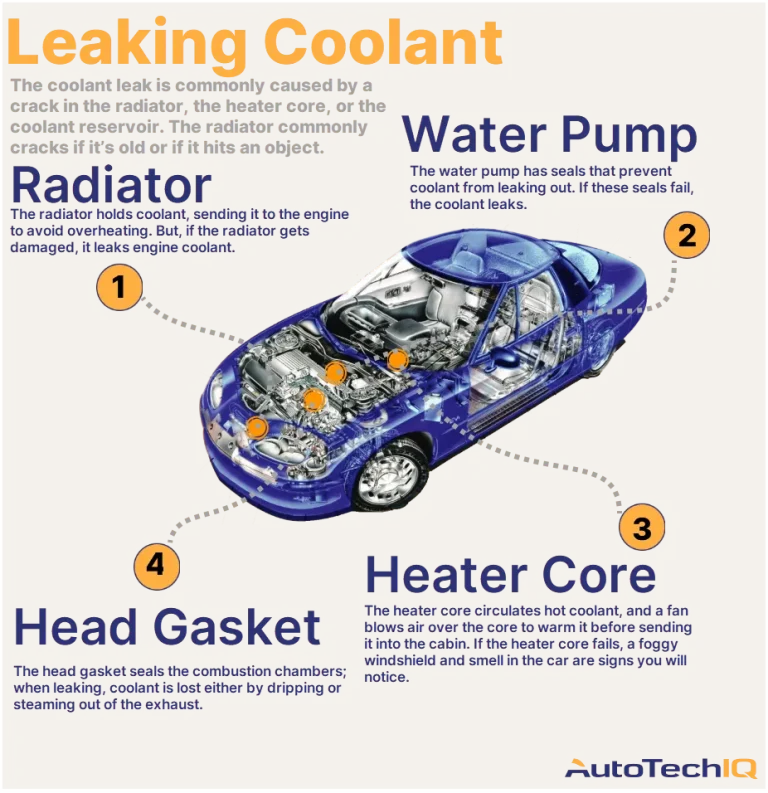
- Check coolant level only when cold. The heater core uses hot engine coolant to warm incoming air. Low coolant can cause weak heat, poor defogging, and engine cooling trouble at the same time.
- Look for obvious leak clues. Oily dirt around AC fittings, damaged condenser corners, sweet smell, wet carpet, or coolant film on the glass all matter.
- Check fuses and relays if accessible. A dead compressor clutch circuit, blower circuit, or fan circuit can look bigger than it is.
What these checks cannot confirm
They cannot confirm refrigerant charge accurately. They cannot prove internal compressor condition. They usually cannot find a small evaporator leak hidden in the dash. They also cannot tell whether a climate module is making bad decisions without scan data.
That is why “regas” should be treated as a symptom path, not a diagnosis. Refrigerant does not get used up like fuel. If charge is low, the question becomes where it went and whether the leak also let moisture into the system. EPA guidance on motor-vehicle AC service also treats refrigerant handling as controlled service work rather than casual top-off maintenance.
Choosing the right diagnostic tools for HVAC faults
Fixing a climate control problem starts with identifying whether the fault is electronic or refrigerant-related. A two-part tool setup—an OBD2 scanner capable of reading live HVAC data and bi-directional controls, paired with an A/C manifold gauge set—covers both sides of the system. Guessing wrong often leads to wasted money on unnecessary parts or recharging a system that actually has a failing blend door actuator.
This guide matches specific scanners, leak detectors, and multimeters to common symptoms like no cold air, split cabin temperatures, and blower failures. Review the full breakdown of climate control diagnostic tools to select equipment that targets your exact issue before buying replacement components.
What to expect for HVAC diagnostic costs
Knowing whether to head to a dealer or an independent shop starts with the price of the diagnosis itself. A standard car climate-control diagnostic typically ranges from $100 to $250, depending on whether the issue involves refrigerant leaks, airflow restrictions, or complex control modules. These fees cover the labor and equipment needed to isolate the fault before any repairs begin. To understand exactly how these charges are broken down and when higher pricing is justified for specific sensor or actuator issues, consult this detailed guide on car diagnostic costs before booking your appointment.
When to buy a smoke machine for leak diagnosis
Buying an automotive smoke machine only makes sense if you diagnose EVAP, intake, vacuum, or HVAC leaks regularly, as the cost is recovered quickly after just a few shop visits. For one-off faults, renting or paying a shop remains more practical, since missed leaks lead to wasted time and unresolved driveability issues. The supporting article provides a detailed smoke machine worth assessment that outlines specific use cases and limitations, helping you decide if this diagnostic tool fits your repair frequency and budget constraints effectively.
Choosing the right thermometer for AC vent testing
Accurate temperature readings are the foundation of any car AC diagnosis. A weak or mismatched thermometer leads to wasted refrigerant, unnecessary parts replacements, and hours of misdirected troubleshooting. Selecting a tool that matches your vehicle’s layout—whether it has single vents, dual-zone climate control, or rear AC—ensures you measure actual performance rather than guessing.
The guide to car AC vent thermometers breaks down options like probe-style units for direct airflow measurement and infrared tools for quick surface comparisons. It covers pocket models for fast checks, clip-on designs for vent-to-vent comparisons, and longer probes for deep under-dash access. Matching the right thermometer type to your specific diagnostic task prevents false conclusions and keeps home AC testing reliable.
Using a Vent Thermometer to Pinpoint AC Temperature Drops
A car AC vent thermometer detects 2–3°F temperature differences between ducts, helping you isolate blend-door failures, low refrigerant, or compressor issues before replacing parts. Without precise readings, you risk diagnosing the wrong component and wasting money on unnecessary repairs.
The supporting guide breaks down probe, clip-on, and infrared styles for single-zone, dual-zone, and rear-vent layouts so you can match the tool to your dashboard. It also explains how to compare driver and passenger outputs side by side. Choosing the right car AC vent thermometer prevents guesswork and speeds up at-home HVAC troubleshooting significantly.
Does recirculate mode cool a car faster?
Yes, recirculate mode usually cools a hot cabin faster because it re-cools already conditioned cabin air instead of pulling in hotter outside air. Consumer Reports says opening windows for 10 to 20 seconds can help cool a hot cabin faster, and says the fastest cooling works better once you are actually driving. NHTSA heat-safety guidance also emphasizes venting trapped cabin heat first because in-car temperatures can rise quickly in the sun.
When recirculation helps
After the initial heat dump, recirculation lowers cabin pull-down time and reduces compressor load. It is especially useful in stop-and-go traffic, dry heat, and strong sun where the cabin is far hotter than the outside air entering the cowl.
There is a fuel tradeoff. Consumer Reports notes AC can reduce fuel economy by about 1 to 4 mpg, and the U.S. Department of Energy’s FuelEconomy.gov also says AC use can reduce a conventional vehicle’s fuel economy, with the effect typically most noticeable in very hot weather and during short trips. That does not mean drivers should avoid AC in unsafe heat, but it explains why recirculation can feel more efficient once the cabin is close to target temperature.
When fresh air is the better choice
Fresh-air mode is often better when windows fog, the cabin feels stale, passengers bring in wet clothing, or outside humidity is lower than cabin humidity. Recirculation can trap moisture from breathing and wet mats. In those conditions, the system may need outside air plus AC drying to clear the glass.
On some cars, selecting defrost automatically requests AC and changes air source. That is normal. The system is trying to dry the air first, then direct it to the glass.
How do automatic climate control systems decide what to do?
Automatic climate control systems compare the target temperature with sensor inputs, then choose blower speed, compressor demand, vent mode, and blend-door position to move the cabin toward that target. Automatic climate control can use cabin, ambient, sunload, evaporator, and coolant temperature sensors, and climate control systems may use algorithms to keep the cabin close to the target temperature. Automaker service information and supplier training documents describe this as a feedback-control process rather than a fixed on-off cycle.
The decision hierarchy drivers can use
Think of the module in layers. First, it asks how far the cabin is from the set temperature. Second, it checks whether outside temperature and sunload mean the cabin will heat up or cool down quickly. Third, it protects hardware by watching evaporator and coolant temperatures.
If the cabin is much hotter than target, it may command high blower, full cold blend position, panel vents, compressor on, and recirculation. If sunload is high on one side, a dual-zone system may bias that side cooler. If the evaporator gets too cold, it may cycle the compressor or change the blower strategy to stop icing.
Why sensor faults feel strange from the driver seat
A bad cabin sensor can make the car overcool or undercool even though the refrigerant side is fine. A bad ambient sensor can make the system act cautious on a hot or cold day. A bad sunload sensor can make the cabin feel uneven in bright sunlight.
Because the module often talks over the CAN bus, odd HVAC behavior can also follow electrical faults or low system voltage. I have chased intermittent HVAC complaints that came down to that, which is why scan-tool work often beats mechanical guesses.
Why does my car fog up even with the AC on?
Fogging with the AC on means the system is either not drying the air well enough, not moving enough air across the glass, or adding moisture faster than it can remove it. AC helps demist by drying air at the evaporator, but low airflow, heater-core leaks, recirculation misuse, or drain problems can still keep windows hazy.
Common fogging paths
Start with airflow. A weak blower or clogged cabin filter slows defogging badly. Next, check mode-door control. If defrost does not send strong airflow to the windshield, the glass will stay wet even if the evaporator is cold.
Then consider moisture sources. Wet carpets, blocked evaporator drains, snow on shoes, and a leaking heater core all add cabin humidity. A sweet smell, oily windshield film, or unexplained coolant loss points toward the heater core path and should not be ignored. Defogging behavior and the AC-on-with-defrost strategy are also described in many owner manuals because dehumidification is central to windshield clearing.
What is the cabin air filter’s role in cooling and airflow?
The cabin air filter protects the evaporator and interior from dust, pollen, and debris, but its biggest diagnosis value is airflow. A clogged filter cuts blower output, slows pull-down, hurts defrost performance, and can contribute to evaporator icing by changing air volume across the core.
Why a filter can mimic bigger faults
Drivers often report “weak AC” when the real complaint is weak air volume. If the evaporator is cold but the blower cannot move enough air through a dirty filter, the vent air may feel cool near the outlet yet the cabin stays hot.
Filter condition also affects odor. Debris and moisture around a neglected filter can leave musty smells that get blamed on refrigerant issues. This is one of the cheapest checks in the whole system, so it belongs early in any diagnosis.
Activated carbon filters and odor control
Activated-carbon cabin air filters add an adsorption layer that traps exhaust, smoke, and chemical odors, which standard particulate media cannot. However, this benefit comes with a slight airflow tradeoff that can matter in dusty conditions or for drivers prioritizing maximum ventilation. activated carbon filter review outlines the specific scenarios where this tradeoff is worthwhile versus when a standard filter is sufficient.
Understanding what carbon media does and does not fix helps you avoid the mistake of assuming one filter type solves every air quality issue. The supporting guide breaks down the decision logic, including how to match the filter type to your actual driving environment and odor sources.
When should I get my car AC regassed?
An AC system should be serviced for low charge when testing shows the refrigerant level is actually low and the cause is understood. Refrigerants like R134a and R1234yf are used in modern systems, but neither should be vented, mixed, or handled casually. A recharge without leak diagnosis is often temporary and sometimes harmful. EPA motor-vehicle refrigerant rules and automaker service procedures both support that basic approach.
When recharge requests make sense
If cooling has faded over time and professional testing confirms low charge, service may include leak detection, evacuation, recharge by specification, and sometimes component replacement. The value is in the diagnosis, not the can of refrigerant.
Older R134a cars may have more repair-path flexibility, while newer R1234yf systems often bring higher service cost and stricter handling. Compressor failure, actuator replacement, and evaporator leaks usually sit at the expensive end. Cabin filters, relays, and actuator recalibration sit far lower. That gap is exactly why triage matters.
When DIY Recharge Kits Make Sense for R-1234yf Systems
If your car’s A/C still holds pressure but struggles to cool—blowing warm air, cycling rapidly, or requiring frequent top-offs—an R-1234yf recharge kit *might* be a cost-effective fix. However, these kits only work when the system isn’t leaking or failing mechanically. A poorly executed DIY job can waste refrigerant, mask leaks, or even damage the compressor. Before buying, confirm your vehicle uses R-1234yf (not R-134a) and rule out major issues like a weak compressor or blocked condenser.
For a breakdown of when a recharge kit is worth the risk—and when to skip it—see our review of the R-1234yf recharge kit value.
Budgeting for heater core repairs
When heater issues persist, you need clear cost benchmarks before booking labor. Our detailed guide covers the typical price range for replacing a heater core, highlighting how dash removal complexity drives costs from $800 up to over $2,000. It also outlines diagnostic fees and specific symptoms that distinguish true heater core failure from other underlying problems. Understanding these figures helps you avoid unnecessary dashboard labor if the root cause is actually elsewhere in the system.
You can review the complete cost breakdown and replacement time estimates in our article on heater core repair costs to set realistic financial expectations for your next service visit.
Is a full actuator kit actually worth the cost?
A blend door actuator kit makes sense only when replacing two or more hard-to-reach motors, or when a single dashboard removal covers the entire HVAC repair. For a single, easy-access actuator, buying just that specific part is cheaper and faster. The guide evaluates the cost difference between kits and individual components, highlighting how incorrect diagnosis leads to unnecessary dashboard disassembly.
You can review the detailed cost breakdown and fitment risks in this actuator kit value analysis to determine the most efficient repair path for your vehicle.
Maintenance, service intervals, and system differences that matter
Routine ownership items
Cabin air filters need periodic replacement based on use conditions. Dusty roads, tree debris, and urban soot load them faster than mild highway use. Condenser faces also need occasional visual cleaning, gently and from the correct side, because packed fins hurt idle cooling long before drivers suspect the front of the car.
Coolant condition matters too. Weak heat is sometimes blamed on HVAC controls when the real fault is low coolant, poor circulation, or a heater core starting to restrict. Keeping drains clear matters for both odor and fogging. For intervals, I trust the owner’s manual first: cabin filter replacement schedules, coolant change intervals, and any HVAC self-test or calibration procedures vary enough by model that generic advice should stay generic.
Older R134a cars, newer R1234yf systems, and EV differences
Older R134a vehicles often have simpler controls and lower service cost, but age raises the odds of seal leaks, weak compressors, and actuator wear. Newer R1234yf systems may have tighter control logic and costlier refrigerant service. The diagnosis method stays the same: symptom first, system second.
EVs and hybrids add another layer. Some use electric compressors and some use heat-pump strategies, so cabin heating may not depend on hot engine coolant the way a gasoline car does. That changes the fault tree for weak heat, but airflow, doors, sensors, and control logic still matter just as much.
What preventive maintenance actually helps
The maintenance that pays off is boring but effective: replace the cabin filter on schedule, keep the condenser face free of packed debris, address coolant loss early, make sure the engine cooling fan works properly, and pay attention to new clicking, sweet smells, or sudden fogging. If the system still cools well, that is not proof it is healthy everywhere, but it usually means you have time to diagnose carefully instead of throwing parts at it.
I also treat performance changes by season and operating condition as maintenance clues. If cooling is fine on the highway but poor in traffic, I inspect airflow and fan operation before thinking about charge. If heat gets weaker as coolant level drops, I look for the leak before blaming the dashboard. Those habits catch small faults while they are still small.
Concise takeaway
The cleanest way to diagnose car AC and climate control problems is to separate airflow, cooling, heating, and control logic. Use the symptom table first, do the safe home checks second, and stop when the next step requires refrigerant handling, scan data, or dash work. In my experience, that one discipline prevents most expensive wrong guesses.
Sources
- Auto Express, climate control explainer and typical cabin temperature-setting range references.
- Consumer Reports, car AC use, recirculation, and hot-cabin cooldown guidance, including the 10 to 20 second window-opening tip and fuel-economy impact discussion.
- U.S. Department of Energy FuelEconomy.gov, air conditioning use and fuel economy effects.
- NHTSA heatstroke and hot-car safety guidance on rapid cabin temperature rise.
- U.S. EPA guidance for motor vehicle air conditioning refrigerant service and handling.
- Automaker owner manuals and service information for defog logic, fan operation, HVAC self-diagnostics, and coolant/cabin-filter maintenance intervals.
- Denso and Valeo HVAC technical training materials for compressor, condenser, evaporator, expansion device, and automatic climate-control operating principles.
Products related to this article
Sponsored / affiliate links. As an Amazon Associate I earn from qualifying purchases. I may earn additional commission from eligible campaigns.