How to Drive on Black Ice
If your tires hit black ice, lift off the gas, keep the wheel pointed where you want to go, and brake only once the car is straight. Get it wrong and a mild skid can become a spin or slide into traffic. This guide covers the first three seconds after grip disappears and the road clues that can help you spot black ice before you reach it.
This guide is part of our Winter Car Care: The Complete Cold-Weather Guide series.
Black ice basics
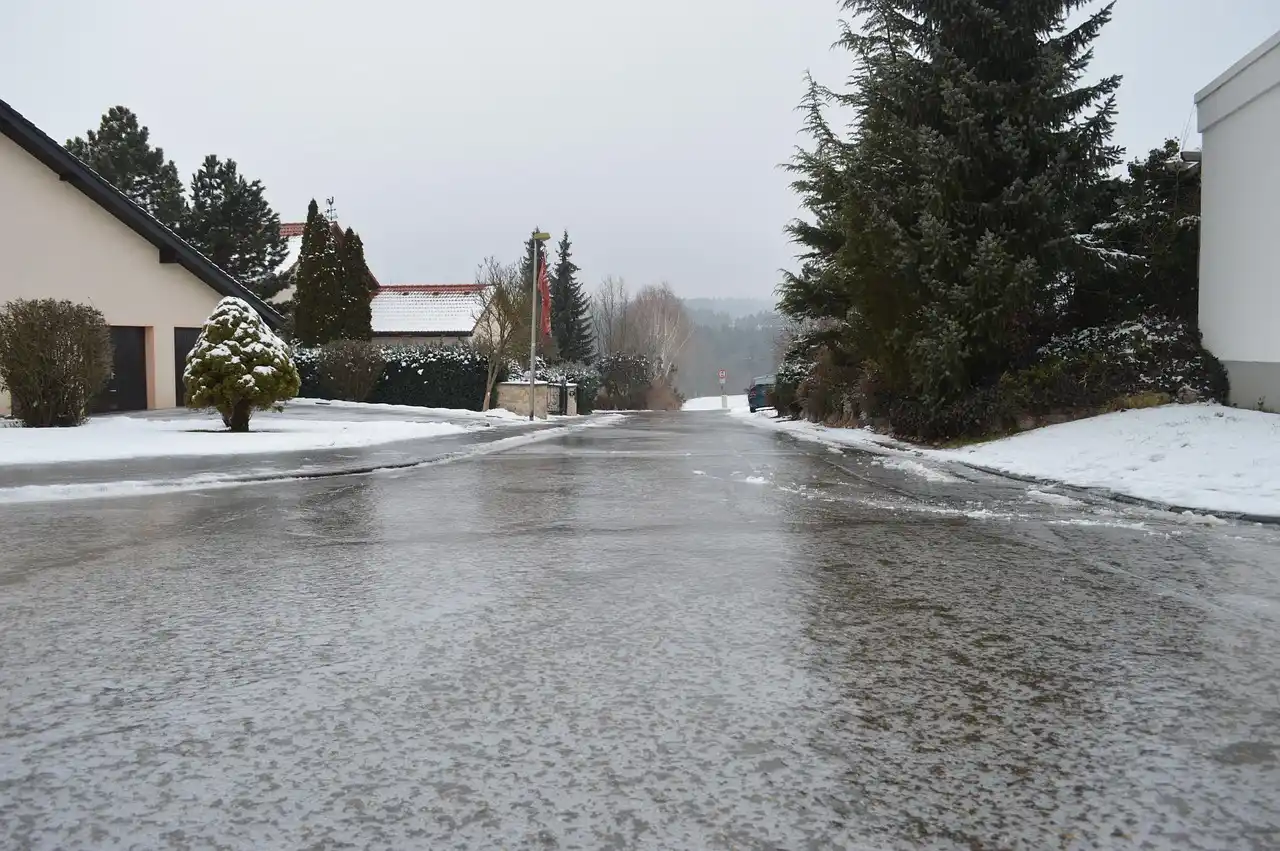
Black ice is a thin, transparent coating of glazed ice on roads. It most often forms when surface temperatures are at or just below freezing, and it often shows up overnight or in the early morning. Because it blends with pavement, you may not notice it until the tires lose grip.
It is especially common on shaded roads, bridges, and overpasses. Bridges and overpasses freeze faster than regular roads because cold air circulates above and below the structure, so the surface loses heat more quickly than nearby pavement.
What you’ll need
- Winter tires, or confirmed tread and inflation that are appropriate for cold, icy conditions
- A clear windshield and working defroster
- Defrost setting selected before you reach the coldest stretch
- Enough following distance to avoid sudden inputs
- A calm, preplanned response: lift, steer gently, then brake only when straight
- Owner’s manual guidance for your vehicle’s ABS and stability systems
Follow the vehicle manual for any safety system or tire-related setup, never work under a vehicle held only by a jack, never exceed the vehicle’s rated roof, hitch, or tow limit, keep items out of airbag zones and the driver’s view, and check local laws.
What do you do in the first 3 seconds?
Within the first few seconds after grip disappears, lift off the accelerator smoothly, keep the steering wheel as steady as possible, and avoid sudden braking or lane changes. That short pause gives the tires a chance to recover without adding wheel spin, lockup, or extra sideways force.
Say your front tires hit a glossy patch on a shaded curve at 6:30 a.m. The car feels light and the nose starts to drift wide. The right move is to back off the throttle, keep inputs small, and wait for traction to return before touching the brake.
- Lift off the accelerator smoothly.
- Hold the steering wheel near center and keep the car pointed along the lane.
- Do not stab the brake pedal or jerk the wheel.
- Let the car slow on its own until the tires bite again.
- If the road straightens and the car straightens with it, then brake gently if needed.
How do you recover from a skid?
Steer gently into the skid. If the rear of the car slides left, turn the wheel left in small amounts; if it slides right, turn right in small amounts. The goal is not a big correction. It is to line the front wheels up with the direction the rear is moving so the car can settle.
Small corrections matter more than speed or strength here. Oversteering adds sideways force and can turn a manageable slide into a spin. Keep your hands calm, make one input, and wait to see what the car does before adding more.
Front-wheel slide versus rear-wheel slide
If the front tires are pushing straight ahead, the car may not answer the wheel much at all. Reduce throttle and wait for grip. If the rear swings out, steer into the skid with small inputs. All-wheel drive can help you start moving, but it cannot ignore ice once the tires are sliding.
How do you brake on black ice?
Brake only when the car is straight and the tires have some grip back. Hard braking can worsen a slide because it asks the tires to handle slowing and steering at the same time. ABS changes the pedal technique, but it does not change the need for smooth inputs and a straight vehicle attitude first.
ABS-equipped vehicles
With ABS, apply firm, continuous pressure if braking is unavoidable. The pedal may pulse or vibrate when ABS activates. That pulse is normal. Do not pump the brake on an ABS-equipped car unless the owner’s manual says otherwise.
Non-ABS vehicles
Without ABS, avoid pumping as a habit and avoid hard pressure. Use the lightest brake input that still slows the car, and only after the vehicle is straight. If the wheels lock and the car starts to slide more, ease off and let the tires roll again.
Reading the road before the skid
The best black ice recovery is the one you never need. Look for overnight cold, early morning frost, shaded pavement, and places where pavement temperature can stay below freezing even when the air feels less severe. Road surface temperature matters more than what the dashboard says.
Shadows can keep pavement icy after nearby sunlit stretches look clear. Bridges and overpasses deserve extra caution because they chill faster. A road that looks merely damp can still be icy if the surface has stayed cold through the night.
| Condition | What to expect | What to do |
|---|---|---|
| Bridge or overpass | Freezes faster than nearby road | Ease off early, before the structure |
| Shade | Surface may stay icy while sunlit pavement thaws | Keep inputs smooth through the shadow |
| Downhill section | Speed builds faster than traction | Slow first, then descend with minimal inputs |
Winter tires improve traction and handling in cold conditions, and that matters even more when the road is icy or snowy. They do not create grip on black ice, but they can shorten the gap between a near miss and a full loss of control.
How do you handle downhill black ice?
Slow before the descent, not during the slide. On a downhill patch, speed control matters more than steering input because gravity keeps adding momentum. Keep the lane choice simple, avoid extra steering, and do not wait until the car is already sliding to start reducing speed.
Picture a long downhill exit ramp with a shaded section at the bottom. The safest move is to enter it already slow, hold a steady line, and avoid lane changes on the slope. If the car begins to drift, use the same small skid correction and keep braking out of the decision until the car straightens.
Black ice response checklist
This checklist separates ABS-equipped vehicles from non-ABS vehicles so the braking decision is clear.
| Step | ABS-equipped vehicles | Non-ABS vehicles |
|---|---|---|
| 1 | Lift off the accelerator smoothly. | Lift off the accelerator smoothly. |
| 2 | Keep the wheel steady and pointed where you want to go. | Keep the wheel steady and pointed where you want to go. |
| 3 | If the rear slides, steer gently into the skid. | If the rear slides, steer gently into the skid. |
| 4 | If braking is unavoidable, press firmly and continuously. | If braking is unavoidable, use the lightest steady pressure you can. |
| 5 | Let ABS pulse or vibrate; keep the pressure steady until the car straightens. | Ease off if the wheels lock, then reapply only after traction returns. |
Do not do: use cruise control, make abrupt lane changes, oversteer, or snap the throttle or brake. Those reactions ask already-slippery tires to do too much at once.
| Scenario | Best response |
|---|---|
| Bridge approach | Slow down before the structure |
| Deep shade | Keep steering and throttle inputs small |
| Downhill stretch | Back off before the slope begins |
Common mistakes
Panic braking is the biggest one. It can lock tires on a non-ABS car or overwhelm the tire’s limited grip on any car. If the slide starts, the first move is to reduce input, not add more.
Another mistake is treating SUVs and all-wheel drive as if they cannot slide. Heavier vehicles can feel planted right up to the moment they lose grip, and AWD helps acceleration more than stopping or cornering on ice. Cruise control is also a bad idea because it can keep feeding throttle when you need less.
How fast should you drive on black ice?
Drive only as fast as you can keep the car straight, smooth, and ready to stop without a surprise input. There is no universally safe speed for black ice. On icy pavement, the better target is a speed that leaves room for gentle steering and gentle braking, especially near bridges and shaded sections.
How slow should you drive? Slow enough that a brief slide does not turn into a loss of control before you can react. On a winter road, that usually means lowering speed well before the risky section instead of trying to manage speed once you are already on the ice.
Can you drive on black ice without skidding?
Yes, sometimes. You can cross a black-ice patch without skidding if your tires retain enough grip, your speed is low, and your inputs stay smooth. But black ice is hard to detect in advance, so the safer approach is to assume traction may drop without warning and drive for that possibility.
That means no sharp throttle changes, no sudden braking, and no abrupt steering. If the car feels normal, keep it that way. If it starts to drift, go back to the recovery sequence immediately.
Frequently asked questions
How do you drive on black ice safely?
Reduce speed before you reach risky pavement, keep both hands calm on the wheel, and make every input small. If the tires slip, lift off the gas, steer gently into the skid if the rear steps out, and brake only when the car is straight again.
What should you do when driving on black ice?
Read the road before you get there. Watch for shade, bridges, overpasses, and early-morning cold. If the surface looks damp but the temperature has been near freezing overnight, treat it as suspect and prepare for a sudden loss of traction.
What do you do if your car starts sliding on black ice?
Keep the wheel calm, lift off the accelerator, and steer gently into the direction the rear is sliding. Do not make a big correction. Once the car straightens, brake lightly only if you still need to slow down.
Should you brake on black ice?
Only if you must, and only after the car is straight. With ABS, use firm continuous pressure and let the system pulse. Without ABS, use the lightest steady pressure you can manage and back off if the wheels lock or the slide worsens.
Can you drive on ice and snow without winter tires?
You can, but you should expect less traction and longer stopping distances. Winter tires are the better choice for cold, icy, or snowy roads because they improve grip and handling in those conditions. Check the manufacturer’s guidance for tire size and fitment.
How do you drive downhill on black ice?
Slow before the descent starts, then keep the car in a straight, steady line. Avoid extra steering and avoid waiting until you are on the slope to start reducing speed. If a slide begins, use the same gentle skid correction and keep inputs minimal.
Products related to this article
Sponsored / affiliate links. As an Amazon Associate I earn from qualifying purchases. I may earn additional commission from eligible campaigns.