Best Battery Chargers for Dead Batteries (2026): we compared
For a dead 12-volt battery, a smart charger can make sense if the battery sits below about 12.2 volts at rest but still lights the headlights; jump-start first if you need the engine turning now, and replace it if it will not hold roughly 12.4 volts after charging. Guess wrong and you can strand yourself again, cook an old battery, or miss a failing alternator. This guide shows when to charge, jump, test, or replace, and which chargers actually recover weak batteries.
This guide is part of our Car ownership essentials series.
Quick comparison
| Product | Badge | Best for | Price | ||
|---|---|---|---|---|---|
 |
smart 2 Bank Marine Battery Charger, 10A (5A/Bank),Zrfmib | Upgrade pick | 10A 12V 2-bank waterproof marine battery charger | $88.29
Price as of 25 Sep 2026
|
View |
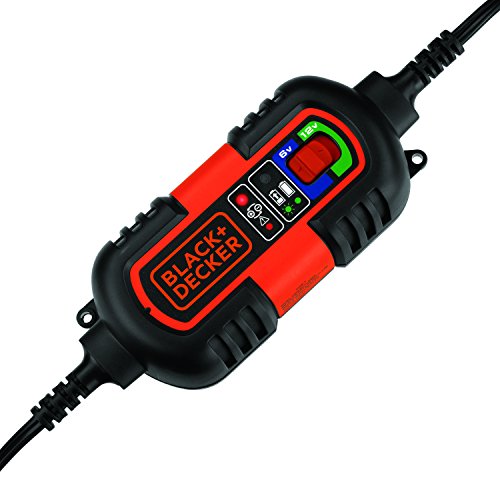 |
BLACK+DECKER BM3B Fully Automatic 6V/12V BatteryBLACK+DECKER | Budget pick | 6V/12V 1.5 Amp fully automatic charger | $29.99
Price as of 25 Sep 2026
|
View |
 |
DBPOWER Peak 3000A 18000mAh Portable Car Jump Starter (upDBPOWER | Our pick | 3000A 18000mAh portable car jump starter | $49.99
Price as of 25 Sep 2026
|
View |
The best charger is the one that matches battery chemistry, battery size, and how soon the car has to run again. A jump starter gets you moving now; a smart charger brings the battery back into usable shape if the battery can still be saved.
How we chose
We compared only 12-volt options with clear chemistry support. We favored automatic multistage charging, useful amp ranges, and safety features like reverse-polarity protection.
We also looked for recovery modes, float maintenance, and enough clarity to separate charging from jump-starting. If a product could not explain its battery type limits, it did not make the cut.
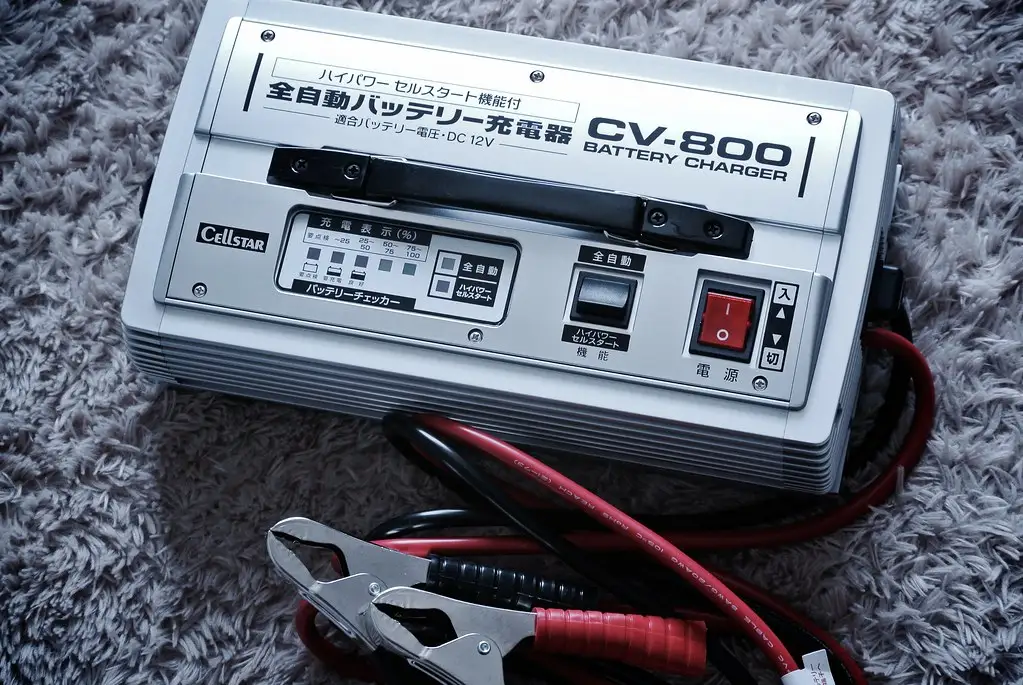
Zrfmib smart 2-bank marine charger: best for charging two batteries at once
This is the strongest pick for drivers or owners who need to charge more than one 12-volt battery and want one unit that can cover AGM, lithium, and deep-cycle batteries. From the spec sheet and owner feedback, its 5A-per-bank layout works well when two batteries need attention at the same time, such as a car plus a seasonal vehicle.
It stands out for its multibank approach, waterproof housing, and built-in diagnostics. The desulfator mode may help neglected flooded batteries, though that is a recovery aid, not a promise.
The drawback is that it is more charger than the average driver needs. If you only maintain one sedan battery, a smaller single-bank unit is simpler and cheaper.
BLACK+DECKER BM3B: best for AGM and storage maintenance
This is the best fit for owners who want a simple maintainer for a standard 12-volt car battery or AGM battery in storage. Its 1.5A output is slow, but that is exactly why it works for topping off a battery that sits for weeks or months.
It automatically switches to float mode, which is the feature most storage batteries need. That matters for garage cars, motorcycles, and seasonal vehicles that are not being asked to recover from a truly dead state every time.
The limit is speed. A 1.5A charger is not the right tool for a battery that needs to be brought back from deep discharge quickly, and it is not a replacement for a higher-output smart charger when recovery matters.
DBPOWER Peak 3000A jump starter: best for immediate starts
This is the right choice when the battery has enough life left to crank after a boost, but the car needs to start now. It is a temporary start aid, not a charger, and its 3000 peak amps can help with gas engines up to the stated size range.
For roadside work, that distinction matters. A jump starter gets the engine running so the alternator can take over; it does not restore state of charge the way a smart charger does.
The drawback is obvious: it cannot replace a charger or a tester. If the battery is sulfated, frozen, swollen, or failing a load test, a jump starter may only delay the real fix.
Can a charger revive a completely dead car battery?
Sometimes, yes. A smart charger can recover a deeply discharged 12-volt lead-acid battery if the plates are not badly sulfated, the case is intact, and the battery is not frozen or shorted. If voltage stays near zero, the battery will not accept charge, or it fails testing after charging, replacement is the smarter move.
When recovery charging makes sense
Recovery charging makes sense when the battery is flat from lights left on, short trips, or storage, but still shows some life at rest. A charger with automatic multistage charging can bring voltage up slowly and reduce the chance of overheating a weak battery.
Desulfation or reconditioning modes can help neglected flooded batteries, especially when the battery has sat at a low state of charge. They are limited tools, though. They cannot reverse mechanical damage, severe sulfation, or a bad cell.
Signs the battery is beyond charging
Replacement is the better call if the battery case is swollen, cracked, leaking, or frozen. It is also time to stop charging if the battery gets hot fast, smells of sulfur strongly, or never reaches a stable resting voltage around 12.4 volts or better after a full charge and rest period.
When to use a jump starter instead
Use a jump starter when you need the car to crank immediately and you are not trying to restore the battery’s charge on the spot. It is the faster answer for a driveway emergency, but it is only a bridge to the next step, not the fix itself.
Decision checklist: charger, jump starter, tester, or replacement
Use this checklist before buying anything. It keeps you from treating every dead battery like the same problem.
- Check battery condition. If the case is damaged, leaking, swollen, frozen, or hot, do not charge it.
- Check chemistry. Match the charger to flooded lead-acid, AGM, or lithium. Do not mix settings.
- Check urgency. If you need to leave now, use a jump starter. If the car can sit, charge it.
- Check state of charge. Around 12 volts at rest is low but often still recoverable. Very low voltage needs more care and testing.
- Check charging history. Deep discharge and long storage increase sulfation risk, which lowers the odds of recovery.
- Test before replacing. A battery tester can show weak cranking voltage, poor load-test results, or conductance loss that charging will not fix.
Battery condition checks
A 12-volt lead-acid battery can sometimes be saved if it is merely discharged. It should not be revived if it is physically unsafe. Batteries that fail a load test after charging, or cannot hold voltage after rest, are often nearing the end of service life.
Chemistry and vehicle use checks
AGM batteries, common in start-stop vehicles and in cold-weather use, need the correct charging profile. Lithium automotive batteries are different again, and need a chemistry-specific lithium battery charger with voltage limits and BMS compatibility. Lead-acid settings are not interchangeable with lithium settings.
Urgency and storage checks
If the car sits for weeks, a maintainer with float mode is the right tool. If the battery is already weak and you need a same-day start, a jump starter helps, but a tester should follow soon after. If the battery keeps going flat, the alternator or parasitic draw may be the real issue.
Which one should you buy?
For most drivers, a smart charger with automatic multistage charging is the best buy. It is the safest way to recover a weak 12-volt lead-acid or AGM battery, and it can double as a maintainer for storage. Manual chargers are not the default choice when the battery chemistry or condition is uncertain.
If winter hits hard or the car sits often, choose a charger with float mode and a low-amp maintenance setting. If the battery may already be failing, buy a tester first or bundle a tester with the charger. If you need one roadside tool, a jump starter is the backup, not the battery solution.
what is the best battery charger for a dead battery
The best charger for a dead battery is a smart charger that matches the battery’s chemistry and size, then charges automatically in stages. For most 12-volt car batteries, that means a unit with lead-acid and AGM support, reverse-polarity protection, and a maintenance or float mode for storage.
If the battery is deeply discharged but still healthy, a moderate-amperage smart charger is usually the practical middle ground. Very small chargers work for maintenance; very large ones can be harder on a tired battery if used carelessly.
what kind of battery charger do i need for a car battery
You need a 12-volt charger that matches the battery type in the car: flooded lead-acid, AGM, or, less commonly, lithium. The charger should support automatic multistage charging and the proper voltage limits for that chemistry. A one-setting manual charger is a poor fit for most drivers.
For a daily driver, 4A to 10A is the useful range. For storage, about 1A to 2A is usually fine. For lithium, choose a charger made for lithium batteries only.
how to put a battery charger on a car battery
Attach the charger in the right order: charger unplugged, red clamp to battery positive, black clamp to negative or a clean chassis ground, then plug in the charger and select the correct battery type. Remove it in reverse order after charging is complete.
Keep the area ventilated, wear gloves and eye protection, and avoid sparks near the battery. If the battery is frozen, leaking, or damaged, stop and replace it instead of charging.
Basic connection order
- Turn the ignition off and keep the charger unplugged.
- Inspect the battery for cracks, leaks, swelling, or freezing.
- Connect red to positive first.
- Connect black to negative or a grounded metal point away from the battery.
- Select the correct battery chemistry and charge rate.
- Plug in the charger and monitor the first few minutes.
- Disconnect in reverse order when charging is complete.
how to charge car batteries at home
Charging at home is straightforward if the battery is safe, the charger matches the chemistry, and the room has ventilation. A smart charger is the easiest choice because it handles bulk charge, absorption, and float without constant monitoring. That matters for anyone who is not sitting beside the battery the whole time.
For a typical 12-volt car battery, 1A to 2A is slow but safe for maintenance, 4A to 10A is the practical daily-driver range, and higher outputs trade convenience for more heat and less forgiveness. Bigger batteries usually need more time.
are car battery chargers worth it
Yes, if you deal with seasonal storage, short trips, or occasional no-starts. A charger costs far less than repeated tow calls or a battery replaced too soon. It is especially useful when the battery is weak but still recoverable, because charging can restore usefulness that a jump start only masks.
They are not worth buying if the battery is already failing hard, the vehicle has a charging-system problem, or you need only one emergency start every few years. In those cases, a tester or jump starter may be the better first purchase.
do i need a smart charger or manual charger for my car battery
Most drivers should buy a smart charger. It is safer, easier to use, and better suited to AGM batteries, seasonal storage, and partially dead batteries that need a proper charge profile. Manual chargers require more attention and are easier to misuse.
A manual charger only makes sense for someone who already understands battery chemistry, charging voltage, and monitoring. For everyone else, automatic multistage charging is the better default.
how long does it take to charge a dead car battery
Charge time depends on battery size, state of charge, and charger output. A 1A to 2A maintainer can take many hours or overnight for a modest top-off. A 4A to 10A smart charger is often the practical range for an overnight recovery. Higher-amp chargers work faster, but they demand more caution on older batteries.
Estimated charge-time ranges by amp output
| Charger output | Typical use | Estimated time for a weak 12V car battery | Main tradeoff |
|---|---|---|---|
| 1A to 2A | Maintenance or slow recovery | Overnight to more than a day | Very gentle, but slow |
| 4A to 10A | Everyday recovery charging | Several hours to overnight | Good balance of speed and control |
| 10A and above | Faster recovery on larger batteries | Often faster, depending on battery size | More heat and more chance of misuse on old batteries |
Bigger batteries, especially AGM or deep-cycle units, usually need longer. A charger can only push current the battery will safely accept.
Products related to this article
Sponsored / affiliate links. As an Amazon Associate I earn from qualifying purchases. I may earn additional commission from eligible campaigns.