Best Car Batteries for Long Storage (2026): We Compared
For cars that sit for weeks or months, a quality AGM battery with a smart maintainer is often a good choice; if the car is stored for more than about 30 days, keep it on maintenance charge. Skip that, and a healthy battery can sulfate, lose capacity, and fail to start when you need the car. This guide covers the battery type to buy, the maintainer to use, and the storage habits that keep it alive.
This guide is part of our Car battery basics: troubleshooting, charging and care series.
Quick comparison
| Product | Badge | Best for | Price | ||
|---|---|---|---|---|---|
 |
Renogy 12 Volt 100Ah Deep Cycle AGM Battery, Lead AcidRenogy | Our pick | 12V 100Ah · AGM · Deep Cycle | $208.99
Price as of 15 Oct 2026
|
View |
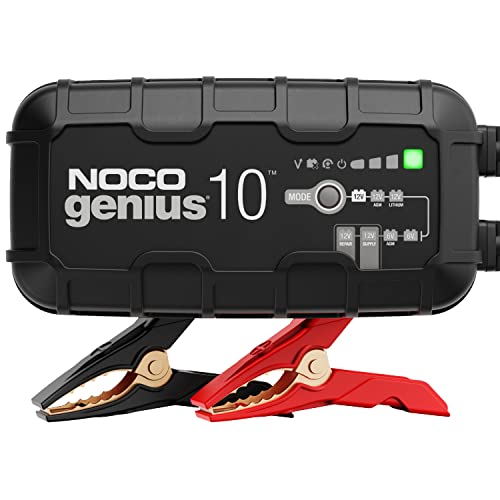 |
NOCO GENIUS10 10A 6/12V Smart Battery Charger, TrickleNOCO | Pair with it | 10A · 6/12V · Smart Charger | $99.95
Price as of 15 Oct 2026
|
View |
 |
Battery Tender Plus 12V 1.25 AMP Car & Motorcycle BatteryBattery Tender | Budget pick | 1.25A · 12V · Maintainer | $58.95
Price as of 15 Oct 2026
|
View |
Think of long storage as a system choice, not a charger purchase. The battery chemistry has to survive inactivity first, then the maintainer keeps the state of charge near full without overheating the battery.
That matters because the wrong battery can self-discharge faster, sulfate sooner, or react badly to the charger settings you pick for storage.
Quick picks
| Best for | Key spec | Storage fit | Price |
|---|---|---|---|
| Infrequent-use vehicles | AGM sealed lead-acid battery | Best default for weeks to months with a maintainer | $208.99 |
| Cars stored on a budget | Flooded lead-acid battery | Works if you monitor charge and accept more checkups | Varies by group size |
| Specialty setups with matching electronics | Lithium-ion starter battery | Only if the vehicle and charger support that chemistry | Varies widely |
| Long-term storage maintenance | Automatic float maintainer | Best companion for any lead-acid storage plan | $58.95 to $99.95 |
How we chose
Storage compatibility came first. A battery only makes sense here if it tolerates inactivity, works with a maintainer, and holds charge well enough to avoid early sulfation.
We also weighed parasitic draw tolerance, chemistry-specific charging needs, and how much upkeep each setup demands. Price matters, but only after the battery can survive the storage window.
Finally, the choice had to fit real use cases: seasonal cars, garage queens, and vehicles that sit between short drives. That separates long-term storage from occasional standby.
Agm battery: best for long storage
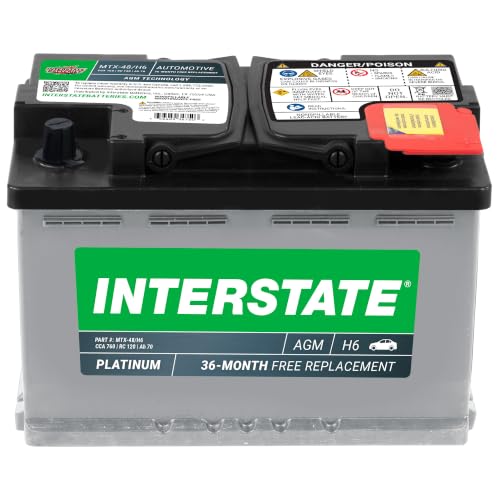
AGM is usually the safest default for infrequently driven cars because it is a sealed lead-acid variant with lower self-discharge than standard flooded batteries and better vibration resistance. Renogy’s AGM deep-cycle battery is aimed at users who want low storage loss and a chemistry that accepts maintenance charging well.
It fits vehicles that sit for weeks or months, especially when paired with a battery maintainer in float mode and a periodic voltage check. Research on product specs also points to very low self-discharge claims for this type, which is exactly what storage buyers want to minimize.
The tradeoff is cost. AGM usually costs more upfront than flooded lead-acid, so the payback comes from fewer storage problems, less maintenance, and a lower chance of arriving at a dead battery after a break.
Flooded lead-acid: best for low upfront cost
Flooded lead-acid batteries remain the cheapest familiar option, and they can work for storage if you stay on top of state of charge. Battery Tender Plus is a maintainer, not a battery, but it pairs with this chemistry because flooded batteries need regular monitoring and float charging during inactivity.
This setup makes sense when budget matters more than convenience, or when the car is stored in a controlled place and you are willing to check voltage. The battery itself is vented, more maintenance-sensitive, and more prone to sulfation during storage if it sits partially discharged.
The drawback is simple: flooded batteries punish neglect. A weak charge, a little parasitic draw, or a skipped maintenance interval can move the battery from “fine” to sulfated faster than an AGM setup usually would.
Lithium starter battery: best for specific setups
Lithium-ion starter batteries are not a universal storage answer. They can work well in the right vehicle, but they need chemistry-specific charging, correct maintainer settings, and a battery management system that is compatible with the charge profile.
NOCO’s Genius10 is a smart charger and maintainer that supports lead-acid and lithium batteries, with repair features and recovery capability down to low voltages. That makes it useful for some storage plans, but only if the battery maker and the vehicle manual agree on lithium compatibility.
The drawback is also the point: lithium is less forgiving when you guess wrong. A maintainer meant for flooded or AGM batteries may not be suitable unless the charging profile matches the battery’s requirements.
Best battery type for storage by use case
| Storage duration | Climate | Parasitic draw risk | Maintenance effort | Recommended chemistry/maintainer setup |
|---|---|---|---|---|
| 1 to 4 weeks | Mild | Low | Low | AGM with a float maintainer; flooded only if fully charged and checked |
| 1 to 3 months | Mild to cold | Medium | Medium | AGM with maintainer and voltage checks every few weeks |
| 3+ months | Cold or hot | Medium to high | Medium to high | AGM, or lithium only with BMS-compatible charging and verified storage procedure |
| Any duration | Garage without power | High | High | Disconnect battery or use an appropriate maintainer if power is available |
| Budget-first seasonal storage | Controlled | Low to medium | High | Flooded lead-acid with regular state-of-charge monitoring and a float-capable maintainer |
How do you choose the right storage battery?
Start with storage duration and climate, then factor in parasitic draw and how much maintenance you will actually do. For weeks to months, AGM is the safest default; flooded lead-acid can work if you are willing to monitor charge; lithium only belongs in setups built for it.
State of charge matters more than people expect. Batteries should be near full before storage, because low charge speeds sulfation, and voltage is the practical way to estimate readiness before the car sits.
Parasitic draw comes next. Clock, module, and alarm drain can flatten a healthy battery over time, so a battery that looks “bad” may simply be feeding the car while parked. Measure draw before blaming the battery, and disconnect or maintain if the draw is too high.
If a car sits for around six weeks with an always-on module, even a good battery may come back too low to crank. If the car sits for six weeks with an always-on module, even a good battery may come back too low to crank.
Storage duration and climate
Short seasonal storage is easier than long inactivity, and warm climates are harder on batteries because heat speeds self-discharge. Cold weather also hurts starting power, so a battery that is merely “okay” in summer can feel weak after a winter sit.
That is why AGM usually wins for cars that sit often. It gives you more margin against charge loss than standard flooded lead-acid, and it handles vibration better when the vehicle gets moved occasionally.
Parasitic draw risk
Parasitic draw is any electrical load that stays alive when the car is off. The usual suspects are clock memory, control modules, and alarms. If the drain is significant, even a healthy battery can go flat while the car is parked.
When the draw is unavoidable, a battery maintainer is the practical fix. A disconnect switch can help in some vehicles, but only if the car does not need continuous memory power for critical systems.
Maintenance effort and charger compatibility
Battery upkeep is easiest when the battery chemistry and charger agree. A battery maintainer is built for storage, with automatic float mode that keeps the battery full without overcharging it. A smart charger can do more, with bulk, absorption, and float stages, plus repair or desulfation modes on some units.
A battery tender or trickle charger can maintain a battery at low current, but it still has to match the battery chemistry. The term sounds generic, yet the settings are not. Wrong chemistry settings can hurt lithium or lead-acid batteries.
Which one should you buy?
If your budget is tight and you can check voltage regularly, choose flooded lead-acid and budget for a maintainer. If you want the best balance of storage tolerance and low upkeep, choose AGM. If the vehicle is already built around lithium and the charger is BMS-compatible, lithium can work, but it should not be the default pick.
For the longest storage, AGM is the better buy because it tolerates inactivity better than standard flooded batteries and is happy on float charge. For high parasitic draw, pick AGM and plan on a maintainer or a disconnect strategy, because chemistry alone will not solve a drain problem.
If the car is going into storage for more than 30 days, a maintainer matters more than a faster charger. Smart chargers like NOCO’s Genius10 can recover weak batteries and support multiple chemistries, while the Battery Tender Plus is built around long-term float maintenance. Schumacher’s manual charger and jump starter is a different tool entirely; it is for recovery and jump support, not unattended storage.
Say your coupe sits from November to March in an unheated garage. An AGM battery on a maintainer is the safer setup, because the battery stays charged without needing constant attention, and the sealed design handles long idle periods better than a basic flooded battery.
How to store a car battery long term
The battery should be fully charged before it goes into storage, then checked during the storage period. Keep it near full state of charge, because a low battery sulfates faster and loses cranking power. If the car will not be started, use a maintainer instead of hoping the battery will hold on its own.
- Charge the battery fully before storage.
- Check voltage or state of charge and confirm it is near full.
- Match the charger or maintainer to the battery chemistry.
- Use float mode for storage, not fast charging.
- Measure parasitic draw if the battery keeps going flat.
- Disconnect the battery or leave it on maintenance charge when the vehicle sits for weeks or months.
Sulfation is the main failure mode to avoid. When a lead-acid battery sits discharged, lead-sulfate crystals build up on the plates. Early-stage sulfation can sometimes be partly reversed by a smart charger with repair or desulfation modes, but leaving the battery low is the faster route to permanent capacity loss.
Battery maintainer vs smart charger vs trickle charger
A battery maintainer is the storage tool you want most often. It watches the battery, switches to float mode automatically, and avoids overcharging during long inactivity. A smart charger can do that too, but it also adds bulk and absorption stages, which makes it more useful for recovery before storage.
A trickle charger or battery tender is usually low-current maintenance charging. It is fine for long-term storage if it matches the battery chemistry, but it is not the same thing as jump starting, and it should not be treated like a quick fix for a dead battery.
Where should I store a car battery?
Store the battery in a cool, dry, ventilated place away from sparks and direct heat. For an installed battery, parking in a garage helps, but temperature alone does not prevent self-discharge. The key is keeping charge near full and limiting any parasitic drain while the vehicle sits.
If the car stays in the vehicle, keep it connected to a maintainer or isolate it from loads that would flatten it. If the battery is removed, place it where it will not freeze, tip, or sit on a conductive surface that could cause issues.
How to keep batteries fresh longer
Keep the battery near full charge, avoid deep discharge, and reduce idle electrical loads. Those three habits do more for battery life than most people expect. A float maintainer is the simplest tool, but only if the charger matches the battery’s chemistry and voltage.
Price, warranty, and ease of use matter after that. Battery Tender Junior, for example, comes with a five-year warranty and uses a four-step charging program with initialization, bulk charge, absorption, and float mode. That makes it attractive for storage, though its lower output means it is not a recovery charger.
Why do car batteries last so long?
Car batteries last longer when they spend most of their life near full charge, avoid heat, and do not sit discharged. That is why some batteries survive storage well while others fail early: the good ones are kept charged, the bad ones are allowed to sulfate or sit under load.
Long life is less about one magic battery and more about conditions. A battery in a vehicle with low draw, regular charging, and a compatible maintainer will usually outlast the same model left idle and partially discharged.
Frequently asked questions
How to store a car battery long term: fully charge it, then keep
Fully charge it, then keep it near full with a maintainer if the car will sit for more than a few weeks. Check voltage during storage, and do not let it sit discharged. If the battery keeps dropping, look for parasitic draw before assuming the battery is bad.
What’s the longest lasting car battery
For storage, the longest lasting battery is usually the one that best matches the car’s downtime and charging setup. AGM often lasts longest in parked vehicles because it tolerates storage better than standard flooded lead-acid and works well on float charge. Lithium can last too, but only in the right system.
Best car battery for long term storage
AGM is the best default for long-term storage in most infrequently driven cars. It offers better storage tolerance than flooded lead-acid, lower self-discharge, and good compatibility with a maintainer. Choose flooded only if cost is the main concern and you are willing to monitor charge closely.
Best car battery charger for long term storage
The best charger for storage is a smart maintainer with automatic float mode. A smart charger like NOCO’s Genius10 is useful if you need recovery, because it supports 6- or 12-volt batteries, works with gel, flooded, AGM, and lithium-ion batteries, and can charge batteries as low as one volt.
How to keep batteries fresh longer: keep the battery fully charged
Keep the battery fully charged, match the charger to the chemistry, and reduce parasitic draw while the car is parked. A maintainer is better than a basic charger for storage because it prevents overcharging and holds state of charge steady during inactivity.
Why do car batteries last so long: they last longer?
They last longer when they avoid deep discharge and sit in stable conditions. Heat, low charge, and parasitic draw shorten life fast. For lead-acid batteries, sulfation is the main enemy; for lithium starter batteries, the charger and BMS settings must stay compatible.
Products related to this article
Sponsored / affiliate links. As an Amazon Associate I earn from qualifying purchases. I may earn additional commission from eligible campaigns.