Best Cabin Air Filters for Cars: Based on Specs and Reviews
The best cabin air filter for most cars is the OE-fit filter matched to your problem: activated carbon for odor and smog, high-efficiency particulate media for allergies, and a plain pleated filter if you want the lowest cost and the least airflow loss. Pick the wrong type and you can end up with weak HVAC output, lingering cabin odors, and poor dust capture. This guide compares top cabin air filters by fit, filtration media, odor control, airflow, and replacement cost.

Quick comparison
| Product | Badge | Best for | Price | ||
|---|---|---|---|---|---|
 |
Reilauto Tesla Model 3 Model Y HEPA Cabin Air FilterReilauto | Our pick | H13 HEPA · Carbon · 2-pack | $15.99
Price as of 24 Oct 2026
|
View |
 |
FRAM CF12436 Fresh Breeze Cabin Air Filter | Fits 2018-2026Fram | Also great | Carbon · Baking Soda · Odor Neutralization | $19.95
Price as of 24 Oct 2026
|
View |
 |
MAHLE LAK 120 Cabin Air FilterMAHLE | Also great | OEM Spec · Pleated Media · Low Pressure Drop | $22.69
Price as of 24 Oct 2026
|
View |
 |
Cabin Air Filter w/Activated Carbon for Honda 2017–2025Carory | Budget pick | Carbon · Multiple Honda Models · Value Pack | $7.99
Price as of 24 Oct 2026
|
View |
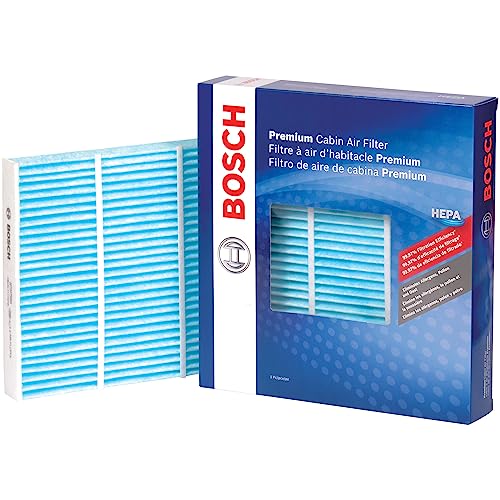 |
BOSCH 6091C HEPA Cabin Air Filter – 3 Layer Protection ForBosch | Also great | HEPA · 3‑Layer · No Chemical Additives | $10.48
Price as of 24 Oct 2026
|
View |
Use this as a fit-and-need filter, not a brand ranking. The right media matters more than the badge when your complaint is exhaust smell, pollen, dust, or a blower that feels weak.
How we chose
Three things drive the picks here: media type, fitment risk, and ownership cost over 12 months. That means matching the filter to the problem first, then checking whether the part seals properly and whether its airflow penalty is worth the trade.
We also weighed odor control separately from particle capture. Those are related, but not the same problem. Moisture and mold can also sit in the HVAC box or evaporator, so a filter alone should not be expected to solve every smell.
Bosch cabin air filters: best for fine particles
Bosch is the cleaner-air pick for drivers who care most about fine particle capture and want a HEPA-style benchmark. Bosch 6091C is described as HEPA filtration with 99.97% efficiency, and Bosch 6092C uses ISO 29463-3:2011 HEPA standards. The structure also uses a melt-blown electrostatic layer and a static cotton layer.
That setup makes sense for allergy-sensitive drivers, frequent city commuters, and anyone who wants the strongest particulate filtering in this group. Bosch also recommends replacement at least once a year or every 12,000 miles, which is a practical reminder that high-efficiency media still needs timely changeouts.
The drawback is fitment care. HEPA-style cabin filters can be denser, so you should verify the exact part number, trim, and housing shape before buying. If the fit is wrong, the extra filtration value does not matter.
Spearhead Odor Defense Breathe Easy: best for long service
Spearhead’s Odor Defense Breathe Easy line is aimed at drivers who want longer service and stronger odor control from a carbon-based design. The brand claims up to 15,000 miles, about 25% longer than standard filters, and uses coconut-shell activated carbon with multi-layer media.
That makes it a reasonable fit for ride-hail drivers, busy commuters, and owners who dislike frequent maintenance. The longer interval can lower the annual replacement burden if your vehicle’s cabin filter is easy to access.
The trade-off is that a longer interval only helps if the filter still seals and moves air well by the end of that stretch. In heavy dust or constant traffic exhaust, shorter intervals may still be smarter.
FRAM Fresh Breeze: best for odor control on a budget
FRAM Fresh Breeze is a practical odor-control option for drivers who want broad fitment coverage and a familiar carbon-plus-additive approach. FRAM uses Arm & Hammer baking soda for odor control, and the line includes budget and premium options, plus scented variants for drivers who want an added odor-masking layer.
For shoppers who want an easy match without paying HEPA pricing, this is a strong middle ground. FRAM is also widely listed across many vehicles, which can reduce the chance of ordering the wrong part when you verify the exact application.
The drawback is that odor control and particle capture are still separate jobs. Baking soda helps with smell, but it does not turn the filter into a true fine-particle benchmark.
EPAuto cabin air filters: best cheap replacement
EPAuto is the value choice when you want an activated carbon cabin filter at a lower price and you plan to replace it on schedule. EPAuto cabin filters are described as replacing after just 12,000 miles, and the line has broad selection across many applications.
That makes it a sensible pick for drivers who want a low-cost annual routine without paying extra for premium media. If your car sees normal commuting and moderate dust, this kind of filter can do the basics well.
The drawback is simple: lower price usually means less margin for long service. If you drive in dense traffic, on dirt roads, or through heavy pollen, you may need to replace it sooner than the calendar suggests.
Which one should you buy?
If allergies and pollen are the priority, start with Bosch. It is the strongest fine-particle choice here, but you need to confirm fitment carefully because denser media and a wrong housing match can create airflow or sealing issues.
If odor control matters more than absolute particle efficiency, FRAM Fresh Breeze and Spearhead are the more practical carbon-based routes. FRAM leans toward wide fitment and easier buying, while Spearhead leans toward longer service and coconut-shell carbon.
If you are buying on a tight budget, EPAuto is the simple value play. If you want the longest service life and accept the upfront cost, K&N is the reusable option, but it is not the best answer for every driver.
Cabin filter decision matrix
This matrix compares filter type, not a single brand. It shows the real trade-off: a filter can improve capture while also increasing restriction, and the wrong choice can make a weak blower feel worse.
| Filter type | City commuting | Allergy sensitivity | Pet odors | Dusty or rural roads | Long-service value | Fitment risk | Odor control | Airflow impact | Replacement interval | Total cost per 12 months |
|---|---|---|---|---|---|---|---|---|---|---|
| Activated carbon pleated | Good | Fair | Good | Fair | Good | Medium | Good for exhaust and smoke | Low to medium restriction | About 12,000 miles or yearly | Low to medium |
| HEPA-style particulate | Good | Excellent | Fair | Good | Fair | Higher | Limited unless paired with carbon | Medium to higher restriction | About 12,000 miles or yearly | Medium to high |
| Reusable washable | Good | Fair | Fair | Good | Excellent | Medium | Usually limited without carbon media | Medium restriction when clean | Roughly every 15,000 miles for cleaning | Higher upfront, lower over time |
| Plain pleated OE-style | Fair | Fair | Poor to fair | Fair | Good | Low to medium | Minimal | Lowest restriction | About 12,000 miles or yearly | Lowest |
City commuting
For city driving, activated carbon is the sweet spot because it handles exhaust smell and general urban grime without making the HVAC system work as hard as a very dense media pack. A plain pleated filter is fine if you only want low cost and basic dust capture.
Allergy sensitivity
Choose HEPA-style media if pollen, fine dust, or traffic particulates are the main issue. Bosch’s 99.97% figure at 0.3 µm is the benchmark to look for, but verify fitment carefully because a tight-sealing filter is part of the gain.
Pet odors
Activated carbon is the more useful tool here. Odor adsorption matters more than sheer particulate efficiency when the complaint is dander smell, wet-dog odor, or stale cabin air after pet transport.
Dusty or rural roads
Go with a filter that balances capture and airflow, then shorten the interval. Dense media can load up quickly on gravel or farm roads, and a clogged filter can look like a weak AC problem even when the refrigerant side is fine.
Long-service value
Reusable filters can win on lifetime cost if the housing fit is correct and you stay on the cleaning schedule. K&N’s washable design and roughly 15,000-mile cleaning interval are attractive here, but the higher upfront cost means the value case depends on ownership length.
Say your commute is 18 miles each way through downtown traffic and the cabin smells like exhaust after stop-and-go runs. A carbon filter is the first move because it targets odor adsorption, while a HEPA-style filter may clean fine particles better but will not always solve smell on its own.
Suppose your SUV’s blower feels weak only on high pollen days and the old filter is gray and packed with debris. That can be a clogged filter problem, not a bad blower, so replacing the filter first is the cheaper diagnostic step.
What are the best cabin air filters for cars?
The best cabin air filters depend on the problem you are trying to solve. Bosch is the strongest fine-particle pick, FRAM Fresh Breeze and EPAuto are good carbon-based choices for odor and value, Spearhead suits longer service, and K&N fits owners who want a reusable option and accept a higher upfront cost.
For most drivers, the right answer is still the OE-fit filter that matches the symptom. If you have pollen issues, choose particulate performance first. If the cabin smells like traffic or smoke, choose carbon first.
What is the difference between activated carbon and HEPA cabin filters?
Activated carbon filters focus on odor adsorption and reducing exhaust-gas smells, often alongside a particulate layer. HEPA cabin filters focus on fine particle capture, with Bosch listing 99.97% filtration at 0.3 µm. That makes HEPA-style media better for allergies, while carbon is better for smell.
They are not interchangeable for every driver. Carbon helps with odor; HEPA helps with tiny particles; neither one fixes a bad seal, and neither one cures moisture or mold in the HVAC box.
How often should I replace my cabin air filter?
A common rule of thumb is yearly replacement or around 12,000 miles. Bosch recommends at least once a year or every 12,000 miles, EPAuto is described with a 12,000-mile replacement interval, and several guides use the same annual rule as a baseline.
Shorten that interval if you drive in heavy pollution, on dusty roads, near construction, or with lots of pet hair in the cabin. Once the filter clogs, airflow drops and odors can linger longer because the HVAC system is moving less air through the media.
How do I know which cabin air filter fits my car?
Fitment should be verified by year, make, model, trim, and part number. Use Amazon Garage or a parts-store lookup, then compare the exact cabin filter code against your vehicle’s trim-level listing before you order. A close-looking filter that does not seal correctly is still the wrong part.
- Check the exact year, make, model, and trim.
- Look up the part in Amazon Garage or a parts-store catalog.
- Match the part number, not just the vehicle family.
- Confirm the filter orientation and housing shape.
- Inspect the old filter tray for gaps, broken tabs, or debris before install.
A wrong-size or wrong-trim filter can rattle, fail to seal, reduce airflow, or leave odor problems unchanged. In some vehicles, the cabin filter tray is a tight package under the dash or cowl, and US patent 11186145 reflects how much design detail goes into that housing.
Do cabin air filters improve HVAC airflow?
They can, but only when the old filter is clogged or poorly matched. A fresh filter restores flow; a denser media pack can also reduce blower airflow compared with a plain pleated filter. That trade-off matters most in vehicles with already weak HVAC output.
Thicker media can catch more fine debris, but it can also make low-speed fan settings feel softer. If the system already struggles, a very dense filter may make that weakness more noticeable, especially at idle or on hot days.
Which cabin air filter is best for allergies and pollen?
HEPA-style cabin filters are the strongest choice for allergies and pollen, especially when the vehicle fit is verified carefully. Bosch’s 99.97% filtration at 0.3 µm is the clearest benchmark in this group, and that level of capture is well suited to fine airborne particles.
If you also want odor control, look for a HEPA-style or particulate filter with a carbon layer. That way you are not forcing one media type to solve two different problems.
Are reusable cabin air filters better than disposable ones?
Not always. Reusable filters make sense if you plan to keep the vehicle a long time and you will clean them on schedule. K&N’s washable design, roughly 15,000-mile cleaning interval, and claimed up to 1 million miles lifespan are attractive, but the higher upfront cost and fitment care matter.
Disposable filters are usually simpler and easier to swap when odor control or particle capture drops off. If you live in a dusty area or want the least maintenance, a disposable carbon or particulate filter may be the safer buy.
Frequently asked questions
Which cabin air filter is best for odor control?
Activated carbon filters are the right starting point for odor control because they adsorb smells and help reduce exhaust-gas intrusion. FRAM Fresh Breeze adds Arm & Hammer baking soda, and Spearhead uses coconut-shell activated carbon. Choose carbon first when smell is the main complaint.
Are HEPA cabin air filters worth it for cars?
They are worth it if you are sensitive to pollen, fine dust, or traffic particulates. Bosch’s 99.97% at 0.3 µm is the key benchmark here. If your main problem is odor, though, HEPA alone is not the best tool unless it is paired with carbon media.
Products related to this article
Sponsored / affiliate links. As an Amazon Associate I earn from qualifying purchases. I may earn additional commission from eligible campaigns.