Best Car Seat Cushions for Commutes: Based on Specs and Reviews
The best car seat cushion for long commutes is the one that matches your main problem: tailbone pressure, low seating, heat buildup, or sliding. For most drivers with soreness at the coccyx, the U-shaped memory foam option is the most direct fix because it relieves pressure without forcing a major change in seat height.
Quick comparison
| Product | Badge | Best for | Price | ||
|---|---|---|---|---|---|
 |
Everlasting Comfort Doctor Recommended Memory Foam SeatEverlasting Comfort | Our pick | Memory foam · U-shape · Black | $47.99
Price as of 31 Oct 2026
|
View |
 |
HAMOJUF Gel Car Seat Cushion, Soft Cooling BreathableHAMOJUF | Budget pick | Gel cushion · Honeycomb · Black | $13.59
Price as of 31 Oct 2026
|
View |
 |
UVCMDUI Adult Booster Seat Cushion for Car, Wedge MemoryUVCMDUI | Upgrade pick | Wedge memory foam · Height boost · Black | $23.99
Price as of 31 Oct 2026
|
View |
 |
Seat Cushion for Office Chair and Car, L-Shaped ErgonomicBANKQF | Also great | L-shaped memory foam · Coccyx hollow · Black | $25.99
Price as of 31 Oct 2026
|
View |
This quick comparison separates shape from problem first. Read the drawback column before you buy; the wrong height or shape can create a new issue in a small cabin or a short-torso driving position.
How we chose
Selection here is based on manufacturer specs, listing details, and published buyer feedback. Fit, cleaning, stability, and height change matter more than brand popularity on long drives.
We also looked at whether a cushion could work in a car without making pedal reach, seat-belt fit, or steering-wheel access worse. That matters as much as softness.
Maintenance counted too. Covers that remove easily, wash without drama, and foam that resists fast compression are better for commuting than pads that feel good for a week and flatten soon after.
Memory foam seat cushion: best for pressure relief
This about 1.2-inch memory foam cushion is a good fit when tailbone pressure is the main complaint and a lower-profile pad is wanted for use in both a car and an office chair. The U-shaped cutout is built for coccyx relief, and the breathable, machine-washable cover plus non-slip base make it practical for daily use.
Its strength is pressure relief without a big height jump. That helps drivers who already sit close to the wheel or who do not want to alter pedal reach much.
The drawback is simple: if you need a major boost in seat height or forward visibility, this is not the shape to solve that. A flat or low-profile cushion can also feel too soft for drivers who want firm posture support.
Wedge car seat cushion: best for visibility
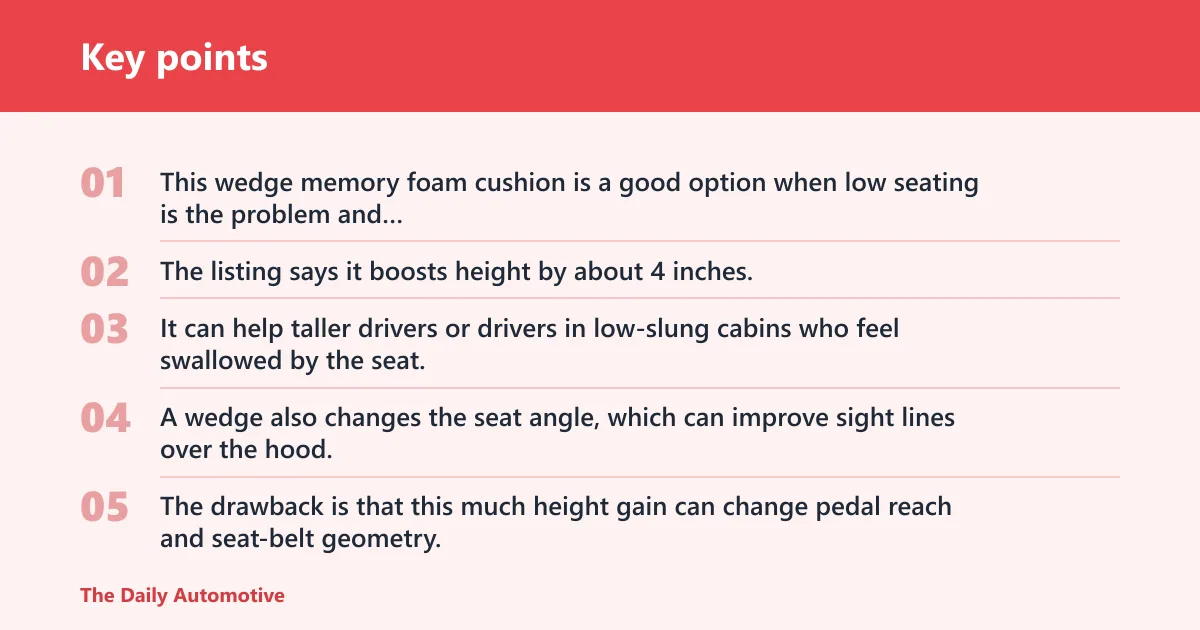
This wedge memory foam cushion is a good option when low seating is the problem and better forward visibility is needed. The listing says it boosts height by about 4 inches, and the wedge shape is meant to support the hips and coccyx while the non-slip bottom helps keep it steadier in the seat.
It can help taller drivers or drivers in low-slung cabins who feel swallowed by the seat. A wedge also changes the seat angle, which can improve sight lines over the hood.
The drawback is that this much height gain can change pedal reach and seat-belt geometry. If you already sit high, have a short torso, or need easy entry and exit, a wedge can be the wrong shape.
U-shaped coccyx cushion: best for tailbone relief
This U-shaped design is the clearest match for tailbone pain and posture support. The 1.2-inch memory foam build is meant to relieve coccyx pressure, and the low-profile fit makes it better for drivers than a thick booster pad when seat height must stay close to stock.
It makes sense for commutes where the soreness starts at the tailbone after a long, steady sit. The machine-washable cover is a plus for daily use, especially in warm weather.
The drawback is that a cutout only helps when the pain is centered on the coccyx or lower pelvis. If your issue is mostly low visibility or a need for firmer forward tilt, a wedge may fit the problem better.
W-shaped ergonomic cushion: best for posture support
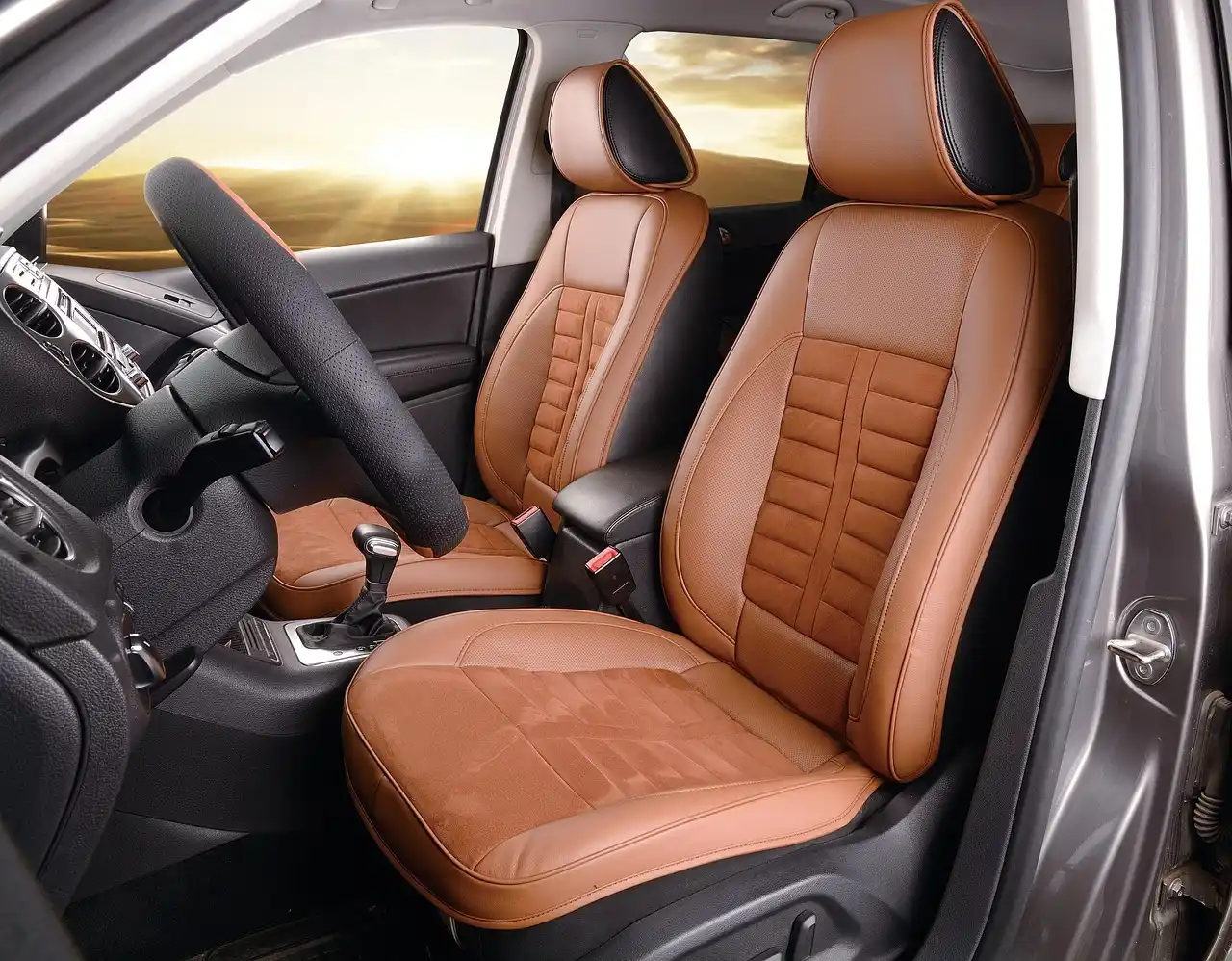
This W-shaped ergonomic cushion is the right category when you want posture support and a seat that feels more structured over a long drive. The shape is meant to guide the body into a more stable sitting position, and a W-shaped layout is also used to support lower-back comfort and sciatica relief positioning.
A W-shaped cushion usually matters most when the seat feels too flat or the hips slide into a slouch. Breathable mesh and an easy-clean cover are the features to look for if heat and cleanup matter on a daily commute.
The drawback is that a posture-focused shape can feel unusual at first, and the wrong contour can irritate drivers who want a simple pressure-relief pad. In a cabin with little headroom or limited seat adjustment, added thickness can also be a problem.
Adjustable air cushion: best for custom firmness
An adjustable air cushion is the best choice when you want to tune firmness instead of committing to one foam feel. The built-in pump gives you variable inflation, and the contoured seat shape is useful if you want portable support that you can adjust for a firmer or softer ride.
This type is useful for drivers who need to fine-tune pressure distribution from day to day. It can also be a practical option if one seat feels fine on one commute and too firm on another.
The drawback is that air cushions can shift feel more than foam, and they may not suit drivers who want a set-it-and-forget-it pad. If your seat is already slippery, an air cushion needs especially good retention.
Car seat cushion decision table
| Pain point | Body/seat condition | Best cushion shape | Expected height change | Heat risk | Stability risk | What to avoid |
|---|---|---|---|---|---|---|
| Tailbone pain | Upright seat, coccyx contact, soreness after 30+ minutes | U-shaped coccyx cushion | Low-profile; usually minimal | Low to medium, depending on cover | Low if the base grips well | Thick wedges that push you too high |
| Low visibility | Low bucket seat, poor hood view, short line of sight | Wedge cushion | 1 to 2 inches is common; some models go higher | Medium if the cover traps heat | Medium if there is no strap or grippy base | Flat pads that do not change eye level |
| Heat buildup | Leather seat, summer commute, sweaty back or thighs | Mesh or ventilated cushion | Usually low | Low | Medium if the surface is slick | Dense foam with no airflow layer |
| Sliding or rocking | Sloped seat, frequent entry and exit, bumpy roads | Non-slip cushion with strap retention | Depends on shape | Varies by cover material | Low with silicone gel bottom or buckle retention | Loose pads with a smooth underside |
| Lower-back support | Slouching, long highway runs, fatigue near the lumbar area | W-shaped ergonomic cushion | Often moderate; some add noticeable height | Medium unless mesh is used | Medium if the contour does not match the seat | Overly soft pads that collapse fast |
| Custom firmness | Changing comfort needs, shared vehicle, varied commute lengths | Adjustable air cushion | Variable by inflation | Medium | Medium if underinflated or poorly placed | Fixed-density pads when pressure changes day to day |
| Pressure relief with secondary office use | Car and desk use, moderate tailbone soreness, limited storage space | Memory foam cushion | About 1.2 inches on the listed model | Low to medium with breathable fabric | Low with a non-slip base | Thick booster cushions that change driving position too much |
What problem are you trying to solve?
The first filter is the symptom. Tailbone pain points you toward a coccyx cutout, low visibility points you toward a wedge, heat points you toward mesh or cooling materials, and sliding points you toward a stronger base or strap retention. Matching the shape to the problem matters more than chasing the softest feel.
A common first-timer mistake is choosing the plushest car seat cushion available without checking whether it stays supportive through a two-hour highway commute. If the seat is already high, extra height can crowd the steering wheel and change how your legs reach the pedals.
Non-slip base details that matter
Stability is more than a buzzword. A silicone gel bottom, rubber base, strap, or buckle retention can keep a cushion steadier during entry and exit, and it can reduce sliding on bumpy roads.
If the seat is leather or heavily textured, read the listing closely. A pad that feels fine in a showroom can drift once the seat gets warm or the driver shifts weight repeatedly on a commute.
Breathable covers and heat control
Mesh, soft-touch fabric, and PU leather all change how much heat you feel over time. Mesh usually helps airflow best, while some softer covers feel better against the skin but may hold more warmth.
Washable or easy-clean construction matters more than many buyers expect. A commuting cushion collects sweat, dust, and road grime faster than a home-chair pad.
How to choose without guessing
- Start with your pain point: tailbone, back posture, heat, or sliding.
- Check seat height before you buy. If your eyes are already near the top of the windshield, avoid a tall wedge or booster.
- Check pedal reach and steering-wheel access after any height gain.
- Choose the least bulky shape that solves the problem.
- Look for a cover you can remove and wash without a fight.
- Ask how fast the foam compresses over time, especially if the cushion will live in the car every day.
Say your sedan seat is low and your view of the road feels cramped on a 45-minute commute. A wedge can help by lifting you higher, but that same change can shorten pedal reach if your legs are already bent tightly.
Suppose your truck seat is comfortable but you get hot on summer drives. A mesh or cooling design makes more sense than adding height, because the real problem is heat buildup, not seat angle.
Which one should you buy?
Choose the U-shaped memory foam cushion if your pain is centered at the tailbone and you do not want a major height change. Choose the wedge if you need a better forward view or a higher driving position. Choose the W-shaped ergonomic style when posture support and lower-back comfort matter more than a soft pad feel.
If your seat slides a lot, prioritize the cushion with the strongest grip and retention method. If your commute is hot or your seats are leather, ventilation should move up the list before thickness does.
For drivers who also want desk use, the memory foam option is the easiest all-around pick. For drivers who want a custom feel from day to day, the adjustable air style makes more sense. Avoid flat pads when you need visibility, and avoid tall wedges when your cabin already feels tight.
Frequently asked questions
What is the best car seat cushion for long commutes?
The best cushion is the one that solves your main driving problem without creating a new one. For tailbone pain, start with a U-shaped memory foam cushion. For low seating, use a wedge. For heat, look for mesh or cooling materials. For sliding, prioritize a grippy base and retention.
Which car seat cushion helps with tailbone pain?
A U-shaped coccyx cushion is the most direct match for tailbone pain because it removes pressure from the center of the seat. A 1.2-inch memory foam build can help keep the profile low, which matters if you do not want to change your seat height much.
Which cushion adds height for better driving visibility?
A wedge cushion is the shape to choose when you need more height and a better view over the hood. The key tradeoff is pedal reach and steering-wheel distance, so a height boost only helps if your cabin still leaves enough room to drive comfortably.
Are memory foam car seat cushions good for long trips?
Yes, memory foam works well for long trips when the goal is pressure relief and a more even seating feel. A breathable cover and non-slip base matter because long trips expose weakness in heat control and stability. Foam that compresses too quickly is less useful for daily commuting.
What car seat cushion stays in place while driving?
Look for a cushion with a silicone gel bottom, rubber base, or strap retention. Those features reduce sliding during entry, exit, and bumpy-road driving. A smooth pad without grip is more likely to wander, especially on leather seats.
Should I choose a wedge cushion or a flat cushion for commuting?
Choose a wedge if you need height, better sight lines, or a more forward-tilted driving position. Choose a flat or low-profile cushion if your main issue is pressure relief and you do not want to alter pedal reach or seat-belt fit. The wrong wedge can feel awkward in a compact cabin.
Products related to this article
Sponsored / affiliate links. As an Amazon Associate I earn from qualifying purchases. I may earn additional commission from eligible campaigns.
 FLORICH Leather Seat Cover, Car Seat Covers Front Set, Waterproof Car Seat Protectors, Front Seat Covers 2 Pack, Breathable Automotive Seat Covers Protector Fit for Most Cars Trucks SUV
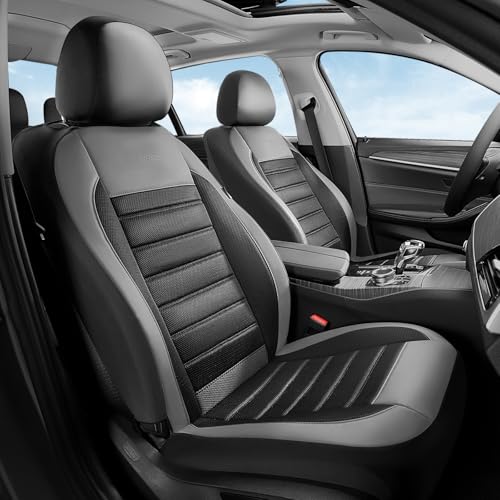 Coverado Car Seat Covers Front Seats, Luxury Leather Car Seat Covers, Automotive Mesh Seat Covers 2 Pack, Airbag-Compatible, Black Gray Seat Covers for SUV Sedan Truck