5 Best Seat Belt Pads for Long Commutes: we compared
Choose seat belt pads by the problem you feel most: neck rubbing needs a wider, contoured pad; heat needs breathable mesh or perforated foam; slip needs grippy backing; easy cleaning needs wipeable or machine-washable covers. Ignore the pain point, and the pad can make a long commute worse by sliding, trapping heat, or rubbing the same spot harder. This guide compares the best seat belt pads for long commutes by comfort issue, material, fit, cleaning, and daily use.
This guide is part of our Car accessories for comfort and convenience series.
Quick picks
For most commuters, a low-profile memory foam pad is the safest first buy because it softens shoulder contact without turning the belt into a bulky strap. If heat, sweat, or shared use matters more, pick the easier-cleaning options below.
- Best for sensitive skin: Dryva Seat Belt Cover — microfiber padding with a washable surface and a softer feel against bare skin.
- Best for hot climates: Yudara Cooling Car Seat Cover — not a seat belt pad, but the only listed option built around airflow and active cooling for summer driving.
- Best for highway miles: Majic Memory Foam Seat-Belt Pad, low-profile foam is a good match when the belt sits on one shoulder for an hour or more.
- Best budget option: Bittwee 2PCS Car Seat Belt Pads, soft leather, simple Velcro fit, and low entry price.
- Best easy-clean option: Dryva Seat Belt Cover, waterproof, sweatproof, and machine washable.
Quick comparison
| Product | Badge | Best for | Price | ||
|---|---|---|---|---|---|
 |
Majic Memory Foam Seat-Belt Pad Adds Comfort and Cushion toMajic | Our pick | Memory foam cushion for shoulder strap comfort. | $12.99
Price as of 29 Sep 2026
|
View |
 |
Cooling Car Seat Cover, Black Automotive Air VentilatedYudara | Upgrade pick | Ventilated cooling seat cover with fan. | $27.99
Price as of 29 Sep 2026
|
View |
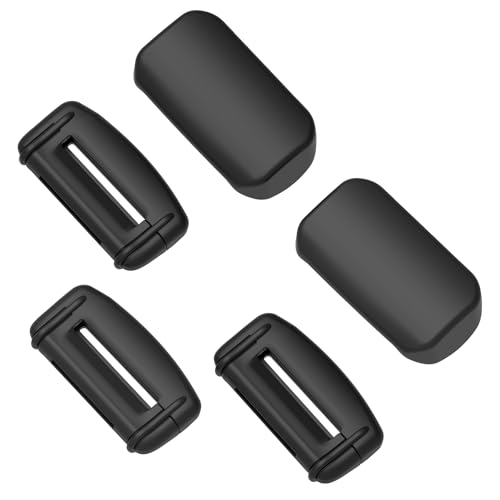 |
YONZEE 5-Pack Silicone Car Seat Belt Buckle Covers –YONZEE | Pair with it | Silicone buckle covers for noise reduction. | $15.99
Price as of 29 Sep 2026
|
View |
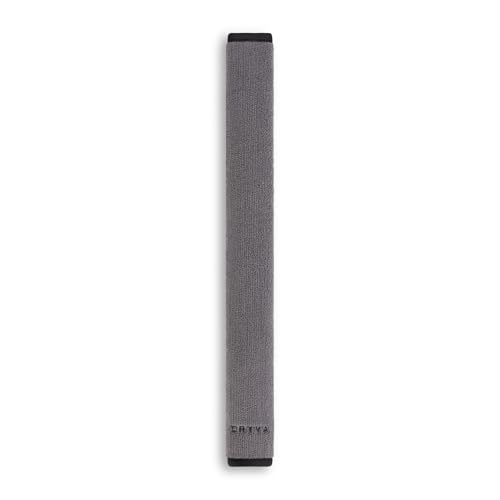 |
Dryva Seat Belt Cover, Extra Long, 20", Waterproof andDryva | Also great | 20-inch waterproof and machine washable cover. | $16.00
Price as of 29 Sep 2026
|
View |
 |
Bittwee 2PCS Car Seat Belt Pads, Breathable Soft Leather,Bittwee | Budget pick | Soft leather pads with breathable comfort. | $9.99
Price as of 29 Sep 2026
|
View |
Use this as a commuter filter, not a style guide. Neck comfort matters most on long highway runs; heat and easy cleaning matter more in stop-and-go traffic, shared vehicles, and warm weather.
Thin, stable pads usually beat extra-plush pads once the commute gets long, because they stay put and keep the shoulder belt feeling like a seat belt instead of a rolled towel.
How we chose
The shortlist focuses on five things that matter in daily driving: neck comfort, heat buildup, slip resistance, washability, and bulk under the belt.
We also weighed fit claims, closure type, and whether each pad is more likely to stay put through repeated buckle-in and buckle-out use.
Finally, we separated comfort by use case. A pad that feels great in winter can be a sweaty mistake in August.
Majic Memory Foam Seat-Belt Pad: best for long highway commutes
This is the best starting point for drivers who want shoulder relief without a lot of extra bulk. Based on the spec sheet and owner feedback, the memory foam build should spread pressure better than flat fabric covers, which helps when the belt edge keeps landing on the same spot for 45 minutes or more.
It is the right kind of simple for long commutes: quick to fit, broadly compatible with standard belts, and soft enough to cut neck rub if the seat sits low or the belt crosses high on the chest. The drawback is familiar with foam pads. They can hold more heat than a thin textile cover, and overly thick foam can change how the belt feels on the shoulder.
Dryva Seat Belt Cover: best for sensitive skin
This one makes sense for drivers whose neck or collarbone gets irritated by rough fabric, sweat, or repeated friction. The microfiber build and washable construction are a better fit for skin sensitivity than firmer, slicker pads that move around during stop-and-go traffic.
Its main advantage is upkeep. The waterproof, sweatproof surface should be easier to keep clean than foam alone, and the extra-long design offers more coverage across the shoulder area. The drawback is that long coverage can add material under the belt, so drivers who already have a tight shoulder fit may notice more bulk than they want.
Bittwee 2PCS Car Seat Belt Pads: best budget leather-style option
This is the budget pick for commuters who want a softer feel and a fast Velcro setup without spending much. Soft leather-style pads tend to feel smoother against shirts than rough webbing, and the two-pack makes sense if both front seats need help.
It is better for light comfort improvement than for serious pressure relief. Leather-style surfaces can wipe clean, but they usually do not breathe as well as open textile covers, so they may feel warmer in summer. The low price also means closure strength and long-term shape retention are the first things to watch.
Yudara Cooling Car Seat Cover: best for hot-weather driving
This is the outlier in the list, and that matters. It is not a seat belt pad in the usual sense, but it fits the hot-climate use case better than most padding products because airflow is the point. For drivers who sweat through a commute, cooling can matter more than cushion.
The strength here is active ventilation, not shoulder wrap comfort. The drawback is equally clear: it is larger, more complex, and less focused on reducing neck rub from a shoulder belt. If the main pain point is a strap edge on the neck, this is the wrong category.
YONZEE 5-Pack Silicone Car Seat Belt Buckle Covers: best for shared vehicles and cabin protection
This is not a comfort pad for the shoulder, but it can still matter in daily commuting because loose buckle hardware can rattle, scratch trim, and add annoyance in shared cars. The silicone build is aimed at noise reduction and surface protection, which helps drivers who care about a quieter cabin.
The drawback is obvious if you need shoulder comfort: it does nothing to stop neck rubbing or belt pressure. It is also a separate use-case purchase, so it should be treated as an add-on rather than a replacement for a real seat belt pad.
Which one should you buy
If your main complaint is neck rubbing on an hour-long commute, start with the Majic Memory Foam Seat-Belt Pad. If your skin is sensitive or the belt feels scratchy over a T-shirt, the Dryva Seat Belt Cover is the cleaner, easier-care choice.
If your car gets hot and you sweat easily, a conventional pad may help less than you expect; airflow matters more than plushness, so the Yudara cooling cover is the better climate-first buy. For the lowest spend, the Bittwee pads give basic relief, but expect more heat than the better-finished options.
If you drive rideshare or share the car with family, prioritize washability over softness. Pads that wipe clean or machine wash are less likely to smell, stain, or feel grimy after repeated use.
What are the best seat belt pads for long commutes?
The best seat belt pads for long commutes are low-profile, stable pads that reduce shoulder pressure without adding so much bulk that the belt starts slipping or bunching. For most drivers, memory foam or microfiber-backed pads are the safest bet. The right choice depends on whether the commute problem is neck rub, heat, or easy cleaning.
Long driving exposes weak pads fast. A pad that feels plush in the driveway can start twisting after 30 minutes, trap sweat, or push the belt away from the body enough to feel distracting. That is why stability and thickness matter as much as softness.
If the commute is mostly highway miles, look for a pad with a firmer core and a closure that stays closed. If it is stop-and-go city traffic, prioritize heat control and washability because the belt is in contact with the skin more often and for shorter bursts.
Do seat belt pads actually make long drives more comfortable?
Yes, but only when the pad matches the discomfort. Seat belt pads reduce friction on the neck and shoulder, and they can spread pressure over a wider area. They do not fix a poor seating position, and a bad fit can create new problems such as twisting, bunching, or extra heat.
The comfort gain is real for drivers who feel the belt edge digging in or who wear thin clothing. The gain is smaller for drivers whose seat is already positioned well and whose belt lands flat across the chest. In that case, the wrong pad can be more noticeable than helpful.
For long commutes, the comfort test is simple: if the pad stays centered, does not migrate into the neck path, and does not make the buckle feel awkward, it earns its keep. If it slips every few miles, it has failed the commute test.
Which seat belt pad material is best: memory foam, gel, fleece, or leather?
Memory foam is the best all-around comfort material for pressure relief, neoprene is better when sweat resistance matters, fleece feels soft but can hold heat, and leather-style covers are easier to wipe down but usually run warmer. The right choice depends on climate, skin sensitivity, and how often you want to clean it.
Memory foam vs. gel
Memory foam spreads pressure well and is usually the most forgiving for shoulder rub. Gel is less common in this product category, but when present it can feel cooler at first touch. The tradeoff is that gel can feel firmer, and many gel-style pads are still wrapped in fabric that limits the cooling effect.
For commuters, foam is usually the safer material because it conforms without feeling slippery. Gel makes more sense when local pressure is the main complaint and heat is secondary. If the belt already sits close to the neck, a softer foam pad usually feels less intrusive.
Fleece and leatherette
Fleece is good for softness and winter comfort. It tends to feel less abrasive on bare skin, but it can absorb moisture and collect odor if the car is warm or the commute is sweaty. Leatherette wipes clean more easily and can resist stains better, though it often traps more heat than fabric.
For sensitive skin, fleece is pleasant but not always practical in summer. Leatherette is cleaner and more durable-looking, but it is not the first choice for hot climates. In both cases, the closure and thickness matter as much as the surface material.
Neoprene
Neoprene works well when sweat resistance and durability matter. It is a sensible choice for drivers who commute in hot weather and want a material that does not feel soaked by the end of the week. The drawback is breathability. Neoprene can feel warm, and it may hold more heat than open-textile designs.
It is a stronger choice for athletic use or shared vehicles than for someone who wants a cooler touch on bare skin. If the cabin is already hot, neoprene alone will not solve the problem.
How we scored the best seat belt pads for commuting
We scored each pad on five practical factors: neck comfort, heat buildup, slip resistance, washability, and bulk under the belt. Those are the things that decide whether a pad feels better after an hour, not just after five minutes in the parking lot.
| Product | Neck comfort | Heat buildup | Slip resistance | Washability | Bulk | Best for |
|---|---|---|---|---|---|---|
| Majic Memory Foam Seat-Belt Pad | High | Medium | Medium | Medium | Low to medium | Long highway drives |
| Dryva Seat Belt Cover | High | Low to medium | Medium to high | High | Medium | Sensitive skin, shared cars |
| Bittwee 2PCS Car Seat Belt Pads | Medium | Medium to high | Medium | Medium | Low to medium | Budget buyers |
| Yudara Cooling Car Seat Cover | Low for belt rub, high for cabin cooling | Low | High for seat use, not belt use | Medium | High | Hot climates |
| YONZEE Silicone Buckle Covers | Not applicable to shoulder comfort | Low | High for buckle placement | High | Low | Cabin noise and scratch reduction |
The table makes the tradeoffs clear. If you want the least hassle on a daily commute, choose the pad with the best mix of low bulk and decent cleaning, not the thickest one in the cart.
Sensitive-skin drivers should bias toward softer linings and lower-friction surfaces. Hot-climate drivers should favor breathability and washability over plush padding. Highway drivers should care most about slip control and belt feel.
Best seat belt pads by commuting need
Different commutes need different fixes. A city driver who buckles and unbuckles ten times a day needs different hardware than a highway commuter who wants the belt to disappear for 90 minutes. Heat, sweat, and cleaning all matter more once the car becomes part of daily routine.
Sensitive skin: soft lining and low friction
Pick a pad with a smooth, low-abrasion surface and enough width to keep the belt edge off the neck. Microfiber or soft foam tends to work better than stiff leather-style covers for skin that reacts to repeated rubbing. The best outcome is less contact pressure, not just more padding.
Hot-weather driving: cooler materials and quick drying
Choose breathable materials, wipe-clean surfaces, or designs that dry quickly after washing. Heat is the enemy of daily use because a sweaty pad starts feeling sticky, then gets ignored, then gets left in the car too long. If a material traps odor, it will wear out in usefulness before it wears out physically.
Long highway drives: stable padding and less shoulder rub
For highway miles, the priority is staying in one place. A pad that slides toward the neck becomes more annoying the longer the drive lasts. Low-profile memory foam or a well-anchored wraparound design usually performs better than extra-thick pads that sit proud of the belt.
Rideshare or shared use: easy cleaning and odor control
Use machine washable or wipeable materials. Shared cars accumulate sunscreen, sweat, dust, and food smells fast. A pad that can be cleaned without a long drying cycle is more likely to stay in rotation than one that has to be set aside for a day.
Will a seat belt pad fit your car?
Most seat belt pads fit standard 2-inch belts, but wider shoulder straps, booster-seat setups, and some larger vehicles can complicate the fit. Universal claims are helpful only if the closure can grip the belt securely and the pad does not bunch up around the latchplate or retractor path.
Fit is not just width. The belt angle, the seat height, and the distance from the shoulder anchor all affect whether the pad stays where you put it. A good pad on a bad belt path still slips.
Standard 2-inch belts versus wider shoulder straps
Standard 2-inch belts are the easiest match. Wider shoulder straps can need a longer wraparound sleeve or a closure with more adjustability. If the listing only says “universal” without saying how it closes or how wide it opens, that is not enough information for a confident buy.
Universal fit claims that need a closer look
Universal fit usually means the pad can mount on common belt sizes, not every seat, every height, and every body shape. Check whether the pad is held by hook-and-loop, snaps, or a sleeve design, because each holds differently over daily use. A weaker closure can rotate after a few entries and exits.
How closure type affects daily re-adjustment
Hook-and-loop is quick to install and adjust, but it can lose grip if the pad is removed often or if lint builds up. Snap closures are stable but less flexible. Wraparound sleeves can stay neat once positioned, while anti-slip backing helps only if the pad already fits well.
Are seat belt pads safe to use with airbags and pretensioners?
Seat belt pads are generally safe when they stay on the shoulder portion of the belt and do not interfere with retraction, buckle motion, or the latchplate path. They should not change how the belt locks, catch, or tightens in a crash, and they should never sit where the belt needs to move freely.
That means placement matters more than style. A pad that slides into the neck or shoulder path is a problem. One that sits centered and lets the belt retract normally is far less likely to create trouble.
Before daily use, check that the pad does not stop the belt from returning into the retractor and does not block the latchplate from moving smoothly. If the belt feels sticky after installation, remove the pad and reassess.
How do I keep a seat belt pad from slipping or twisting?
The best way to prevent slipping is to choose the right closure for the belt thickness and your commute. Hook-and-loop works for quick installation, wraparound sleeves hold shape better, and anti-slip backing helps once the pad is already sized correctly. A poor fit will twist no matter how soft it feels.
- Match the pad width to the shoulder belt width.
- Center the pad on the shoulder contact point before closing it.
- Use a closure that fully grips the belt, not just the edge.
- Check the first few drives for rotation, bunching, or neck migration.
- Re-seat the pad after buckle-in if the belt angle changes.
If the pad keeps moving, the issue is usually closure strength or thickness, not comfort. Extra-thick pads can roll more easily because they present a larger surface for the belt to push against.
Are seat belt pads washable?
Many are, but wash care varies a lot. Some pads are machine washable, some are wipe clean, and some rely on a removable cover. For daily commuters, washability matters because sweat, sunscreen, and dust build up fast, especially in warm weather or shared vehicles.
Drying time matters as much as the wash method. A pad that stays damp for hours is less likely to get cleaned regularly. Wipe-clean surfaces dry fastest, while foam-heavy pads may need more time before they go back in the car.
Odor control also depends on material. Breathable fabrics and removable covers are easier to keep fresh than dense foam or leatherette that traps heat and body oils.
How thick should a seat belt pad be for daily commuting?
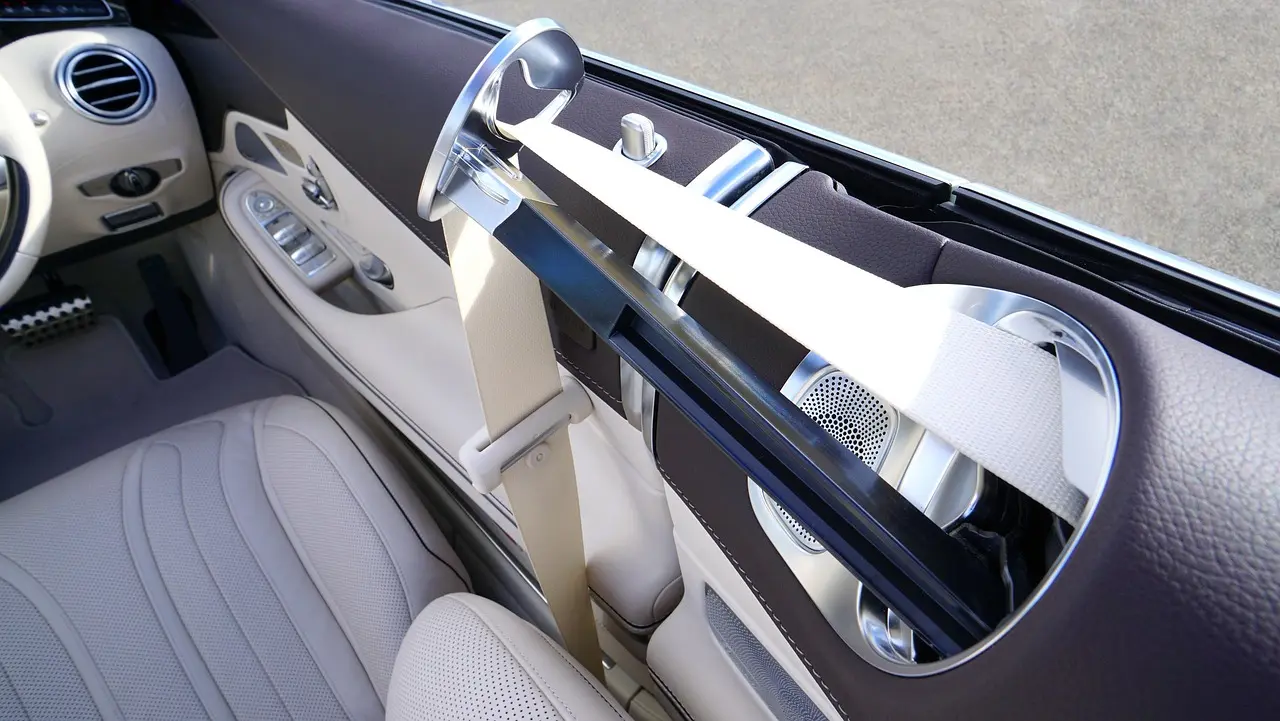
For daily commuting, medium thickness is usually the best balance because it reduces neck rub without making the belt feel disconnected from the body. Thin pads keep the belt feel close to stock, while extra-thick pads can add bulk, roll at the shoulder, and slow retraction.
Thickness should match the problem. If the belt edge is barely annoying, a thin low-profile pad is enough. If the belt cuts into the neck every day, medium cushioning is safer than going straight to the plushest option. Extra-thick pads are best reserved for very specific pressure points.
The warning sign is easy to spot: if the pad changes how the belt lays across the chest or makes you notice the retractor more often, it is too much for commuting.
Thin pads for belt feel and retraction
Thin pads are best when you want a little softness without changing the belt geometry. They are a solid choice for drivers who care about maintaining a close, familiar belt feel and for anyone who already sits in a good driving position.
Medium pads for daily commuting balance
Medium pads usually give the best mix of comfort and control. They are thick enough to reduce friction and shoulder pressure, but not so bulky that they crowd the neck or feel cumbersome in a seat with a tight shoulder path.
Extra-thick pads and when they become too much
Extra-thick pads are tempting because they look plush, but they can become a problem on long commutes. They may bunch under winter clothing, warm up quickly, and interfere with the normal feel of the shoulder belt. If the pad needs constant straightening, it is too thick for daily use.
Frequently asked questions
Which seat belt pad material is best: memory foam, neoprene, fleece, or leather?
Memory foam is the best all-around choice for comfort. Neoprene is better for sweat resistance, fleece feels soft in cooler weather, and leather-style covers are easiest to wipe clean. The best material depends on whether you want pressure relief, heat control, or simple maintenance.
Products related to this article
Sponsored / affiliate links. As an Amazon Associate I earn from qualifying purchases. I may earn additional commission from eligible campaigns.
 Seat Belt Covers for Kids, 2 in 1 Car Seat Strap Covers & Auto Seatbelt Pillow for Kids nap, Car Travel Pillow & Strap Pads Cushion for headrest, Neck/Shoulder Support, fit Child, Adult, Grey;
 FLORICH Leather Seat Cover, Car Seat Covers Front Set, Waterproof Car Seat Protectors, Front Seat Covers 2 Pack, Breathable Automotive Seat Covers Protector Fit for Most Cars Trucks SUV