Best Car Camping Kitchen Setup: 6 Essentials for Your Trunk
A car camping kitchen is really six separate decisions — where you’ll cook, what you’ll cook on, where gear lives between trips, how you’ll get water, what you’ll cook in, and how you’ll wash up afterward. This guide compares six current products across those exact categories, cross-referencing manufacturer listings against aggregated buyer feedback — not in-house lab testing. Our top picks: the GCI Outdoor Slim-Fold Cook Station for a stable, heat-resistant surface that sets up in seconds, and the Coleman Triton+ 2-Burner Stove to cook on once you’re set up — see our related guide, Car Camping: Elevating Your Outdoor Lifestyle.

Quick Answer
A complete car camping kitchen needs a stable cook surface (like a folding cook station with a heat-resistant top), a two-burner propane stove, a chuck box or bin to keep everything organized between trips, a water container with a spigot, a compact cookware set, and a way to wash dishes. You don’t need all six to be premium — prioritize the stove and cook surface first, since those are what fail most obviously if underpowered or unstable.
Quick Picks
- Best Overall (Cook Station): GCI Outdoor Slim-Fold — heat-resistant top, folds flat.
- Best Two-Burner Stove: Coleman Triton+ — InstaStart ignition, reliable output.
- Best Storage: Yoke Chuck Box — keeps gear organized between trips.
- Best Water Container: Digury 5-Gallon Jug — spigot for easy access.
How These Products Are Grouped
Rather than ranking six unrelated products on one scale, we grouped them by the six roles a complete car camping kitchen actually needs filled. The six categories below cover the setup a car camper is most likely to need:
- Best Cook Station: GCI Outdoor Slim-Fold Cook Station
- Best Two-Burner Stove: Coleman Triton+ 2-Burner Propane Stove
- Best Storage: Yoke Chuck Box Camp Kitchen
- Best Water Container: Digury 5-Gallon Water Jug with Spigot
- Best Cookware Set: THTYBROS 17-Piece Camping Cookware Kit
- Best Wash Station: Collapsible Sink 2-Pack
Comparison Table: All 6 Picks at a Glance
| Award | Product | Role | Typical Price | Verdict |
|---|---|---|---|---|
| Best Cook Station | GCI Outdoor Slim-Fold | Cook surface | $90-$120 | Heat-resistant, stable, folds flat |
| Best Stove | Coleman Triton+ | Cooking | $60-$80 | Reliable ignition, two adjustable burners |
| Best Storage | Yoke Chuck Box | Organization | $350-$400 | Durable, USA-made, keeps gear together |
| Best Water | Digury 5-Gal Jug | Water supply | $20-$30 | Spigot means no tipping to pour |
| Best Cookware | THTYBROS 17pc Kit | Cooking vessels | $35-$50 | Sized for car camping, not ultralight backpacking |
| Best Wash Station | Collapsible Sink 2-Pack | Dish washing | $20-$28 | Two basins for wash + rinse |
Prices fluctuate by retailer — treat these as ballpark ranges.
Full Reviews: 6 Car Camping Kitchen Essentials
Best Cook Station: GCI Outdoor Slim-Fold Cook Station
Best Cook Station • Approx. $90-$120
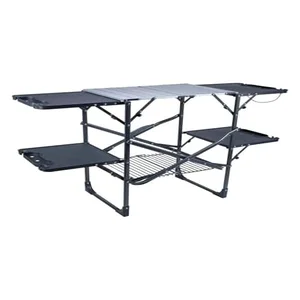
GCI Outdoor Slim-Fold Cook Station, Heat-Resistant Top
| Surface | Heat-resistant aluminum |
| Setup | Folds flat, quick assembly |
| Stove Compatibility | Fits most two-burner stoves |
| Best For | Weekend car camping trips |
- Heat-resistant aluminum top handles a two-burner stove without warping or scorch marks
- Folds flat for storage and transport, unlike a bulky picnic table
- Stable enough that a stove won’t wobble mid-cook
- Takes up meaningful trunk space compared to a simple folding table without built-in stove accommodations
This is the foundation the rest of the kitchen builds on — a stable, heat-safe surface solves the single biggest problem with improvising on a picnic table or tailgate.
Best Two-Burner Stove: Coleman Triton+
Best Two-Burner Stove • Approx. $60-$80
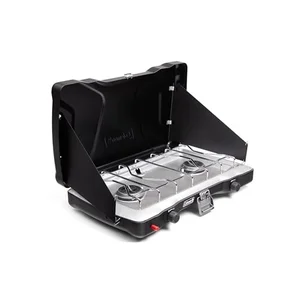
Coleman Triton+ 2-Burner Propane Camping Stove
| Burners | 2, independently adjustable |
| Ignition | InstaStart (push-button) |
| Fuel | Propane |
| Best For | Cooking two dishes at once |
- InstaStart ignition lights reliably without matches or a separate lighter
- Two independently adjustable burners let you simmer one pot while boiling another
- Propane canisters are another consumable to pack and track alongside everything else
Two independent burners matter more than it sounds — a single-burner stove means every dish is sequential, which adds real time to a group meal.
Best Storage: Yoke Chuck Box Camp Kitchen
Best Storage • Approx. $350-$400
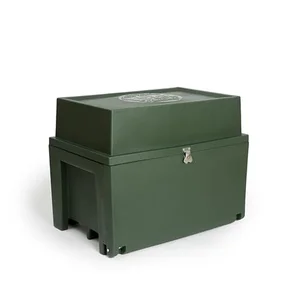
Yoke Chuck Box Camp Kitchen
| Type | Dedicated storage box |
| Material | Durable, lightweight |
| Origin | USA-made |
| Note | Storage only — pair with a separate table/cook station |
- Keeps stove, cookware, and utensils organized and quickly accessible between trips
- Durable, USA-made construction built for repeated loading and unloading
- This is a storage box, not a full cook station — you’ll still need a separate surface to prep and cook on, like the pick above
The real value here is not re-packing a scattered box of gear every single trip — everything has a place and stays there between uses.
Best Water Container: Digury 5-Gallon Water Jug
Best Water Container • Approx. $20-$30
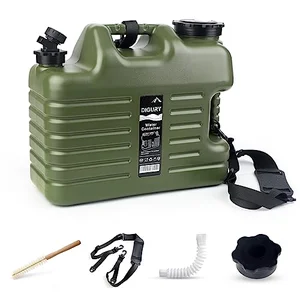
Digury 5 Gallon Water Jug with Spigot
| Capacity | 5 gallons |
| Dispensing | Built-in spigot |
| Material | BPA-free |
| Best For | Cooking and wash-up water |
- Spigot means pouring water doesn’t require lifting or tipping the entire container
- 5-gallon capacity covers a weekend trip’s cooking and wash-up needs for most groups
- Full at 5 gallons is genuinely heavy (about 40 lbs) — plan where it sits in the car accordingly
A dedicated water container with a spigot is a small upgrade that removes a genuinely annoying daily task — tipping a jug to fill a pot.
Best Cookware Set: THTYBROS 17-Piece Camping Cookware Kit
Best Cookware • Approx. $35-$50
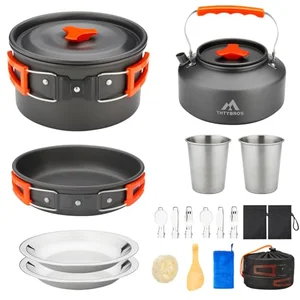
THTYBROS 17pc Camping Cookware Kit
| Piece Count | 17 |
| Includes | Pot, pan, kettle, utensils |
| Sizing | Car-camping scale, not ultralight |
| Best For | Small groups |
- Sized appropriately for car camping rather than ultralight backpacking, so pieces are actually usable for real cooking
- Includes a full set (pot, pan, kettle, utensils) rather than piecing items together separately
- Bulkier than a minimalist backpacking set — fine for a car trunk, not for carrying on foot
The car-camping sizing matters — backpacking cookware is optimized for weight over usability, while this set is sized for actually cooking a real meal.
Best Wash Station: Collapsible Sink 2-Pack
Best Wash Station • Approx. $20-$28
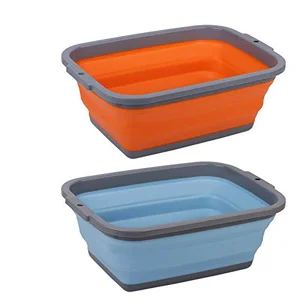
Collapsible Sink 2-Pack, 2.25 Gal Each
| Pack Size | 2 basins |
| Capacity | 2.25 gal each |
| Design | Collapsible, drain plug |
| Best For | Wash + rinse dish routine |
- Two basins allow a proper wash-then-rinse routine instead of one murky basin for everything
- Collapses flat for storage when not in use
- Requires hauling and heating your own wash water — no built-in heating element
A two-basin setup is a meaningful upgrade over a single basin — rinsing in clean water after washing actually gets dishes clean instead of just moving grease around.
How We Picked These
We haven’t run these products through a lab — no controlled BTU output testing, no durability drop tests. What we did instead: cross-referenced each product’s manufacturer-published specs against aggregated buyer feedback and independent camp-kitchen review roundups, and grouped picks by the six distinct roles a complete kitchen setup actually needs (cook surface, stove, storage, water, cookware, wash-up) rather than treating “camp kitchen” as one single product category. This is a genuinely useful, honestly-sourced buyer’s guide — not a hands-on lab review, and we’re not pretending otherwise.
Buying Guide: What Actually Matters
1. Start With the Cook Surface and Stove, Not the Extras
A wobbly table or an underpowered single-burner stove will frustrate every meal of the trip. Get a stable, heat-safe surface and a reliable two-burner stove sorted first — everything else (storage, wash station) is genuinely useful but less trip-ruining if it’s mediocre.
2. A Chuck Box Is Storage, Not a Full Kitchen
Chuck boxes keep gear organized between trips, but most don’t include a cook surface built in — you’ll still need a separate table or cook station to actually prep and cook on. Don’t assume “chuck box” and “camp kitchen” are interchangeable purchases.
3. Plan Water Capacity for Cooking and Washing, Not Just Drinking
Cooking pasta, washing dishes, and rinsing all use water beyond what you’d drink directly. A 5-gallon container covers a weekend for a small group, but scale up for longer trips or larger groups rather than relying on drinking-water bottles for kitchen tasks.
4. Match Cookware Size to Car Camping, Not Backpacking
Backpacking cookware is optimized to minimize weight, often at the expense of usable cooking capacity. Since car camping doesn’t require carrying gear on your back, a slightly larger, more functional cookware set actually cooks better without any real downside.
5. Never Run a Propane Stove Inside the Car or an Enclosed Tent
This is the single most important safety rule for any car camping kitchen: propane stoves are designed for open-air use and produce carbon monoxide as they burn. Running one inside the car, an enclosed tent, or any space without real airflow can build up dangerous, potentially lethal carbon monoxide levels with no visible warning sign. Always cook outside with a stove on a stable, level surface away from the vehicle, in a genuinely open, ventilated area — not just cracked windows. If bad weather forces cooking under a shelter, make sure it is open on multiple sides rather than fully enclosed.
Frequently Asked Questions
What’s the minimum I need for a basic car camping kitchen?
A stable cook surface, a two-burner stove, a pot and pan, and a way to carry water covers the essentials. Storage boxes and dedicated wash stations are genuine quality-of-life upgrades but not strictly required for a basic trip.
Is a chuck box the same thing as a camp kitchen?
Not exactly. A chuck box is primarily storage and organization for your gear — most don’t include a built-in cook surface, so you’ll still need a separate folding table or cook station alongside it.
How much water should I bring for cooking and washing?
A 5-gallon container is generally enough for cooking and dish-washing over a weekend for a small group, though this varies with meal complexity and group size — bring extra for longer trips.
Do I need a two-burner stove, or is one burner enough?
One burner works for simple meals, but two independently adjustable burners let you cook two dishes at once (like simmering a sauce while boiling pasta), which saves real time for group meals.
Should I use backpacking cookware for car camping?
You can, but it’s not necessary. Backpacking cookware is optimized to minimize weight for carrying on foot, which often means smaller, less functional cooking vessels. Since weight isn’t a constraint in a car, a car-camping-sized cookware set generally cooks better.
Conclusion
Build the kitchen in priority order: a stable, heat-safe cook surface and a reliable two-burner stove first, since those are what ruins a trip if they underperform. From there, a chuck box keeps everything organized between trips, a spigot-equipped water container removes a genuinely annoying daily task, and a two-basin wash station makes cleanup actually effective rather than just moving grease around. None of these six pieces need to be premium — they just need to reliably do their one job.
Products related to this article
Sponsored / affiliate links. As an Amazon Associate I earn from qualifying purchases. I may earn additional commission from eligible campaigns.