How To Fix Car Heater Blowing Cold Air: Common Causes
It’s a bummer when your car heater blows cold air. Especially when it’s chilly outside. You expect a cozy ride.
Instead, you get a blast of frosty air. This can be really frustrating. It can even make your commute uncomfortable or even unsafe.
We’ve all been there. You turn the dial, expecting warm air. But nope.
Just cold. It’s a common problem. Many drivers face this issue.
But don’t worry. Most of the time, it’s not a super complicated fix. We’re going to break down why this happens.
We’ll look at the usual suspects. And we’ll talk about what you can do. You’ll learn what to check first.
This guide will help you understand the common causes. You’ll get a clear picture. We’ll explain things simply.
You’ll learn what might be wrong with your car’s heating system. We want you to feel more confident. You’ll know what to look for.
And maybe even how to solve it yourself. Or at least, you’ll know what to tell your mechanic. Let’s dive in.
When your car’s heater blows cold air, it’s often due to low coolant levels, a faulty thermostat, a blocked heater core, or a problem with the blend door actuator. Checking these common issues can help diagnose and resolve the problem.
Understanding Your Car’s Heater System
Your car’s heater isn’t magic. It uses a smart system. It borrows heat from your engine.
Your engine gets very hot when it runs. This heat needs to go somewhere. The cooling system takes care of this.
It uses a liquid called coolant. This coolant flows through your engine. It picks up excess heat.
Then, this hot coolant travels to the heater core. Think of the heater core like a small radiator. It sits behind your dashboard.
A fan blows air across this hot heater core. As the air passes over the hot fins, it warms up. This warm air then gets pushed into your car’s cabin.
That’s how you get warm air!
So, if you’re getting cold air, something in this chain is broken. The heat isn’t getting to the heater core. Or the air isn’t being blown over it correctly.
Or the system is trying to blow cold air instead. We need to find out where the break is.
Why is My Car Heater Blowing Cold Air? Common Causes
There are several reasons why your car heater might decide to blow cold air. Some are simple fixes. Others need a bit more work.
Let’s look at the most frequent culprits.
1. Low Coolant Level
This is perhaps the most common reason. Coolant is vital for your heater. It carries the heat from the engine to the heater core.
If your coolant level is too low, there isn’t enough hot liquid to warm the air. Your car needs a certain amount of coolant to operate correctly.
When your engine runs, the coolant circulates. It goes to the heater core. If there’s not enough coolant, the heater core won’t get hot enough.
This means the air passing through it stays cold. Or it might feel lukewarm at best. Low coolant can also mean you have a leak somewhere.
That’s something you need to fix.
You should check your coolant level regularly. It’s usually easy to do. Look for the coolant reservoir tank.
It’s a translucent plastic tank. It has markings for “min” and “max.” Make sure the level is between these marks when the engine is cool. If it’s low, you’ll need to add the correct type of coolant.
Always use the coolant recommended in your car’s owner’s manual.
2. Faulty Thermostat
The thermostat is like a gatekeeper for your coolant. It controls when the coolant flows to the radiator. When your engine is cold, the thermostat stays closed.
This helps the engine warm up faster. Once the engine reaches its normal operating temperature, the thermostat opens. Then, the coolant flows to the radiator to cool down.
If your thermostat gets stuck in the open position, your engine might struggle to reach its normal temperature. This is especially true in colder weather. If the engine doesn’t get hot enough, the coolant won’t be hot enough either.
This means the heater core won’t get the heat it needs. So, you get cold air.
A stuck thermostat can also cause your engine to overheat if it gets stuck closed. So, it’s an important part. If you suspect your thermostat is bad, it’s best to have it replaced by a professional.
It’s a relatively inexpensive part, but the labor can add up depending on your car model.
3. Clogged Heater Core
The heater core is where the magic happens for cabin heat. It’s a small radiator. It sits behind your dashboard.
Hot coolant flows through it. Air blows over it. Over time, gunk and sediment can build up inside the heater core.
This is often due to using the wrong type of coolant or not flushing the system often enough.
When the heater core gets clogged, coolant can’t flow through it properly. This means the heater core won’t get hot. Even if the engine is hot and the thermostat is working.
The hot coolant just can’t make its way through the blockages. So, the air passing over it stays cold. You might also notice a sweet smell inside your car if the heater core is leaking.
Fixing a clogged heater core can be tricky. Sometimes, a professional can flush it. This uses special chemicals and high-pressure water.
If it’s too badly clogged, it might need to be replaced. This is often a labor-intensive job. It means removing a large part of your dashboard.
4. Issues with the Blend Door Actuator
This is a part that controls the temperature inside your car. Your car has a blend door. This door mixes hot air from the heater core with cool air from the outside.
It decides how much of each to let in. This lets you set your desired temperature. For example, warm or hot.
An actuator is a small motor. It moves this blend door. If the blend door actuator fails, it might get stuck.
It could be stuck in the “cold” position. Or it might not be able to move at all. Even if the heater core is hot, the blend door is directing the air flow to stay cool.
Sometimes, you might hear clicking or grinding noises from your dashboard. This could be a sign of a failing blend door actuator. Replacing this part can vary in difficulty.
Some are easily accessible. Others are buried deep within the dashboard. It depends on your car’s make and model.
5. Problems with the Radiator Fan or Blower Motor
We need air to flow across the heater core. The blower motor is the fan that pushes air into your car’s cabin. If the blower motor isn’t working, you won’t feel any air coming out of the vents at all.
Or it might be very weak.
If you have air coming out, but it’s cold, it’s less likely the blower motor itself. However, sometimes a failing blower motor can cause weak airflow. This weak airflow might not be enough to pick up much heat from the heater core.
So, it feels cooler than it should.
The radiator fan is different. It cools the engine. It’s located at the front of the car.
It doesn’t directly blow air into your cabin. However, if the engine isn’t getting cooled properly due to a fan issue, it can affect the overall temperature regulation. This could indirectly impact your heater.
6. Air in the Cooling System
Air pockets in your cooling system are bad news. They can prevent coolant from flowing correctly. Especially to the heater core.
Air doesn’t transfer heat well. So, if air bubbles get trapped around the heater core, it won’t get hot. This can happen after a coolant flush or if there’s a leak that lets air in.
When air pockets form, they can create a barrier. This barrier stops the hot coolant from reaching the heater core. It’s like trying to heat a room with a blocked vent.
The heat is there, but it can’t get to you. You might also notice gurgling sounds coming from your engine bay.
Bleeding the cooling system is how you remove air. This process varies by car. It usually involves running the engine with the radiator cap off or opening specific bleed screws.
It’s a job that requires care. Overheating can occur if not done right.
7. Blocked or Leaky Hoses
Your car uses hoses to move coolant around. There are specific hoses that go to and from the heater core. If these hoses are kinked, collapsed, or blocked internally, coolant flow is reduced.
This means less hot coolant reaches the heater core.
Similarly, if a hose is leaking, you’ll lose coolant. As we already discussed, low coolant means less heat. A leak can be obvious, like a drip under your car.
Or it can be slow, leading to a gradual drop in coolant level.
Visually inspect the hoses that connect to your firewall. These are usually the ones going to the heater core. Look for cracks, bulges, or signs of leakage.
Squeeze them gently (when the engine is cool!) to check for firmness. A hose that feels mushy or brittle might need replacing.
My Personal Experience: A Frigid Morning Commute
I remember one particularly brutal winter morning. It was just below zero degrees Fahrenheit. I hopped into my trusty old sedan, ready for my drive to work.
I turned the key, and the engine rumbled to life. I immediately turned the heat up to its highest setting, anticipating that warm blast of air that usually greeted me.
But this time, nothing. Just a steady stream of icy air. I fiddled with the temperature dial.
I cranked the fan speed. Still, frigid air. Panic started to set in.
My fingers were already getting cold. I could see my breath fogging up inside the car. This was more than just inconvenient; it was becoming unsafe.
I pulled over and popped the hood. Steam was billowing out, which initially freaked me out. But then I realized it was just the cold air hitting the warm engine block.
I checked the coolant reservoir. It was bone dry. Completely empty.
That’s when it hit me. No coolant meant no heat. I had completely forgotten to check it after a minor repair a few weeks prior.
It turned out there was a small, slow leak I hadn’t noticed. That day, I learned a valuable lesson: never underestimate the power of regular checks. I ended up calling a friend for a jump and a tow to the nearest mechanic.
The drive was miserable, but the lesson was clear.
Car Heater Troubleshooting Checklist
Problem: Heater blowing cold air.
Quick Checks:
- Check coolant level in the reservoir.
- Ensure engine reaches normal operating temperature.
- Listen for fan noise from dashboard vents.
- Look for dashboard warning lights (e.g., engine temp).
If these are fine, move to more in-depth checks.
Real-World Context: Why This Happens So Often
Several factors contribute to car heaters blowing cold air. It’s not usually one single event. It’s often a mix of wear and tear, lack of maintenance, and environmental factors.
Wear and Tear Over Time
Like any part of your car, heater components age. Rubber hoses can become brittle. Seals can degrade.
Metal parts, like the heater core, can corrode or clog over years of use. The coolant itself can lose its effectiveness. This is why regular maintenance is so important.
It prevents small issues from becoming big ones.
Maintenance Habits (Or Lack Thereof)
This is a big one. Many drivers forget about their cooling system until there’s a problem. They might not check coolant levels.
They might skip coolant flushes. This allows sediment to build up. It can lead to clogged heater cores and poor circulation.
Following your car’s maintenance schedule is key.
Environmental Factors
In colder climates, your heater works harder. This puts more stress on the system. Low temperatures can also affect coolant.
If the wrong type of coolant is used, or it’s too diluted, it might not protect against freezing. This can lead to system damage.
Driving Habits
Short trips are also tough on your engine. If you only drive short distances, your engine might not get hot enough. This can prevent the heater from working efficiently.
The engine needs to reach its optimal operating temperature for the heater to produce warm air.
Myth vs. Reality: Heater Core Clogs
Myth: A clogged heater core is rare and only happens in very old cars.
Reality: Heater cores can clog much sooner than expected. This can be caused by using incorrect coolant, mixing coolant types, or neglecting regular coolant flushes. Even in newer vehicles, poor maintenance can lead to sediment buildup.
What This Means for You: When to Worry
A car heater blowing cold air isn’t always a major crisis. But it’s important to know when to take action. Understanding the signs can save you from bigger problems down the road.
When It’s Normal (Sort Of)
Sometimes, right after starting a cold engine, the air might not be instantly toasty. This is normal. The engine needs a few minutes to warm up.
The coolant needs time to get hot. So, a little bit of cool air at the start is okay. If it stays cold for more than 5-10 minutes, that’s when you should pay attention.
Also, if you’ve just had work done on your cooling system, like a coolant change, you might get a bit of cool air initially. This could be due to trapped air. The system might need to be “bled” to remove the air.
This usually resolves itself or requires a quick fix.
When to Worry and What to Check
You should worry if:
- The air never gets warm, even after a long drive.
- Your engine temperature gauge is reading lower than normal.
- You see steam or smoke coming from under the hood.
- There are strange noises coming from the dashboard when you adjust the temperature.
- You notice puddles of coolant under your car.
- Your engine is overheating.
Simple Checks You Can Do:
- Check Coolant Level: Open the hood when the engine is COLD. Locate the translucent coolant reservoir. Ensure the level is between the MIN and MAX lines. If it’s low, add the correct type of coolant.
- Observe Engine Temperature: Watch your car’s temperature gauge on the dashboard. Does it climb to the middle and stay there? Or does it stay low?
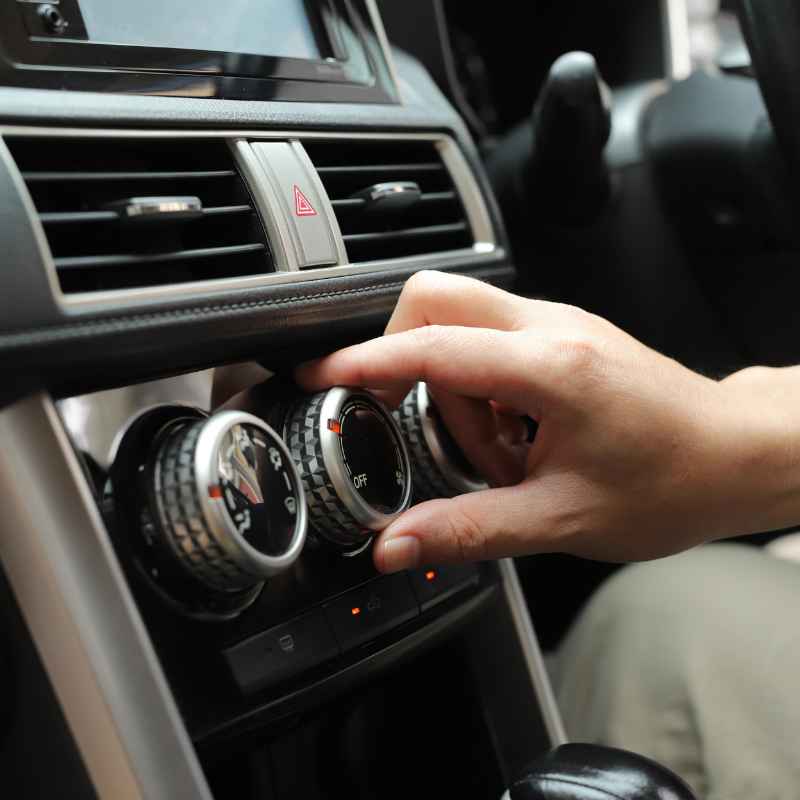
- Listen for Fan Noise: Turn on your car’s fan. Can you hear and feel air coming from the vents? If not, the blower motor might be the issue.
- Visual Hose Inspection: When the engine is COLD, look at the heater hoses. They are typically thick rubber hoses going through the firewall into the car. Are they cracked, bulging, or kinked?
Quick-Scan Table: Common Heater Problems
| Symptom | Likely Cause | What To Do |
|---|---|---|
| Cold air only | Low coolant, bad thermostat, clogged heater core | Check coolant, check temp gauge, inspect heater core access |
| No air from vents | Blower motor failure | Check fuse, check blower motor resistor, replace motor |
| Lukewarm air | Partially clogged heater core, weak coolant flow | Flush heater core, check hoses, check thermostat |
| Sweet smell | Leaking heater core | Inspect for coolant leaks, replace heater core |
Quick Fixes and Tips for Your Car Heater
While some heater problems require a mechanic, there are simple steps you can take to try and fix or improve the situation.
1. Top Off Coolant
This is the easiest and most common fix. If your coolant is low, get the right type of coolant specified in your owner’s manual. Add it to the reservoir.
You might need to add a gallon or more if it’s very low. After adding coolant, run the engine for a bit and see if the heat returns.
2. Bleed the Cooling System
If you suspect air pockets, bleeding the system is important. The process varies by car. Some cars have specific bleed screws.
Others require you to run the engine with the radiator cap off and the heat on full blast. Consult your car’s manual or a trusted online resource for your specific model.
3. Try a Heater Core Flush
If you suspect a clogged heater core, a flush might help. You can buy kits at auto parts stores. These kits involve connecting hoses to your heater core lines and circulating a cleaning solution.
This is a more involved DIY task. If you’re not comfortable, a mechanic can do it.
4. Check Fuses and Relays
If you have no air at all, or very weak air, check the fuses and relays related to your blower motor. Your owner’s manual will show you where these are located. A blown fuse is a simple fix.
5. Inspect and Replace Hoses
Visually inspect the heater hoses. If they look cracked, swollen, or collapsed, they need replacing. This is a moderate DIY task.
Make sure to get the correct hoses for your car.
Stacked Micro-Sections: Heater Core Care
Regular Coolant Checks: Top off your coolant regularly. Use the correct type. Never mix different coolants.
Scheduled Flushes: Follow your car’s maintenance schedule for coolant flushes. This removes old coolant and debris.
Address Leaks Promptly: Small coolant leaks can lead to low levels. Fix them before they cause major issues.
Use Quality Coolant: Good quality coolant prevents corrosion and freezing.
Frequently Asked Questions About Car Heaters
Why does my car heater only blow cold air when I first start it?
This is usually normal. Your engine needs time to warm up. The coolant circulates and heats up.
Once the engine reaches its operating temperature, the heater should start blowing warm air. If it stays cold for too long, there might be an issue.
Can I drive my car if the heater is blowing cold air?
Yes, you can usually drive. However, if your car’s temperature gauge is also reading low, it might indicate a bigger engine problem. In very cold weather, a lack of heat can make the cabin uncomfortable and potentially dangerous.
How often should I flush my car’s cooling system?
This depends on your car’s make and model. Most manufacturers recommend a coolant flush every 30,000 to 100,000 miles. Check your owner’s manual for the specific interval.
Neglecting this can lead to heater core issues.
What is the difference between coolant and antifreeze?
They are often used interchangeably, but antifreeze is a concentrate that you mix with water to create coolant. Coolant is the mixture that circulates in your car’s system. It both prevents freezing and raises the boiling point of water, while also preventing corrosion.
My car heater used to be hot, but now it’s only warm. What could be wrong?
This often points to a partially clogged heater core or a problem with coolant flow. It could also be a sign of low coolant, or a thermostat that isn’t opening fully. Ensure your coolant level is adequate and consider a heater core flush.
Can a bad water pump cause my heater to blow cold air?
Yes, a failing water pump can cause the coolant to not circulate properly. If the coolant isn’t moving through the engine and to the heater core, you won’t get heat. You might also notice other signs like overheating or leaks.
Conclusion: Staying Warm on the Road
Dealing with a car heater blowing cold air can be a real pain. But now you know the most common reasons why this happens. From simple low coolant to more complex issues like a clogged heater core or a bad thermostat, there are several possibilities.
Regular maintenance is your best defense. Checking your coolant level, listening for odd noises, and following your car’s service schedule can prevent many of these problems. If you’re handy, some checks are easy DIY tasks.
For more involved repairs, don’t hesitate to call a trusted mechanic. Staying warm and safe on the road is important!
Products related to this article
Sponsored / affiliate links. As an Amazon Associate I earn from qualifying purchases. I may earn additional commission from eligible campaigns.