3 Best Air Dryers for Cars (2026): We Compared
The best air dryer for cars matches your vehicle size and drying setup: a compact unit for weekly maintenance, a wheeled blower for SUVs and trucks, or a higher-airflow model for hard-water areas and pro use. Pick wrong and you waste time, leave spots, or drag grit across paint. This guide compares three touch-free car dryers and shows how to choose by airflow, hose reach, noise, and garage fit.
Quick comparison
| Product | Badge | Best for | Price | ||
|---|---|---|---|---|---|
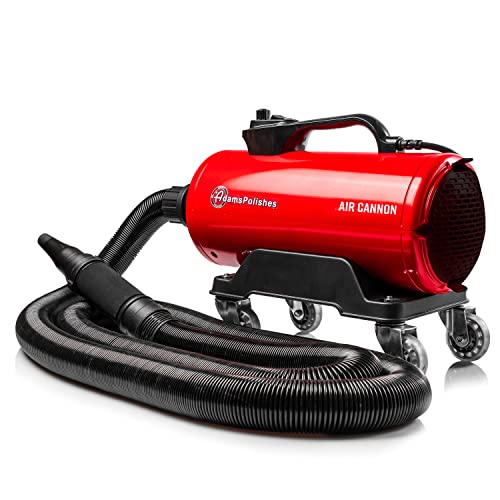 |
Adam’s Polishes Air Cannon Car Dryer Blower – PowerfulAdam’s Polishes | Our pick | Car dryer · 392 CFM · hose blower | $284.74
Price as of 24 Oct 2026
|
View |
 |
METROVAC MB-3CD Air Force Master Blaster 8-HP Car DryerMETROVAC | Upgrade pick | Car dryer · 8-HP · touchless blower | $537.99
Price as of 24 Oct 2026
|
View |
 |
Chemical Guys EQP403 ProBlow High Flow Professional HandChemical Guys | Budget pick | Handheld blower · 1000W · car wash dryer | $74.98
Price as of 24 Oct 2026
|
View |
 |
Handheld Cordless Lightweight Powerful Car Dryer Air BlowerKOLENDA | Also great | Cordless blower · 335MPH · handheld dryer | $119.99
Price as of 24 Oct 2026
|
View |
Start with the drying job, not the biggest spec number. Choose based on panel coverage, seam-clearing air speed, and a body you can store and lift without trouble.
How we chose
These picks are compared on four practical points: airflow and nozzle speed, hose or cord reach, portability and storage, and whether filtered air or heat improves paint-safe drying. Keep the category focused on dedicated car dryers, not towels or general cleanup tools.
Two numbers matter in different ways. CFM helps you judge how well a dryer covers large panels, while FPM matters more for moving water out of badges, mirrors, trim gaps, and other crevices.
Car dryer decision table
| Vehicle size | Water hardness | Storage space | Power source | Expected drying time | Spec threshold to prioritize |
|---|---|---|---|---|---|
| Compact sedan | Soft to moderate water | Small shelf or closet | Standard wall outlet | Short to moderate | Weight and hose length |
| Mid-size SUV | Moderate to hard water | Garage corner or wall hook | Standard wall outlet | Moderate | CFM and hose length |
| Full-size SUV or truck | Hard water or frequent spotting | Floor space available | Standard wall outlet | Moderate to long | FPM, hose length, and weight |
| Apartment garage or shared parking | Any, but especially hard water | Very limited | Nearby outlet only | Short to moderate | Weight, cord length, and storage footprint |
| Weekend detail or pro-style wash bay | Hard water or dark paint | Dedicated space | Reliable outlet access | Short | High airflow and filtered air |
If your setup changes often, buy for the hardest case you face regularly. A lighter handheld unit is easier to live with, but a wheeled blower makes more sense when you are drying larger panels, tall vehicles, or multiple cars back to back.
Adam’s Polishes Air Cannon Car Dryer Blower: best for full-size detailing
This is the strongest fit for owners who want a premium touch-free dryer with enough reach for larger vehicles and regular detailing. Adam’s Polishes says the Air Cannon uses a 30-foot self-expanding hose and moves over 73,000 feet per minute of warm air, which puts it in the high-output class for panel drying and crevice work.
It stands out for the setup detailers need: adjustable airflow, five attachments, and a body that rolls for easier maneuvering. The filtered drying approach also matters here, because filtered air is the safer choice when you want to reduce contact with paint and limit the chance of dragging grit around emblems, trim, and mirrors.
The drawback is size and price. At this level, you are buying a full-size tool that makes the most sense when you have storage space, a regular outlet, and enough wash volume to justify the footprint.
Metro Master Blaster: best for maximum air output
Choose the Metro Master Blaster if your top priority is maximum air output and you want a canister-style blower built for serious touchless drying. It is positioned as the best air blower drying cannon, and its 58,500 feet per minute rating is the highest figure in this comparison set.
That speed helps when you are drying a large SUV, truck bed edges, mirrors, grille openings, and places where towel use is awkward. Buyers also get a reusable filter and five attachments, which matters if you want filtered air and a setup that can handle different drying angles without constant swaps.
The honest trade-off is cost. This is the most expensive option here, so it makes the most sense for high-frequency detailers, hard-water situations, or anyone who wants the strongest output and is willing to pay for it.
Adam’s Polishes Mini Air Cannon: best for compact storage
The Mini Air Cannon fits when storage space and easy handling matter more than maximum output. Adam’s reportedly lists it at around 19,000 FPM, about 3.2 pounds, with a 20-foot cord and dual tips, so it can suit quick maintenance drying and tighter storage spaces better than a floor-standing blower.
It is the practical choice for smaller vehicles, apartment garages, and owners who want touch-free drying without giving up floor space to a canister dryer. The lighter body also helps reduce fatigue during longer drying passes, especially when you are working around badges, wheels, and lower trim.
The drawback is simple: it will not match the reach or panel coverage of a full-size blower. For full-size SUVs, trucks, or repeated drying in hard-water conditions, this is the compact option, not the heavy hitter.
METROVAC Sidekick Blaster: best for handheld control
Pick the Sidekick Blaster if you want a small, handheld dryer with enough output for seams, mirrors, grilles, and other tight spaces. METROVAC lists it at 1.3 peak HP, 3 pounds, 18,000 feet of air per minute, and a 25-foot heavy-duty cord, which makes it a strong choice for quick, controlled drying.
Its all-steel construction sets it apart from many lightweight handheld units, and that matters if you prefer a tool that feels built for regular detailing use rather than casual cleanup. The cord length also helps if your outlet is not directly beside the vehicle.
The downside is that handheld units can be slower on large panels. If you dry a truck or a three-row SUV often, this style works best as a supplement or a compact main tool, not the fastest answer for the whole vehicle.
Which one should you buy?
For most readers, the best first buy is the model that matches the vehicle class you dry most often. If you want the strongest full-size option, the Metro Master Blaster is the safest pick on output alone. If you want a premium blower with a long hose and a more flexible drying setup, the Adam’s Air Cannon is the better all-around choice.
For apartment garages, smaller cars, or limited storage, the Mini Air Cannon is easier to live with. If you want a lighter handheld that stays easy to aim at seams and trim, the Sidekick Blaster makes more sense than a larger canister unit.
Say your car is a dark sedan and your water is hard. A towel alone can leave mineral spots if you miss a panel edge, so a touch-free dryer with filtered air and a strong nozzle speed is the safer daily habit. Suppose you dry a lifted truck in a shared garage with only one nearby outlet; a wheeled or canister-style dryer with a long hose will save more time than a short handheld unit.
- Match airflow to the size of the vehicle. Use higher CFM for broad panels and higher FPM for mirrors, seams, emblems, and grilles.
- Check hose or cord length against your parking setup. A short cord becomes a real limitation in shared garages and driveway spaces.
- Decide whether you need filtered air. If paint safety matters most, filtered drying reduces contact with paint and helps limit swirl marks.
- Choose the body style you can store and lift comfortably. A heavy canister is fine if it stays in one place; a handheld is better if you move the dryer often.
- Be honest about frequency. If you only dry one sedan occasionally, a compact unit may be enough. If you wash several vehicles a week, full-size output pays off.
A common first-timer mistake is choosing a car dryer because it advertises high CFM instead of checking whether it can safely push water out of mirror seams and grille crevices. A very fast blower can still be the wrong choice if it is too heavy to move around the garage, too loud for your space, or too awkward to store near the wash area.
Frequently asked questions
What is the best air dryer for cars?
The best air dryer is the one that fits your vehicle size, outlet access, and storage space. For most serious detailers, a premium full-size blower is the best overall choice, while compact handheld dryers make more sense for smaller cars, limited storage, and lighter drying needs.
What are the best dryers for car detailing?
The best dryers for car detailing are touch-free models with filtered air, enough hose or cord reach, and nozzle attachments for seams and crevices. For large panels, prioritize airflow; for trim and badging, prioritize nozzle speed. That split helps you avoid overbuying power you will not use.
Is an air compressor or air dryer better for drying a car?
A dedicated air dryer is usually better for drying a car. Compressors are built to supply compressed air for many tasks, but a purpose-built dryer is easier to aim, often safer around paint, and more practical for moving water off panels, trim, and badges without dragging a towel.
What’s the difference between an air dryer and a compressor?
An air dryer is designed to move air for drying and detailing, often with filtered output and attachments made for vehicle surfaces. A compressor stores and delivers pressurized air for a broader range of tools. For paint-safe drying, a dedicated dryer is the more relevant tool.
Which car dryer is best for large vehicles?
Large vehicles benefit most from a full-size blower with high airflow, a long hose, and enough output to cover broad panels quickly. The Metro Master Blaster is the strongest output choice here, while Adam’s Air Cannon is a strong premium option if you want a rolling body and long hose reach.
Do air dryers help prevent water spots?
Yes, they can help prevent water spots because they remove standing water before minerals have time to dry on the paint. That matters most in hard-water areas and on dark paint. They do not fix poor washing habits, but they do reduce the chance of leftover droplets on seams and trim.
Products related to this article
Sponsored / affiliate links. As an Amazon Associate I earn from qualifying purchases. I may earn additional commission from eligible campaigns.