Best Leather Cleaner Wipes for Quick Touch-Ups for Cars
For quick leather touch-ups, the best leather cleaner wipes are the right buy when you need fast dust, fingerprint, or light grime removal on sealed automotive leather; choose spray or a kit for heavy soil, transfer marks, or neglected seats. Use the wrong product and you can leave streaks, over-wet seams, or strip the finish. This guide compares wipe options, explains when wipes beat sprays, and shows what to buy for seats, bolsters, and trim.
Best leather cleaner wipes for quick touch-ups
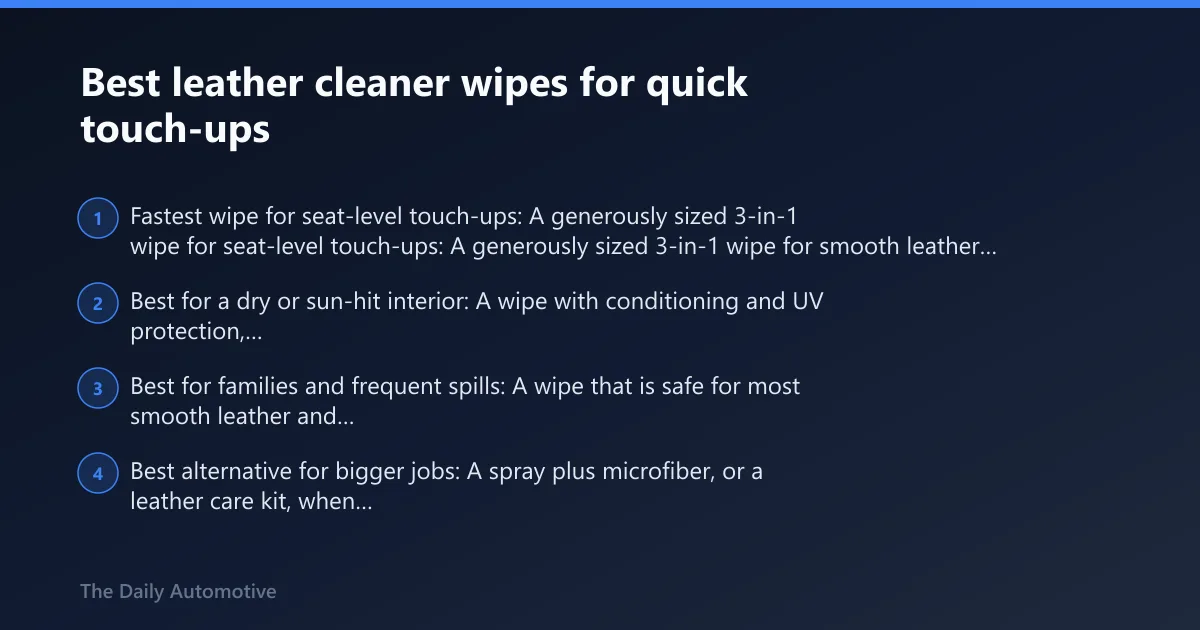


The top pick for most smooth leather seats is a 3-in-1 wipe that cleans, conditions, and adds protection in one pass. In recent testing, the Weiman wipe stood out as the quickest fix, and it also worked on small items like gloves, wallets, and handbags.
That format matters. Leather cleaner wipes are grab-and-go, single-step tools, and that is why they suit car interiors better than many all-purpose leather products. For crumbs, skin oils, and light transfer marks on seats or armrests, they move faster than a spray and cloth setup.
Quick picks by need
- Fastest wipe for seat-level touch-ups: A generously sized 3-in-1 wipe for smooth leather bolsters, steering wheel trim, and door pads.
- Best for a dry or sun-hit interior: A wipe with conditioning and UV protection, especially for daily drivers parked outdoors.
- Best for families and frequent spills: A wipe that is safe for most smooth leather and easy to keep in a center console, as long as it stays sealed.
- Best alternative for bigger jobs: A spray plus microfiber, or a leather care kit, when the seat needs more than a quick surface clean.
What recent testing says about the format
Good Housekeeping tested 6 leather cleaners of 2025. The lab used stained and dirt-ground leather swatches, and it also tested naturally soiled leather items. That matters for car owners, because a product that handles swatches and real-world grime is more likely to work on seats than one judged only on clean material.
The wipe pick in that roundup was a 3-in-1 cleaner, conditioner, and protectant. It left leather swatches rehydrated and shiny, and it included ingredients that help protect leather from sun damage. It also could leave hands slightly slippery, which is worth knowing if you are using it on a steering wheel or a driver’s seat edge.
Are leather wipes safe for car seats?
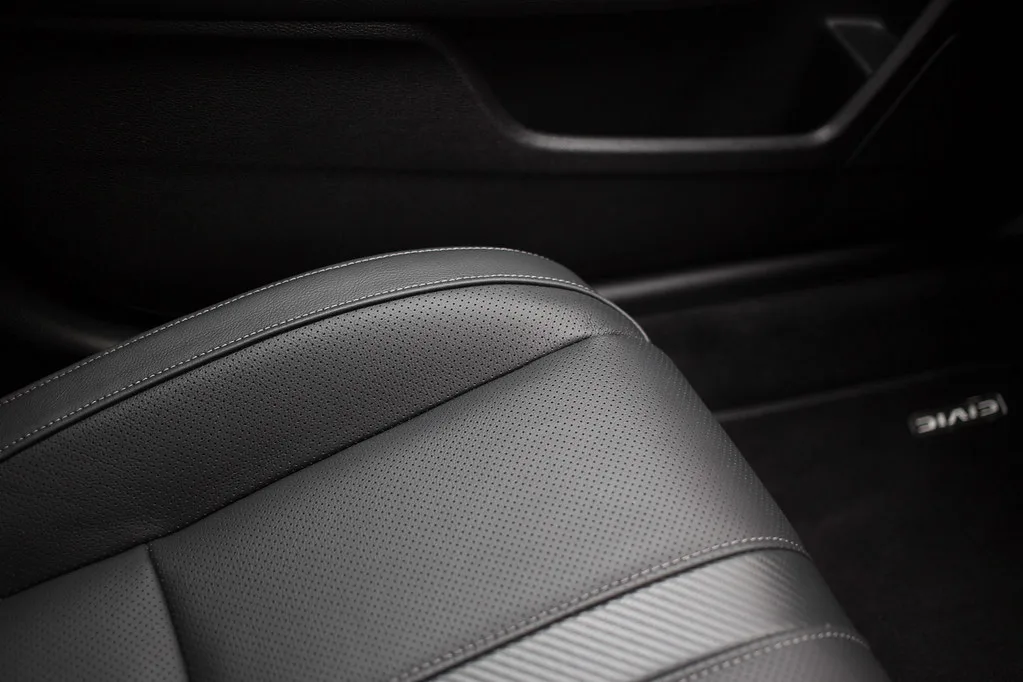
Leather wipes are safe for most smooth leather car seats, coated leather, and finished trim when used lightly and with a test spot first. They are generally not suited to suede, nubuck, Alcantara, or unfinished leather, and it is wise to use them carefully around perforations, seams, and stitched panels so the cleaner does not soak in.
Safe surfaces
Smooth leather is the main target. That includes most modern automotive leather surfaces and many finished trim pieces around the cabin. The same roundup noted one cleaner as safe for most types of leather, but also not suitable for suede or nubuck, which is a good reminder that the finish matters more than the label.
No-go surfaces
Skip wipes on suede, nubuck, Alcantara, and unfinished leather. Those materials are more absorbent and more likely to darken, roughen, or spot. If the seat has a soft, matte nap rather than a sealed surface, use the product only if the maker explicitly says it is approved for that finish.
Perforations, seams, and stitched panels
Perforated seats need light pressure and a nearly dry wipe. Do not press liquid through the holes. On seams and stitched bolsters, wipe across the surface instead of scrubbing into the thread line. If the panel is already dry or worn, the goal is gentle cleaning, not loading it up with product.

Which wipe formula is worth buying?
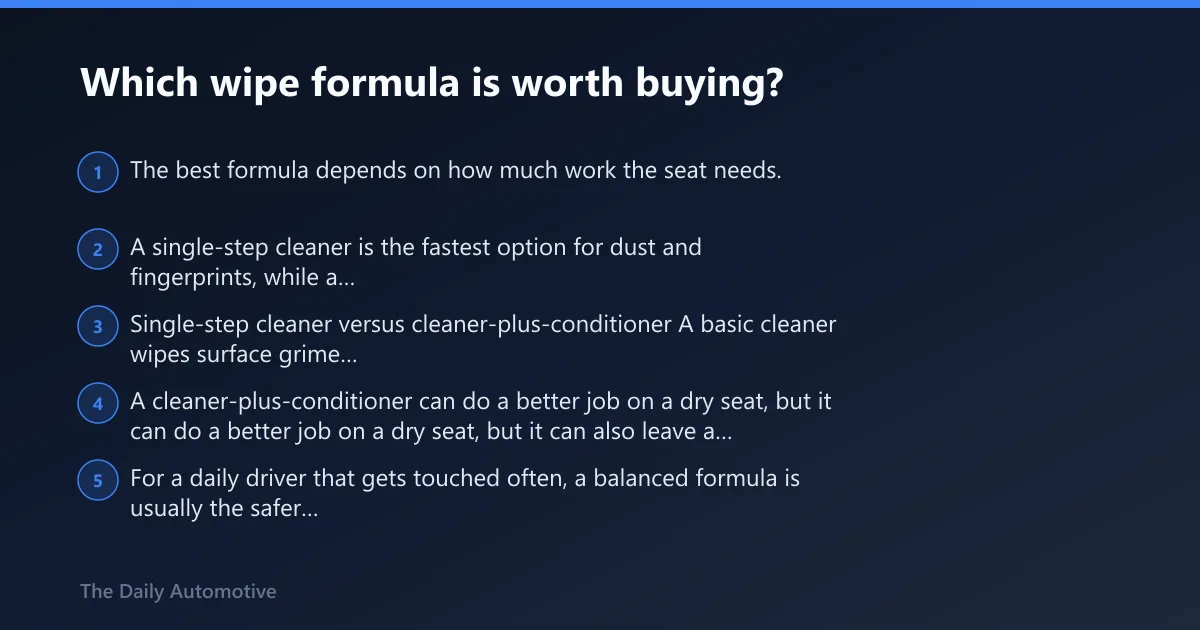
The best formula depends on how much work the seat needs. A single-step cleaner is the fastest option for dust and fingerprints, while a cleaner-plus-conditioner or 3-in-1 formula makes more sense if the leather looks dry, has been sitting in sun, or needs a bit of protection after cleaning.
Single-step cleaner versus cleaner-plus-conditioner
A basic cleaner wipes surface grime and leaves behind less residue. A cleaner-plus-conditioner can do a better job on a dry seat, but it can also leave a more noticeable hand feel or sheen if overused. For a daily driver that gets touched often, a balanced formula is usually the safer buying choice.
When a 3-in-1 formula makes sense
A 3-in-1 leather formula can clean, condition, and protect in one step. That is useful when the car sits outside, the seat sees regular sun, or the interior gets light cleanup more often than full detailing. It is less helpful when the job is mainly heavy grime removal, where a separate cleaner and follow-up conditioner work better.
Where UV protection helps and where it does not
UV protection for leather helps reduce drying, fading, and the early start of cracking. It is useful on exposed seats, top surfaces, and side bolsters that take sun through the glass. It is not a full sun shield, and it will not fix leather that is already cracked or badly faded.
Scent, residue, and hand feel
Two practical details matter more than marketing copy: residue and hand feel. A wipe that leaves the surface tacky can pull in dust. One that leaves hands slippery can be annoying on touch points. If the interior is on the dry side, a light rehydrating finish is good; a greasy one is not.
Wipes vs spray: what should you buy?
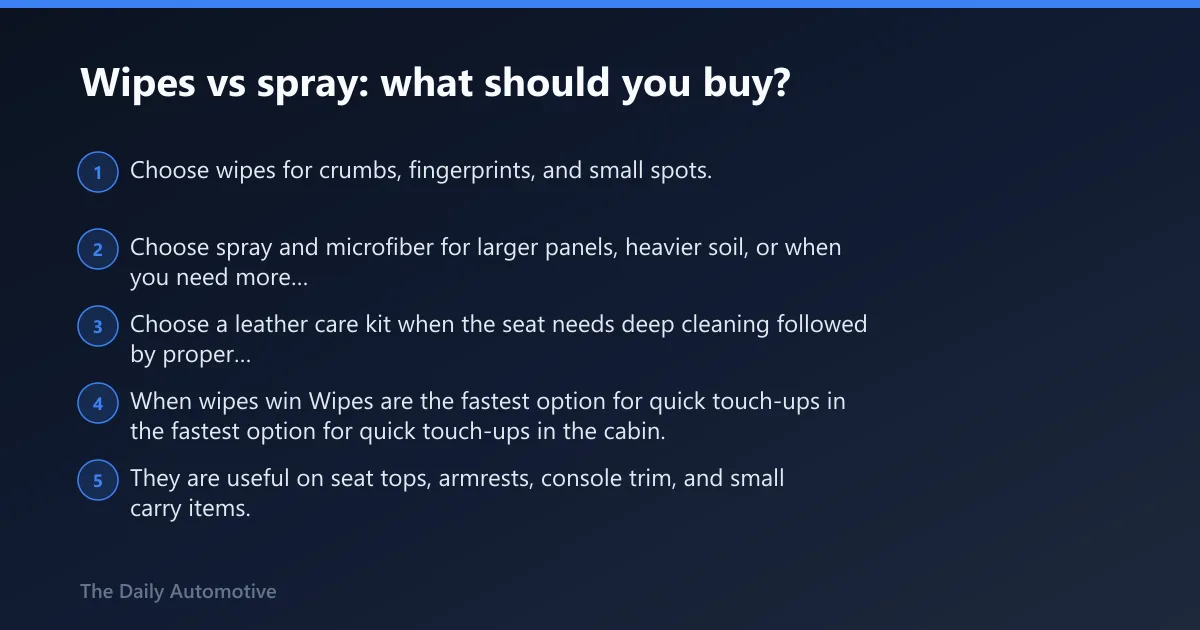
Choose wipes for crumbs, fingerprints, and small spots. Choose spray and microfiber for larger panels, heavier soil, or when you need more control over how much liquid reaches the leather. Choose a leather care kit when the seat needs deep cleaning followed by proper conditioning.
When wipes win
Wipes are the fastest option for quick touch-ups in the cabin. They are useful on seat tops, armrests, console trim, and small carry items. The big advantage is speed: open the pack, wipe, and close it again before the job spreads into a full detail.
When spray wins
A spray is better for wide seat surfaces, door inserts, and repeated grime. One product in the recent roundup was a 12 oz spray, which is the sort of format that makes sense when the job covers more square footage than a wipe can comfortably handle. Spray also gives better coverage on stubborn dirt.
When a kit wins
One product in the roundup was a 17 oz kit for smooth leather upholstery. That kind of set makes more sense for larger interiors, family vehicles, and scheduled maintenance where you want to clean, then condition, then protect. A kit is slower, but it is the right tool for leather that needs more than a surface pass.
When wipes are the wrong tool
If the seat has dye transfer, built-up body oils, dried spills, or grime in stitching, wipes alone can smear the mess instead of lifting it. That is when a spray, a soft brush, and a towel give better control. Wipes are for speed, not rescue work.
Decision checklist: wipe or spray?
Use this checklist when you are choosing a quick interior cleaner. It is built for the common choices a car owner actually faces: a small spill on a door armrest, a dusty seat bolster, or a neglected driver’s seat that needs more than a fast pass.
| Mess type | Leather finish | Seat condition | Wipe vs spray recommendation | Conditioning or protection needed? |
|---|---|---|---|---|
| Dust, fingerprints, light lotion | Smooth or coated leather | Fresh or lightly used | Wipe | Usually no |
| Food smear or mild drink residue | Smooth leather | Normal daily-driver wear | Wipe first; spray if it smears | Light conditioning can help if the seat looks dry |
| Body oils, steering-wheel grime, armrest buildup | Finished leather or coated trim | Used often | Spray and microfiber | Optional light conditioner after cleaning |
| Dye transfer, heavy soil, neglected bolster | Smooth leather only | Dry or worn | Spray or leather care kit | Yes, with protection if the seat sees sun |
| Perforated seat with dirt in holes | Finished leather | Any | Spray applied to cloth, not directly into holes | Yes, but keep product light |
| Suede, nubuck, Alcantara | Open-nap material | Any | Neither; use a product approved for that finish | Finish-specific care only |
How to use leather cleaner wipes without leaving a mess
The safest method is simple: test first, wipe lightly, and stop before the surface gets wet. Most failures come from overworking one spot or using too much liquid on seams and perforations. A wipe should clean the surface, not soak it.
- Test on a hidden area first, especially on new leather or an unfamiliar finish.
- Wipe in short passes instead of long, wet strokes.
- Flip to a clean section of the wipe before the dirt gets spread back onto the panel.
- If the finish looks hazy, dry-buff with a clean microfiber towel.
- On perforated leather, use very little pressure and keep moisture off the holes.
- Close the pack immediately so the remaining wipes stay usable.
Streaking usually means too much product or too much pressure. Residue usually means the wipe was used on a dirty section for too long. If the seat is already dry or worn, avoid heavy conditioning in one pass; use a lighter touch and let the leather recover gradually.
How to keep wipes from drying out
Storage matters because dried-out wipes are useless in a hot car. Keep the pack sealed tightly, avoid leaving it in a hot cabin, and store it in a cooler place when possible. If the container is opened often, the top wipes dry first, so press the closure down after every use.
Can you use leather wipes on wallets, bags, gloves, and shoes?
Leather wipes can be useful on wallets, bags, gloves, and shoes, especially when the item is smooth leather and only needs a quick surface clean. They are less suitable for delicate finishes, open-nap materials, or pieces that need controlled conditioning instead of fast cleanup.
Best use cases beyond car interiors
Small items benefit most because the wipe format is quick and the contact area is limited. Wallets, handbags, and gloves are the cleanest fit. Shoes can work too, provided the finish is smooth leather and the wipe is used lightly, with attention to seams and decorative stitching.
When a cloth and spray is safer
If the item has a soft finish, a detailed grain, or a lot of stitching, a spray on a cloth gives more control than a pre-moistened wipe. That approach also reduces the chance of leaving residue on edges, buckles, or trim pieces that do not need much cleaner.
Frequently asked questions
Do leather wipes clean and condition at the same time?
Some do. A 3-in-1 leather formula can clean, condition, and offer protection in one step, which is why it works well for fast interior maintenance. That said, a true deep-clean job still benefits from a separate cleaner and conditioner, especially on neglected leather or larger upholstery areas.
How do I keep leather wipes from drying out?
Keep the pack tightly closed and out of heat when possible. A hot vehicle is a bad storage place because the wipes may dry out if not properly stored. Once the top seal loosens, the remaining wipes can lose moisture quickly and become far less useful for quick touch-ups.
What’s better for quick leather cleaning, wipes or spray?
Wipes are better for crumbs, fingerprints, and small spots because they are fast and simple. Spray and microfiber are better for bigger panels, heavier soil, and stitched areas that need more control. If the seat is very dirty or dry, a leather care kit is usually the smarter buy.
Can leather wipes be used on wallets and bags too?
Yes, leather wipes can work well on wallets, handbags, gloves, and even some shoes. They are especially handy for small items with smooth leather finishes. For delicate materials, heavy dye, or lots of stitching, a cloth with spray gives better control and lowers the chance of residue.
Do leather cleaner wipes protect against sun damage?
Some do, but only as part of a broader protectant formula. The best-known 3-in-1 wipe in the roundup included ingredients that help protect leather from sun damage, which can reduce drying and fading. That help is useful, but it is not a full shield against long-term sun exposure.
Products related to this article
Sponsored / affiliate links. As an Amazon Associate I earn from qualifying purchases. I may earn additional commission from eligible campaigns.