Best Leather Care Kits for New Car Owners (2026): we compared
For most new-car owners, the best leather care kit is a pH-balanced cleaner plus a light conditioner, with microfiber towels and a soft brush; choose cleaner-only if the seats are coated and still new. Skip it and you can stain fresh leather, strip factory protection, or leave slick residue that attracts grime. This roundup compares starter kits, explains leather types, and shows exactly which add-ons matter.
This guide is part of our Leather car seat care and repair guide series.
Top pick: the easiest leather care kit for first-time buyers

The safest first purchase is usually a starter kit because it gives you the cleaner-and-conditioner sequence in one box. That matters more than chasing extra bottles you may never use.
According to Car Leather Care Starter Kit — Chemical Guys sells a Leather Care Starter Kit priced at $27.99. (source)
Quick comparison
| Product | Badge | Best for | Price | ||
|---|---|---|---|---|---|
 |
Otter Wax Essential Leather Care Kit | Complete LeatherOtter Wax | Our pick | All-natural leather care kit for all types of leather | $39.95
Price as of 29 Sep 2026
|
View |
 |
Meguiar’s Gold Class Leather Conditioner Spray, 16 OzMeguiar’s | Budget pick | Affordable leather conditioner spray for car seats | $7.97
Price as of 29 Sep 2026
|
View |
 |
Autoglym Leather Care Balm, Nourishes & Protects AutomotiveAutoglym | Also great | Nourishing leather care balm for automotive leather | $27.73
Price as of 29 Sep 2026
|
View |
 |
Chemical Guys, Colorless & Odorless Leather Cleaner forChemical Guys | Pair with it | Colorless and odorless leather cleaner for interiors | $21.98
Price as of 29 Sep 2026
|
View |
Use this page as a decision tool, not a shopping trophy case. The right kit depends on what trim your car actually has, because sealed leather, natural leather, and synthetic leather do not want the same level of care.
If you are unsure, buy the simplest kit that still gives you cleaner, conditioner, a soft brush, and lint-free towels. Extra compounds, polishes, and “deep restore” steps are usually wasted on a brand-new cabin.
How we chose
Leather compatibility came first. A kit had to fit modern car interiors, not furniture or hobby work.
Kit contents mattered next. Cleaner and conditioner are the core pair, but towels and a brush decide whether the job is easy or messy.
Beginner use was another filter. The best options are forgiving when a new owner is still learning how much product to apply and how quickly to wipe it off.
Value was judged by use, not by shelf appeal. A smaller bottle can be the smarter buy if the car is new and only needs light maintenance.
Otter Wax Essential Leather Care Kit: best for a complete natural-leather routine
This is the best fit for owners who want a complete cleaner-and-conditioner routine from an all-natural kit. Based on the spec sheet and owner feedback, it is the most straightforward choice for someone who wants one purchase to cover both cleaning and conditioning without mixing brands.
What stands out is the all-in-one approach. The kit is made to clean, condition, shine, and protect, and the all-natural, PFAS-free positioning may appeal to buyers who want a simple cabin-care routine with a shorter ingredient list.
The drawback is that “complete” can also mean more than some new owners need. If the car has sealed leather that still looks fresh, a separate cleaner may be enough at first, and this kit can be more than a light maintenance job requires.
Meguiar’s Gold Class Leather Conditioner Spray: best for quick upkeep
This is a good fit for owners who already know their seats need conditioning and want a simple spray bottle for upkeep. The value here is convenience: it is easy to apply, and the product is positioned to leave no residue or buildup.
It stands out for UV protection and for the low-effort format. That makes it useful for busy owners who want a fast conditioning step after a proper cleaning, especially on seats that are drying a little but are not yet neglected.
The drawback is obvious: it is not a cleaner. On fresh interiors, conditioner alone can leave road film, body oils, and dealership residue in place, which is the wrong place to start.
Autoglym Leather Care Balm: best for natural-leather nourishment
This is best for owners who know they have natural leather and want a balm-style product that keeps the surface supple. Based on the spec sheet, it is aimed at preserving the leather’s natural appearance instead of turning it glossy or sticky.
What stands out is the emphasis on a matte, factory-like finish. That is useful in cars where the cabin should stay understated and clean-looking rather than shiny after care.
The drawback is that balms take more discipline than sprays. They can be a poor match for a first-time buyer who wants the quickest possible wipe-on, wipe-off routine.
Chemical Guys Colorless & Odorless Leather Cleaner: best for cleaner-only maintenance
This is the best pick if the seats are sealed leather and still new, or if the buyer already has conditioner and only needs a cleaner. It is pH-balanced, and the product page says it is safe for natural leather, sealed leather, and synthetic leather materials.
What stands out is the simple role: remove dirt, grease, and stains without adding scent or residue. That is exactly what a first-time owner needs when the cabin still has factory-fresh leather protection and does not need a heavy conditioning pass yet.
The drawback is that a cleaner-only purchase can leave some buyers missing the tools that make the job easier. Without a microfiber towel and, in some cases, a soft brush, the product is harder to use well around seams and stitching.
What is the best leather care kit for a new car owner?
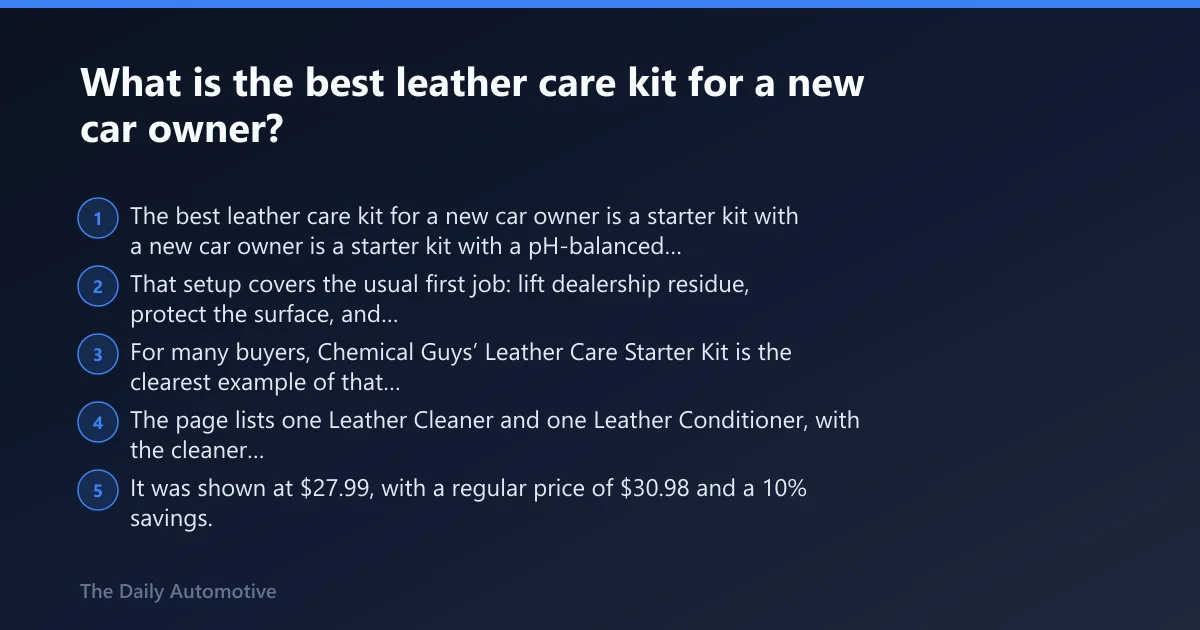
The best leather care kit for a new car owner is a starter kit with a pH-balanced cleaner, a light conditioner, microfiber towels, and a soft brush. That setup covers the usual first job: lift dealership residue, protect the surface, and avoid overbuying products that a new interior does not need yet.
For many buyers, Chemical Guys’ Leather Care Starter Kit is the clearest example of that kind of first purchase. The page lists one Leather Cleaner and one Leather Conditioner, with the cleaner described as pH-balanced and safe for natural leather, sealed leather, and synthetic leather materials.
It was shown at $27.99, with a regular price of $30.98 and a 10% savings. A smaller 4 oz version was listed at $12.99, with a regular price of $14.99. The page also reports a 4.8-star rating from 315 reviews.
Why cleaner-plus-conditioner beats a single-product shortcut
Cleaner and conditioner do different jobs. Cleaner removes dirt, grease, and stains; conditioner hydrates leather, helps protect against fading and cracking, and supports a matte finish.
A single product can work for a narrow use case, but most new owners do better with the two-step approach. Cleaner first removes the film that can block even application; conditioner goes on after the surface is actually clean.
What should a leather care kit include for car interiors?
A useful leather care kit for car interiors should include a leather cleaner, a leather conditioner, at least one microfiber towel, and ideally a soft leather brush. That combination covers the full job: clean, wipe, condition, and remove residue without scratching the surface.
Look for a leather cleaner that is pH-balanced and safe for common car materials. Look for a conditioner that hydrates without leaving the cabin greasy. Skip bulky extras unless the car has heavily soiled seams, perforated panels, or older leather that needs more handwork.
Leather cleaner
Leather cleaner should remove dirt, grease, and stains before conditioning. In practical use, pH-balanced cleaner matters because it is less likely to be harsh on modern interiors, including sealed leather and many synthetic surfaces.
Leather conditioner
Leather conditioner matters when the surface is drying, dulling, or starting to lose its matte look. It helps moisturize leather and can reduce fading and cracking, but it is not a cure for dirty seats; it works best after proper cleaning.
Leather brush
A leather brush helps work cleaner into seams and crevices. It should be soft enough for interior leather, because stiff bristles can leave marks or push grime deeper into stitching.
Microfiber towel
A microfiber towel is needed for clean removal after cleaning and conditioning. It should be lint-free so it does not leave fibers behind, and it is the safest way to wipe residue from high-touch areas without scratching the cabin.
Do I need a leather cleaner and conditioner or just one product?
Most new-car owners need both, but not always at the same time. If the seats are coated or sealed and still fresh, a cleaner may be enough at first. If the leather is natural, or if it looks dry, a conditioner belongs in the routine after cleaning.
The key is to match the product to the leather type and condition. Cleaner handles grime. Conditioner handles moisture loss and surface protection. Using conditioner on top of dirt is how buyers get streaks, uneven sheen, and a cabin that feels slick instead of cared for.
When one product is enough
Cleaner-only is the right starting point for many new cars with sealed leather. Those seats are common in modern interiors and should not be soaked; they usually need light surface cleaning, not heavy product loading.
Conditioner-only can make sense only when the seat is already clean and the buyer is maintaining a leather type that clearly benefits from hydration. It is a narrower use case than most first-time shoppers expect.
How often should I clean and condition leather car seats?
For a new car, the safest approach is to clean lightly when dirt starts to build and condition only when the leather begins to look dry, dull, or less flexible. In the first 30 days, most owners should focus on gentle cleaning and leave conditioning for natural leather or visibly dry surfaces.
After that, keep the routine simple: wipe contamination quickly, clean on a regular interval that matches use, and condition only as needed. Seats that see sunscreen, denim dye, pet hair, or daily commuting usually need more attention than garage-kept weekend cars.
First 30 days
During the first month, avoid aggressive cleaning. Fresh interiors often still have factory protection, and overdoing product early can leave residue or change the finish before you have a sense of how the leather behaves.
After the break-in period
Once the car is being used normally, clean more by condition than by calendar. If the surface feels tacky, picks up grime easily, or looks dull in high-contact areas, it is time to clean. If it looks dry or chalky, add conditioner.
Is leather cleaner safe for sealed leather seats?
Yes, a pH-balanced leather cleaner is generally the right choice for sealed leather seats, as long as the leather is not soaked. Sealed leather is common in modern cars, and it usually needs a gentle cleaner more than it needs heavy conditioning right away.
The mistake is to treat sealed leather like a sponge. Apply cleaner lightly to a towel or brush, work small sections, and wipe dry. Too much liquid can sit in seams, gather around stitching, and leave the surface looking blotchy.
What to avoid on coated surfaces
Avoid flooding the seat with product. Avoid abrasive pads. Avoid a conditioner that leaves a shiny film if the factory finish is matte. The goal is to keep the surface that is already there, not to drown it in product.
Can leather conditioner prevent cracking and fading?
Leather conditioner can help protect against cracking and fading, but it does not fix damage that is already present. Its job is to moisturize leather, support a more stable surface, and reduce the risk of dryness turning into visible wear.
That matters most on natural leather, which is more vulnerable to drying out. On sealed leather, conditioner is often optional in the early stages and should be used only when the manufacturer’s directions and the seat’s condition make it worth adding.
When hydration matters most
If the leather looks matte but thirsty, feels slightly stiff, or starts to lose its even color, conditioner becomes more useful. The mistake is applying it every time just because the bottle is in hand; overuse can create a slick feel and attract dust.
What is the difference between leather cleaner and leather conditioner?
Leather cleaner removes dirt, grease, and stains. Leather conditioner moisturizes leather, protects against fading and cracking, and helps restore a matte finish. They are not interchangeable, and using one in place of the other usually leads to either dirty leather or dry leather.
In practice, cleaner comes first because it clears away the grime that would interfere with conditioning. Conditioner comes second only when the leather type and condition actually call for it.
How to choose the right kit for your leather type
The best first-time buy depends on what the car actually has. Sealed leather needs gentle cleaning. Natural leather needs cleaning plus conditioning. Synthetic leather can usually be cleaned with a compatible leather cleaner and may also be conditioned, depending on the product directions.
This is where most shopping pages fall short. They sell a kit as if every seat were the same, when modern interiors often mix coated leather, synthetic panels, and perforated sections in one cabin.
First-time buyer decision table
| Leather type | What to buy first | Kit contents that matter | Risk level |
|---|---|---|---|
| Sealed leather | Starter kit or cleaner-only | pH-balanced cleaner, microfiber towel; soft brush if seams hold dirt | Low |
| Natural leather | Starter kit or separate cleaner plus conditioner | Cleaner, conditioner, microfiber towel, soft brush | Medium |
| Synthetic leather | Cleaner-first purchase; conditioner only if the product directions allow it | Compatible cleaner, microfiber towel; brush only if texture traps debris | Low to medium |
Buy a starter kit when you are unsure, or when the car has mixed leather types and you want the simplest safe routine. Buy separate cleaner and conditioner when you already know the seats are natural leather and want to control exactly what goes on them.
Add a brush-and-towel bundle when the car has perforations, deep seams, or textured bolsters that trap grime. Skip the add-ons if the seats are smooth, new, and only need light wipe-downs.
What size leather care kit is best for first-time buyers?
For first-time buyers, the smaller kit is usually the smarter start unless the car has multiple leather seats and will need repeated cleaning. A 4 oz version is enough for learning the routine and treating a new interior lightly; a larger kit makes more sense when you know the seats will need regular maintenance.
The size choice is really about commitment and usage. New-car owners who only want a safe first clean should keep the purchase small. Owners with kids, pets, or long commutes will burn through product faster and may prefer a bigger starter kit.
When 4 oz makes sense
Choose 4 oz if the goal is to test the process, maintain one vehicle, or handle a lightly used cabin. It reduces waste if you later decide you want a different cleaner feel or a different finish from the conditioner.
When a larger kit makes sense
Choose the larger kit if the car has more seating area, if the leather will need more than one treatment, or if you want enough product on hand for follow-up cleaning. The point is not to stock a garage shelf; it is to avoid buying too little and then stretching the job with the wrong amount of product.
Which one should you buy?
For a brand-new car with sealed leather, buy a pH-balanced cleaner first and keep the conditioner for later unless the seats start to dry. If you are not sure what trim you have, choose a starter kit with cleaner, conditioner, towels, and a soft brush so you can handle the common cases without guessing.
If your goal is the lowest-cost safe start, the cleaner-only option is the leanest buy, especially when the leather still looks fresh. If you want one purchase that covers most first-time owner needs, the starter kit is the better default.
Best choice for a brand-new car with sealed leather
Choose the cleaner-only option or a starter kit used mainly for cleaning. Sealed leather does not need aggressive treatment, and the risk of over-conditioning a new coated surface is higher than many shoppers expect.
Best choice if you are not sure what trim you have
Choose the starter kit. It gives you cleaner and conditioner in one place, and it is easier to follow the correct sequence once you identify the leather type after checking the owner’s manual or the trim description.
Best choice if you want the lowest-cost safe start
Choose the smallest compatible cleaner and add microfiber towels before spending on anything else. That keeps the initial outlay focused on what touches the seat, not on extras that may sit unused.
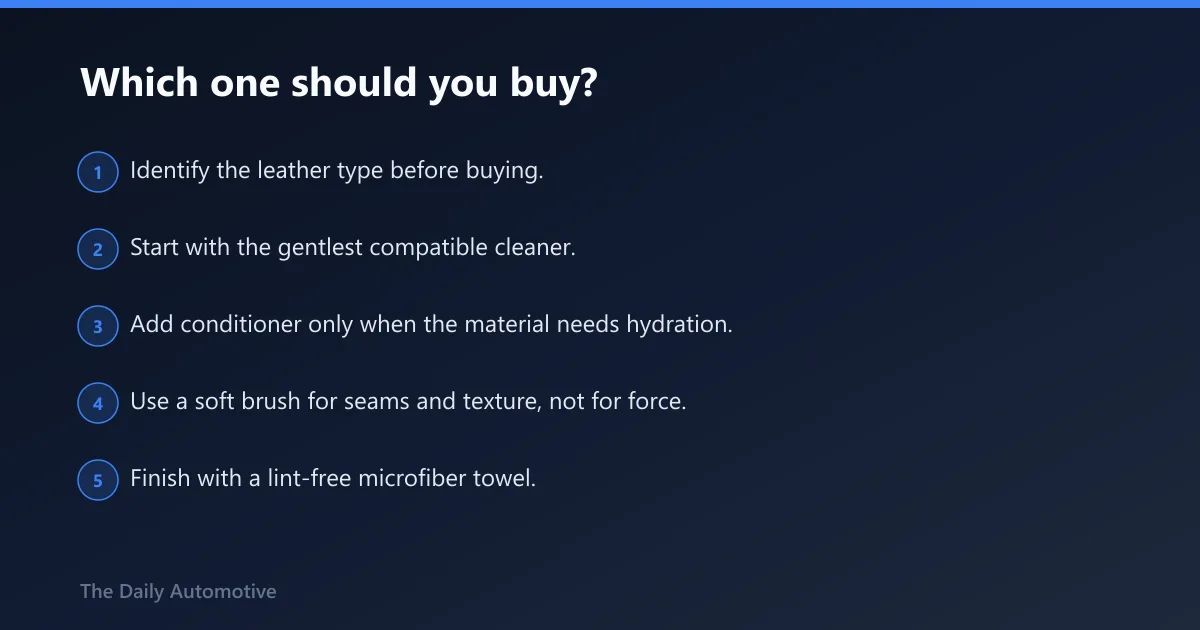
- Identify the leather type before buying.
- Start with the gentlest compatible cleaner.
- Add conditioner only when the material needs hydration.
- Use a soft brush for seams and texture, not for force.
- Finish with a lint-free microfiber towel.
Products related to this article
Sponsored / affiliate links. As an Amazon Associate I earn from qualifying purchases. I may earn additional commission from eligible campaigns.