5 Best Rust Removers for Older Cars (2026): We Compared
For mixed-material parts, Evapo-Rust Heavy Duty Rust Remover is the safest first pick because it is a chelating liquid that works as an overnight soak on metal parts that still have paint, rubber, or plastic attached. If the rust is heavy, vertical, or structural, change chemistry: use a stronger remover, or use a converter where the metal needs to be stabilized and painted afterward.
How we tested and compared these five rust removers
Quick comparison
| Product | Badge | Best for | Price | ||
|---|---|---|---|---|---|
 |
CRC Evapo-Rust Heavy Duty Rust Remover for Metal and ToolsEvapo-Rust | Our pick | 1 gallon · water-based · heavy-duty remover | $29.89
Price as of 6 Nov 2026
|
View |
 |
WD-40 Specialist Rust Remover SoakWD-40 Specialist | Also great | 1 gallon · acid-free · rust soak | $31.94
Price as of 6 Nov 2026
|
View |
 |
Rust-Oleum Rust Dissolver Spray GelRust-Oleum | Budget pick | 32 oz · spray gel · rust dissolver | $11.97
Price as of 6 Nov 2026
|
View |
 |
Blaster Metal Rescue Rust RemoverBlaster | Upgrade pick | 1 gallon · safe soak · pack of 4 | $132.17
Price as of 6 Nov 2026
|
View |
 |
2 Inch Strip Discs 9 PackGeneric | Our pick | $6.66
Price as of 27 Nov 2026
|
View |
Older cars need different chemistry for different jobs. A soak that is safe on trim and bushings is not the same tool as a converter for large rusty panels or a gel for vertical spot work.
The table below separates those use cases so you do not buy the wrong product for paint, rubber, seams, or structural metal.
Rust removers decision table
| Rust severity and vehicle area | Product type | Safe on paint | Safe on rubber/plastic | Best dwell time | Protective layer left behind | Repainting required |
|---|---|---|---|---|---|---|
| Light rust on mixed-material parts, brackets, fasteners, trim pieces | Chelating soak | Yes | Yes | Overnight to 12–24 hours | No | Only if bare metal stays exposed |
| Light-to-medium rust on painted brackets and rubber bushings | Acid-free soak | Yes, on painted parts | Yes | Extended soak | No | Usually yes for bare steel after rinse and dry |
| Heavy frame and axle rust | Acid-based rust remover | No, avoid painted finishes unless the label says otherwise | No, keep off rubber and plastic | Under one hour | Yes, a zinc phosphate layer | Often yes, after rinse and dry |
| Vertical panels, small patches, hard-to-reach spots | Rust dissolver gel | Best used with caution around paint edges | Keep off rubber and plastic | Minutes | No | Yes if the area is left bare |
| Wheels, painted surfaces, clear coats, single-stage paint | pH-neutral iron remover | Yes | Usually yes, but keep to label guidance | Short activation window | No | No unless corrosion remains |
| Large rusty body panels or repairs that will be painted | Rust converter | No, unless the product says it is safe on paint | No | Varies by product | Yes, it converts rust to a stable layer | Usually yes, before primer and topcoat |
How do you choose the right formula?
The right choice starts with rust depth and the part you are treating. Light surface rust on removable hardware calls for a chelating soak or an acid-free remover. Heavy scale on a frame, axle, or large repair area calls for either a stronger remover with careful follow-up or a converter if the goal is to stabilize the surface before primer and paint.
Picture a brake backing plate with crusty fasteners and a painted bracket beside it. A soak can work on the bracket if the part comes off the car, but the brake hardware itself should be treated cautiously and replaced if corrosion has damaged function. Do not use a chemical remover on structural rust, compromised seams, or brake parts that should be repaired or replaced instead.
For classic cars, preserve what you can. Painted trim, plated pieces, and mixed-metal hardware need a formula that does not attack nearby finishes. If the part includes rubber bushings or plastic clips, a non-acidic soak is usually the safer starting point.
Evapo-Rust: best for mixed-material parts
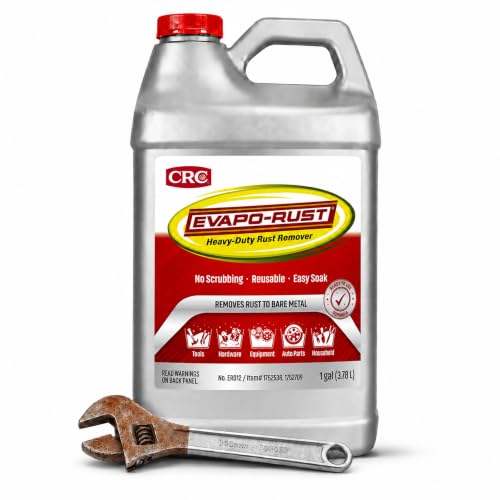
Evapo-Rust Heavy Duty Rust Remover is the best fit for older-car owners who need a chelating liquid that can soak mixed-material parts without attacking nearby paint, rubber, or plastic. It is a strong choice for brackets, tools, hardware, and antique-style parts that can be immersed.
Its practical advantage is dwell time and simplicity. The liquid works as an immersion soak, and the usable window is overnight to 12–24 hours, which gives rust time to break down without sanding every contour. Published product details also note that the solution can be reused until it darkens, which helps stretch the cost across several parts.
The main drawback is access. It is for soak jobs, not for a vertical quarter panel or an assembled car. If a part cannot be removed and submerged, choose a spray gel or a different chemistry made for the surface.
WD-40 Specialist Rust Remover Soak: best budget soak
WD-40 Specialist Rust Remover Soak is the budget-minded soak choice for light-to-medium rust on parts that can sit in liquid for an extended period. The one-gallon size makes sense when you have several brackets, fasteners, or small restoration pieces to clean.
It is described as safe on painted brackets and rubber bushings, which matters on older vehicles where parts often come off with a mix of metal, coating, and rubber still attached. The acid-free formula is also a better fit when you want to avoid harsher chemistry around restoration parts.
The drawback is speed. It is not the tool for heavy frame scale or a panel you need to treat in minutes. For bigger rust, you may need repeated soaks, a stronger remover, or a converter if the surface is meant to be painted afterward.
POR-15 Rust Remover: best for heavy frame rust
POR-15 Rust Remover is the right chemistry when the rust is heavier and you are working on frames, axles, or other steel parts that need aggressive cleaning. It is an acid-based remover, so it belongs on the tougher end of the scale rather than on delicate mixed-material assemblies.
Its key benefit is action time. The product is meant to work in under one hour, and the listed behavior includes a zinc phosphate layer after treatment. That makes it more suitable for heavy-duty metal work than a gentle soak that is meant mainly to preserve nearby finishes.
Use ventilation with this chemistry. The drawback is that it is harsher than a chelating soak, so it is a poor fit for rubber, plastic, and adjacent paint unless the label specifically says otherwise. After use, plan on rinsing, drying, and following with protection or paint where the metal will stay exposed.
Rust-Oleum Rust Dissolver Trigger Spray Gel: best for spot treatment
Rust-Oleum Rust Dissolver Trigger Spray Gel is the spot-treatment option for vertical metal, small patches, and places where a liquid would run off before doing useful work. The gel format lets it cling to the surface instead of draining away.
Its appeal is speed and control. The product is described as working in minutes, and the no-scrub removal claim fits the kind of targeted cleanup older cars often need around bolts, seams, and small brackets. That makes it a practical choice when you want to treat a local rust spot without stripping a whole area.
The drawback is scope. It is not the best answer for big structural rust or for parts that need a soak. Keep it on the metal area you mean to treat, and avoid letting gel sit on finishes, rubber, or plastic that are not meant to be exposed to the chemistry.
What should you do after removal?
After any rust treatment, the next steps matter as much as the chemistry. If the label calls for a rinse, rinse it. Then dry the part fully, because flash rust can appear fast on older steel. Bare metal should be protected right away with primer, paint, oil, or another suitable coating, depending on the part and the product instructions.
Some products leave residue that can affect adhesion. If you plan to repaint, clean off any remaining film before primer. If a remover is used on a painted or plated part, check the finish closely after treatment so you do not trap residue under new coating.
Suppose you treat a rusty sway-bar bracket on a humid day and leave it on the bench overnight. If the metal is not sealed, orange haze can return by morning. A quick dry-and-protect step prevents that wasted work.
- Check the label for rinse requirements before you start.
- Remove loose rust and dirt so the chemistry reaches bare metal.
- Apply the product only to the intended surface.
- Wait the listed dwell time, then rinse if required.
- Dry completely with air, towels, or heat allowed by the label.
- Prime, paint, or coat the metal if it will stay exposed.
- Inspect seams, crevices, and fastener heads for leftover residue.
Which one should you buy?
Choose Evapo-Rust Heavy Duty Rust Remover if you want the safest all-around soak for mixed-material parts, especially when paint, rubber, or plastic is still attached. It is the best default choice for older-car hardware that can be removed and submerged.
Choose WD-40 Specialist Rust Remover Soak if you need a lower-cost soak for light-to-medium rust and you want a one-gallon format for repeated small jobs. It fits painted brackets and rubber bushings better than harsh chemistry does.
Choose POR-15 Rust Remover when the rust is heavy on frames or axles and you need an aggressive remover with short dwell time. Keep ventilation in mind and be ready for rinse-and-protect follow-up.
Choose Rust-Oleum Rust Dissolver Trigger Spray Gel when the rust is localized and the part is vertical or awkward. The gel format is the right answer for spot work where a soak would be impractical.
For wheels and painted bodywork, a pH-neutral iron remover is the correct chemistry class, while a converter belongs on larger rusty areas that will be painted afterward. Do not mix those jobs up with a remover meant to strip corrosion from metal.
Frequently asked questions
What’s the best rust remover
For older cars, the best rust remover depends on the part. Evapo-Rust is the safest general pick for mixed-material pieces that can be soaked. For heavy frame rust, a stronger remover is a better fit. For large rusty panels that will be painted, a converter is often the better chemistry.
What is a good rust remover?
A good rust remover matches surface safety to the job. If the part has paint, rubber, or plastic attached, a non-acidic soak is the safer choice. If the rust is on a vertical spot, a gel helps keep the product in place. If the metal is structural and heavily rusted, use stronger chemistry or body repair.
How to stop rust on vehicle
Stop it by treating the right surface with the right chemistry, then sealing the result. Use a remover for removable metal parts, a converter for larger rusty areas that will be painted, and avoid chemical treatment on structural rust or failed seams. Older cars need quick follow-up because bare steel flash-rusts fast.
Products related to this article
Sponsored / affiliate links. As an Amazon Associate I earn from qualifying purchases. I may earn additional commission from eligible campaigns.