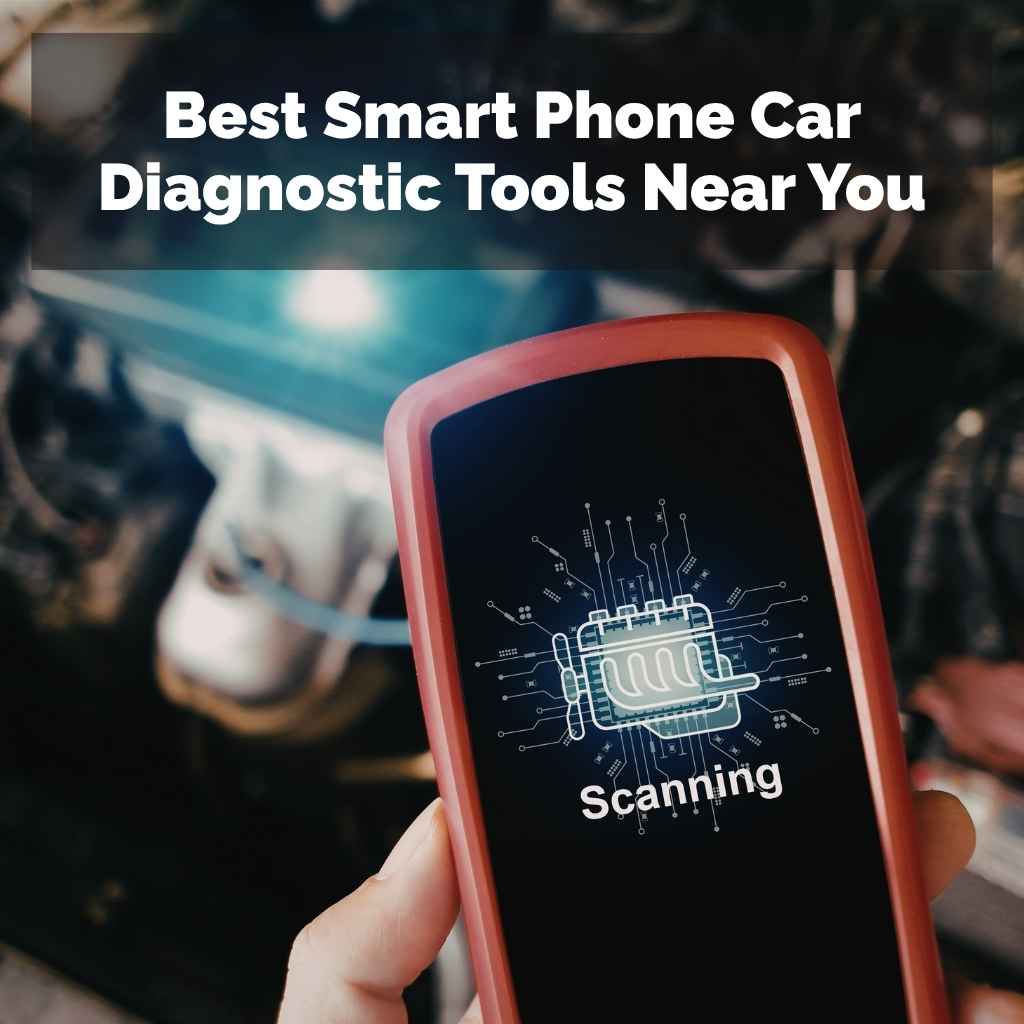
Best Smart Phone Car Diagnostic Tools Near You
Finding the Best Smart Phone Integrated Car Diagnostic Tools Near You can feel a bit tricky at first. You want to know what’s wrong with your car, but all the technical terms can make your head spin. It’s easy to feel overwhelmed when you’re just trying to get a clear picture of your vehicle’s health.
Don’t worry, though! We’re going to break it all down in a super simple way. Get ready for a straightforward guide that will help you understand everything you need to know.
Finding Best Smart Phone Integrated Car Diagnostic Tools
This section is your starting point for understanding how to locate and choose the best smart phone integrated car diagnostic tools. We will cover what these tools are, why they are useful, and what key features to look for. This will help you make an informed decision that fits your needs and budget.
Knowing these basics ensures you get the most out of your car’s diagnostics right from your phone.
What Are Smart Phone Integrated Car Diagnostic Tools
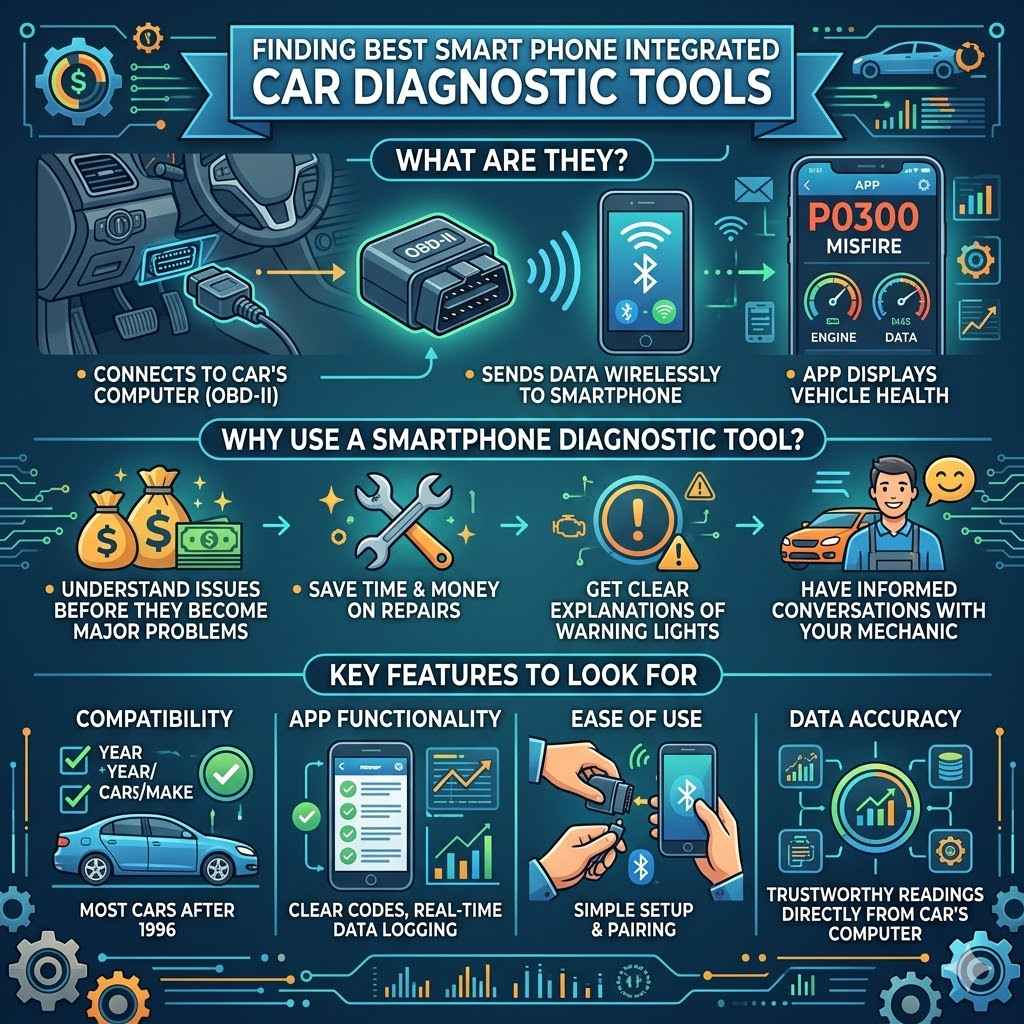
Smart phone integrated car diagnostic tools are devices that connect to your car’s computer system, often through the On-Board Diagnostics (OBD-II) port. This connection allows them to communicate with your vehicle and send data wirelessly to your smart phone or tablet. Think of it like giving your car a voice that your phone can understand.
These tools read trouble codes that light up your “check engine” light. They also provide a lot of other information about your car’s performance. This includes things like engine temperature, speed, fuel pressure, and more.
The data is then displayed through a special app on your smart phone. This makes complex car information accessible and easy to interpret for everyday drivers.
Why Use A Smart Phone Diagnostic Tool
Using a smart phone diagnostic tool offers many advantages, especially for car owners who want to stay informed about their vehicle’s health. It empowers you to understand potential issues before they become major problems. This can save you significant time and money on repairs.
Instead of guessing what that warning light means, you can get a clear explanation. This allows you to decide if a repair is urgent or if you can wait. It also helps you have more informed conversations with your mechanic.
You can tell them exactly what the tool is showing you, leading to more accurate diagnoses and preventing unnecessary services.
Key Features To Look For
Compatibility: Make sure the tool works with your car’s make and model. Most tools work with cars made after 1996 because that’s when OBD-II became standard. Always check the product description to confirm it supports your vehicle’s year, make, and model. Some specialized tools might be needed for European or Asian cars, though many universal ones cover a wide range.
App Functionality: The companion app is crucial. It should be user-friendly and provide clear explanations of diagnostic trouble codes (DTCs). Look for apps that offer real-time data logging, repair information, and the ability to clear codes. Some apps offer additional features like maintenance reminders or performance tracking.
Ease of Use: A good tool is simple to connect and set up. It shouldn’t require complex technical knowledge. You should be able to plug it in, pair it with your phone via Bluetooth or Wi-Fi, and start reading codes within minutes. The app should guide you through the process smoothly.
Data Accuracy: The information provided by the tool and app needs to be accurate. Reliable tools pull data directly from your car’s computer, so the readings should be trustworthy. Look for reviews that mention accuracy and consistency in reporting.
Best Smart Phone Integrated Car Diagnostic Tools Near You Explained
This section will explore the specific types of diagnostic tools that integrate with your smart phone and how to find them conveniently in your area. We will discuss different technologies and brands, along with their unique benefits. Understanding these options helps you choose the tool that best suits your car maintenance needs and location.
Understanding OBD-II Scanners
OBD-II stands for On-Board Diagnostics II. It’s a standardized system in all cars and light trucks sold in the United States since 1996. This system monitors many engine-related systems and components, including those that affect emissions.
The OBD-II port, usually located under the dashboard on the driver’s side, is where diagnostic tools connect.
OBD-II scanners read specific codes, known as Diagnostic Trouble Codes (DTCs), when a problem is detected. These codes are universal, meaning a P0300 code (random/multiple cylinder misfire) means the same thing regardless of your car manufacturer. This standardization makes it easier for mechanics and car owners to diagnose issues.
Types Of Smart Phone Diagnostic Adapters
There are two main types of adapters that connect your car’s OBD-II port to your smart phone: Bluetooth and Wi-Fi.
Bluetooth Adapters: These are the most common and usually the most affordable. They pair directly with your smart phone like headphones or a speaker. Once paired, the adapter sends data wirelessly to the diagnostic app. They are simple to use and generally have a good range for in-car use.
Wi-Fi Adapters: These adapters create their own Wi-Fi network that your smart phone connects to. They can sometimes offer a slightly more stable connection or faster data transfer speeds, especially for advanced features. However, they might consume more battery on your phone and can sometimes interfere with your phone’s regular internet connection if it’s not designed to handle both simultaneously.
Popular Brands And Models
Several brands offer excellent smart phone integrated car diagnostic tools. Some of the most popular include:
1. FIXD: This is a very user-friendly option, especially for beginners. It plugs into your OBD-II port and connects via Bluetooth.
The accompanying app is known for its simple interface and clear explanations of car problems, often translating DTCs into plain English and suggesting possible causes and repair costs. It also offers basic code clearing.
2. Ancel: Ancel offers a range of scanners, from basic to more advanced. Their smart phone integrated models often provide detailed live data and can perform more complex functions than basic code readers.
They are known for good value and a wide range of supported vehicles.
3. OBDLink: The OBDLink MX+ is a highly recommended tool known for its speed and reliability. It uses Bluetooth and works with a variety of third-party apps, giving users a lot of flexibility.
It’s a favorite among DIY mechanics due to its comprehensive data logging and advanced diagnostics capabilities.
4. BlueDriver: This tool is praised for its accurate readouts and excellent customer support. It connects via Bluetooth and its app provides detailed information, including freeze frame data (the car’s condition when a code was set) and smog check readiness.
It can also perform specific manufacturer-related diagnostic tests.
Where To Buy Near You
You can find these tools in several places, both online and in physical stores.
Online retailers like Amazon, eBay, and the official websites of the brands themselves are excellent resources. You can compare prices, read customer reviews, and often find the widest selection here.
Physical stores such as auto parts retailers (e.g., AutoZone, O’Reilly Auto Parts, Advance Auto Parts) often carry a selection of OBD-II scanners. Visiting a store allows you to see the product in person and get advice from sales associates. However, their selection might be more limited compared to online options.
Sometimes, electronics stores or even larger department stores with an automotive section may also stock these devices. Always check stock and availability online before visiting a physical location to save yourself a trip.
How To Use Your Smart Phone Diagnostic Tool
This section will guide you through the practical steps of using your smart phone diagnostic tool, from initial setup to interpreting the data. We will cover connecting the device, downloading and using the app, and understanding the information you receive. This makes the process less intimidating and more productive for any car owner.
Connecting The Adapter
The first step is to locate your car’s OBD-II port. It is usually found under the dashboard, on the driver’s side, near the steering column. Some cars might have it in other locations, so consult your car’s manual if you can’t find it.
Once found, simply plug the diagnostic adapter into the port. It should fit snugly. Ensure your car’s ignition is turned to the “ON” position, but the engine does not need to be running for most basic scans.
For some functions, like reading live data, you may need to start the engine.
Downloading And Pairing The App
The next step is to get the right app for your diagnostic tool. Most adapters come with a recommended free app, but many also work with third-party apps that offer even more features. Search for the app in your smart phone’s app store (Google Play Store for Android or Apple App Store for iOS).
Download and install the app. Open the app, and it will usually guide you through the pairing process. For Bluetooth adapters, go to your phone’s Bluetooth settings, find the adapter’s name, and pair it.
For Wi-Fi adapters, you’ll connect to the adapter’s Wi-Fi network through your phone’s Wi-Fi settings. The app will then attempt to connect to the adapter.
Reading Diagnostic Trouble Codes DTCs
Once the app is connected to the adapter, you can begin reading codes. Most apps have a prominent “Read Codes” or “Check for Codes” button. Tap this button.
The app will then communicate with your car’s computer and retrieve any stored DTCs.
If your “check engine” light is on, you will likely see one or more codes listed. These codes typically look like “P0300” or “P0420.” The app will then usually provide a description of what each code means in plain language. For instance, “P0420 – Catalyst System Efficiency Below Threshold (Bank 1)” might be explained as “Your car’s catalytic converter is not working as efficiently as it should.”
Understanding Live Data
Beyond just reading codes, most smart phone diagnostic tools can also display live data from your car’s sensors. This is incredibly useful for diagnosing intermittent problems or monitoring your car’s performance.
You can see real-time information such as:
Engine RPM (Revolutions Per Minute): How fast the engine is turning.
Vehicle Speed: Your current speed on the road.
Engine Coolant Temperature: How hot or cold your engine is running.
Fuel System Status: Whether the fuel system is operating in open or closed loop.
Mass Air Flow (MAF) Sensor Readings: How much air is entering the engine.
By observing these readings while driving or under specific conditions, you can spot anomalies that might indicate a problem. For example, if your engine coolant temperature is unusually low or high, it could point to a faulty thermostat or cooling system issue.
Clearing Codes And Resetting Warnings
After identifying a problem and potentially fixing it, you can use the app to clear the DTCs. This will turn off your “check engine” light. However, it’s crucial to remember that clearing a code doesn’t fix the underlying issue.
If the problem persists, the code will likely return.
Some tools and apps also offer the ability to reset certain service lights, like oil change reminders. Always follow the app’s instructions carefully when clearing codes or resetting warnings. It’s a good practice to drive your car for a bit after clearing codes to ensure the light stays off.
If it comes back on, a further inspection is needed.
Advanced Features And Applications
This section will delve into the more advanced capabilities of smart phone integrated diagnostic tools, including performance tuning, battery health checks, and advanced manufacturer-specific diagnostics. We’ll explore how these tools go beyond basic code reading to offer deeper insights into your vehicle.
Performance Monitoring And Tuning
Many smart phone diagnostic tools can access data related to your car’s performance, such as horsepower, torque, and acceleration. Some advanced apps and adapters allow for basic performance tuning, though this is typically for enthusiasts.
For example, you can use these tools to measure your 0-60 mph acceleration times. You can also monitor how engine parameters change under heavy load. While not a replacement for professional tuning equipment, this can give you a good idea of your car’s capabilities and how modifications might affect performance.
Battery Health And Charging System Checks
A failing car battery can cause a host of problems, from starting issues to erratic electrical behavior. Some diagnostic tools, especially those designed with battery monitoring in mind, can assess your battery’s health.
They can check the battery’s voltage and cranking amps. They may also monitor the charging system to ensure the alternator is properly charging the battery when the engine is running. This is a vital function, as a weak battery or faulty alternator can leave you stranded.
A car battery typically lasts 3-5 years. About 20% of roadside assistance calls in the US are due to battery issues.
Manufacturer Specific Diagnostics
While standard OBD-II codes are universal, some car manufacturers use proprietary codes for specific systems. More advanced smart phone diagnostic tools and apps can access these manufacturer-specific codes, providing a more in-depth diagnosis for certain brands like BMW, Mercedes-Benz, or Ford.
These specialized diagnostics can cover areas like ABS (Anti-lock Braking System), SRS (Supplemental Restraint System – airbags), and transmission control modules. Accessing these codes can be very helpful for diagnosing complex issues that a standard OBD-II reader might miss.
Common Scenarios And Solutions
Let’s look at a couple of real-world scenarios where a smart phone diagnostic tool can be a lifesaver.
Scenario: Your “check engine” light comes on suddenly. You’re not sure if it’s serious.
Solution: You plug in your smart phone diagnostic tool. The app reads a code “P0442 – Evaporative Emission System Leak Detected (Small Leak).” The app explains this usually means a loose gas cap. You tighten your gas cap, clear the code, and after a few driving cycles, the light stays off. You saved a trip to the mechanic and the cost of a potentially unnecessary repair.
Scenario: You notice your car is sometimes sluggish to start, and you’re worried about the battery.
Solution: You use your diagnostic app’s battery health check feature. It shows the battery voltage is consistently low and the cranking amps are below optimal levels. This confirms your suspicion. You can then proactively replace the battery before it fails completely, avoiding the inconvenience of a breakdown.
Data Logging And Sharing
Many sophisticated apps allow you to log live data over a period of time. This is invaluable for diagnosing intermittent problems that don’t always show a fault code. You can record sensor readings while driving, then review them later or share them with your mechanic.
Sharing this data can significantly help your mechanic pinpoint the issue faster. Instead of trying to replicate a problem in the shop, they have real-world data to analyze. This can lead to quicker repairs and more accurate diagnoses, saving you time and money.
Some apps even allow you to export the data as a CSV file for easy sharing.
Best Smart Phone Integrated Car Diagnostic Tools Near You For DIYers
This section focuses on helping DIY car enthusiasts find the right diagnostic tools that integrate with their smart phones, emphasizing ease of use and practical application for common repairs. We will offer tips for choosing tools that empower you to take on more car maintenance yourself.
Empowering The DIY Mechanic
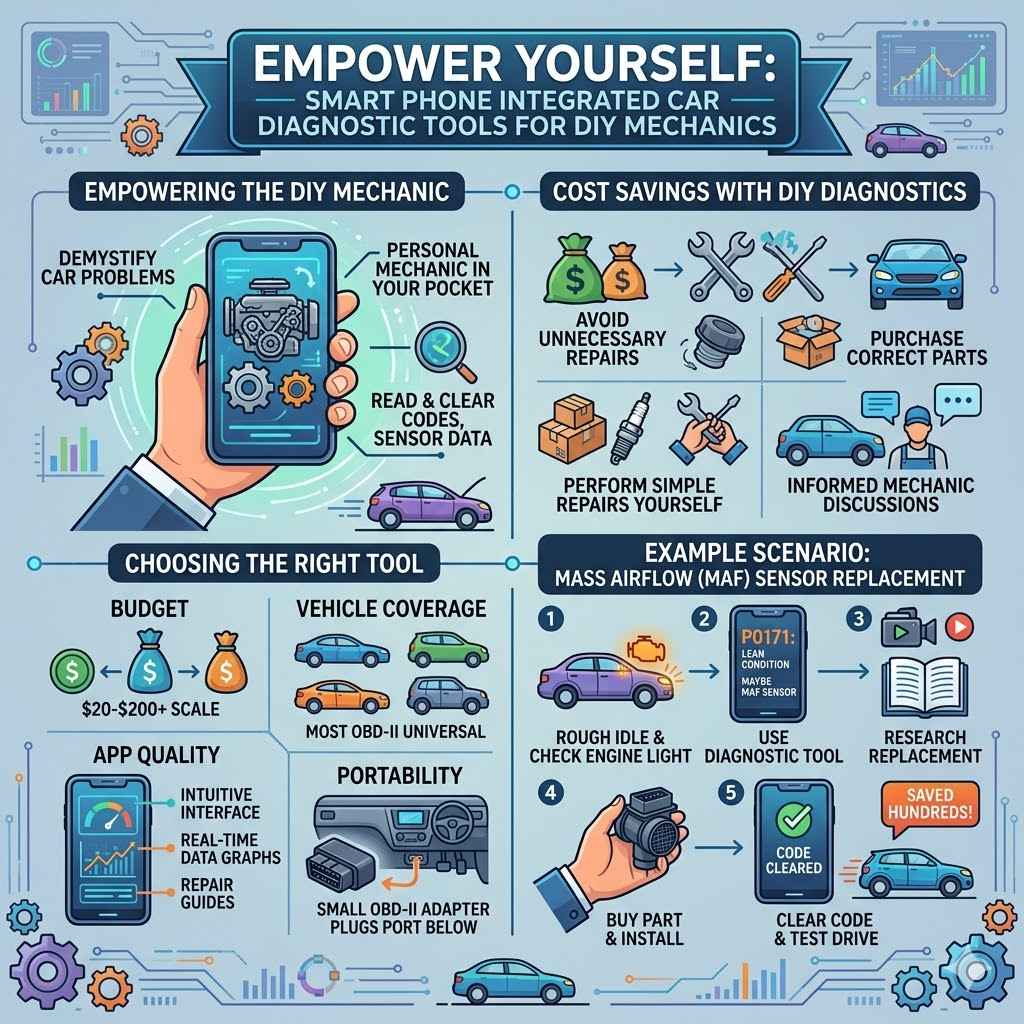
Smart phone integrated car diagnostic tools are a boon for do-it-yourself (DIY) mechanics. They demystify car problems, providing clear information that was once only accessible to professionals. This allows individuals to confidently tackle repairs and maintenance tasks they might have previously avoided.
With these tools, you can perform many of the same checks a mechanic would perform during an initial inspection. This includes reading and clearing codes, checking sensor data, and monitoring system performance. It’s like having a personal mechanic in your pocket.
Cost Savings With DIY Diagnostics
The primary benefit of using these tools for DIY purposes is cost savings. Diagnostic fees at repair shops can add up quickly. By using your own tool, you can often identify the problem yourself.
This allows you to:
Avoid unnecessary repairs: Sometimes a warning light can be triggered by a minor issue, like a loose gas cap. Your tool can help you identify this easily.
Purchase the correct parts: Knowing the exact part that needs replacing helps you buy the right component, avoiding costly mistakes or returns.
Perform simple repairs yourself: Many common issues, like replacing a faulty oxygen sensor or spark plugs, can be done by a DIYer once the problem is identified.
Have informed discussions with mechanics: Even if you can’t perform the repair yourself, understanding the issue helps you get accurate quotes and avoid being overcharged.
Choosing The Right Tool For Your Needs
When selecting a tool as a DIYer, consider these factors:
Budget: Prices range from $20 to over $200. For basic code reading and clearing, less expensive options are fine. For more advanced features and live data, investing a bit more is worthwhile.
Vehicle Coverage: Ensure the tool supports your car’s make, model, and year. Most OBD-II tools are universal, but some specialized features might be brand-specific.
App Quality: A good app is as important as the hardware. Look for intuitive interfaces, clear explanations, and helpful features like repair guides or real-time data graphs.
Portability: Most adapters are small and easily stored in your glove box.
Example Scenario: Replacing A Mass Airflow Sensor
Imagine your car starts to idle roughly, and the “check engine” light illuminates. You use your smart phone diagnostic tool and get code P0171, which indicates a lean condition on bank 1, often caused by a faulty Mass Airflow (MAF) sensor.
The app might provide information about the MAF sensor, its function, and common symptoms of failure. You can then research how to replace a MAF sensor on your specific car model. You watch a few videos and decide you can do it yourself.
You purchase the correct MAF sensor, install it following the instructions, and then use your tool to clear the P0171 code. After a test drive, the “check engine” light stays off, and the engine runs smoothly again. You’ve just saved hundreds of dollars on a repair that took you less than an hour.
Frequently Asked Questions
Question: What is the OBD-II port?
Answer: The OBD-II port, or On-Board Diagnostics II port, is a standard connector found in all cars and light trucks manufactured since 1996. It allows diagnostic tools to access your vehicle’s computer system to read error codes and sensor data.
Question: Do I need a special app for my car model?
Answer: Most smart phone diagnostic tools come with a universal app that works with a wide range of vehicles. However, some advanced tools or apps offer enhanced features or manufacturer-specific diagnostics for certain car brands.
Question: Can I clear the “check engine” light with these tools?
Answer: Yes, most smart phone diagnostic tools allow you to clear diagnostic trouble codes (DTCs), which will turn off the “check engine” light. However, this should only be done after the underlying issue has been identified and addressed, as the light will return if the problem persists.
Question: Are these tools difficult to set up?
Answer: No, setup is generally very simple. You plug the adapter into the OBD-II port, pair it with your smart phone via Bluetooth or Wi-Fi, and download the accompanying app. Most apps guide you through the process with clear instructions.
Question: Can these tools diagnose transmission problems?
Answer: Standard OBD-II tools can often read general transmission-related codes. For more in-depth transmission diagnostics, you might need a more advanced tool or one that supports manufacturer-specific codes for your vehicle’s make and model.
Wrap Up
Finding the Best Smart Phone Integrated Car Diagnostic Tools Near You is now simpler. These tools offer clear insights into your car’s health, saving you time and money. You can read codes, check live data, and even tackle DIY repairs.
Start exploring these helpful devices today to gain confidence in your car maintenance.