Brush for Car Wheels: Tested & Reviewed (3 Picks)
The safest brush for car wheels depends on wheel design: use a soft barrel brush for deep spokes, a narrow detail brush for tight lug recesses, and a flagged-tip face brush for open, coated wheels. Pick the wrong shape and you can miss brake dust, scratch delicate finishes, or force bristles into spots that hold grime. This guide compares 3 wheel brushes and shows which one fits each rim shape, finish, and cleaning job.
Top wheel brush picks at a glance

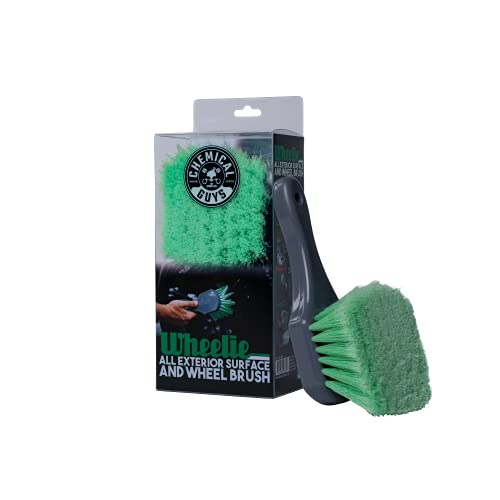
The best overall pick for mixed wheel designs is the Chemical Guys Red Rocket Brush because its 18-inch length reaches deeper areas while still fitting most face-and-barrel jobs. For tight spaces, the Chemical Guys Wheelie All Exterior Brush is easier to place with more control. For gentle barrel and lug work, the Wheel Woolie WW-15-MF is the safest style.
- Best overall: Chemical Guys Red Rocket Brush
- Best value / compact control: Chemical Guys Wheelie All Exterior Brush
- Best gentle barrel and recess cleaning: Wheel Woolie WW-15-MF
Chemical guys Red Rocket brush
The Red Rocket is the most versatile single pick for mixed wheel shapes. The Drive lists it as the top overall pick, and its 18-inch total length gives it the reach needed for deeper barrels and wider spoke openings. It uses nylon and polypropylene bristles, and The Drive says it is safe for chrome, polished, painted, and matte finishes.
Chemical guys Wheelie all exterior brush
The Wheelie is the better compact option when you need control more than reach. The Drive lists it as best value, and its 9.37-inch total length makes it easier to steer around tight spokes, small caliper openings, and narrow face gaps. The Drive says it uses synthetic bristles and is safe for chrome, polished, powder-coated, wrapped, and custom finishes. (Thedrive)
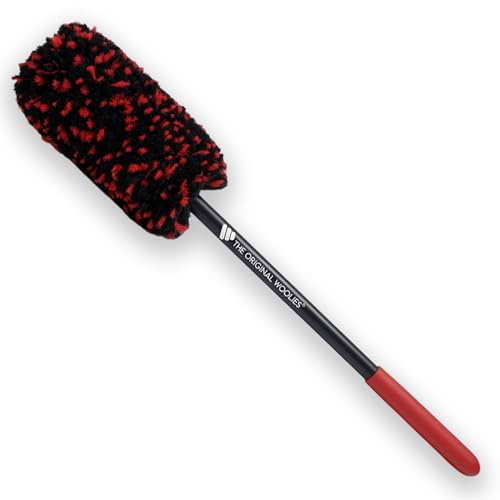
Wheel Woolie WW-15-MF
The WW-15-MF is the gentlest style in this group for barrel, center cap, and lug nut recess cleaning. Its microfiber loop construction is meant to move around curved surfaces without a hard bristle edge. The three-size lineup matters because wheel depth and spoke spacing vary more than most buyers expect.
Which brush fits your wheel design?
Start with the wheel shape, then choose the brush. Deep barrels need reach and a flexible cleaning path. Tight multi-spoke wheels need a slimmer head that can pass between spokes without forcing it. Delicate finishes need the least aggressive contact that still removes grit and brake dust.
Deep-barrel performance wheels
Deep-barrel performance wheels need a long brush with a flexible spine or a soft loop design. A short face brush cannot stay in contact long enough, and it often leaves dust at the barrel lip or around the hub. A flexible handle about 17 inches long, or a brush about 18 inches total length or longer, is often a safer fit when the barrel sits far behind the spoke face.
Say your wheel has a deep barrel and a narrow spoke opening. A bulky cylindrical brush may reach the barrel, but it can bind at the spoke gap and leave the inner rim dirty. A long, flexible barrel brush solves the reach problem without forcing the head sideways.
Tight multi-spoke OEM wheels
Tight multi-spoke wheels need a narrow cylindrical head or angled head that can thread between spokes and around lug recesses. Here, shape matters as much as softness. A brush that is too large for the gap will scrape the spoke edges or push grime back onto the face.
For this wheel type, short brushes often give better control than longer ones. A 10-inch handle can be easier to place on the face, while a brush about 15 inches or longer is better only if the head remains slim enough for the gap. The problem is not length alone; it is whether the head can enter the space cleanly.
Delicate finishes and custom wraps
Wrapped, matte, polished, and powder-coated wheels need softer contact and less grit drag. The safest option is usually a microfiber loop or a soft synthetic brush with a clean-rinsing head. Avoid stiff bristles if the finish marks easily, because a stiff edge can turn trapped dust into abrasion.
Chrome and polished wheels also show splashback more clearly, so a brush that rinses quickly matters. If the brush holds dirty slurry in its base, it can redeposit grit on the next pass.
What brush type works for your finish?
Finish type changes the risk profile. Chrome and polished rims tend to show micro-marring quickly. Painted, matte, and powder-coated wheels can be more forgiving, but they still scratch if the brush traps grit. Wrapped and custom finishes need the most caution because surface film can be less durable than bare metal or factory paint.
Chrome and polished wheels
Chrome and polished wheels do best with soft synthetic fibers, chenille microfiber, sheepskin wool, or a quality wheel woolie style. Natural boar hair and flagged-tip bristles can work on stubborn dust, but they bring more contact pressure and more risk if the brush has already collected grit.
For these finishes, the key is not “soft” in the abstract. It is soft and clean-rinsing, with a head that does not trap debris at the base.
Painted, matte, and powder-coated wheels
Painted, matte, and powder-coated wheels can tolerate more brush options, but they still benefit from soft synthetic fibers, flagged-tip bristles, or synthetic wool. A brush that is too soft may glide over baked-on dust and leave residue behind, especially on winter wheels. If the dust is heavy, use chemistry and dwell time before you add scrubbing force.
Wrapped and custom wheels
Wrapped and custom wheels need low-abrasion contact first. Synthetic bristles, chenille microfiber, and woolie-style loops are the safer starting points. A narrow brush can still help in lug recesses, but keep the face brush gentle and rinse it often so the wrap does not see a loaded, dirty surface.
Pick 1: Chemical guys Red Rocket brush
The Red Rocket fits buyers who want one brush that can cover most wheel jobs without being too short for barrels or too bulky for the face. Its 18-inch total length gives it more reach than compact face brushes, while the nylon and polypropylene bristles give it enough bite for regular brake dust on open wheels.
Why the 18-inch length matters
An 18-inch brush reaches deeper into barrels and around wider spoke openings, where short brushes stop too early. That matters on performance wheels with a set-back barrel and on cars whose calipers leave limited side access. It also keeps your hand farther from the wheel face, which helps with control during barrel-first cleaning.
Where nylon and polypropylene fit best
Nylon and polypropylene are useful when you need a firmer scrub than a woolie can give. They suit chrome, painted, polished, and matte finishes according to The Drive, but they are not the first choice for very delicate wraps or surfaces that scuff easily. They also work best when the wheel has enough clearance for the head to move without forcing contact.
Finish compatibility and known limits
The stated compatibility includes chrome, polished, painted, and matte finishes. The main limit is geometry: if the spoke spacing is very tight, a longer brush can be awkward to angle through the gap. On a wheel with narrow recesses, a shorter detail brush may clean faster and with less chance of bumping the spoke edges.
Pick 2: Chemical guys Wheelie all exterior brush
The Wheelie is the better pick when control and compact size matter more than barrel reach. At 9.37 inches long, it is easier to place in tight wheel wells, around small caliper openings, and along spoke faces where a longer handle feels clumsy. The Drive lists it as best value, and its synthetic bristles keep it in the safer range for many finishes.
Why the 9.37-inch size works in tight spaces
A shorter brush gives your hand more precise placement. That helps with multi-spoke wheels, where the brush has to enter, scrub, and withdraw without dragging across the spoke face. It also reduces the chance of the handle contacting the wheel arch liner or suspension parts while you work.
Best uses for chrome, powder-coated, and wrapped wheels
The Wheelie is stated as safe for chrome, polished, powder-coated, wrapped, and custom finishes. That makes it a useful general-purpose face brush for mixed-wheel households where one vehicle has a delicate finish and another has a tougher coating. It is also easier to rinse quickly than a longer, denser tool.
Where a shorter brush gives better control
A shorter brush is the better choice when the gap is shallow, the face is simple, or the lug recesses are easy to reach from the front. It is also useful when you need to scrub around wheel weights or valve stems without flexing a long shaft into the wrong angle.
A common mistake is choosing one stiff brush for all wheels, even when some rims need a smaller, softer tool to reach tight spokes without scratching the finish. On a simple OEM wheel, that extra length can make the tool harder to steer and more likely to touch the wrong surfaces.
Pick 3: Wheel woolie WW-15-MF
The WW-15-MF is the safest style for wheel owners who want maximum surface gentleness. Its microfiber loop construction reduces the chance of hard bristle tip contact, and the design is well suited to barrel, center cap, and lug nut recess cleaning. It is the right answer when the finish is sensitive and the dust is not fully baked on.
Microfiber loop construction for gentle cleaning
Microfiber loops hold cleaning solution and glide over curved surfaces with less edge pressure than stiffer bristles. That makes them a strong fit for polished or custom wheels, especially where the wheel surface has a high visible-finish risk. They also rinse well if you flush them often during use.
Barrels, center caps, and lug nut recesses
The WW-15-MF makes sense for barrel cleaning because the loop shape can contact the inner rim without a hard spine rubbing the finish. It also reaches around center caps and lug nut recesses better than many wide face brushes. The tradeoff is that it may be slower on heavy, baked-on dust than a firmer nylon brush.
Choosing among the three sizes
The size choice should follow barrel depth and spoke spacing. A larger size helps on deeper barrels; a smaller one is easier around tight lug pockets and dense multi-spoke faces. If your household has one vehicle with deep barrels and another with simple OEM wheels, a two-brush setup often works better than trying to force one size into every job.
Wheel brush decision matrix
This matrix ties the brush to the wheel, not just the brand. It helps you match geometry, finish risk, and likely failure mode before you buy.
| Wheel type | Finish risk | Barrel depth | Spoke spacing | Best brush style | Common failure mode |
|---|---|---|---|---|---|
| Deep-barrel performance wheels | Medium to high | Deep | Medium to wide | Long flexible barrel brush or microfiber woolie | Brush too short to reach the back wall |
| Tight multi-spoke OEM wheels | Medium | Shallow to medium | Tight | Narrow cylindrical head or angled detail brush | Brush too large for narrow gaps |
| Gloss black painted wheels | High | Medium | Medium | Soft synthetic or microfiber loop brush | Grit retention causes visible marring |
| Chrome wheels | High | Shallow to deep | Varies | Soft synthetic, woolie, or chenille microfiber | Splashback leaves slurry on the face |
| Powder-coated wheels | Medium | Shallow to medium | Medium | Synthetic bristle or microfiber brush | Too-soft head leaves baked-on dust behind |
| Wrapped/custom wheels | High | Shallow to medium | Medium | Microfiber loop or soft synthetic brush | Hard bristles catch film edges |
| Muddy winter wheels | Medium | Medium | Wide to medium | Firmer synthetic brush with easy rinse-out | Brush clogs and redeposits grime |
| Light-duty daily-driver wheels | Low to medium | Shallow | Open | Compact face brush or short woolie | Long tool feels awkward and misses recesses |
Start with barrel depth, then check spoke spacing, then inspect lug recess size. If the barrel is deep, prioritize length and flexibility. If the spokes are tight, prioritize a narrow head. If the finish is delicate, prioritize microfiber or soft synthetic material over aggressive scrubbing power.
Bristle material and head shape
Soft synthetic fibers are the safest all-around option for painted and polished rims because they balance cleaning and finish protection. Natural boar hair adds more bite and can help with stubborn grime, but it is less forgiving on delicate finishes. Sheepskin wool, chenille microfiber, flagged-tip bristles, and synthetic wool sit in the gentler range, with microfiber loops usually giving the best finish protection.
Head shape matters just as much. A narrow cylindrical head fits tight spoke gaps. An angled head helps with recessed lug areas. A flexible spine helps the brush follow the barrel without forcing the contact patch into one corner.
Handle length and reach
A 10-inch handle is usually better for close control on smaller wheels or shallow faces. A 15 inches or longer tool improves reach on larger wheels, and a 17-inch flexible handle can make barrel cleaning easier when the inner rim sits far behind the spokes. The right length is the one that reaches the dust without forcing your wrist into a bad angle.
Cleaning sequence that lowers scratch risk
- Pre-soak the wheel so loosened dust can release before the brush touches the surface.
- Clean the barrel first, where the heaviest brake dust usually sits.
- Rinse the brush often so grit does not build up in the fibers or loops.
- Move to the spoke faces next, using the lightest pressure that removes residue.
- Finish with lug nut recesses and center caps using a smaller, narrower tool.
- Flush the wheel again so leftover slurry does not dry on the finish.
Suppose one car has deep-barrel performance wheels and another has simple 5-spoke OEM wheels. A long barrel brush can be ideal on the performance setup but awkward on the simpler one. In that mixed household, one long brush plus one compact face brush is usually more efficient than a single do-everything tool.
Frequently asked questions
What brush is best for cleaning car wheels without scratching them?
The safest choice is usually a soft microfiber loop or a soft synthetic brush that rinses clean quickly. For delicate chrome, polished, or wrapped wheels, avoid stiff bristles if the brush will drag trapped grit across the surface. Geometry still matters, so match the head size to the spoke gap and lug recess.
Do I need a long wheel barrel brush or a short face brush?
Use a long barrel brush when the inner rim sits far behind the spokes or when the wheel has deep barrels. Use a short face brush when the wheel is shallow, the spokes are tight, or you need better control around complex shapes. Many owners need both, not one compromise tool.
What bristle material is safest for painted or polished rims?
Soft synthetic fibers, chenille microfiber, sheepskin wool, and synthetic wool are the safest starting points for painted or polished rims. Flagged-tip bristles can also work well if the wheel is not heavily coated in grit. The real issue is not only softness, but how well the brush releases dirt during rinsing.
Can one wheel brush clean spokes, barrels, and lug nuts well?
One brush can cover all three areas on some open wheels, but it usually fails on at least one task when the design gets more complex. Long brushes reach barrels better; short narrow brushes handle lug recesses better. For tight multi-spoke wheels, a single brush often misses detail or loses control.
How do I remove brake dust from wheels without damaging the finish?
Start with a wheel-safe cleaner and let it dwell, then rinse and brush the barrel before the face. Use light pressure, rinse the brush often, and save the spoke faces for last. That sequence lowers the chance of grinding loosened dust back into the finish.
Are woolie-style wheel brushes better than regular bristle brushes?
Woolie-style brushes are better when finish protection matters most, especially on chrome, polished, matte, wrapped, or custom wheels. Regular bristle brushes are often better when you need more scrubbing power on heavy brake dust. If your wheels are sensitive and your dust is moderate, woolies are usually the safer first choice.
What wheel brush works best for deep barrel or multi-spoke wheels?
Deep barrel wheels favor long, flexible brushes or microfiber woolies with enough reach to stay in contact at the back wall. Multi-spoke wheels favor narrow cylindrical heads or angled detail brushes that can enter tight gaps without scraping the spoke edges. If your wheel has both traits, choose a two-brush setup.
Which wheel brush is best for delicate chrome or powder-coated wheels?
For delicate chrome, choose a soft synthetic or microfiber loop brush that rinses clean. For powder-coated wheels, a soft synthetic brush or the Chemical Guys Wheelie All Exterior Brush is a strong fit because The Drive says it is safe for powder-coated finishes. Avoid stiff bristles if the surface shows marks easily.
Products related to this article
Sponsored / affiliate links. As an Amazon Associate I earn from qualifying purchases. I may earn additional commission from eligible campaigns.
 2Pack Automotive Oil Film Cleaning Brush, Cars Clear Vision Glass Cleaner for Car Windows,Anti-Rain&Anti-Fog Windshield Cleaner Tool to Improve Clarity and Visibility,Car Glass Oil Film Remover
 15-Piece Car Detailing Brush Set for Wheels, Bumpers, Air Vents – Includes 5 Detailing Brushes, 3 Wire Brushes, 1 Wheel Brush, PP Material