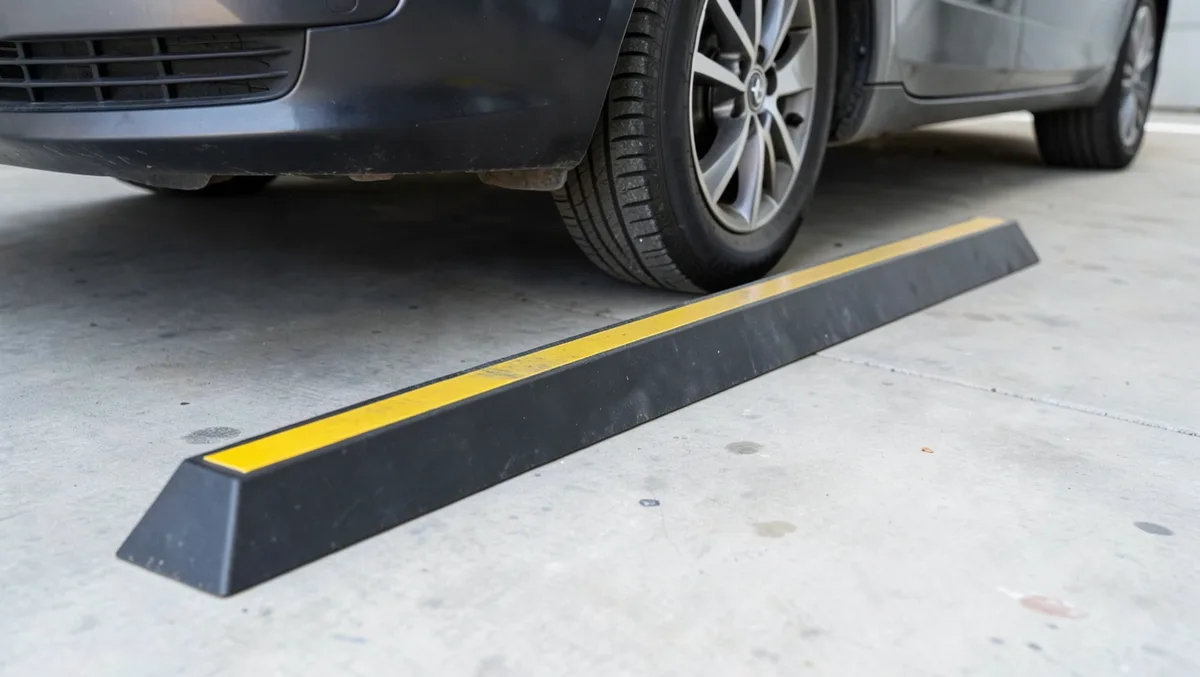
Bumpers for Cars: Rubber Parking Stoppers & Bump Guards
A rubber parking stopper is a low block you position on the garage or driveway floor so your front tire stops rolling before the real bumper touches a wall, a shelf, or another vehicle. Most are made from heavy-duty recycled rubber with a reflective yellow stripe for visibility after dark, and they hold up far longer than the plastic or concrete stops sold at most hardware stores.
This guide covers three widely bought options: a single-piece garage stopper, a two-pack rated for heavier vehicles, and a 160-piece assortment of the small rubber bump stops found inside the hood, trunk, and glove box — plus how to tell which one actually solves your problem.
Bumpers for Cars: What This Guide Actually Covers
People searching “bumpers for cars” are usually looking for one of two different things: the large plastic-and-foam fascia that absorbs impact on the front or rear of a vehicle, or a small rubber part that cushions something else entirely. This article is about the second kind — rubber parking stoppers that keep your tires (and your actual bumper) from ever reaching a wall, plus the small rubber bump guards used inside a hood, trunk, or door. If you are trying to identify a part on your vehicle’s real crash-safety bumper instead, see What Is the Front Bumper of a Car Called? or What Are the Plastic Screws in Car Bumpers Called?
Pyle Curb Garage Vehicle Floor Stopper
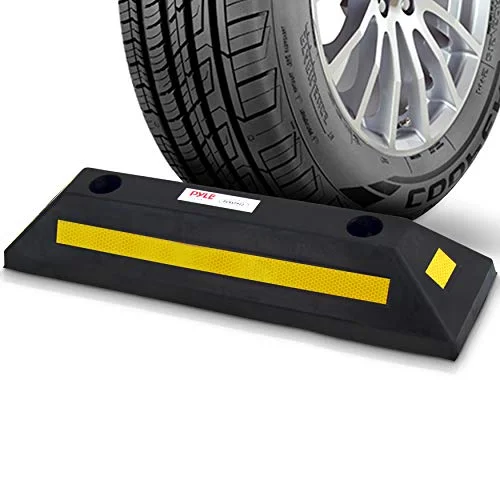
The Pyle Curb Garage Vehicle Floor Stopper is a single 22-inch rubber block built for one vehicle in one spot — a home garage bay, a driveway, or a reserved space. Roll forward until the front tire meets the block and stop there; the block marks the exact point where your bumper clears a wall or whatever is stored at the back of the garage.
Pros:
- Compact single unit sized for one vehicle bay
- Recycled rubber holds its shape through freeze-thaw cycles better than plastic
- No hardware required — the block’s own weight keeps it in place on a garage floor
Cons:
- Ships as one block, so a two-car garage needs a second order
- The reflective strip is a plain rectangle rather than a corner-mounted diamond marker
Because it is not bolted down, the stopper can be repositioned in minutes if you rearrange shelving or swap vehicles. Two mounting holes are molded in for concrete screws if you want it permanent, which is worth doing in a shared or rental garage where another driver could kick it out of place.
Pyle 2-Pack Heavy Duty Rubber Wheel Stops
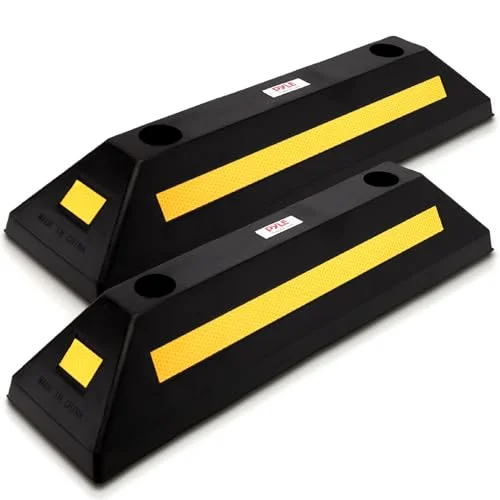
The 2-pack is the better buy for a two-car garage, a driveway with a second vehicle, or a small lot with a couple of marked spaces. Each block carries the same reflective yellow strip as the single-pack stopper, and Pyle rates the pair for trucks, vans, and light RVs in addition to standard passenger cars.
Pros:
- Two blocks cover two parking spots in one order
- Reflective strip runs the full width of the block for better night visibility
- Rated for trucks, vans, and RVs, not just passenger cars
Cons:
- Heavier to carry in from the car than the single-pack version
- Still needs occasional repositioning if a vehicle nudges it out of line
Placement matters more than the stopper itself. Pull in slowly and mark where your tire naturally lands with the door open and mirrors folded in — that is where the block belongs, not an arbitrary distance from the wall. Get that measurement right once and the stopper does the same job every time you park after that.
Rubber vs. Plastic vs. Concrete Parking Stops
Parking-lot suppliers generally rate rubber above the plastic and precast-concrete stops sold at most hardware stores. Concrete cracks and chips with repeated impact and temperature swings, and once it breaks it typically has to be replaced rather than repaired. Molded plastic is lighter and cheaper up front, but it turns brittle in cold weather and can shatter under a heavier vehicle. Rubber flexes on impact instead of cracking, sits flush against asphalt or concrete instead of curling up over time, and most manufacturers back it with a warranty against breakage that plastic and concrete stops rarely offer.
| Material | How It Holds Up | Best For |
|---|---|---|
| Rubber | Flexes on impact, resists cracking for years | Home garages and daily use |
| Plastic | Lightweight but brittle in cold weather | Occasional or light-duty use |
| Concrete | Heaviest option, cracks and chips over time | Commercial lots on a slower replacement cycle |
Dsnaduo 160-Piece Automotive Rubber Bumper Assortment
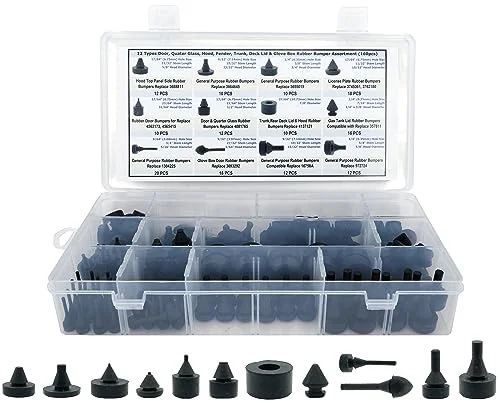
This kit is a different category of “bumper” altogether — not a parking-lot wheel stop, but a box of small rubber bump stops and grommets that cushion metal-on-metal contact inside the car itself. The 160-piece set includes the small rubber pads that sit where the hood meets the fender, the stop on the trunk lid and rear deck, the pad inside a glove box door, and similar stops for a gas-tank or license-plate flap. Dsnaduo lists the set as a match for common GM, Ford, and Chrysler part numbers, including 20030 and 8210, which are typical OEM numbers for hood and trunk bump stops on those brands.
Pros:
- Covers most common OEM bump-stop sizes in one box instead of ordering single parts
- Useful for a garage or shop that services multiple GM, Ford, or Chrysler vehicles
- Stops the rattling and paint wear that starts once a factory rubber pad dries out and falls off
Cons:
- You still need to identify which size matches your vehicle before installing
- Not a wheel stop or parking aid — a different product from the two above
The rubber in these small bump stops hardens and cracks with age the same way weatherstripping does, usually somewhere between 8 and 12 years depending on climate. A missing pad is easy to miss on a walkaround, but you will hear it — a loose hood or trunk lid rattles at idle and over bumps once its cushion is gone. Matching the old part by its shape and stem length is more reliable than matching it by size alone, since the assortment covers dozens of close variants.
Frequently Asked Questions
What Are Garage Floor Stoppers Used For?
A garage floor stopper marks the exact spot where your front tire should stop rolling, so the bumper never reaches a wall, workbench, or stored items at the back of the space. It is a reference point, not a barrier meant to absorb a hard hit — it is built for a normal parking approach, not a collision at speed.
How Do Rubber Wheel Stops Enhance Parking Safety?
They give you a consistent, visible stopping point instead of guessing by eye. A reflective strip means you can still see the block clearly with your headlights on after dark, which matters most in an unlit garage or a lot without overhead lighting.
Can Rubber Bumpers Fit Different Car Models?
The wheel stops themselves are universal — any tire that rolls up to a rubber block works the same way regardless of make or model. The small rubber bump-stop assortment is different: it is sold by OEM part number and matched to specific GM, Ford, or Chrysler applications, so check the part number before you order.
Why Choose Heavy-duty Rubber Parking Stoppers?
Rubber holds up to repeated impact and years of weather better than the plastic or concrete alternatives sold at most hardware stores. It flexes instead of cracking, does not lift off the ground the way lightweight plastic can, and most manufacturers back it with a warranty against breakage that concrete and plastic stops typically do not carry.
Are Reflective Strips Important For Parking Stops?
Yes, especially in a garage without bright overhead lighting or a driveway you use after dark. A reflective strip catches your headlights as you pull in, so you can see exactly where to stop before you get close enough for it to matter.
Conclusion
A rubber parking stopper solves one specific problem: it stops your tire, and with it your car’s bumper, before either one reaches a wall or shelf. The single Pyle Curb Garage Stopper works for one dedicated spot, the 2-pack covers a second vehicle or a slightly heavier one, and the Dsnaduo assortment is worth keeping on hand separately if a GM, Ford, or Chrysler has started rattling from a missing hood, trunk, or door bump stop. None of the three substitutes for the others — pick based on which problem you actually have, tire placement or a worn interior bump pad, rather than by price alone.
Products related to this article
Sponsored / affiliate links. As an Amazon Associate I earn from qualifying purchases. I may earn additional commission from eligible campaigns.