Custom Front Bumpers for Cars: Materials, Cost, and Legality
A custom front bumper is an aftermarket replacement for your car’s factory bumper cover, built from steel, aluminum, fiberglass, or reinforced polyurethane instead of thin factory plastic, and people install one to change how the car looks, add real off-road protection, or replace a bumper that is already cracked beyond a simple repair.
Cost is the part most buying guides gloss over. Bolt-on scrape guards and trim run under $50, but a full bumper swap typically lands between $800 and $2,000, and that jumps to $1,500–$3,500+ once parking sensors or a front camera need to be re-integrated. There is also a legal side few articles mention at all: federal rule FMVSS 581 sets a bumper height and impact standard for passenger cars, and a handful of states, including Virginia, spell out an exact height range in inches – a poorly chosen off-road bumper can put a truck on the wrong side of that line.
This guide covers what a custom front bumper actually replaces, how the common materials compare, realistic price ranges by job type, the legal rules that actually apply, and how to decide between a weekend DIY install and a shop job.
What Is a Custom Front Bumper?
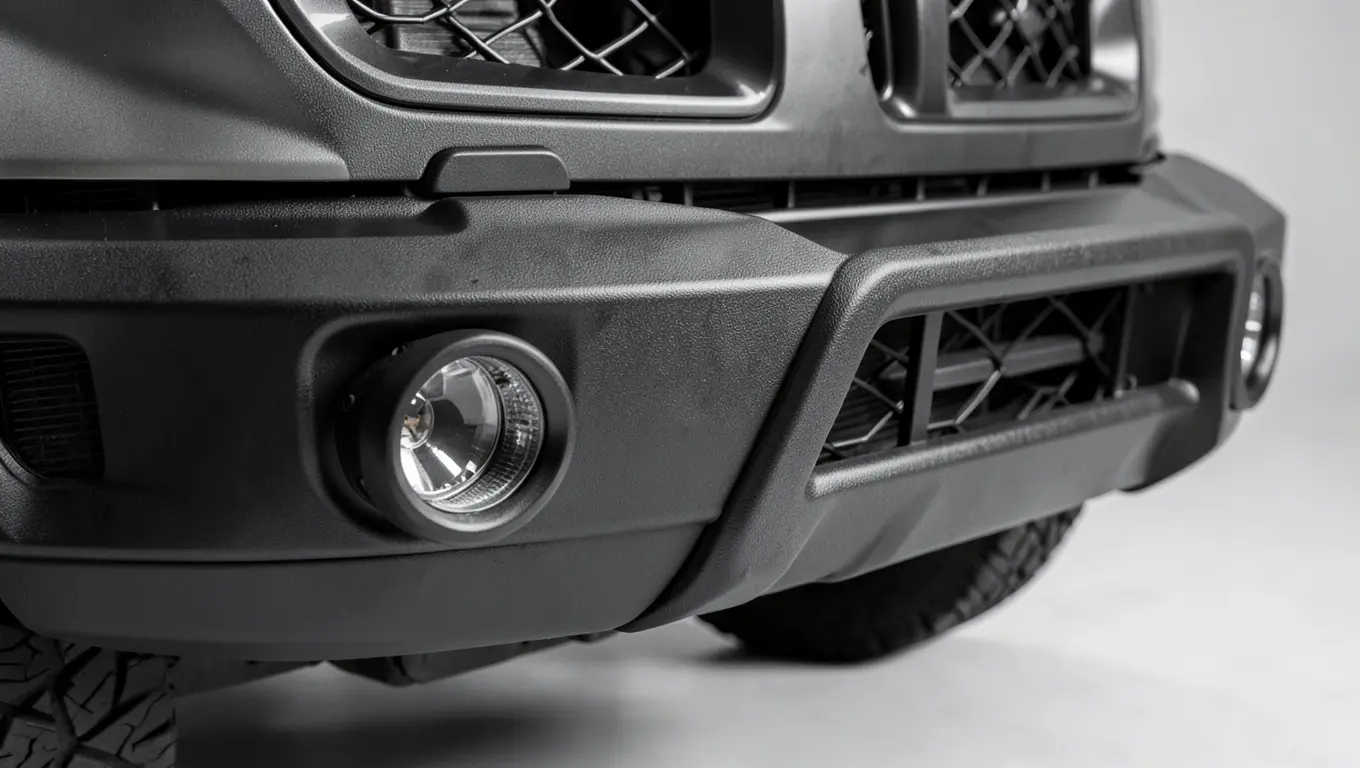
Every car’s front end actually has two separate bumper components. The bumper cover is the visible plastic or fiberglass fascia you see and touch – it is cosmetic and holds the grille, fog lights, and often a sensor array. Behind it sits the bumper reinforcement bar, a steel or aluminum beam bolted to the frame rails that does the actual work of absorbing a low-speed impact. Plastic clips and fasteners hold the cover to that structure underneath.
“Custom front bumper” covers three different kinds of projects, and they are not interchangeable:
- OEM+ replacement – a color-matched cover that swaps in for the factory piece, usually to fix damage or add a slightly sportier look without changing the car’s silhouette.
- Off-road / bull bar style – replaces both the cover and the reinforcement bar with a heavy steel or aluminum unit built to mount a winch, light bar, or skid plate, common on trucks and SUVs.
- Widebody / aero kit style – a fiberglass or polyurethane cover designed for a lower, wider stance, aimed at looks and airflow rather than impact protection.
PROTECT YOUR NEW BUMPER
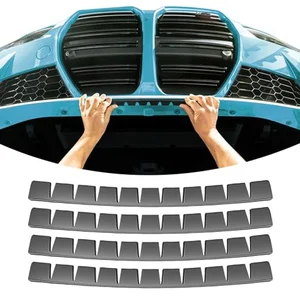 |
Polyurethane Front Bumper Guard, 4-Pack – $35.99 Whether you go OEM+ or full off-road, a new bumper is money you just spent – these self-adhesive polyurethane strips absorb curb scrapes and parking-lot bumps before they chip fresh paint or gouge a fiberglass cover.
|
Custom Bumper Materials Compared
Material drives weight, durability, price, and how the bumper is meant to be used. Here is how the four common choices stack up.
| Material | Weight | Durability | Typical Cost | Best For |
|---|---|---|---|---|
| Steel | Heaviest | Very high impact resistance; can rust if the coating chips | $$$ (higher, plus install) | Off-road/overland builds, winch mounting |
| Aluminum | Light-moderate | Good protection, corrosion-resistant | $$$ (comparable to steel) | Off-road builds where weight over the front axle matters |
| Fiberglass | Light | Looks sharp, cracks more easily on impact than metal | $$ | Widebody/aero styling, daily drivers on paved roads |
| Reinforced polyurethane/ABS | Light | Flexes and resists denting/cracking better than fiberglass | $$ | OEM+ replacements, budget-friendly daily use |
Steel is the strongest option and the standard choice for genuine off-road protection, but it adds the most weight to the front of the car, which can affect handling on a lighter vehicle. Aluminum gets most of that impact resistance for meaningfully less weight, at a similar price point. Fiberglass gives the cleanest, most car-show-ready lines but is the most brittle of the four – a curb strike that a polyurethane cover would just flex through can crack fiberglass. Reinforced polyurethane and ABS plastic are what most factory covers and OEM+ replacements are made from for exactly that reason: they take everyday abuse without shattering.
Popular Custom Front Bumper Styles
Once the material is decided, the next choice is style, and it usually follows directly from what the bumper needs to do.
- Off-road/overland bumpers add a winch plate, D-ring mounts, a light bar cutout, and sometimes an integrated skid plate. They are built for departure-angle clearance, not fuel efficiency.
- Sport/aero front lips lower the front air dam and add a splitter, aimed at improving high-speed stability and giving a more aggressive stance – mostly a styling and light aerodynamic upgrade on street cars.
- Color-matched OEM+ covers keep the factory shape and mounting points but swap the finish, mesh grille inserts, or minor contour lines, and are the easiest to install and re-sell later.
- Widebody kit bumpers are built as part of a full flare/fender package and usually require cutting or trimming to fit, which is a bigger commitment than a bolt-on swap.
How Much Does a Custom Front Bumper Cost?
Price depends heavily on scope – whether it is a minor upgrade, a full swap, or a swap that also has to keep factory tech working.
| Job Type | Typical Cost Range |
|---|---|
| Bumper guard/scrape protector accessories | $30 – $150 |
| Minor scratch/scuff repair on an existing bumper | $150 – $500 |
| Crack repair and repaint | $400 – $1,200 |
| Full bumper cover replacement (basic, no sensors) | $800 – $2,000 |
| Bumper with parking sensors or a front camera | $1,500 – $3,500+ |
| Full off-road bumper with winch mount, professionally installed | $1,000 – $3,000+ (parts and labor) |
| Luxury vehicle bumper replacement | $2,500 – $5,000+ |
Two things push a job to the high end of these ranges every time: sensors and paint. A bumper cover with radar-based parking sensors or an ADAS-linked front camera often needs a recalibration scan after install, which adds shop time and cost even if the part itself is affordable. Paint is the other variable – a bumper delivered in primer that needs a color match and clear coat can add $300–$800 on its own, while a pre-painted or textured black off-road bumper skips that step entirely.
Is a Custom Front Bumper Legal?
Federal rule FMVSS 581 (49 CFR Part 581) is the bumper standard most people have never heard of. It requires a passenger car’s bumper to withstand a low-speed impact test (roughly 2.5 mph) applied at a height between 16 and 20 inches off the ground, so the bumpers on two similarly sized cars actually line up in a collision instead of overriding each other. The standard’s damage requirements technically apply to passenger cars, not to light trucks and SUVs, which is part of why the off-road bumper market for trucks is so much larger than it is for sedans.
On top of the federal rule, several states set their own height limits in state law. Virginia, for example, requires trucks with a gross vehicle weight rating of 4,500 pounds or less to keep the front bumper between 14 and 28 inches off the ground – a rule that matters if a lift kit is going on at the same time as a new bumper. Before installing anything that changes ride height, mounting position, or adds features like a light bar, check your specific state’s vehicle code and your insurer’s stance on modifications; a bumper that fails a state inspection or voids a claim after an accident is a far more expensive problem than the bumper itself.
DIY vs. Professional Installation
Installation difficulty varies as much as the parts themselves do.
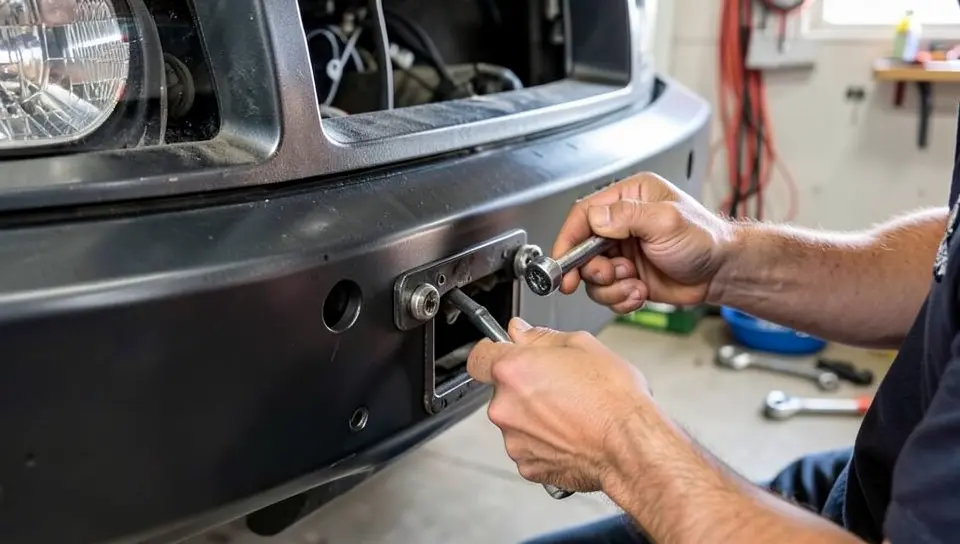
A straightforward OEM+ cover swap on factory mounting points is a realistic weekend DIY job with basic hand tools – typically a few hours, including removing fasteners, disconnecting fog light wiring, and clipping the new cover into place. A full off-road bumper swap is a bigger job: the reinforcement bar itself often has to come off, the new unit is heavier and needs a second set of hands or a jack to hold in position, and factory tow hooks or crash sensors may need to be relocated or wired in. If the bumper carries parking sensors, a forward camera, or adaptive cruise radar, professional installation is worth the money – those systems usually need a scan tool to recalibrate after the part is reinstalled, and a shop that skips that step can leave a safety feature reading incorrectly without any obvious warning.
How to Choose the Right Custom Front Bumper for Your Car
- Confirm exact fitment. Bumpers are made for a specific make, model, and often a specific year range or trim – a bumper listed for the wrong generation will not line up with the mounting points.
- Match material to the job. Off-road and towing needs point toward steel or aluminum; daily-driver styling points toward polyurethane or ABS for durability, or fiberglass if a lower price and lighter weight matter more than dent resistance.
- Check sensor and camera compatibility. If the factory bumper has parking sensors, fog lights, or a camera, confirm the replacement has cutouts and mounting provisions for the same hardware, or budget to relocate it.
- Be honest about installation difficulty. A bolt-on cover is a DIY job; a winch-ready off-road bumper or anything requiring recalibration is usually better left to a shop.
- Check the legal side first. Confirm the bumper’s height and any accessories (light bars, winches) comply with your state’s rules before it goes on the car, not after.
- Set a real budget, including paint and labor. The part price on a listing rarely includes paint matching, sensor recalibration, or installation labor – add those in before comparing prices between two bumpers.
- Read the warranty terms. Aftermarket bumpers vary widely on what is covered – look for coverage on cracking, fading, and mounting hardware specifically, not just a general “manufacturer defect” clause.
- Read real buyer reviews for your specific model. Fitment problems and hardware quality issues tend to show up in reviews from owners of the same vehicle, not in the general product description.
- Buy from an established brand for structural parts. A bumper cover that is purely cosmetic has more room for a budget brand; a bumper that is also your reinforcement structure is not the place to save a few dollars on an unknown manufacturer.
Frequently Asked Questions
What Is a Custom Front Bumper?
It is an aftermarket replacement for a car’s factory front bumper cover, and sometimes the reinforcement bar behind it, made from steel, aluminum, fiberglass, or reinforced polyurethane instead of stock materials. People install one to change the car’s look, add real off-road protection, or replace a bumper that is cracked beyond repair.
How Much Does a Custom Front Bumper Cost?
A basic cover replacement with no sensors typically runs $800–$2,000 in parts and labor. Bumpers with parking sensors or a front camera run $1,500–$3,500 or more because of the added recalibration work, and luxury vehicle bumpers can run $2,500–$5,000+. Smaller accessories like scrape guards run $30–$150.
Are Custom Front Bumpers Legal?
Generally yes, but federal rule FMVSS 581 sets an impact and height standard for passenger car bumpers, and several states add their own height limits on top of that – Virginia, for instance, requires trucks under 4,500 pounds GVWR to keep the front bumper between 14 and 28 inches off the ground. Check your state’s vehicle code before installing a bumper that changes ride height or adds accessories like a light bar.
Do Custom Front Bumpers Fit All Cars?
No. Bumpers are made for a specific make, model, and usually a specific year range or trim level. Always confirm exact fitment against your vehicle’s year and trim before buying, since even a one-year model refresh can change the mounting points.
Can I Install a Custom Front Bumper Myself?
A straightforward OEM+ cover swap on the factory mounting points is a realistic DIY project with basic hand tools, usually a few hours of work. Off-road bumpers that replace the reinforcement bar, and any bumper carrying sensors or a camera that need recalibration, are better handled by a professional shop.
What Material Is Best for a Custom Front Bumper?
It depends on the goal. Steel gives the strongest off-road protection but adds the most weight. Aluminum offers similar protection at less weight for a comparable price. Fiberglass gives the sharpest styling lines but cracks more easily than the other options. Reinforced polyurethane or ABS is the most impact-resistant choice for everyday street driving and is what most factory covers use.
Conclusion
A custom front bumper is really two decisions in one: what the bumper is made of, and what job it needs to do. A daily driver replacing a cracked factory cover wants a polyurethane or ABS OEM+ replacement that bolts onto existing mounting points. A truck heading off-road wants steel or aluminum, a reinforcement bar, and mounting for a winch or light bar. Either way, price out paint and sensor recalibration alongside the part itself, confirm exact fitment for your model year, and check your state’s bumper height rules before anything goes on the car – not after.
Get those pieces right and a custom front bumper is one of the few upgrades that genuinely delivers on both looks and real protection.
Products related to this article
Sponsored / affiliate links. As an Amazon Associate I earn from qualifying purchases. I may earn additional commission from eligible campaigns.