Can a Propane Tank Explode in a Hot Car: Essential Warning
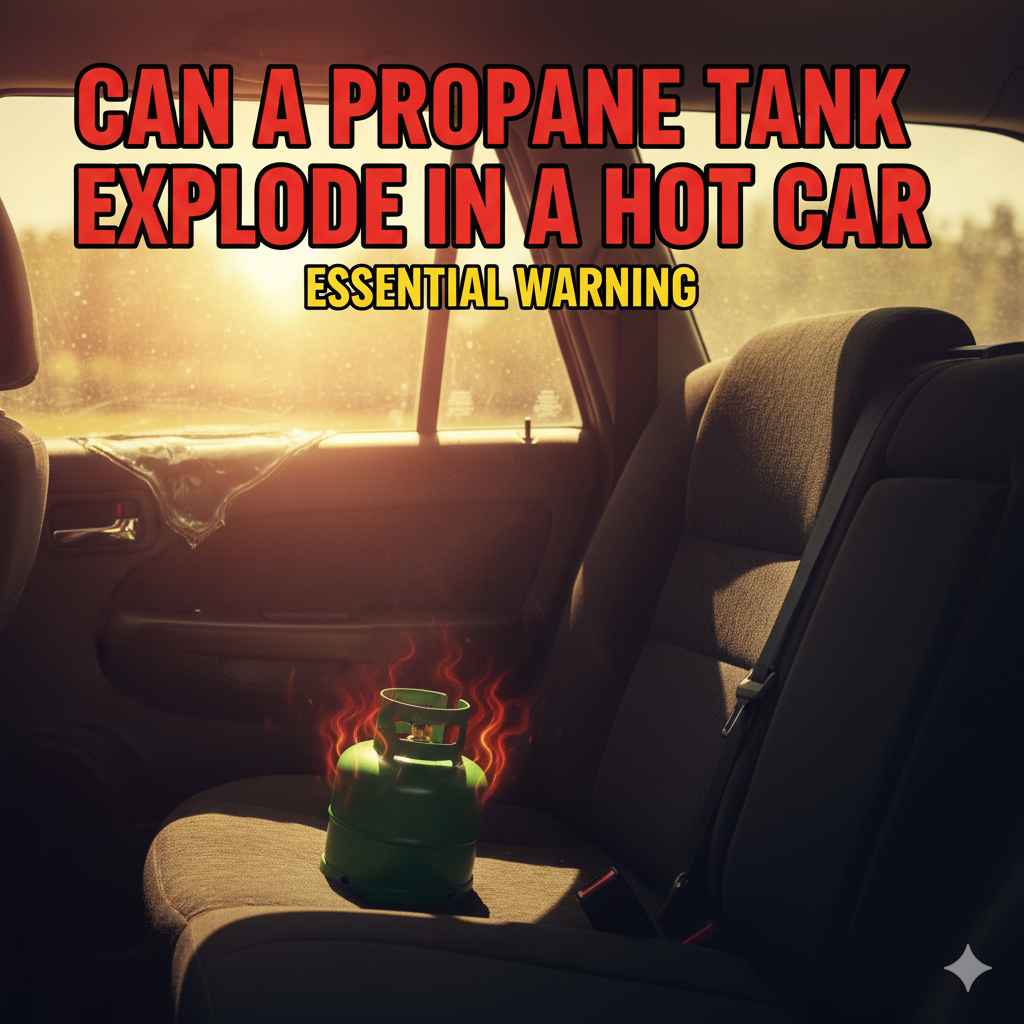
Can a propane tank explode in a hot car? Yes, under extreme heat, a propane tank can build dangerous pressure and potentially explode. This guide explains the risks and how to stay safe by avoiding leaving propane tanks in hot vehicles.
It’s a question that might pop into your head on a sweltering summer day: what happens if I leave a propane tank in my car? We all want to be prepared, whether it’s for a backyard barbecue or a camping trip. But tucking away that propane tank in your car, especially when temperatures soar, can be a recipe for disaster. It might seem like a simple place to store it, but the sun beating down on your vehicle can turn your car into an oven, creating serious safety hazards. Don’t worry, though! We’re here to break down exactly why this is a danger and what you can do to keep yourself and your loved ones safe. We’ll walk you through the science behind it and offer simple steps to avoid any potential accidents.
Understanding the Danger: Propane Tanks and Extreme Heat
Propane, also known as liquefied petroleum gas (LPG), is a fuel that’s highly sensitive to temperature changes. When propane is stored in a tank, it exists as a liquid under pressure. As the temperature rises, the liquid propane vaporizes, meaning it turns into a gas. This vaporization process creates a significant increase in pressure inside the tank. Think of it like shaking a soda bottle; the fizz builds up pressure. In a confined space like your car, exposed to direct sunlight, the temperatures inside can quickly become much hotter than the outside air.
Car interiors can reach extreme temperatures very rapidly. On a warm day, even with the windows cracked, a car’s interior can become significantly hotter than the ambient temperature. For instance, a study by the National Highway Traffic Safety Administration (NHTSA) found that car interior temperatures can rise as much as 20 degrees Fahrenheit in just 10 minutes and can climb to dangerous levels within an hour. When a propane tank is placed in such an environment, the pressure inside can exceed the tank’s designed limits.
How Heat Affects Propane Tanks
Propane tanks are built with safety features, like pressure relief valves, designed to release excess pressure before it becomes critical. However, these valves have limitations, and they are engineered to operate within specific temperature ranges. If the internal pressure climbs too high, too fast, due to extreme external heat, the relief valve might not be able to vent the gas quickly enough. This is where the danger of explosion comes in.
The pressure inside a propane tank can increase dramatically with temperature. For every 10-degree Fahrenheit increase above 70°F, the pressure inside a propane tank can rise by about 10 PSI (pounds per square inch). At extremely high temperatures, the pressure can reach levels that the tank or its components might not withstand, leading to a rupture or explosion.
The “Explosion” Scenario: What Really Happens?
When we talk about a propane tank “exploding” in a hot car, it’s important to understand what that means. It’s not typically a nuclear-style detonation. Instead, it’s a rapid, forceful release of pressurized gas. If the tank fails catastrophically, it can rupture violently. The propane inside, which is already under pressure, will then escape very quickly:
- Rapid Gas Expansion: The liquid propane rapidly turns into a much larger volume of gas once released.
- Fire Hazard: Propane is highly flammable. If there is any ignition source nearby (a spark, static electricity, a hot surface, or even a pilot light from another appliance), the escaping propane can ignite, causing a powerful fireball or flash fire.
- Shrapnel: A ruptured tank can become shrapnel, posing a physical danger to anyone or anything nearby.
The consequences can range from a significant fire to a dangerous explosion that can damage property and cause serious injury. This is why treating propane tanks with respect, especially in hot conditions, is crucial.

Factors Increasing the Risk
While any propane tank left in a hot car is a risk, certain conditions can significantly amplify the danger. Understanding these factors can help you make more informed decisions about propane tank storage and transport.
Tank Condition and Age
The physical condition of a propane tank plays a vital role in its ability to withstand pressure. Tanks that are old, corroded, dented, or rusted are more susceptible to failure. These imperfections can weaken the tank’s structural integrity, making it more likely to rupture under pressure, even if the pressure is within the range that a newer, undamaged tank would handle.
Regular inspection of your propane tanks is essential. Look for:
- Rust: Especially around the base, valve, or seams.
- Dents and Gouges: Significant physical damage can compromise the tank’s structure.
- Valve Integrity: Ensure the valve is not damaged and the threads are in good condition.
- Expired Inspection Dates: Many tanks have a date stamped on them indicating when they were manufactured or last inspected. Regulations vary, but damaged or very old tanks may need to be replaced. Facilities like propane safety organizations often provide guidelines on tank inspection.
Amount of Propane in the Tank
A full tank or a nearly full tank generally has less empty space (ullage) for the liquid propane to expand into as it vaporizes. This can lead to higher internal pressures developing more rapidly as temperatures climb. While a nearly empty tank might seem safer, even a residual amount of liquid propane can create significant pressure in very high heat.
The general rule of thumb is that a propane tank is filled by volume to about 80%, leaving 20% for vapor space. This vapor space is critical for safety, allowing for expansion as temperature changes. When that space is reduced, the pressure build-up is more direct.
Direct Sunlight and Insulation
A propane tank left in direct sunlight, especially on a hot day, will heat up much faster and reach higher temperatures than a tank stored in shade or the cool interior of a building. Cars act like greenhouses. The sun’s rays penetrate the windows, heating the interior and anything inside. Darker colored cars, or those with dark interiors, absorb more heat, making them even more dangerous environments for propane tanks. Even if the tank appears to be somewhat shielded by other items in the car, the overall cabin temperature can still become dangerously high.
Insulating materials, like blankets or car covers, can trap heat inside a vehicle, further accelerating the temperature rise and increasing the risk to stored propane tanks.
When is it “Too Hot”? Safe Temperature Guidelines
Propane tanks have safety features, but they are not designed for indefinite storage in extreme heat. While specific “explosion temperatures” are hard to pinpoint due to variations in tank condition, regulations, and exact conditions, there are general guidelines to consider:
Ambient vs. Interior Car Temperatures
It’s crucial to distinguish between the outside air temperature and the temperature inside a car’s cabin. On a typical sunny day in the 80s or 90s Fahrenheit, a car’s interior can easily exceed 130-150°F (54-65°C), and in some cases, much higher. These temperatures are well above what is considered safe for extended propane tank storage without proper ventilation or cooling.
Pressure Relief Valve Activation
Propane tanks are fitted with pressure relief valves (PRVs). These are designed to open if the internal pressure reaches approximately 375 PSI. However, they are intended to vent gas gradually, not to handle a sudden, extreme pressure surge. The temperature at which this pressure is reached depends on various factors, but prolonged exposure to temperatures that cause significant pressure build-up is the primary concern.
According to the U.S. Department of Transportation (DOT), which regulates propane cylinders, tanks must be able to withstand certain pressures. However, the real-world scenario of a car interior can create conditions beyond the design intent for passive storage.
Recommended Safety Thresholds
- Avoid Above 100°F (38°C) Ambient: As a general rule, avoid leaving propane tanks in cars when the ambient temperature is above 100°F (38°C).
- Never Leave in Full Sun: Even at lower ambient temperatures, never leave a propane tank in direct sunlight inside a vehicle.
- Ventilation is Key: If short-term transport is absolutely necessary, ensure maximum ventilation (open windows) and try to keep the tank out of direct sunlight.
The propane industry recommends keeping tanks at ambient temperatures as much as possible. For example, the National Fire Protection Association (NFPA) provides extensive resources on safe propane handling and storage, emphasizing avoiding excessive heat.
Safe Storage and Transport: What You SHOULD Do
Now that we understand the risks, let’s focus on how to handle propane tanks safely. Following these guidelines will help prevent accidents and ensure you can enjoy your propane-powered activities without worry.
Where to Store Propane Tanks Safely
The best place to store a propane tank is in a cool, dry, well-ventilated area, away from any ignition sources or direct sunlight. Think about outdoor storage sheds, ventilated garages, or covered patios. The key is to keep the tank at or near ambient temperature and protected from excessive heat.
- Outdoor Sheds: Excellent for storage, provided they are not airtight and are located away from living spaces.
- Ventilated Garages: If storing in a garage, ensure it has adequate ventilation. Never store propane tanks in attached garages if possible, especially if they are not well-ventilated.
- Covered Patios: Can be suitable for medium-term storage if they are not enclosed and are out of direct sun.
- Secure Them: Always store tanks upright and secure them so they cannot tip over.
Transporting Propane Tanks: Best Practices
Transporting propane tanks requires careful consideration, especially during warmer months. If you must transport a tank in your vehicle, follow these steps diligently:
- Ventilate the Vehicle: Open all windows and doors for as long as possible before and during transport to help equalize the interior temperature with the outside air.
- Keep Out of Direct Sunlight: Place the tank in the trunk or in a shaded area of the vehicle if possible. If not, use a light-colored blanket or cover to shield it from direct sun.
- Secure the Tank: Ensure the tank is upright and securely fastened so it cannot move or fall over during transit.
- Minimize Travel Time: Transport the tank directly to its destination and unload it immediately.
- Check for Leaks: Before connecting, always check the tank and connections for leaks using a soap and water solution.
A great resource for transport safety can be found from organizations like the Propane Education & Research Council (PERC), which offers comprehensive safety guidelines.
What NOT to Do with Propane Tanks
To reinforce the dangers, here’s a direct list of actions to strictly avoid:
- Never store propane tanks inside a vehicle for extended periods, especially during warm weather.
- Do not leave propane tanks unattended in a car, even for short trips.
- Avoid storing tanks in direct sunlight or near heat sources (radiators, fires, etc.).
- Never attempt to repair a leaking tank yourself; return it to a qualified facility.
- Do not use damaged or expired propane tanks.
- Never place a propane tank in a closed, unrefrigerated truck bed or cargo area during hot weather without extreme ventilation.
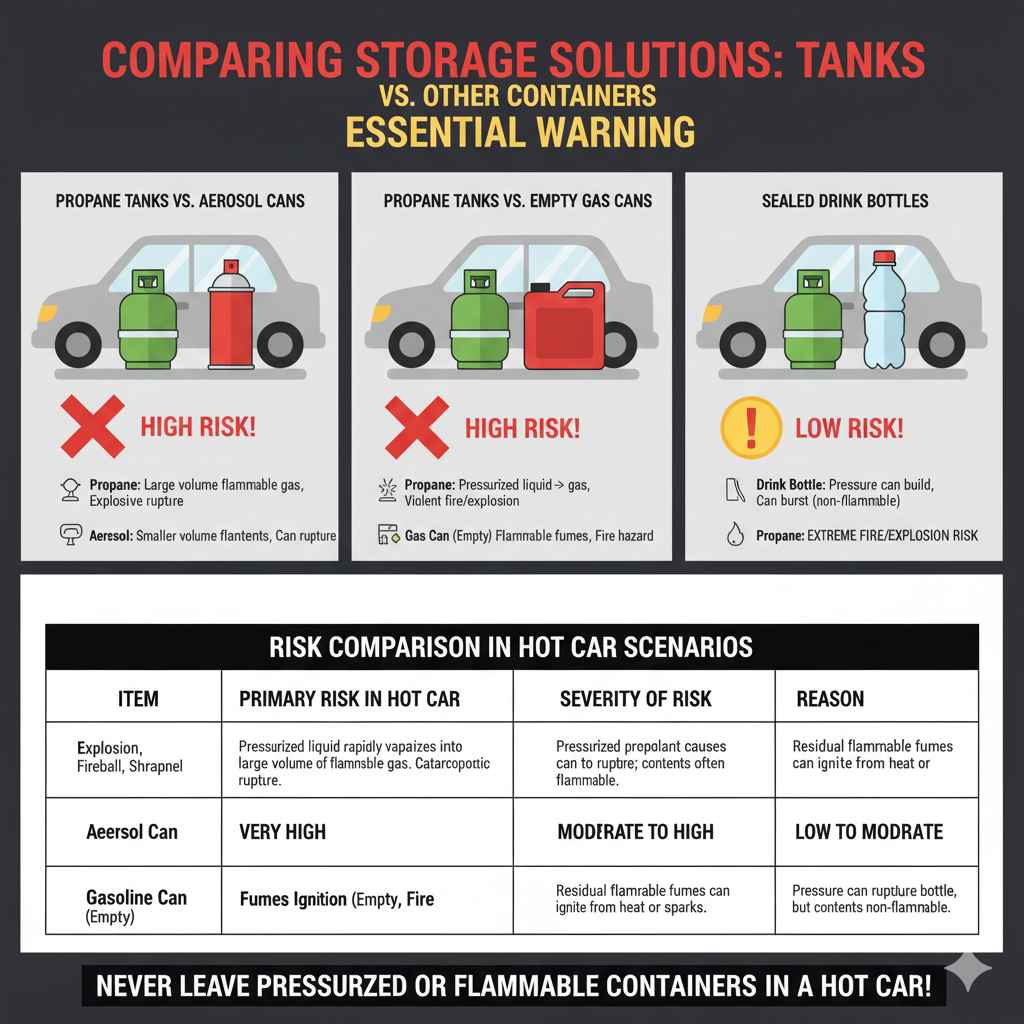
Comparing Storage Solutions: Tanks vs. Other Containers
It’s worth noting that propane tanks are specifically designed to handle pressure, making them different from many other containers. Leaving other pressurized containers in a hot car can also be dangerous, but propane tanks have a unique risk profile due to the rapid vaporization and flammability of propane.
Propane Tanks vs. Aerosol Cans
Aerosol cans, like spray paint or hairspray, also contain propellants that can build pressure in heat and pose an explosion risk. However, the volume of flammable material and the pressure dynamics are different from a propane tank.
- Aerosol Cans: Can explode or rupture in high heat, releasing contents that are often flammable and toxic. They have warning labels to avoid heat.
- Propane Tanks: Contain a much larger volume of highly flammable gas under significant pressure. A failure can be much more catastrophic, involving a large fireball and forceful rupture.
The Occupational Safety and Health Administration (OSHA) provides regulations for handling flammable gases and liquids in various settings, underscoring the seriousness of these risks.
Propane Tanks vs. Empty Gas Cans
Even empty gasoline containers should not be left in hot cars. Residual gasoline fumes can ignite. However, a propane tank contains pressurized liquid that instantly turns into a large volume of flammable gas upon release, creating a more immediate and intense hazard in an explosion scenario.
Table: Risk Comparison in Hot Car Scenarios
| Item | Primary Risk in Hot Car | Severity of Risk | Reason |
|---|---|---|---|
| Propane Tank | Explosion, Fireball, Shrapnel | Very High | Pressurized liquid rapidly vaporizes into large volume of flammable gas. Potential for catastrophic rupture. |
| Aerosol Can | Rupture, Release of Flammable Contents | High | Pressurized propellant causes can to rupture; contents are often flammable. |
| Gasoline Can (Empty) | Fumes Ignition, Fire | Moderate to High | Residual flammable fumes can ignite from heat or sparks. |
| Sealed Drink Bottles (Plastic) | Pressure Build-up, Bursting | Low to Moderate | Pressure can rupture bottle, but contents are generally not a fire hazard. |
This comparison highlights why propane tanks demand the highest level of caution when it comes to heat exposure.
What to Do If You Suspect a Problem
If you notice a propane tank that has been left in a hot car for an extended period, or if you suspect it may have been compromised, it’s crucial to handle it with extreme care. Your safety and the safety of others are paramount.
Immediate Steps in Case of Suspected Danger
- Do Not Touch Immediately: If the tank has been in a very hot car for a long time, allow the car to cool down by opening all doors and windows for a significant period.
- Visually Inspect: From a safe distance, check for any obvious signs of damage: bulging, severe rust, leaking valve, or corrosion.
- Listen for Leaks: If you can hear a hissing sound, there is a leak.
- Ventilate the Area: Ensure the area around the tank, and the vehicle, is as well-ventilated as possible.
- Contact Professionals: If you suspect a leak or damage, or if the tank has been exposed to extreme heat for many hours, do not attempt to use it. Contact your local propane supplier, fire department non-emergency line, or a qualified hazardous materials team for advice.
Who to Call for Help
When in doubt, it’s always best to err on the side of caution. Instead of trying to manage a potentially dangerous situation yourself, reach out to experts:
- Local Propane Supplier: They can offer specific advice on handling their products.
- Fire Department Non-Emergency Line: For guidance on safety procedures if a leak or damage is suspected beyond what a supplier can advise on.
- Emergency Services (911 or local equivalent): ONLY if there is an immediate fire, a strong smell of gas, or a clear and present danger.
Remember, propane is a serious fuel. Treat it with the respect it deserves, especially concerning heat and storage.
Frequently Asked Questions (FAQ)
Can a small propane tank explode in a hot car?
Yes, even a small propane tank can explode in a hot car. The danger isn’t solely based on tank size but on the pressure build-up. All propane tanks, regardless of size, contain fuel that expands significantly with heat, creating dangerous pressure levels.